Vinay Kumar
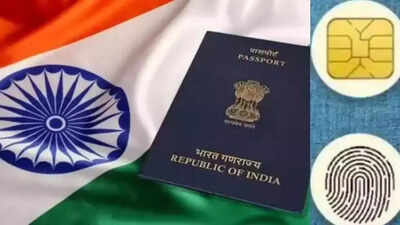
The Ministry of External Affairs rolled out e-passport service under the Passport Seva Programme (PSP V2.0). With the new system, the government aims to facilitate faster, more secure, and smooth travel for all Indian passport holders. While the existing ones remain valid till their expiry, anyone applying for a passport will get a chip-enabled passport by default, irrespective of whether they apply in India or abroad.
What is e-passport
As explained by the external affairs ministry in a press release, the e-Passport is a hybrid passport that combines both paper and electronic elements. It features an embedded Radio Frequency Identification (RFID) chip and an antenna, which store and secure the holder’s data in accordance with International Civil Aviation Organization (ICAO) standards. Critical information printed on the data page is also stored electronically on the chip, enabling enhanced security and authentication, the ministry says. Going forward, all newly issued passports will be e-Passports, while existing non-electronic passports will remain valid until their expiry, it added.
How to apply for e-passport
As mentioned above, any Indian citizen who is eligible for a regular passport can apply for e-passport. The process of applying for an e-passport is the same as that of applying for a regular passport. Applicants are required to first register on the official Passport Seva portal using their personal details. After completing the registration, they must fill in the online application form carefully and pay the prescribed fee through the available payment options.Once the payment is completed, applicants are required to book an appointment at a nearby Passport Seva Kendra or Post Office Passport Seva Kendra, based on their location and slot availability. On the scheduled date, the applicant must visit the selected centre in person for document verification.During the appointment, biometric details of the applicant are captured. This includes taking fingerprints and a photograph, which are used for identity verification and are later embedded securely into the e-passport’s electronic chip.After the verification process is completed and the application is cleared, the e-passport is printed with the embedded chip that stores the holder’s biometric and personal details. The finished e-passport is then dispatched and delivered to the applicant’s registered residential address through the postal system.