Vinay Kumar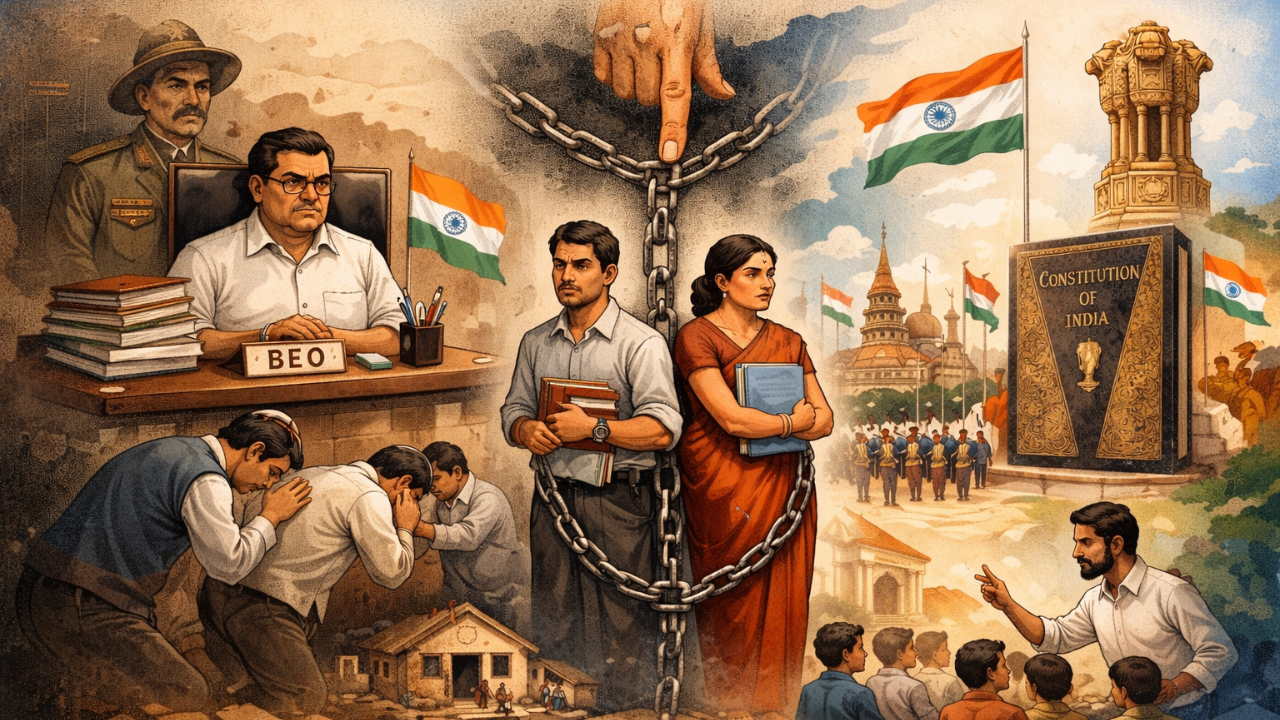
The Bihar Education Department’s recent directive—restricting teachers from addressing anyone other than the Block Education Officer (BEO) as “Sir”—appears, at first glance, to be a trivial matter of administrative protocol. In reality, it is a revealing institutional signal. This is not about etiquette. Put bluntly: it is about power, incentives, and the failure of the Indian state to internalise its own constitutional design. It exposes the persistence of a feudal mindset and bureaucratic equilibrium that sits uneasily—indeed, unconstitutionally—within a republic formally committed to equality, decentralisation, and dignity of labour and its citizens.
“Sir culture” in India operates as an informal institution—unwritten rule governing interactions between agents positioned asymmetrically within the state. A sort of a parallel governance mechanism that compensates for weak rule-based administration. While the term originates in British systems of honorific distinction, in contemporary India it operates as a signaling device, especially, in a high-discretion, low-accountability system. In those cases, the deference becomes a currency. For frontline workers like teachers, calling every block-level official “Sir” is not cultural excess or courtesy; it is rational risk minimisation in a high-discretion, low-accountability environment, a strategy to reduce transaction costs, delays, and punitive discretion. Where rights are weakly enforced, rituals substitute for contracts.
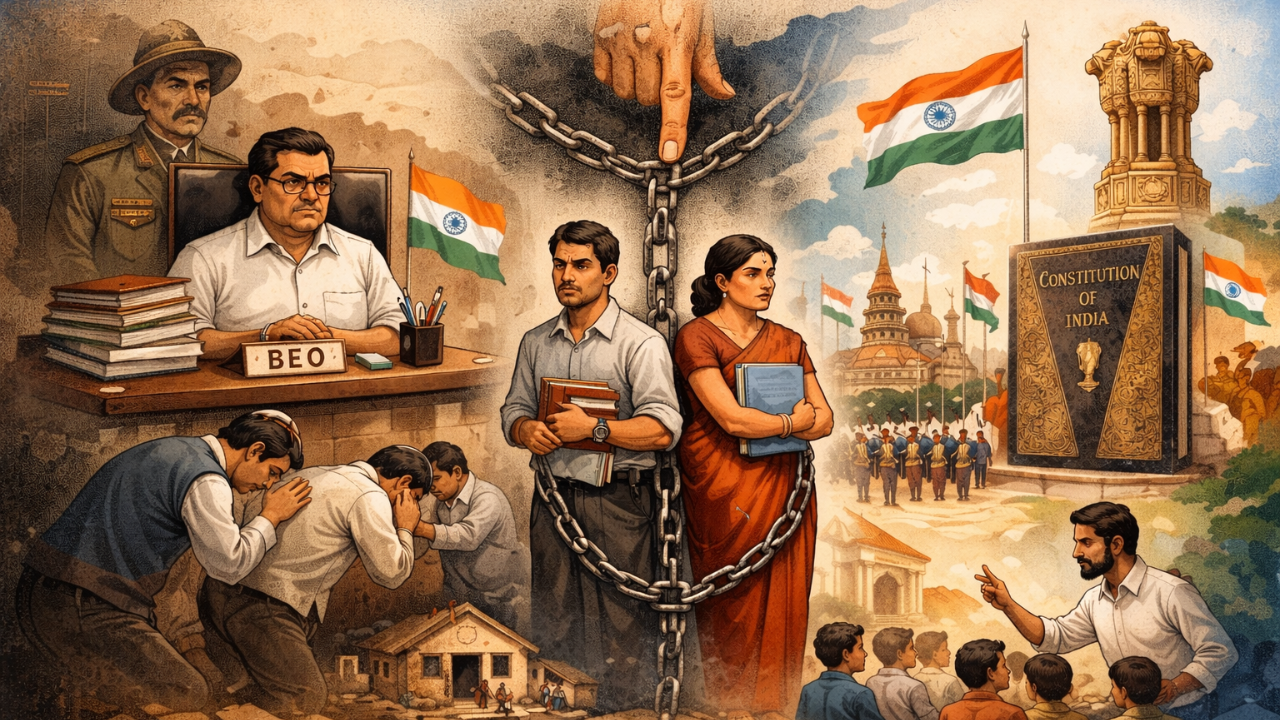

(AI-generated image)
The directive’s irony is profound. This is where the constitutional logic breaks down. India’s Republic was founded on a deliberate rejection of feudal authority. The Constitution dismantled inherited hierarchy and replaced it with a civic order based on equal citizenship, rule of law, and functional decentralisation. The 73rd and 74th Constitutional Amendments further attempted to rebalance power by pushing governance closer to the last mile. In theory, teachers—frontline agents of the state—should operate within a framework of horizontal coordination, not vertical subordination. In practice, however, governance remains highly centralised. Block- and district-level officials exercise disproportionate discretionary power over salaries, transfers, inspections, and compliance. This creates a textbook principal–agent problem: the state (principal) delegates service delivery to teachers (agents) but monitors them through intermediaries who face weak performance incentives and strong rent-seeking opportunities. In such a system, hierarchy becomes a substitute for capacity.
Teachers occupy the most distorted position in this political economy. In classrooms and communities, they are revered as “Guru” or “Sir/Ma’am,” reflecting their role as producers of human capital and positive externalities. Historically, this honorific elevated teachers’ authority, enabling them to discipline, instruct, and inspire. It was an efficiency-enhancing norm. But within the administrative apparatus, the same teachers are systematically deskilled and infantilised. Their professional status collapses the moment they enter the Block office. They become low-power agents subject to procedural harassment and symbolic humiliation. The message is clear: your authority in the classroom is borrowed; your primary role within the system is one of subordination.
The implications for human capital formation are serious and has measurable economic consequences. Teachers are not just employees; they are the primary input into learning outcomes. It has been observed with empirical regularity that motivation, autonomy, and professional respect significantly affect teacher effort and effectiveness. A system that persistently humiliates its frontline workers generates low morale equilibria: ritual compliance replaces initiative, and exit replaces commitment.
Bihar’s chronic failure in education outcomes is therefore not merely a problem of poverty or resources. It is an institutional failure rooted in anti-republican governance norms. You cannot proclaim equality on Republic Day while operationalising hierarchy every working day. You cannot celebrate the Constitution as a symbol while violating its spirit through everyday administrative practices. Republic Day is meant to remind the state that authority flows from the Constitution, not from office furniture, files, or proximity to power. In a republic, public officials are not feudal superiors; they are functionaries with delegated responsibilities. Teachers, no less than bureaucrats, are constitutional actors. When the state treats teachers as subordinates rather than skilled professionals, it depresses returns on public investment in education. In the language of economics, it is sabotaging its own human capital production function.
If Bihar is serious about improving human capital, it must move beyond cosmetic circulars and confront the underlying incentive structure. This means reducing discretionary power at the Block level, decentralising operational decisions, formalising procedures to lower transaction costs, and treating teachers as professional partners rather than subordinate claimants. The state’s progress depends not on who is called “Sir,” but on ensuring that every child has a teacher who feels valued, supported, and free to lead.
Disclaimer
Views expressed above are the author’s own.
END OF ARTICLE