Vinay Kumar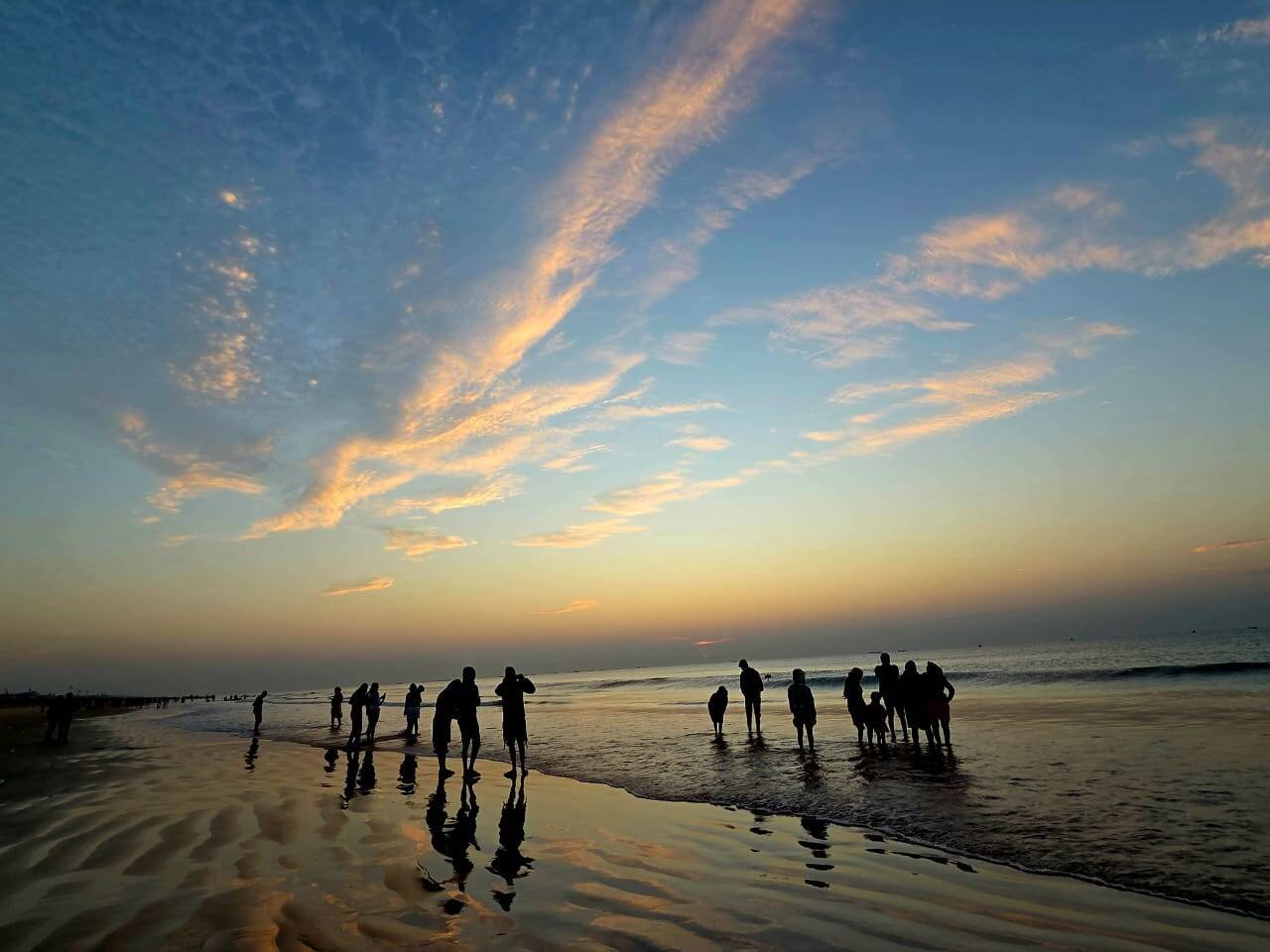
My journey to the Diamond Triangle of Odisha unfolded not merely as a physical passage across sacred geography, but as an inward pilgrimage through memory, myth, and living devotion. On the way, I halted at Puri, the ancient coastal city resting on the shores of the Bay of Bengal. Though I had visited Puri once in my childhood, the impressions had long faded, leaving behind only a sense of having been somewhere important. This return felt entirely new, as if the city itself was waiting to reveal its deeper layers.
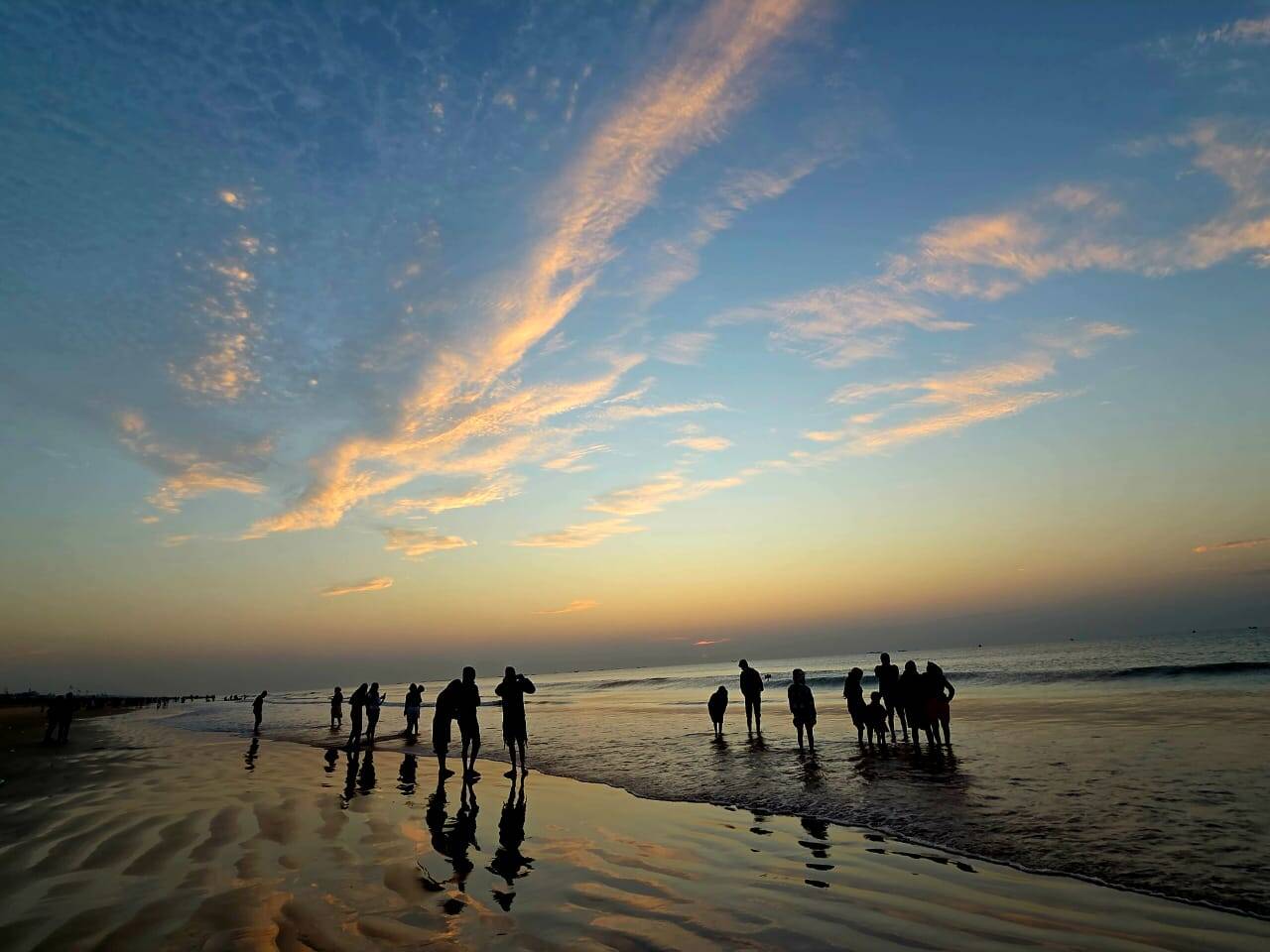

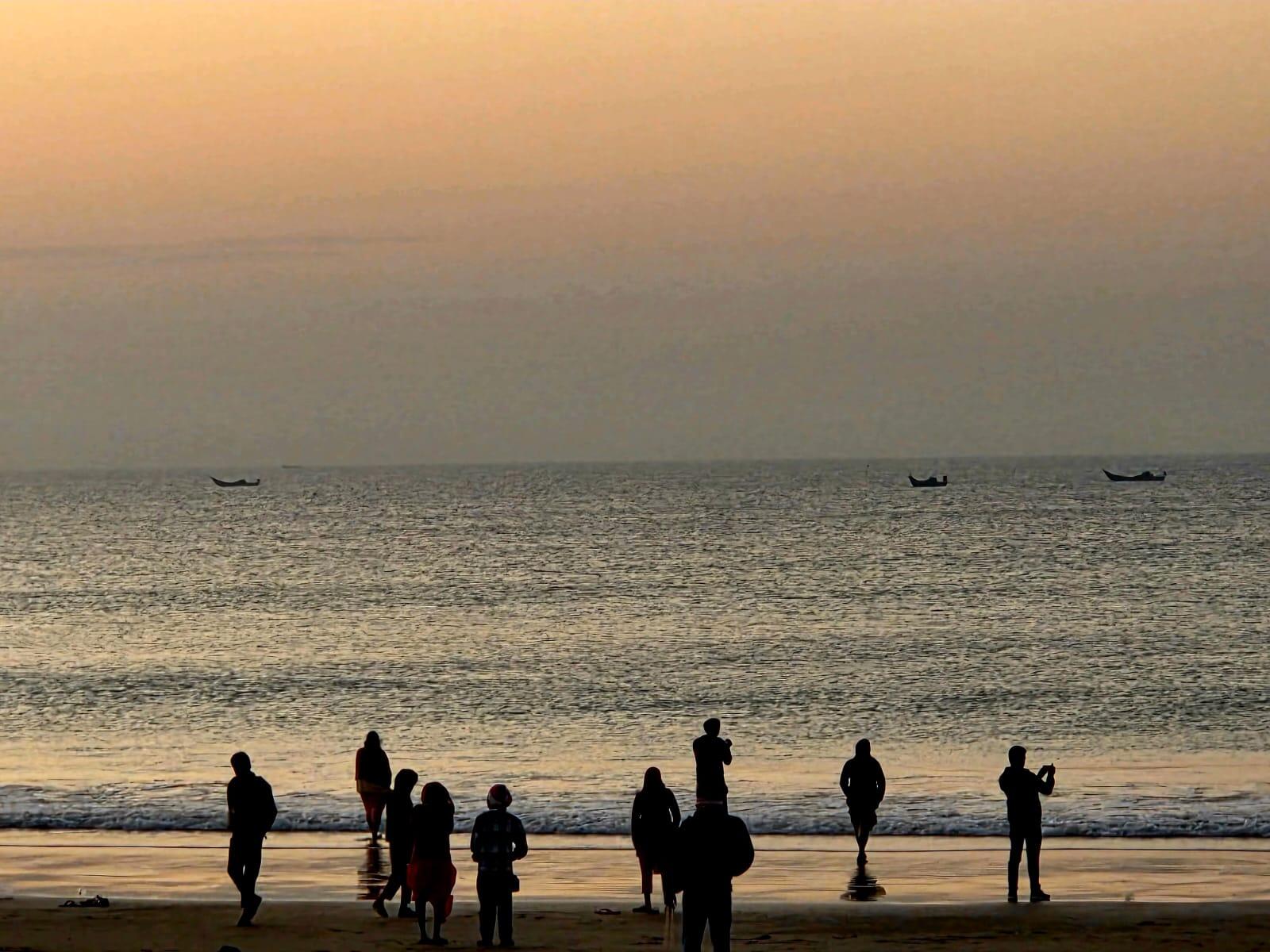
I stayed in an ashram near the beach, where the vast expanse of the sea merged seamlessly with silence and prayer. The sound of waves rolling in rhythmically felt like a natural invocation, cleansing the mind even before the day began. After a shower, refreshed and inwardly prepared, I set out to visit the Jagannath Temple, one of the most sacred and enigmatic temples in India.
The Jagannath Temple, dedicated to Lord Jagannath, a unique and deeply symbolic form of Vishnu, is not simply a monument of stone and wood, but a living, breathing tradition. According to temple records, the original temple was built by King Indradyumna of Avanti, while the present grand structure was rebuilt by Anantavarman Chodaganga, the first ruler of the Eastern Ganga dynasty. What makes this temple exceptional is the way its rituals seamlessly blend classical Vedic practices with Shabari tantras—spiritual traditions that evolved from ancient tribal cultures. This fusion lends the temple a raw, earthy sanctity that feels profoundly inclusive and timeless.
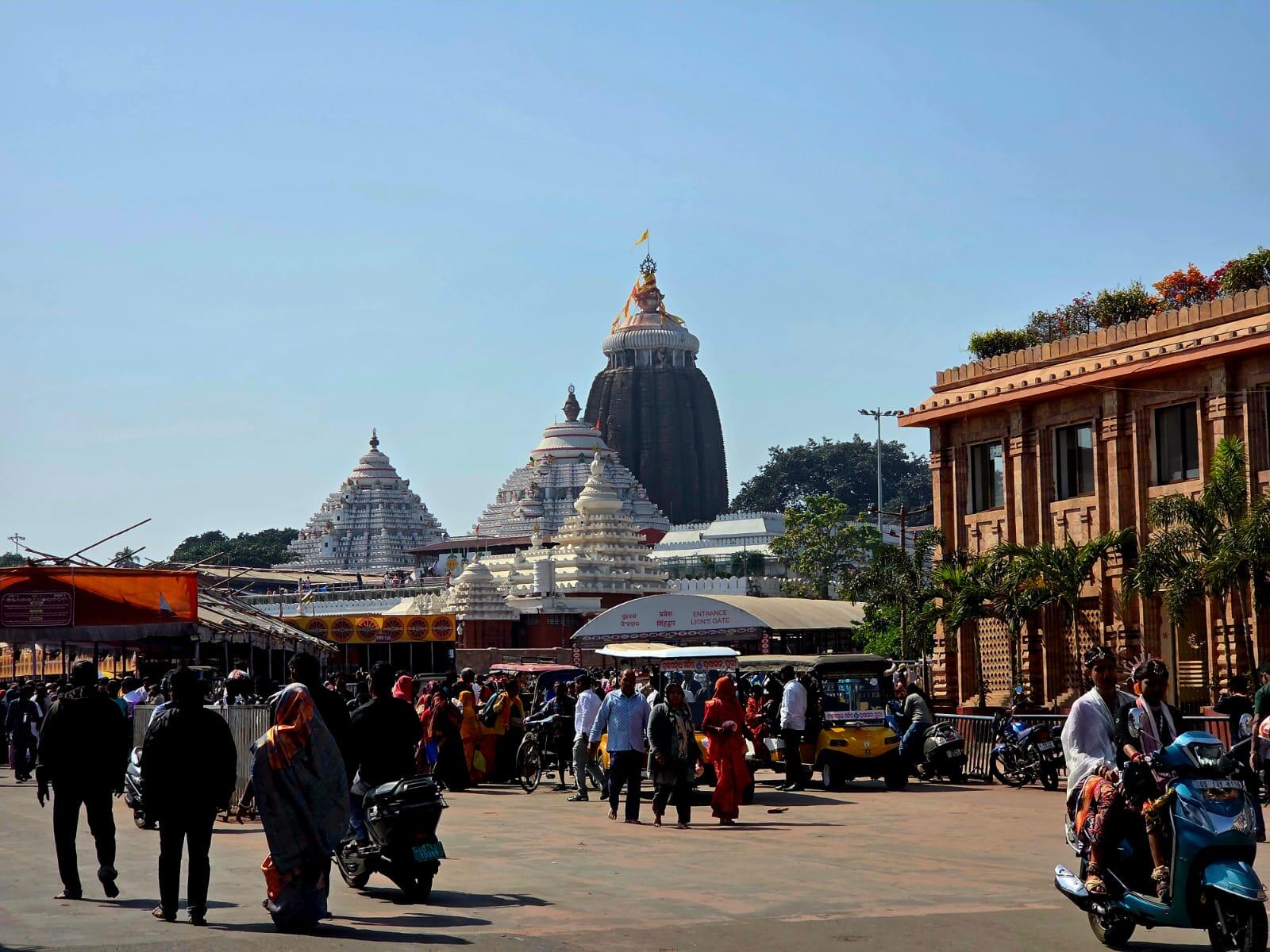

The Jagannath Temple holds multiple layers of religious importance. It is one of the 108 Abhimana Kshethram revered in the Sri Vaishnavite tradition and, at the same time, one of the four sacred Char Dham pilgrimage sites of India. It is also globally renowned for its annual Rath Yatra, during which the three principal deities—Jagannath, Balabhadra, and Subhadra—are ceremonially brought out of the sanctum and drawn through the streets of Puri on colossal, elaborately decorated chariots. During this festival, divinity steps out of the temple to meet humanity, dissolving boundaries between the sacred and the secular.
Inside the temple’s inner sanctum, the deities Jagannath, Subhadra, and Balabhadra are carved from sacred neem (margosa) wood and placed upon a jewelled platform. Alongside them are installed Sudarshana Chakra, Madanmohan, Sridevi, and Vishwadhatri. One of the most extraordinary features of this temple is the ritual of Nabakalebar, during which the wooden idols are ceremoniously replaced every 12 or 19 years. This elaborate, month-long process reflects a profound philosophical truth: while the physical form perishes, the divine essence remains eternal.
Many legends assert that Lord Krishna’s heart resides within the Jagannath idol, making the wooden body merely a sacred vessel. As wood naturally decays, the body is renewed, yet the inner reality—the true Jagannath—remains unchanged. The temple has drawn some of the greatest spiritual masters of India. Ramanujacharya established the Emar Matha near the temple complex, while Adi Shankaracharya founded the Govardhan Math, one of the four cardinal seats of Advaita Vedanta. The temple is also central to Gaudiya Vaishnavism, as Chaitanya Mahaprabhu, deeply moved by Jagannath’s form, lived in Puri for many years, absorbed in devotion.
The mythological origins of the Jagannath deity trace back to the end of the Dwapara Yuga. According to tradition, the original divine presence manifested near the seashore in the form of the Indranila Mani, the radiant Blue Jewel capable of granting instant moksha. To prevent its misuse, the god Dharma concealed it within the earth. In the Kali Yuga, King Indradyumna undertook severe penance to rediscover this divine mystery. Vishnu then instructed him to journey to Puri, where a mystical floating log would appear in the ocean, destined to become the body of the deity.

When the sacred log was found, a yajna revealed Narayana’s four-fold form as Jagannath, Balabhadra, Subhadra, and Sudarshana. Vishnu, appearing as a carpenter, began carving the deities on the condition of solitude, but when the door was opened in anxiety, he vanished, leaving them unfinished and handless. A divine voice then instructed King Indradyumna to install the forms as they were, declaring that Jagannath would eternally watch over and govern the world. Even with a protocol visit, it took me three full hours to circumambulate and absorb the vast temple complex. I felt deep regret that photography was not permitted, as the magnificence of the architecture defies description alone. The energy there was unmistakable and intense.
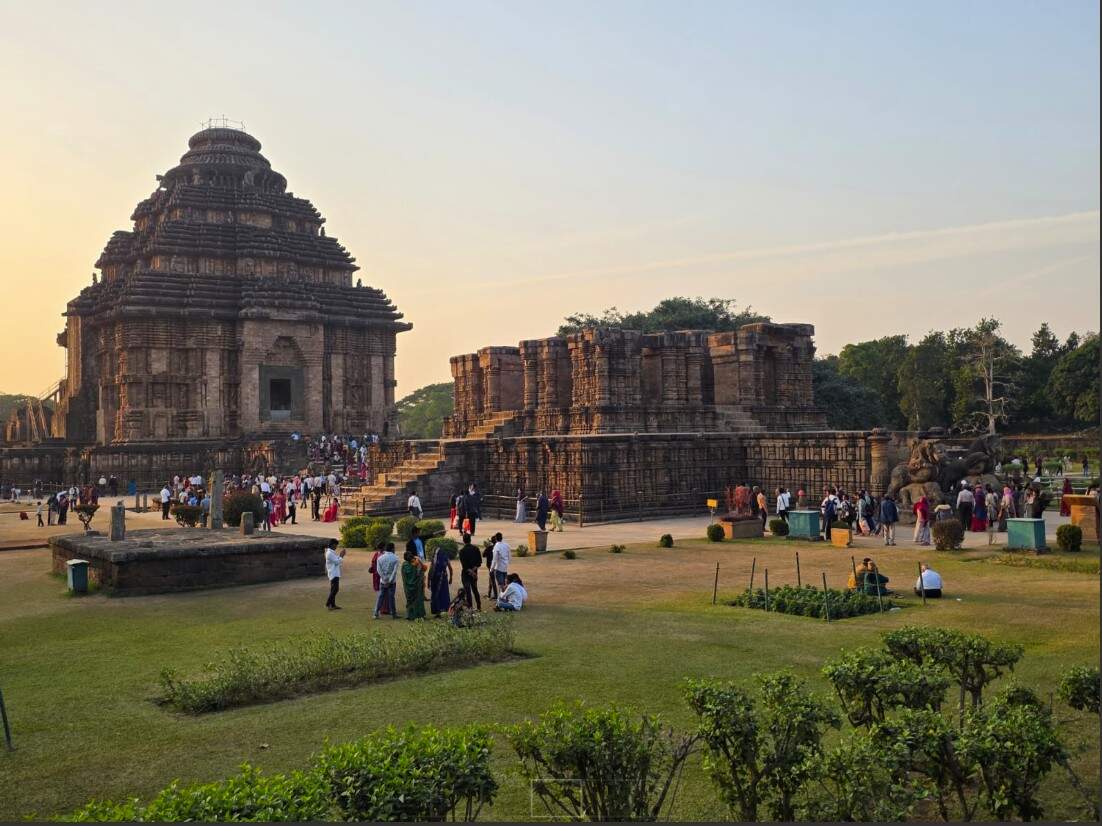
From Puri, I travelled onward to the Konark Sun Temple, another jewel of Odisha’s spiritual and architectural heritage. Built in 1250 CE by King Narasingha Deva of the Eastern Ganga dynasty, this UNESCO World Heritage Site is crafted entirely from stone and conceived as a colossal, intricately carved chariot of Surya, the Sun God. In Vedic iconography, Surya rises in the east and traverses the sky in a radiant chariot drawn by seven horses, symboliding the seven metres of Sanskrit prosody—Gayatri, Brihati, Ushnih, Jagati, Trishtubh, Anushtubh, and Pankti—with Aruna as his charioteer.
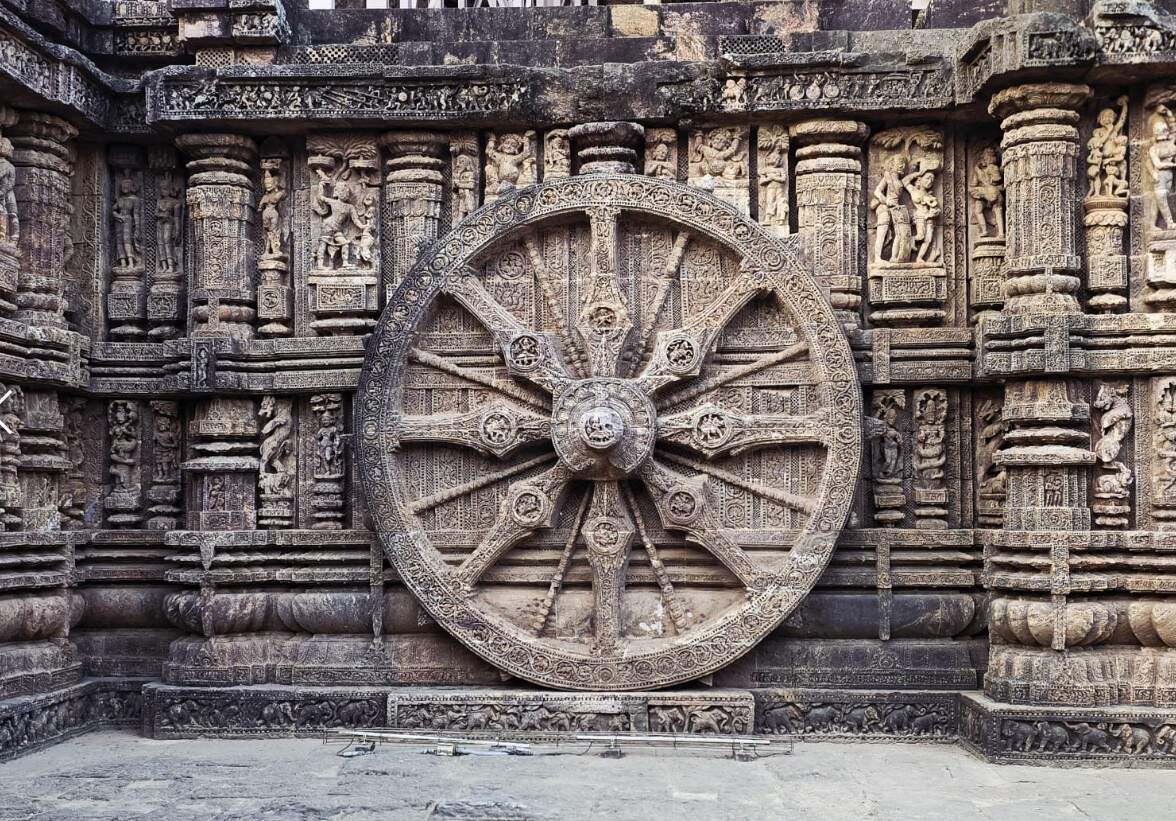

Flanking Surya are the dawn goddesses Usha and Pratyusha, depicted shooting arrows to dispel darkness, symbolizing the triumph of light over ignorance. The architectural symbolism is equally profound. The chariot’s twelve pairs of wheels represent the twelve months of the Hindu calendar, each divided into Shukla and Krishna cycles, reflecting the rhythmic flow of time.
According to legend, a powerful magnet once crowned the Konark Sun Temple, causing the idol of Surya to float in perfect balance. Its magnetic force was believed to disturb ship compasses at sea, and when it was removed, the temple’s main tower gradually collapsed.
I had been fascinated by Konark during my school days and still remembered posing beside its sculpted dancers. Returning now, I experienced it on a far deeper level. The temple stands as an epitome of beauty, romance, cosmic order, and artistic brilliance. The evening light-and-sound show was especially mesmerising, narrating the temple’s story and transporting me back to an era of visionary kings, master craftsmen, and celestial imagination.
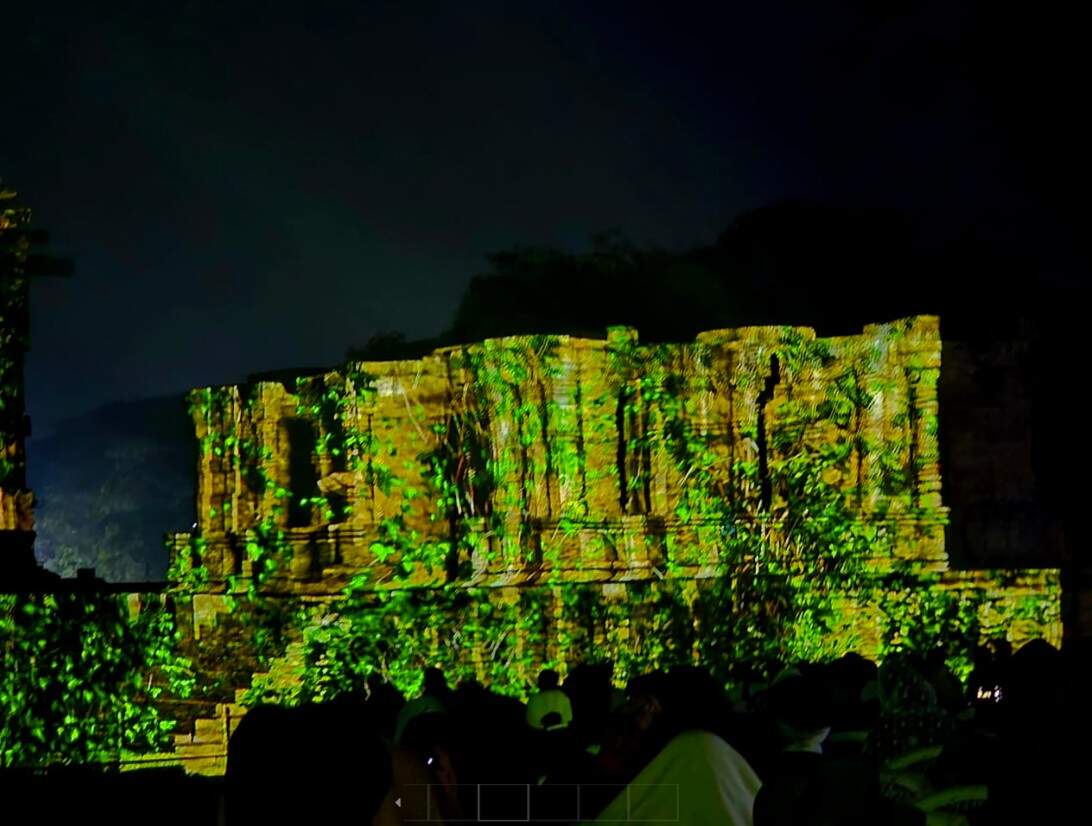

This journey, from the handless yet all-seeing Lord Jagannath of Puri to the resplendent solar chariot of Konark, was far more than a tour of sacred sites. It was a passage through living mythology, embodied philosophy, and timeless devotion, leaving me with a profound sense that these places are not relics of the past, but vibrant gateways into the eternal.
Disclaimer
Views expressed above are the author’s own.
END OF ARTICLE