Vinay Kumar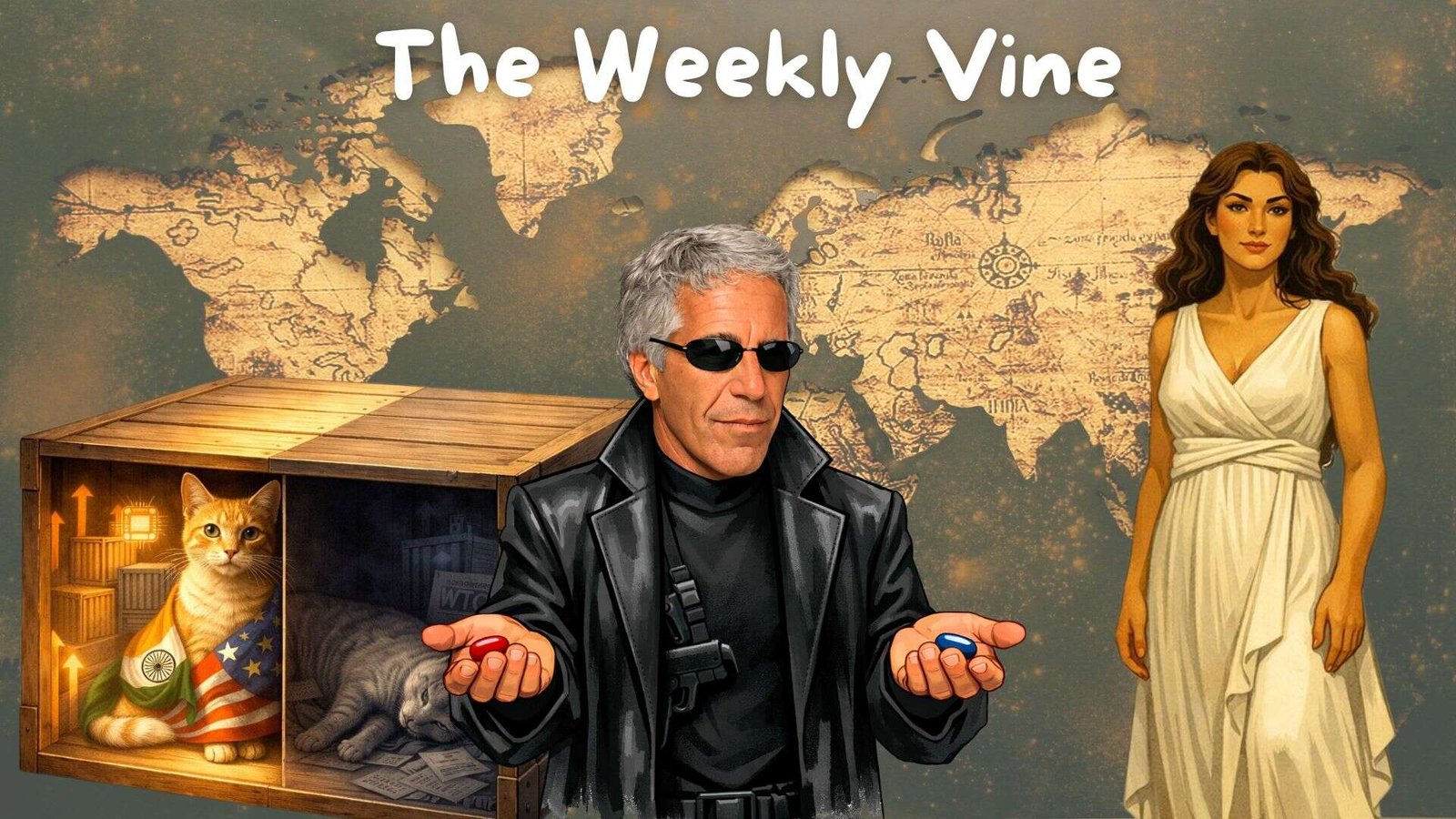

Hello, dear reader, and welcome to the 79th edition of the Weekly Vine. This week, we take a look at the US–India trade deal, explain how The Matrix foreshadowed the Epstein saga, delve into the Black vs White argument about Helen of Troy, and finally explore the great Indian middle-class delusion about the Budget.
India–US Trade Deal?
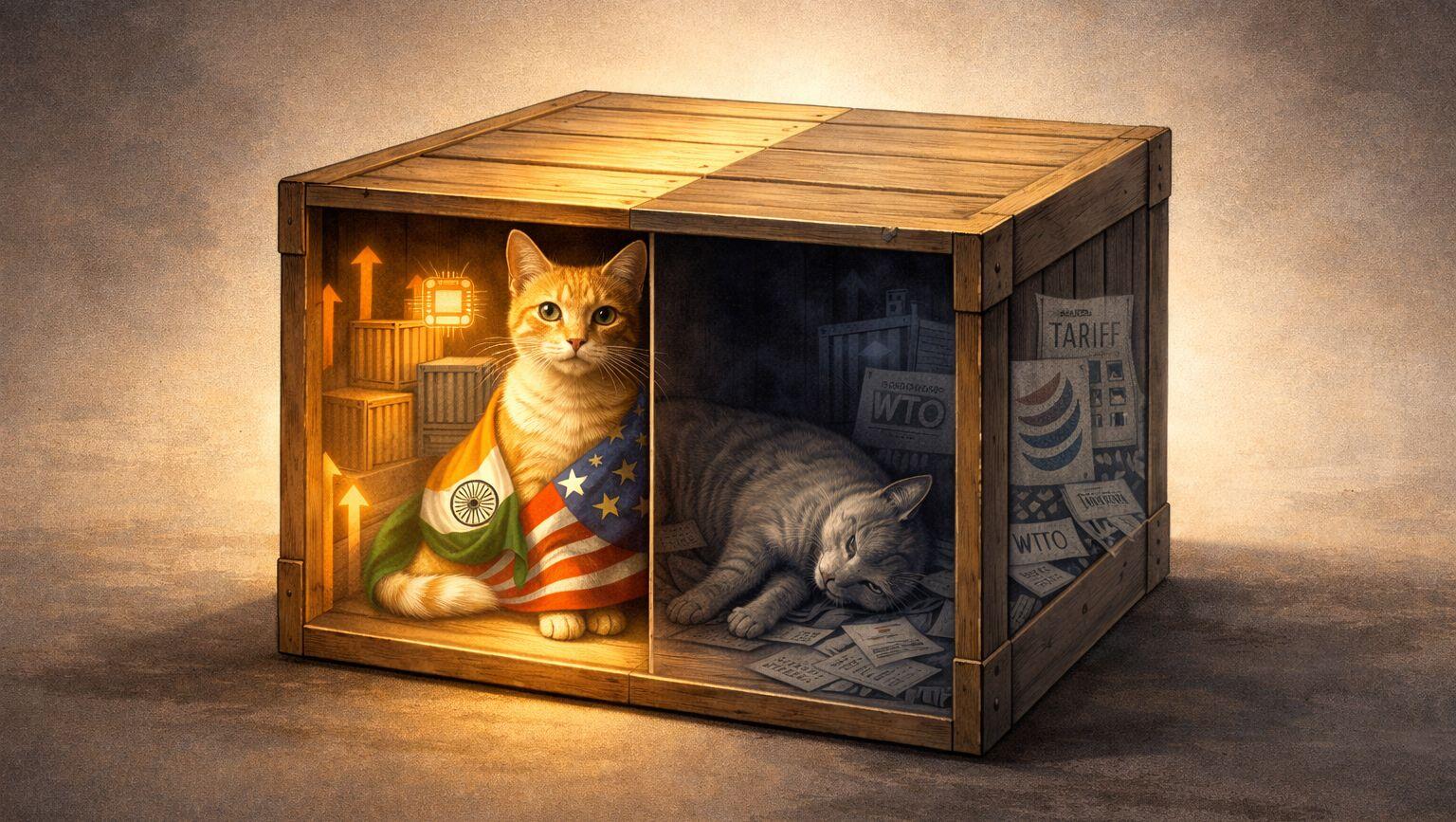

For those not familiar with thought experiments, Schrödinger’s cat is a quantum mechanics hypothesis involving a cat in a closed box, trapped with a vial of poison. The experiment suggests that it is impossible to know whether the cat is alive or dead until the box is opened.
Similarly, we seem to know nothing about the India–US trade deal except that it was a fabulous win for both governments. The rest of the devil is in the details, which hasn’t stopped commentators from hyperventilating as if, the moment the deal is finalised, a six-pack of Bud Light and buffalo wings will drop onto their laps.
The headline number right now is that the US has promised to dial down tariffs on Indian exports to 18% from 50%, and Trump claims that India will stop buying Russian oil.
Beyond that, the deal quickly dissolves into diplomatic fog. The tariff rollback is real, but context matters, and we have very little of it so far.
The White House calls this an “initial” deal, with more documents to follow. For now, there is no legal text, no sector-wise breakdown, no timelines, and no enforcement mechanism. In trade terms, we know as little as the trade negotiations that started Star Wars.
Washington also claims India will lower tariffs and non-tariff barriers on American goods, possibly to zero. Which goods, over what period, and under what conditions remains unclear. India has offered no product list and no confirmation, especially on politically sensitive sectors like agriculture.
Then there is the $500 billion claim. India currently accounts for roughly $80 billion a year in total US exports, including goods and services. Reaching $500 billion would require a historic surge sustained over years. There is no roadmap explaining how this happens.
What this deal clearly does is end an unsustainable tariff war. What it does not yet deliver is predictability. The box remains closed. The cat, for now, is still both alive and dead. Time will tell the cat’s status.
The Matrix–Epstein foreshadowing
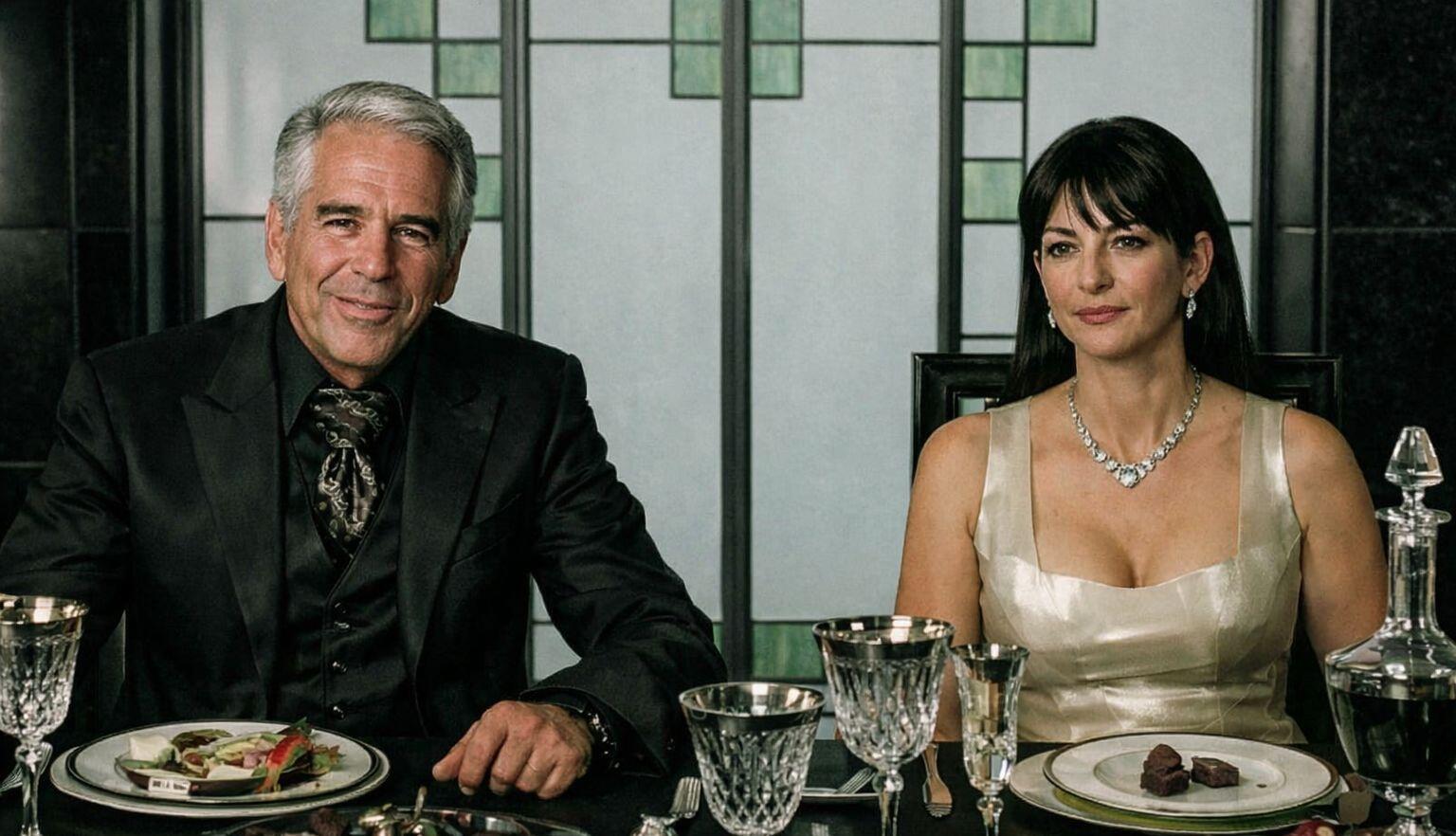

The more time you spend delving into the Epstein emails, the more you wonder how such a busy man had any time to perform the depraved acts.
The latest tranche of emails tells us that Bill Gates contracted an STD (leading to jokes about Microsoft products being laden with viruses), Deepak Chopra explaining that “God is not real, but cute girls are”, Musk not understanding code about “meeting diplomats”, or Epstein pointing out to Noam Chomsky that since Trump had written three books, this made him one of the few people in the world who had written more books than he had read.
But zoom out a bit, and it starts to resemble the world described in The Matrix, with Epstein coming across as the Merovingian (also known as the Frenchman).
For those who don’t remember, the Merovingian was an old program who ran a black-market empire inside the Matrix, operating a smuggling ring that provided a haven for exiled programs.
He was a trafficker of information, loved living the high life, had a partner who helped him run his criminal syndicate, spoke with utmost smug superiority, kept old programs like trophies, sold access to the powers that be, operated from private spaces as theatres of control, hid behind moral relativism as his philosophy (“It’s all a game, it’s always been a game”), and pretended he had all the answers.
Strip away the French, the programs, and the green tint, and the Merovingian is exactly like Epstein. His lines could very well have been Epstein’s guiding philosophies.
When The Matrix first came out, it was heralded as era-defining science fiction.
Little did we know it was a foreshadowing of our lives, where we would all become so jacked into our devices that we would forget our real lives, where our every action would be judged by an algorithm tweak, where we would use small machines to peer into the lives of others instead of living our own, and where we would willingly submit ourselves, as Aldous Huxley predicted, not because of oppression but because of convenience.
The real deus ex machina was never the machines with tentacles. It was the invisible architecture that learned how to manage human longing itself.
And little did we know that the entire operating system was being run by a few men who could control each other’s guilt.
Read: How The Matrix foreshadowed the Epstein saga
Was Helen of Troy black or white?
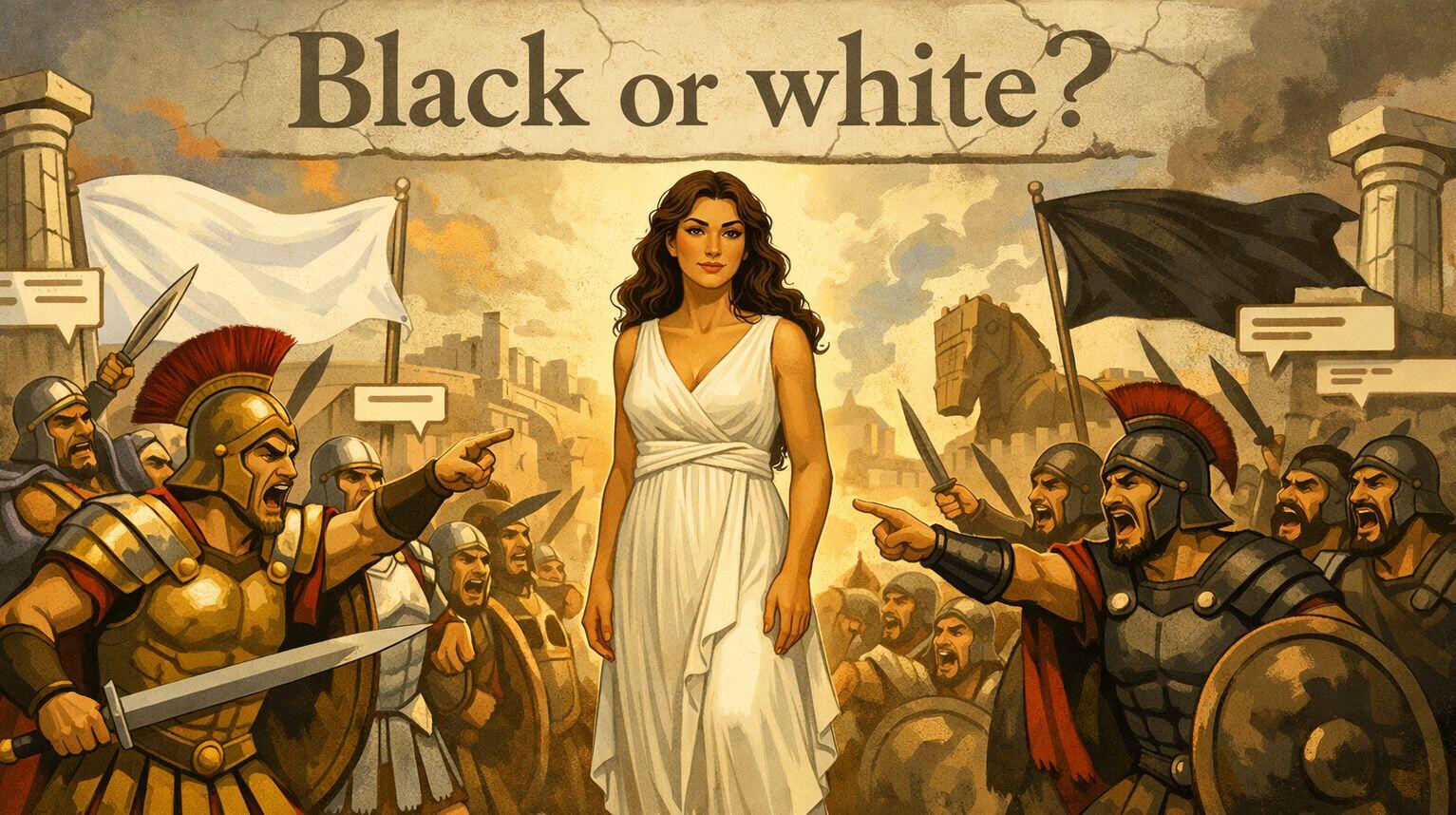

Being a right-winger or a left-winger today means living in a state of permanent angst. You must always be angry about something. The only variable is the trigger. And this week’s chosen outrage for the online right is Lupita Nyong’o being cast as Helen of Troy by Christopher Nolan in his adaptation of The Odyssey.
The online right is outraged, outraged, that Nolan, the master of historical accuracy, would dare cast a black person to play Helen of Troy.
The loudest voice in this chorus belongs to Elon Musk, a man who either has access to time turners or to substances that radically alter one’s perception of time, because it is unclear how a single human being manages to be outraged by these many things before breakfast.
But the anger over Nyong’o’s casting is as misplaced as believing that Jesus of Nazareth was a white man wandering around the Middle East. Which is to say, the outrage is not just emotional, it is illiterate.
For starters, Helen of Troy is not a historical figure. She is a legendary one. A literary construct shaped by oral poetry, myth-making, and centuries of retelling. There is no birth certificate, no skeletal remains, no DNA sample waiting to be analysed by Twitter subscribers. Treating Helen like a verifiable ethnic datapoint is a category error masquerading as cultural defence.
Second, the world of Homer is not the world of modern racial taxonomy. The epics are set in the eastern Mediterranean, not in East Texas. Aegean, Anatolia, the Levant, and Egypt were connected through trade, migration, warfare, and intermarriage for centuries before Homer’s poems were even composed. Ports, not borders, defined the ancient Mediterranean. Mixing was the norm, not the exception.
Race as people imagine it today simply did not exist in Homer’s world. Identity was organised around city, kinship, language, status, and loyalty. You were Trojan or Achaean, king or slave, noble or commoner. You were not “white” in the modern sense any more than you were “Asian” or “African” in a census-category sense. To insist that Helen must be white is to import a 21st-century American–European racial framework into a Bronze Age imagination that had no use for it.
The confusion, of course, is cultural, not textual. For many viewers, Helen looks the way she does because Diane Kruger played her in Troy. Hollywood aesthetics have a way of quietly replacing ancient literature as the “original source”. Once an image hardens into default, it is mistaken for truth, no matter how ridiculous, given Kruger is German. Helen, mythic as she is, is located in the eastern Mediterranean world. Whatever she was, she was not northern European. If one insists on dragging genetics into mythology, the irony is obvious: Nyong’o, by virtue of not being German either, is no less plausible within the setting than Kruger ever was.
Which brings us to the deeper point. Helen could not have been “white” in the modern sense because “white” itself is a modern construction, forged much later and shaped by European history, colonialism, and racial hierarchy. Applying it retroactively to Homeric myth is like insisting Achilles should have a passport or that Odysseus file a travel itinerary with Schengen authorities.
If one absolutely needs a colour metaphor, then yes, Helen was probably what modern language would awkwardly call “brown”. Not black, not white. Mediterranean. In-between. Like most of the ancient world that modern identity politics keeps trying to flatten into binaries. Or, as the old Black or White lyric had it, neither this nor that.
The real miracle here is not a black actress playing a legendary Greek queen. The real miracle is how much time people have to agitate.
Budget and the great Indian middle-class delusion
by Prasad Sanyal

This is my twenty-fifth year in journalism, and my twenty-fifth Union Budget.
Once upon a time, it was a three-day carnival. It began with the Railway Budget, moved to the Economic Survey, peaked with the Union Budget, and spilled over into thick, ink-stained newspapers dissecting the Finance Bill the morning after. Newsrooms hummed, and readers actually waited.
That buzz is gone. The formats have changed, the platforms have multiplied, attention has fragmented. But the Budget remains, as does the middle class.
Every Budget season in India arrives with a familiar chorus, usually heard somewhere between the dining table and the WhatsApp group titled “Family Only”. The Budget has nothing for the middle class. It is delivered with the wounded surprise of someone who genuinely believed that this year might be different, that after decades of polite compliance, advance tax payments, and Form 16 stoicism, the middle class would finally be noticed.
Disclaimer
Views expressed above are the author’s own.
END OF ARTICLE