 Vinay Kumar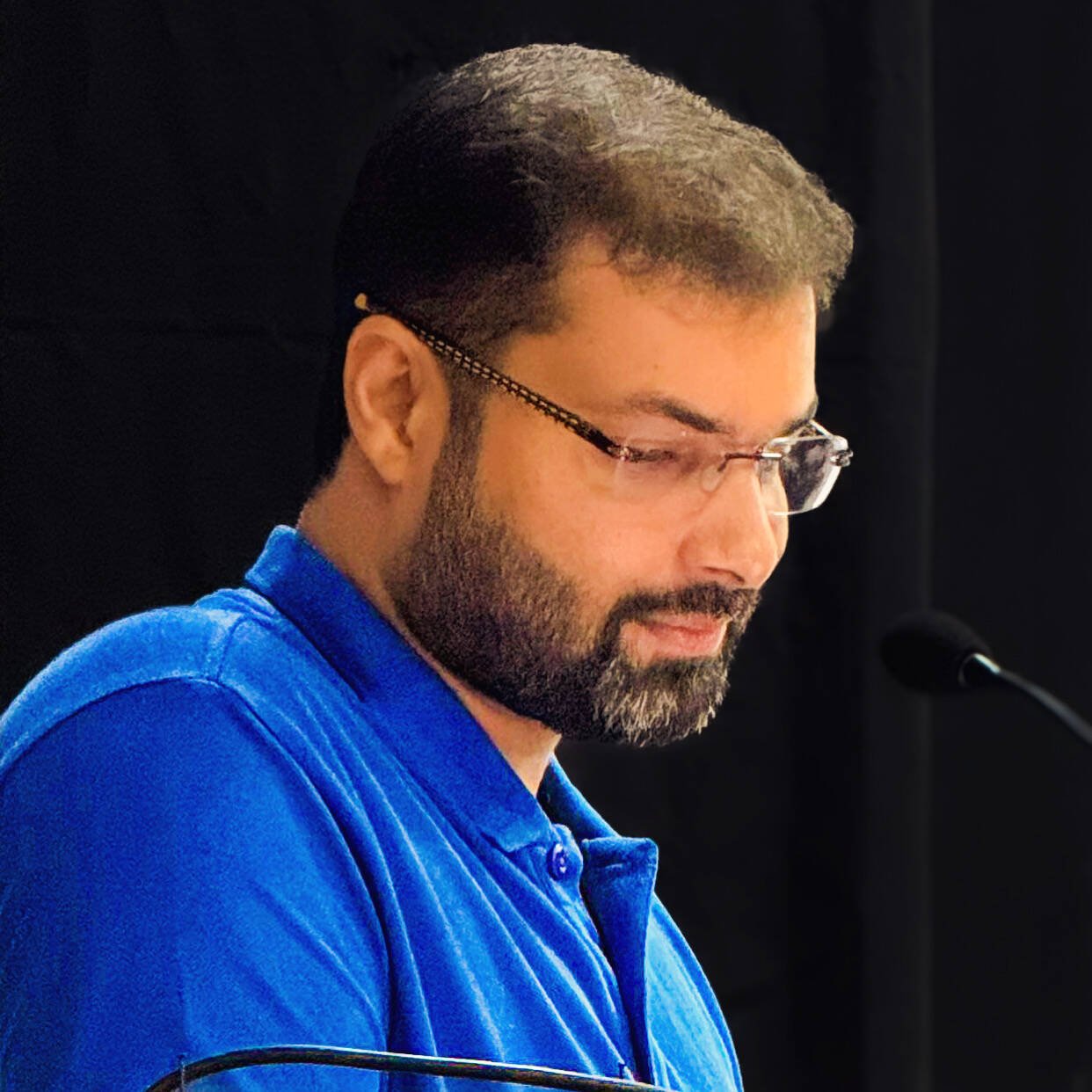
Leadership is often measured in volume. Who speaks the strongest in the boardroom. Who posts the most confident quote. Who looks busiest, fastest, most unshakeable.
Yet the real test of leadership does not happen in applause. It happens in pressure. A client threatens to walk. A senior hire resigns. A supplier fails. A family emergency collides with a quarterly deadline. In those moments, charisma is nice, but cognition is king.
When I say IQ in leadership, I am not worshipping grades or glorifying “smartness” as a personality. I am talking about the mind’s ability to organise reality when reality becomes messy. It is the skill of strategic thinking, pattern recognition, prioritisation, and decision-making under pressure without selling your soul to panic.
The uncomfortable truth is this: many leaders do not fail because they lack talent. They fail because their thinking collapses under stress, and they mistake urgency for importance.
Pressure does not reveal character. It reveals cognition
Here is what I have seen repeatedly as a coach. Under pressure, leaders tend to default to one of three survival modes.
One, they become reactive-firefighters, sprinting from problem to problem, feeling productive while quietly losing the plot.
Two, they become controlling-micromanagers, tightening their grip as if squeezing harder will produce certainty.
Three, they become avoiders, postponing decisions, hoping time will do their job for them.
All three modes have one thing in common. They are not strategic. They are neurological.
Under acute stress, the brain prioritises speed over nuance. The threat system becomes louder, and the parts of the brain involved in planning, impulse control, and flexible reasoning have to work harder to stay online. This is why leadership under pressure is not simply about confidence. It is about executive function, the mental capacity to hold competing information, inhibit unhelpful impulses, and choose the next best move.
Strategic thinkers are not emotionless. They are skilful at not letting emotion drive the steering wheel.
The strategic thinker’s superpower: Reducing noise without reducing truth
I remember a moment early in my consulting career. A senior leader received a sudden escalation: a reputational issue, internal politics, and an anxious team, all within the same hour. He looked calm, but his calm was not a performance. It was a method.
He said one line that still lives in me: “We are not solving everything today. We are choosing the next right problem.”
That is IQ in leadership. The capacity to reduce noise without reducing truth.
High-pressure environments create a cognitive illusion: everything feels equally urgent. Strategic thinkers break that spell. They separate signal from drama. They resist the addictive rush of doing. They choose.
In our cultures, especially, “being busy” is often confused with being important. I sometimes wonder if we have made a religion out of exhaustion. The strategic leader quietly refuses that religion.
The neuroscience of good decisions: your brain loves shortcuts
The brain is a brilliant energy-saver. Under pressure, it reaches for shortcuts: assumptions, stereotypes, confirmation bias, blame narratives, familiar patterns. These shortcuts are not moral failures. They are cognitive defaults.
But leadership requires more than defaults. It requires deliberate thinking.
When I work with leaders on decision-making under pressure, I often ask a slightly irritating question: “What are you treating as a fact that is actually an interpretation?”
Because under stress, interpretations harden into “truth” in seconds. A delayed email becomes disrespectful. A slow sales month becomes a failing team. A single complaint becomes a doomed reputation.
Strategic thinking brings the mind back to reality. It says: slow down just enough to see clearly. Not slow as in indecisive, slow as in accurate.
The IQ moves strategic leaders make under pressure
Strategic thinkers do not magically have fewer problems. They simply approach problems differently.
First, they widen the lens. Under stress, attention narrows. The leader sees only the fire, not the building. High IQ leadership deliberately asks: What is the system around this issue? What is the second-order effect of this decision? Who else will this impact?
Second, they work with constraints instead of complaining about them. In Mauritius, I often hear leaders talk about limited talent pools, small market realities, and relationship-based ecosystems. In India, it might be scale, speed, and intensity. Strategic thinkers accept constraints as design boundaries. They do not whine at the map. They navigate it.
Third, they use cognitive flexibility. They can hold two truths at once: “This is serious” and “We can handle it.” They can change their mind when new information appears, without feeling humiliated by the change. That is not weakness. That is intelligence.
Fourth, they simplify decisions into principles. Under pressure, too many options create paralysis. Strong leaders build a few non-negotiable decision filters, such as: protect trust, preserve cash flow, keep the culture intact, act ethically, choose the most reversible option first. When principles are clear, decisions become cleaner.
IQ without eq is a knife without a handle
Let me be blunt. Some leaders are cognitively sharp and emotionally clumsy. They can out-think everyone and still destroy a team’s morale in one meeting.
IQ in leadership is not about winning arguments. It is about making better decisions that human beings can actually execute.
Under pressure, leaders often communicate in a way that spreads stress. Their tone becomes clipped, their words become vague, and they assume people will “just get it”. But the team’s nervous system is watching the leader’s nervous system. If you are chaotic, the room becomes chaotic.
Strategic leaders treat communication as a cognitive tool. They make the situation nameable. They offer clarity without false certainty. They say what is known, what is unknown, and what happens next.
In yogic language, this is steadiness. Not passive calm, but grounded presence. In neuroscience language, it is regulation. In leadership language, it is trust.
A pressure ritual i use with leaders
When a leader tells me, “I can’t think clearly”, I do not start with strategy. I start with state.
Because your brain cannot strategise from a threat posture.
A simple ritual I use is this: pause, breathe slower than your urgency, and ask three questions.
What is the actual decision I need to make, not the emotional storm around it?
What information am I missing that would change my choice?
What is the smallest safe action I can take in the next 24 hours?
This is not spiritual fluff. It is cognitive triage. It brings executive function back online. It also trains your mind to respect sequencing: stabilise first, decide second, optimise third.
Societal question: Are we training leaders to think, or to perform?
Sometimes I worry that modern leadership culture rewards performance more than thinking. The loudest person is assumed to be the most competent. The most available leader is considered the most committed. The one who never rests is admired, even when they are making sloppy decisions.
But a leader who cannot think under pressure becomes a liability, no matter how inspiring their speeches are.
If you are leading a business, a department, or even a family, your decision-making is your destiny. And your decision-making is shaped by your cognition under stress.
So perhaps the deeper question is not, “Am I confident?”
It is, “Can I stay clear when my nervous system wants chaos?”
Strategic thinking is a daily practice
IQ in leadership is not something you switch on during crises. It is something you build on ordinary days.
You build it when you reflect before reacting.
When you read deeply instead of scrolling endlessly.
When you sleep enough to protect your prefrontal cortex.
When you ask better questions.
When you let data challenge your ego.
When you learn to tolerate discomfort without impulsive choices.
Pressure will come. It always does. The question is whether you will meet it with frantic intelligence or strategic intelligence.
I have coached enough leaders to know this: the best decisions under pressure do not come from the fastest mind. They come from the clearest mind.
Disclaimer
Views expressed above are the author’s own.
END OF ARTICLE