
 Vinay Kumar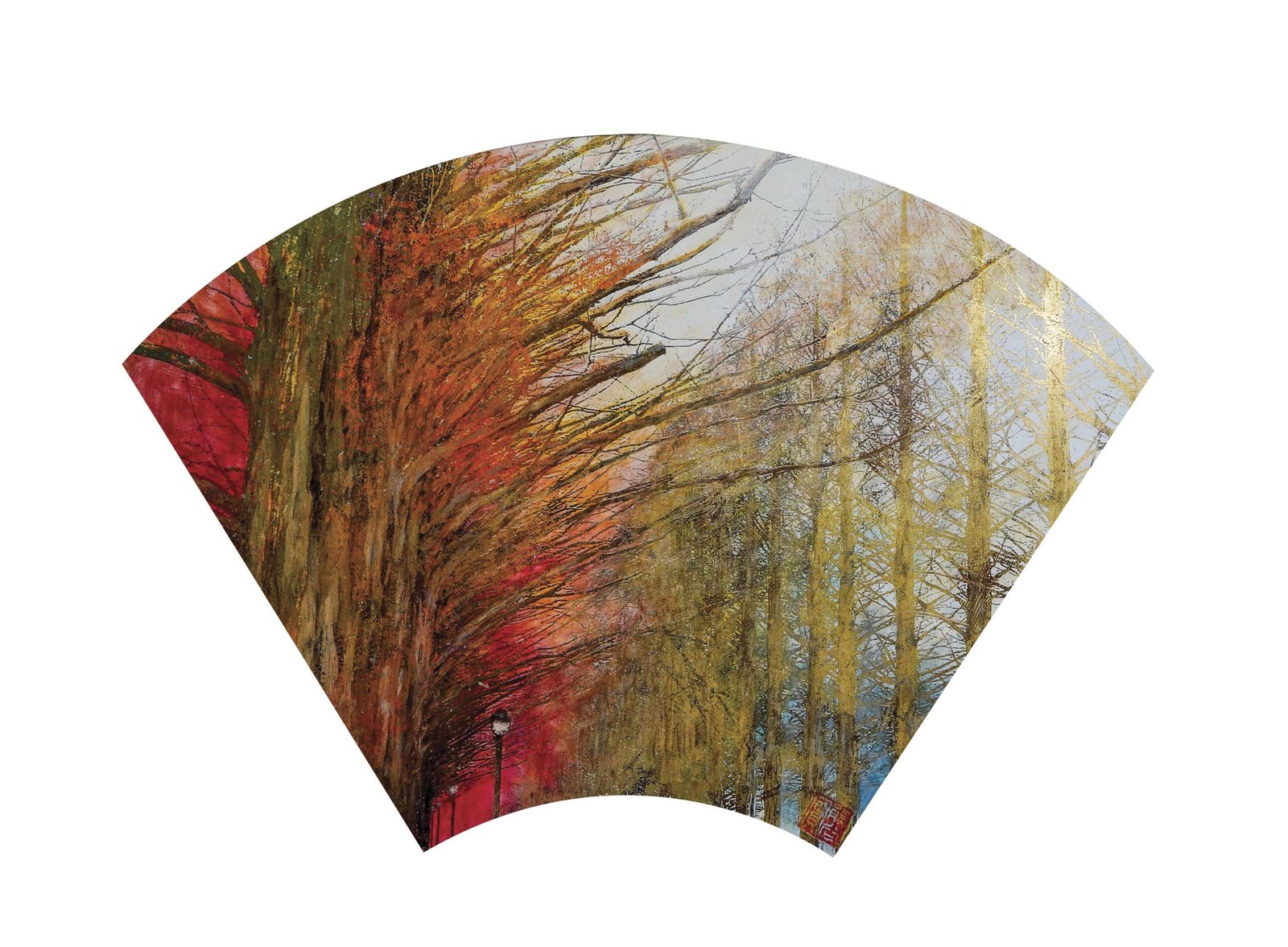
Opening today at Bikaner House is the small 50-painting show by 81-year-old Japanese artist Komugai Minoru.
Self-taught artist who began life as a designer, his travels around the world taught him to dabble in silver and gold foil and acrylics and mixed media to create his own vocabulary of technique and style.
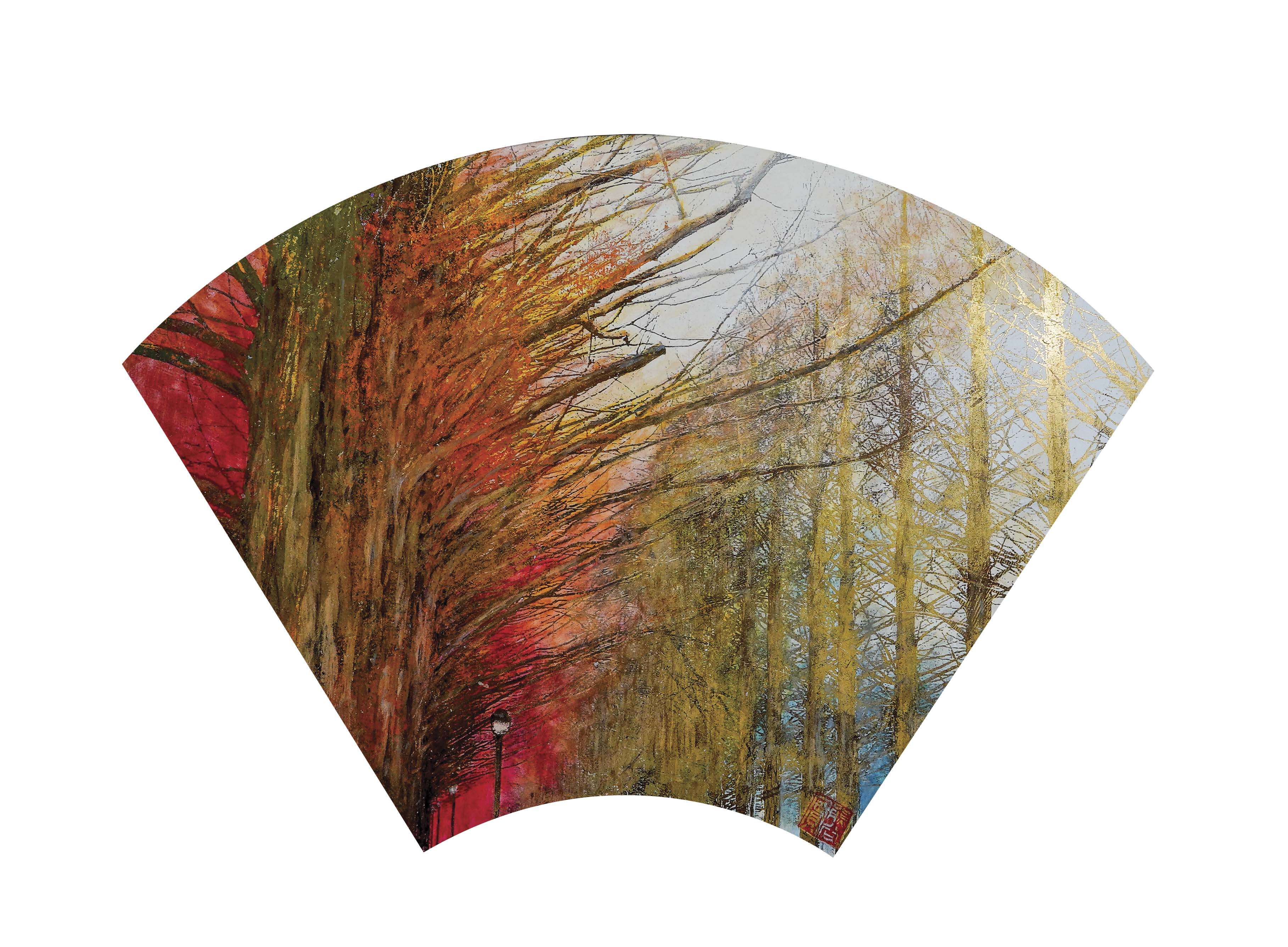

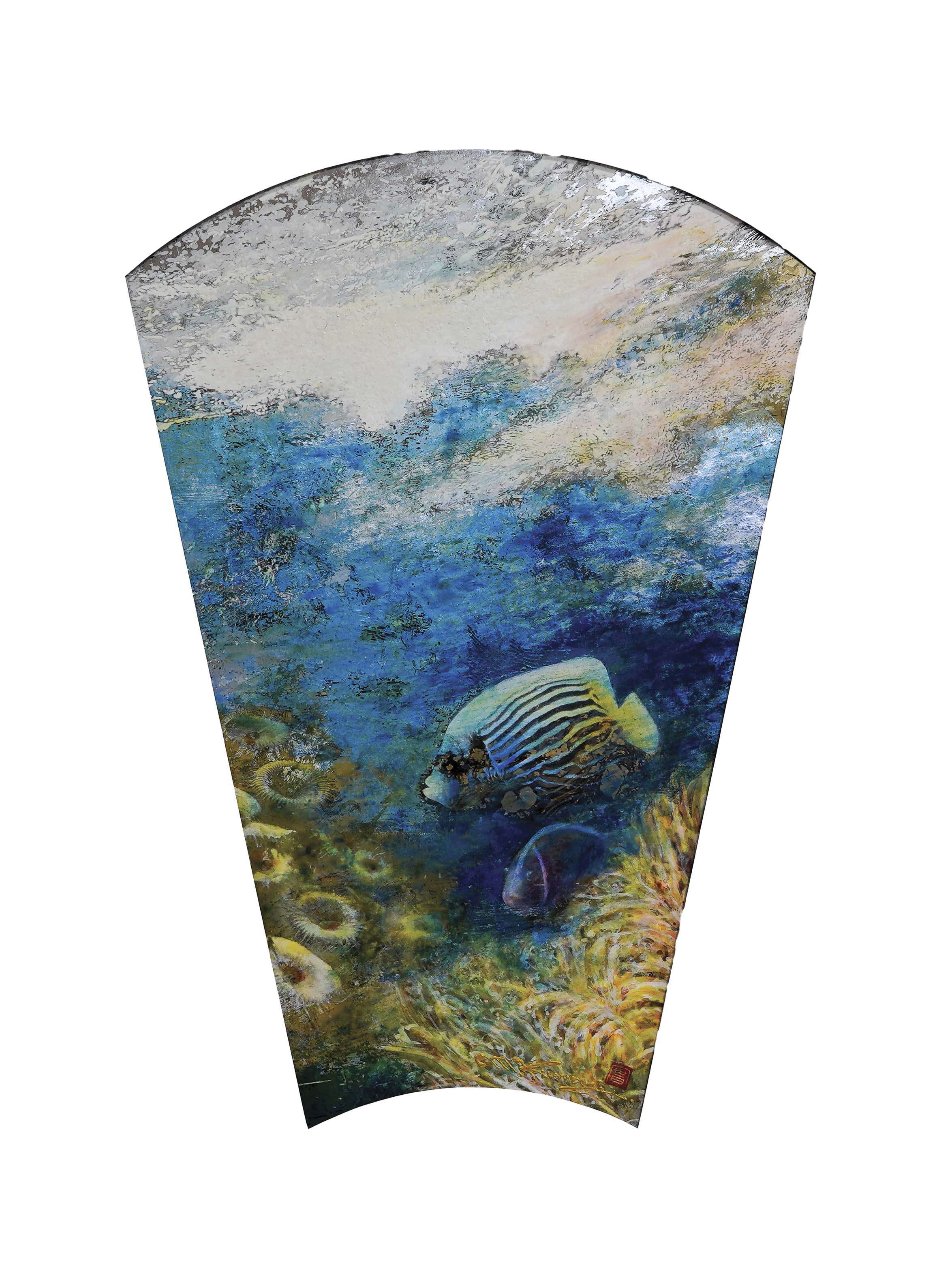
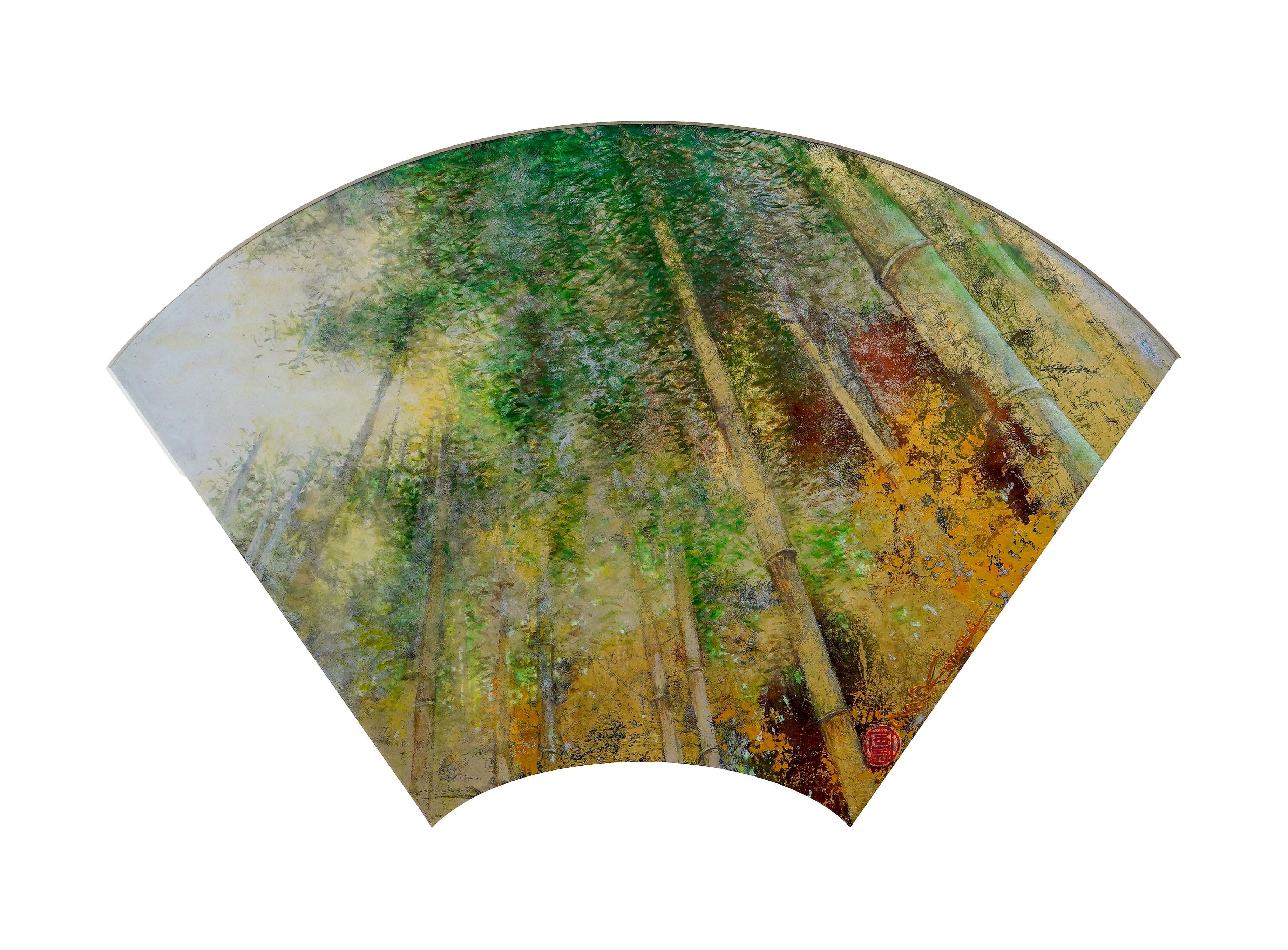
At the Bikaner House Kalamkaar Gallery, his first set of 15 works are suffused by warm sunlight and soft shadows, and lithe lines of leaves and stalks and branches of trees. For Minoru, it is the play of nature and its rhythms that bring about a series of works that are shaped like fans and vertical emblems that are a masterful study of the play of natural light within the landscape.
All his works on paper are a meticulous showcasing of the sophistication of the artist’s Impressionist technique, in its verdant vitality. From the earth-toned surface of land to the depths of oceans, each scene is a manifestation of love for the planet.
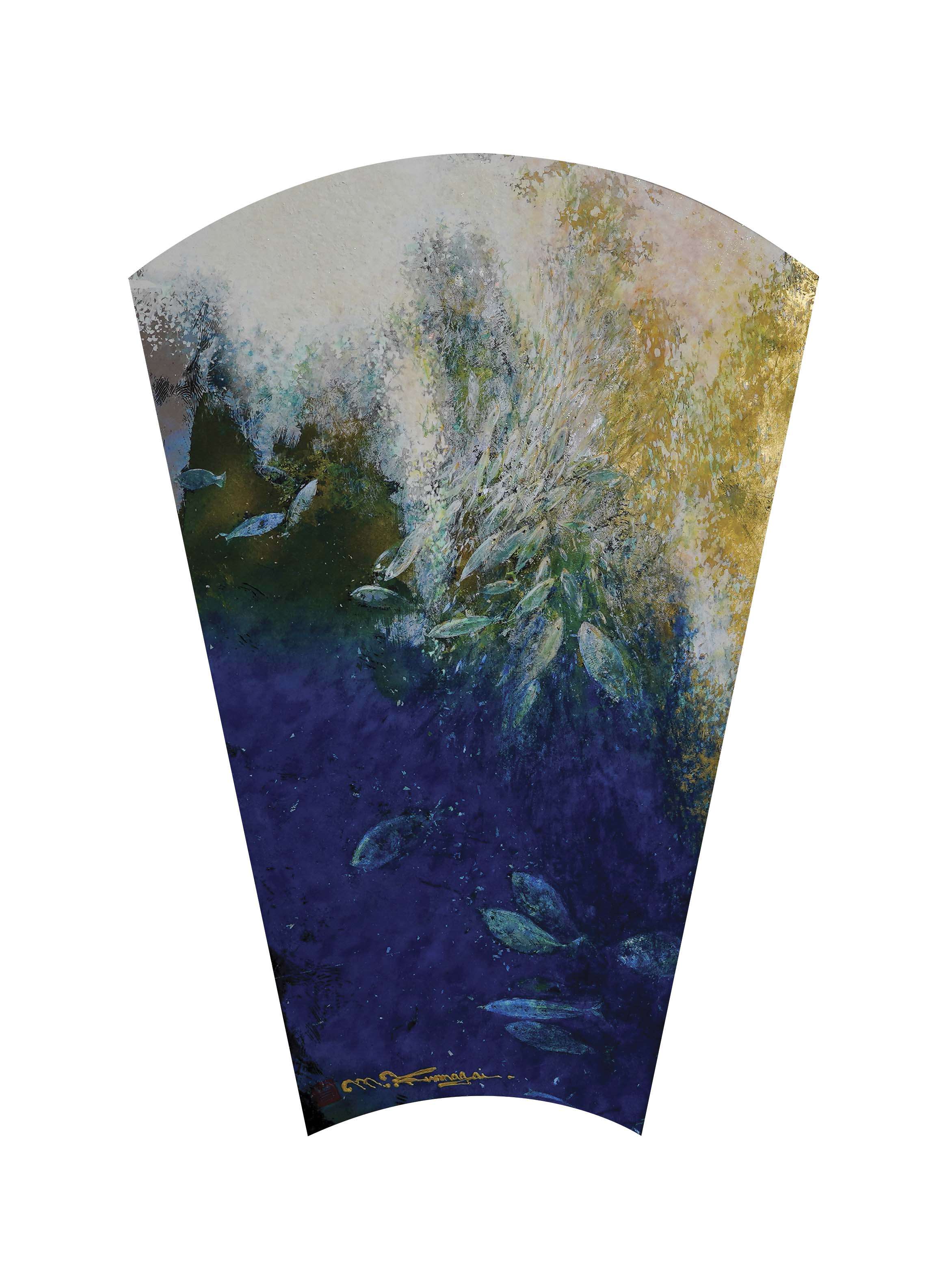

In its vertical offerings, Minoru presents intriguing views of lush greenery, as well as bustling blue hues, and secluded corners of carefully cultivated, gorgeous garden fragments he captures from his experience, as well as memories. Each of these set of 15 finely shaped entities are filled with a richly nuanced play of colour, and each stroke of colour, as well as contour, is more about picking out details within the foliage that he observes and absorbs.
These paintings provide us with a window into the environment of his own favourite places in Japan during these years, a subject that captivates him throughout many seasons.
When he paints fish, it is a thriving scene of the genesis of oceanic authenticity.

Minoru’s Saihaku
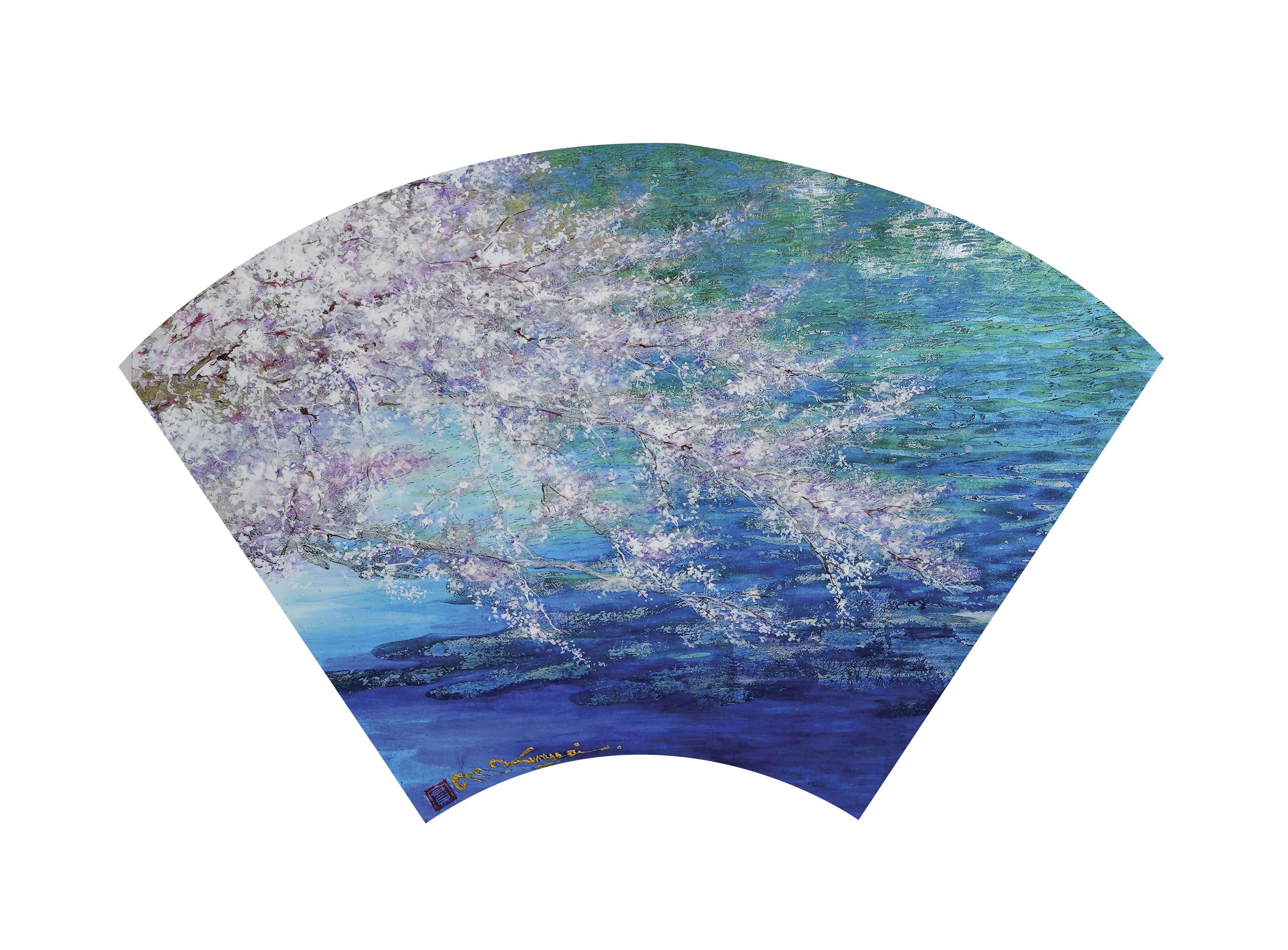
Of his work, he says, “Saihaku” is the name I’ve given to this style of painting that I developed. It uses various types of foil—gold leaf, silver leaf, holographic foil, coloured foil, etc.—as a base, and then incorporates traditional Japanese painting pigments and acrylic paints to effectively showcase the brilliance of the foil.
It’s a work of art that blends traditional and modern techniques. It’s a contemporary Japanese painting style that uses a variety of foils and is coloured with paints. It’s difficult to explain, but that’s the best way I can describe it in words.”

For one who has travelled the world with his work, he also adds: “ While respecting traditional Japanese painting techniques, I express myself with modern, innovative techniques and use a variety of foil materials to create a new style of “Saihaku”.
He has a silent, gently flowing aesthetic in which his design language of nature’s accents and elements are centred on the idea of the existence of the spirit that rests within its own grace in the realms of precision, subtle beauty and the power of its own presence.

Each work in this exhibition of a small suite represents both form and function in the paradigms of nature’s bounty, all finding their own balance in perfect harmony. Man is more than a witness; man is the emblematic symbol of one who treasures nature’s rhythms in its entire symbolism of nurturing eternal notes of time’s treasures.

Ancient Temple aura
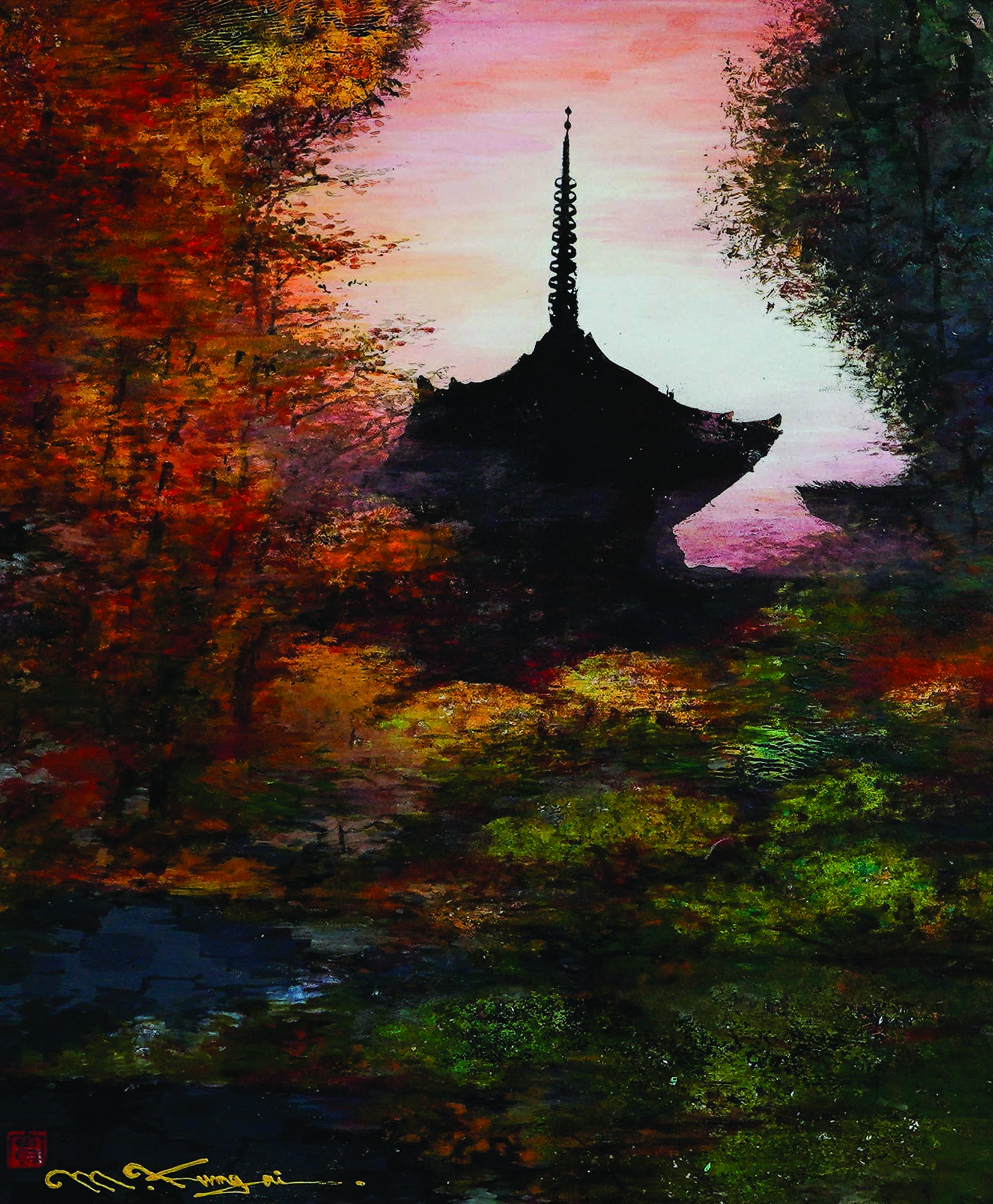
Amongst these 50-odd works is one silhouette of the famed Kiyomizu temple in Kyoto. Over 1250 years have passed since the foundation of Kiyomizu-dera Temple. Halfway up Mt. Otowa, one of the peaks in Kyoto’s Higashiyama mountain range, stands the temple, to which large numbers of visitors come to pay their respects to Kannon, a deity of great mercy and compassion. For this reason, the temple is known as a “Kannon Reijo.”
‘Reijo’ is a Japanese word meaning a “holy place” where Kannon’s compassion is abundant.
He creates the temple with its spire and gives us a melancholic yet meditative composition that presents nature as a serene and sanguine accompaniment that washes over our entire being. In his handling of resonance and reflection, we see that the temple is known also for its autumnal aura.
It is said that the leaves turn stunning shades of red, vermilion and gold across hillsides, inside temple grounds and around parks and gardens all over the country.
Literally translated as “red leaves,” kōyō is to fall what cherry blossoms are to spring in Japan.
Both natural events bring the Japanese out en masse to celebrate the changing seasons, with hanami (cherry blossom viewing) parties in the springtime and momiji-gari (maple leaf viewing) in the fall.
Presented by Livngo Hospitality, this is a winsome debut.
Disclaimer
Views expressed above are the author’s own.
END OF ARTICLE