Vinay Kumar
There is a particular kind of optimism that feels productive but isn’t. It announces targets, celebrates milestones, and mistakes momentum for progress.
India’s electric vehicle story, at least so far, has been a little too comfortable with that kind of optimism.
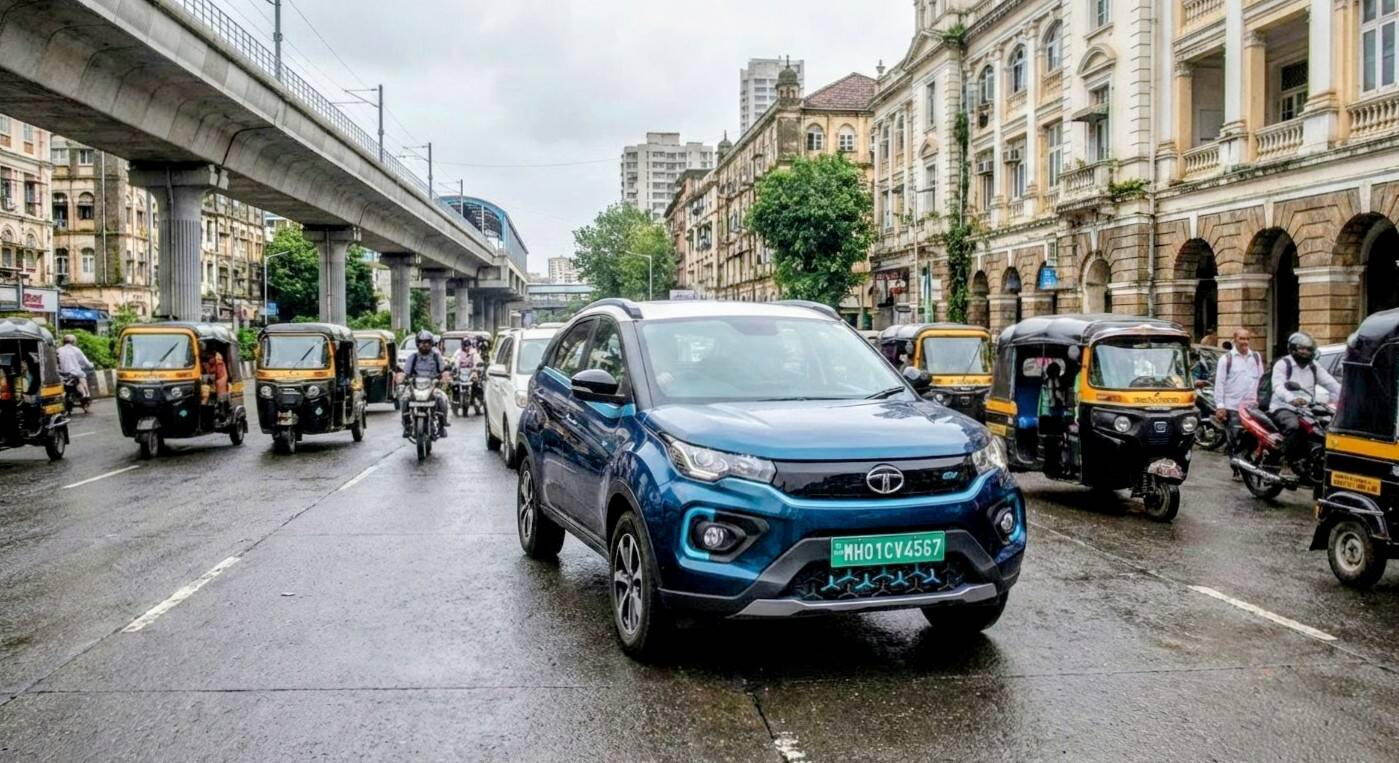

AI image
A report released this week by the Institute for Energy Economics and Financial Analysis puts a number to the discomfort. Between 2020 and 2025, India deployed roughly INR 2.23 lakh crore into its electric transport ecosystem.
Manufacturing, subsidies, charging infrastructure: five years of capital, political will, and policy architecture. By any measure, that is a serious commitment.
And yet it represents just 18% of what the country needs by 2030.
The 82% that remains is not a rounding error. It is Rs 10.26 lakh crore, or approximately $118 billion, that needs to flow into the sector in the next five years if India’s targets, 30% EV penetration in private cars, 80% in two and three-wheelers, 70% in commercial vehicles, are to mean anything beyond press releases. At current pace and structure, they will not.
The instinct, at this point, is to call for more government spending. That instinct is wrong, and it is worth saying so clearly.
India’s EV ambition does not have a subsidy problem. The FAME scheme worked as a demand catalyst. State-level incentives followed.
Manufacturers invested, primarily through internal accruals, which tells you the sector attracts confidence at the level of large, established players.
What the sector cannot do is bring smaller fleet operators, commercial three-wheeler drivers, and mid-sized logistics companies into the EV economy at scale. And the reason is straightforward: the cost of credit makes the math work against them.
Commercial EV borrowers in India today face interest rates between 15% and 33%. This is not a marginal inconvenience.
At 25% interest, the total cost of ownership advantage that an electric vehicle offers, lower fuel costs, fewer moving parts, reduced maintenance, is effectively erased. A fleet operator doing the numbers rationally will stay with diesel.
The EV remains a product for people who can absorb the financing cost, which means it remains, structurally, a premium product in a mass market.
This is the central contradiction in India’s EV story, and it is almost entirely a financing architecture problem.
Why are rates so high? Because lenders are pricing in uncertainty they cannot yet quantify. Battery degradation curves are not standardised. Residual values are speculative. Cash flow visibility for commercial operators is inconsistent.
In the absence of reliable data, lenders charge for risk the only way they know how: by making credit expensive. This is rational behaviour. It is also, left unaddressed, a structural barrier to the transition India says it wants.
The IEEFA report proposes an integrated financing platform that bundles credit guarantees, residual value protection, battery-as-a-service arrangements, and co-lending structures into a coordinated framework anchored by development finance institutions.
SIDBI for the MSME and small fleet segment. IIFCL for larger commercial operators and institutional buyers. The logic is sound: when risk is distributed across a platform rather than concentrated at the point of lending, the cost of credit falls.
And when credit becomes affordable, demand deepens, which in turn generates the performance data that lenders need to underwrite more confidently. A self-reinforcing cycle, but one that requires deliberate architecture to initiate.
India has done this before in other sectors. Solar power did not become cost-competitive by accident. Blended finance structures, viability gap funding, and institutional risk-sharing changed the investment calculus.
The EV sector needs a version of that same logic, applied to the financing stack rather than the technology.
There is a second gap that deserves more attention than it receives: charging infrastructure. Of the INR 20,600 crore estimated to be needed in public charging by 2030, only 9.6% has been deployed. Charger count has grown, from 5,151 in 2020 to roughly 39,485 today, but the ratio of chargers to EVs remains well below global benchmarks.
The business model is, frankly, still broken. Low utilisation rates, high capital costs, and uncertain revenue streams make charging infrastructure a difficult pitch to private investors without some form of structural support.
This matters beyond convenience. Range anxiety is a behavioural barrier as much as a technical one. People who worry about whether they can charge their vehicle will not buy one.
No amount of subsidy on the vehicle price compensates for the infrastructure that feels thin. The charging gap, if unaddressed, will put a ceiling on EV adoption that no manufacturing push can overcome.
What India needs now is not more ambition. The 2030 targets are set. What it needs is a grown-up conversation about capital structure, risk allocation, and financial plumbing. These are unglamorous subjects.
They do not make for compelling political announcements. They do not photograph well at auto expos. But they are the actual determinants of whether the transition happens at scale or remains confined to urban, premium, and policy-insulated pockets of the market.
The binding constraint, as the IEEFA report puts it, is not a lack of capital in the system.
It is how EV risk is priced. Capital is available. It is sitting in institutional coffers, in insurance funds, in foreign climate finance pipelines, waiting for investable structures. The job now is to build those structures, not to celebrate the 18% that has already arrived.
India’s electric mobility story is real. The intent is serious, the industrial base is developing, and the political commitment, at least rhetorically, is consistent.
But intent, without a functioning financing architecture beneath it, is just aspiration. And aspiration, at INR 10.26 lakh crore short of the goal, is not enough.
The next five years will not be won on policy. They will be won, or lost, on plumbing.
Disclaimer
Views expressed above are the author’s own.
END OF ARTICLE