
 Vinay Kumar
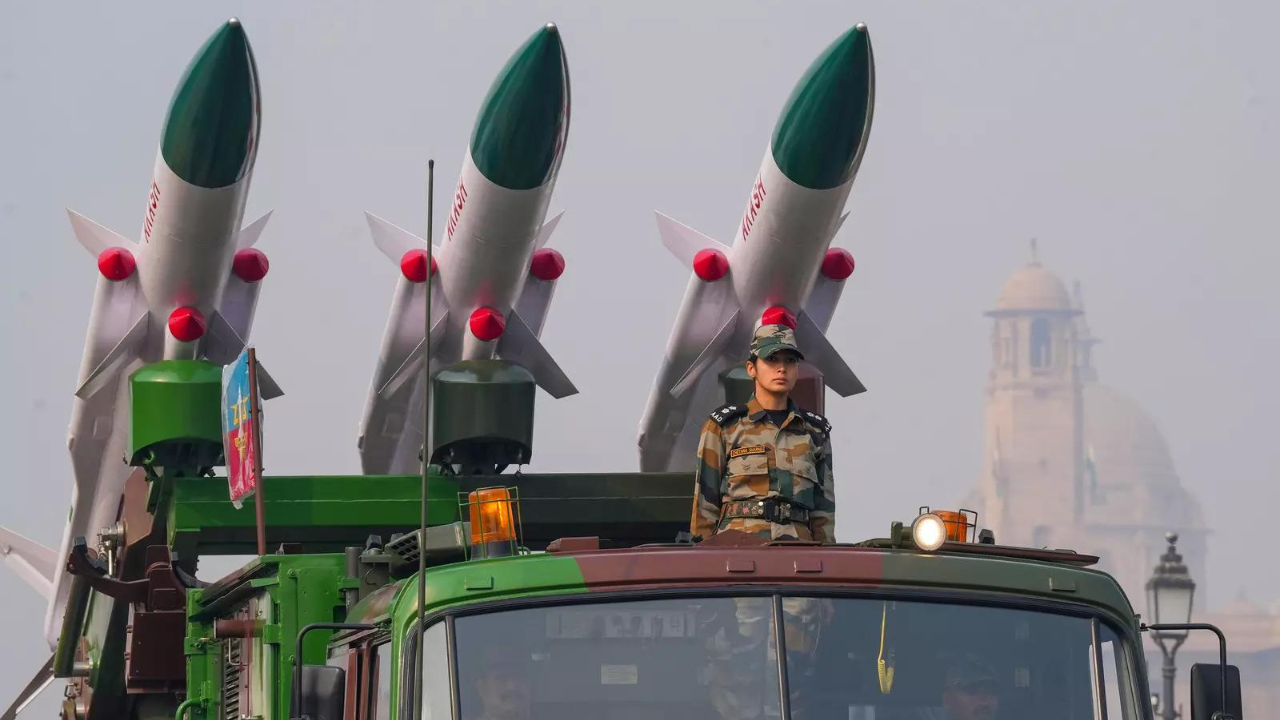

On 10 February 2026, the ministry of defence quietly placed on its website a draft that may prove to be one of the most consequential reforms in India’s military modernisation journey: the Defence Acquisition Procedure (DAP) 2026. At first glance, it appears to streamline categories, tweak indigenous content thresholds, and fast-track trials. But embedded within its clauses lies a strategic pivot that goes far beyond procurement mechanics.
The most transformative shift is philosophical: India is moving from technology transfer to intellectual property control. My interactions and talks with the Defence Secretary Rajesh Kumar Singh bring out the first-ever account of transformative policy changes which come out of his bold, no-nonsense approach towards defence procurement in India.
Under DAP 2026, bidders must ensure that the intellectual property rights (IPR) for platform design are “licensed in perpetuity by the original IPR holders to the MoD.” This is a marked departure from the earlier formulation under DAP 2020, which required licensing only for the “full life of the platform and subsequent upgrades.” The difference is not semantic. It is structural.
For decades, India has acquired platforms—fighters, warships, artillery systems—only to discover that design authority, source codes, or system-level integration rights remained outside sovereign control. Upgrades required foreign approvals. Integration of indigenous weapons met contractual barriers. Even routine modifications were hostage to the original equipment manufacturer. DAP 2026 seeks to end that vulnerability.
The IP turn: Ending structural dependence
Perpetual licensing alters the balance of power. It means India demands enduring design access.
Defence Secretary Rajesh Kumar Singh explains the objective behind the policy thrust, saying, “Indian design is given priority and weightage in the procurement process. And at the same time, the capability enhancement is not lost sight of.”
This shift reflects hard-earned lessons that platforms outlive geopolitical alignments, and the upgrades increasingly define combat effectiveness. Software, source codes, and design data now matter more than hardware.
By mandating perpetual licensing from original IPR holders, the MoD is explicitly attempting to avoid a scenario where India owns the metal but not the mind of the machine. The learning curve might have come from the operation sindoor over the issue of weapon integration with the existing assets.
In an era of AI-enabled warfare, electronic warfare suites, and rapidly evolving sensors, control over architecture is operational sovereignty.
Rationalisation—where and how
DAP 2026 reduces procurement categories from five to four: Buy (Indian – Indigenous Design, Developed & Manufactured), Buy (Indian) & Manufacture in India, Buy (Global) and Buy (Global) & Manufacture in India.
This rationalisation does tighten strategic signalling. The hierarchy places indigenous design at the top, reinforcing that Indian design authority—not just Indian assembly—defines priority.
The formal inclusion of a definition for “Indigenous Design” (absent in DAP 2020) further clarifies intent. Design ownership is now codified as a national capability benchmark, not an aspirational slogan.
Raising the indigenous bar
Draft DAP 2026 increases the Indigenous Content (IC) requirement in Buy (Indian-IDDM) from 50% to 60%. More significantly, it incentivises local raw material use and critical technology absorption. Even Buy (Global) cases now carry a 30% IC requirement—previously zero.
This broadening of indigenous expectations signals that “global” no longer means unconstrained import.
The new fast lanes: Long-term bulk acquisition
The draft introduces important accelerators: providing the industry with demand visibility and fostering de facto national champions.
The best of draft DAP 2016: Low-Cost Capital Acquisition (LCCA)
This is the most crucial and salient point of DAP reform–no earnest money deposit for an exemption for MSMEs and startups, and also up to 75 crore.
This “Trial-to-scale acquisition mechanism” fast lane allows initial orders up to Rs 75 crore, with a total allocation of Rs 2000 crore. It is tailor-made for drones, UAVs, electronic warfare systems, and other fast-evolving technologies.
If trials succeed, bulk orders can follow without repeating the entire evaluation cycle. For start-ups, this could be transformative: a Rs 75 crore order is not a pilot project; it is scale validation.
With Acceptance of Necessity (AoN) validity reduced to two months (from six), LCCA embeds urgency into the system.
Approval powers for AoN, RFPs, and Services Qualitative Requirements (SQRs) are further delegated. Crucially, AoN authorities can now flex financial thresholds case-by-case. This discretionary elasticity could reduce bottlenecks—if exercised transparently.
Trials, TRLs, and MRLs: Maturity Matters
DAP 2026 adopts Technology Readiness Levels (TRL) and Manufacturing Readiness Levels (MRL) as formal procurement inputs. Both must be declared at the RFI stage and reflected in the Annual Acquisition Plan.
It attempts: No more conflating prototypes with production-ready systems.
Additionally, it involves a two-stage trial (essential trials first, balance post-contract) and a single-terrain trial flexibility. Draft DPA 2026 directs compensation to all vendors whose equipment clears trials and, crucially, the involvement of subject experts involved in SQR finalisation.
And for the iDEX, it is aimed at the spiral development with assured orders up to five years. Industry looks at iDEX as a grant, not commercial funding.
However, the level of tech innovation in iDEX has been below the expectation. The military does not recall any significant systems which come to mind. As I said, on the technology front, the government must appoint a person with great integrity and knowledge, out of regular coteries. Similar is the fate of the Technology Development Fund (TDF), where funding and outcome often clash; wonder if there are any breakthrough ideas in the prototypes.
No doubt, these reforms collectively reduce risk for the industry.
Ab initio single vendor in Indian-IDDM
Allowing single-vendor procurement in Indian-IDDM cases (for TRL 6–9 systems) acknowledges a market reality: deep-tech defence ecosystems are not always multi-vendor environments. This provision could accelerate indigenous champions—but it must guard against complacency and capture.
The real test
DAP 2026 reflects two strategic insights: Control of IP equals strategic autonomy, speed is a combat multiplier.
The perpetual licensing clause, however, will test global partnerships. Foreign OEMs may resist expansive IP access. Negotiations will grow tougher. But India’s market size and long-term demand visibility strengthen its bargaining position.
The question is not whether such reforms are ambitious—they are. The question is whether India can afford not to attempt them.
Policy shifts are necessary, but ultimately, the implementation will determine whether DAP 2026 becomes transformative or another well-intentioned manual.
However, some key risks include the over-bureaucratisation of TRL/MRL certifications. Again, discretionary misuse of threshold flexibility might crop up.
But if executed faithfully, DAP 2026 could mark the moment India better aligns procurement, industrial policy, and strategic autonomy.
For decades, India mastered the art of buying platforms. DAP 2026 signals an intent to break that reality institutionally through DAP.
In defence, sovereignty is no longer just about territory. It is about design authority. India seems determined to own it—perpetually. If Draft embraces the best, will make defence a tech revolution.
Disclaimer
Views expressed above are the author’s own.
END OF ARTICLE