
 Vinay Kumar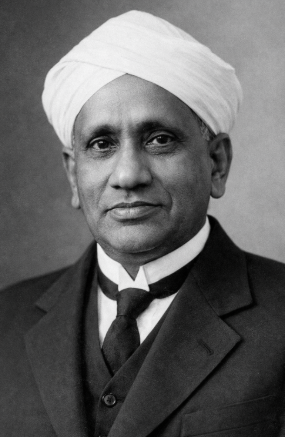
Sir C V Raman (7 November 1888 – 21 November 1970), the first Asian and non-White person to receive a Nobel Prize in Physics.
On February 28, 1928, Sir C.V. Raman demonstrated the Raman Effect: light changes wavelength and frequency when passing through a transparent material. That breakthrough won India its first Nobel Prize in Science in 1930. That date, marked as National Science Day, is more than a commemoration of a discovery—it is a celebration of curiosity, innovation, and the transformative role of science in shaping modern India.
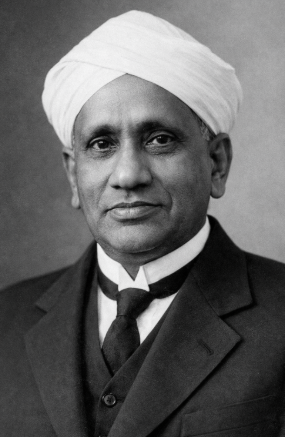

Remembering Sir C. V. Raman
Raman’s discovery explained how light scatters and changes wavelength when it passes through a transparent medium. This breakthrough laid the foundation for Raman spectroscopy, a technique widely used in physics, chemistry, medicine, and materials science. Raman’s story is even more inspiring because he made his discovery during colonial India, with limited resources but unwavering determination.
Raman believed that science thrives on curiosity. His legacy stays alive by encouraging generations of Indian scientists to ask questions, explore boldly, and innovate fearlessly. National Science Day serves as a reminder that outstanding discoveries often begin with simple observation and a curious mind.
Science in Everyday Life
Science is deeply embedded in our daily lives, often in ways we do not consciously notice. Science makes progress possible and raises living standards. It powers our homes with electricity, connects millions of people through smartphones, protects public health with vaccines, and transforms how governments operate with digital technology.
In India, scientific advancements have revolutionized agriculture through improved seeds and irrigation techniques, strengthened healthcare through medical research and affordable medicines, and enhanced connectivity through digital infrastructure. Science is not distant from society—it is the invisible force powering development and improving lives.
India’s Rise in Science and Technology
India has emerged as a global leader in science and technology, with remarkable achievements across multiple fields. The Indian Space Research Organisation (Isro) has made history with cost-effective and successful missions such as Chandrayaan, Mangalyaan, and Aditya-L1. India’s lunar mission, which achieved a soft landing near the Moon’s south pole, demonstrated the country’s growing technological capability and scientific vision.
In healthcare, India’s pharmaceutical and biotechnology sectors have played a crucial role globally, especially during the Covid-19 pandemic. Indigenous vaccine development and large-scale medicine production showcased India’s scientific strength and commitment to global well-being.
Science and innovation also drive India’s rapidly growing startup ecosystem. From artificial intelligence and renewable energy to biotechnology and space technology, young entrepreneurs are translating scientific ideas into real-world solutions, strengthening the nation’s innovation landscape.
Promoting Scientific Temper
One of the key goals of National Science Day is to foster scientific temper—a mindset grounded in inquiry, rational thinking, and evidence-based reasoning. Scientific temper encourages individuals to question myths, challenge misinformation, and make informed decisions.
In an era characterized by the rapid flow of information, a scientific temper is more crucial than ever. It helps society address challenges such as climate change, health crises, and sustainable development. Throughout India, schools, universities, and research institutions commemorate National Science Day with science fairs, lectures, exhibitions, and community outreach activities that bring science closer to the public and stimulate students’ curiosity.
Science Education and Young Minds
India’s future as a knowledge-driven nation relies on cultivating young scientific minds. National Science Day illustrates the importance of science education in promoting creativity, critical thinking, and innovation. Modern education emphasizes experiential learning, encouraging students to experiment, explore, and address real-world problems rather than simply memorizing facts.
Innovation labs, science clubs, and research initiatives empower students to engage actively with science. Teachers play a crucial role in this process by inspiring curiosity and guiding students in scientific exploration. Encouraging children to pursue science not only fosters future scientists but also nurtures problem-solvers and innovators who can contribute to national progress.
Women in Science: Driving Inclusive Innovation
Women have made substantial contributions to India’s scientific advancements, ranging from pioneering researchers to space scientists and technologists. However, gender disparity in STEM fields remains a significant issue. National Science Day underscores the need to create equal opportunities for women in science and technology.
To get more women interested in science careers, it’s important to offer scholarships, mentorship programs, and workplaces that are open to everyone. Increasing women’s participation in science enhances innovation by introducing diverse perspectives and solutions. Celebrating women scientists motivates young girls to envision a future without limitations and pursue careers in research and technology.
Science for Sustainable Development
As the world confronts environmental challenges, science is essential for developing sustainable solutions. Issues such as climate change, pollution, water scarcity, and biodiversity loss demand scientific innovation and responsible action. India has made great progress in renewable energy, especially in solar and wind power. This has helped the world become more sustainable.
Scientific research is also advancing sustainable agriculture, clean technologies, and climate-resilient infrastructure. National Science Day illustrates the importance of science in building a greener, more sustainable future for generations to come.
Challenges and Opportunities
Despite significant progress, Indian science faces obstacles such as limited research funding, infrastructure gaps, and the need for stronger collaboration between academia and industry. Addressing these challenges requires increased investment in research and development, policy support, and encouragement for innovation.
India’s youthful population and expanding digital ecosystem present vast opportunities. Emerging technologies such as artificial intelligence, quantum computing, biotechnology, and space science offer pathways for growth and global leadership. By fostering innovation and supporting research, India can bolster its position as a scientific powerhouse.
The Role of Science Communication
Effective science communication is essential to making science accessible and understandable for society. Simplifying complex ideas, promoting awareness, and encouraging public engagement help build trust in science. Media, educators, and scientists must work together to bridge the gap between research and the public.
National Science Day encourages scientists to share their work with society, inspiring curiosity and appreciation for science. When science becomes part of everyday conversation, society becomes more informed, rational, and progressive.
Looking Ahead
India is poised to undergo a significant scientific revolution. With strong policy support, investment in innovation, and a culture of curiosity, the nation can lead in emerging scientific fields. National Science Day is not just about celebrating past achievements but about envisioning a future shaped by science, innovation, and sustainable development.
Conclusion
National Science Day celebrates the spirit of discovery and the power of knowledge. From Sir C. V. Raman’s groundbreaking work to India’s modern scientific achievements, the journey reflects resilience, innovation, and determination. Science is not merely a discipline—it is a way of thinking, a tool for progress, and a force that transforms societies.
As we celebrate National Science Day, let us embrace curiosity, promote scientific temper, and support innovation. By investing in science and nurturing young minds, India can build a brighter, more sustainable, and knowledge-driven future—one discovery at a time.
Disclaimer
Views expressed above are the author’s own.
END OF ARTICLE