 Vinay Kumar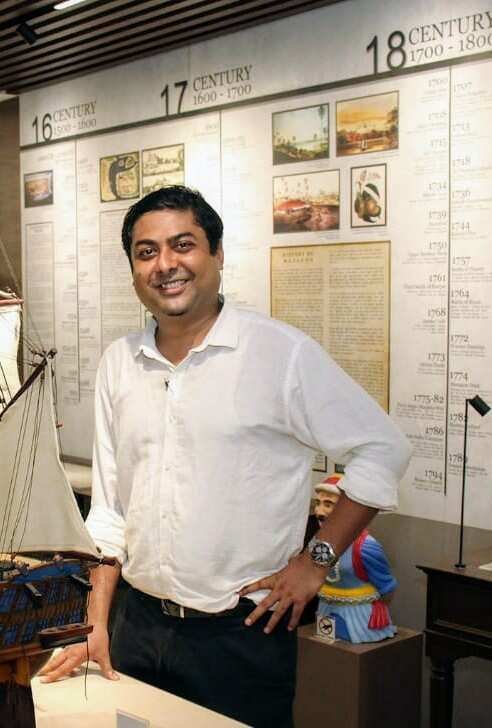
India is inching closer to two of the most consequential defence procurement decisions in its recent history: the acquisition of 114 multi-role fighter aircraft under the MRFA programme—now increasingly centred on the Rafale—and the long-awaited Project-75I submarine programme.
In my talk with Defence Secretary Rajesh Kumar Singh, the quest for 114 Multi Role Fighter Aircraft (MRFA) has finally concluded with Dassault Aviation Rafale.
Even after years of delays and shifting priorities, both deals will shape the trajectory of India’s military capability and will be seminal for the Indian defence acquisition for decades. With IC content, source code, weapon—domestic weapon– and integration, the negotiation process for Rafale will test the nerves of both in all fairness for meaningful “indigenisation”.
Yet the real question is not whether these deals will eventually be signed. It is whether India can structure them in a way that truly advances indigenisation and operational sovereignty, rather than merely expanding its inventory of sophisticated foreign platforms.
That is not the conclusion. Critically, India’s 114-aircraft MRFA (Multi-Role Fighter Aircraft) programme raises an important strategic question: can India realistically run three major fighter programmes simultaneously?
Those programmes would include: Dassault Rafale under the MRFA acquisition, HAL Tejas Mk2 (Medium Weight Fighter) and Advanced Medium Combat Aircraft (AMCA), India’s fifth-generation stealth project?
Rafale MRFA: Complexity Beyond the Aircraft
The process surrounding the proposed government-to-government Rafale deal has begun to move, but its timeline remains uncertain. Industry officials and sources within the Indian Air Force (IAF) and the Ministry of Defence suggest that a final agreement is unlikely before late 2026 or even early 2027.
That delay reflects the extraordinary complexity of the negotiations. The deal involves not only the purchase of aircraft but also domestic production arrangements, technology transfer protocols, industrial partnerships, delivery schedules and the fine print of long-term support.
On paper, indigenisation commitments—whether framed as 40% or even 50% domestic content—sound promising. In practice, however, these numbers often mask deeper dependencies. As Defence Secretary Rajesh Kumar Singh put it candidly while discussing negotiations, “We are negotiating; we will do as much as possible.” The phrase captures both the ambition and the ambiguity surrounding India’s push for local manufacturing.
The challenge lies not merely in assembling aircraft in India, but in securing meaningful technological depth. Without it, domestic production risks becoming an exercise in licensed assembly rather than capability building.
New Variants, New Capabilities
The aircraft themselves will undoubtedly represent a significant technological step forward. Once the agreement is signed, the IAF is expected to receive the newer Rafale F4 variant and eventually the F5 configuration, rather than the earlier F3R standard delivered in the initial batch of 36 fighters inducted by 2022.
These newer variants promise important upgrades: enhanced connectivity, improved sensor fusion, advanced digital architecture and more capable software systems. In an era of network-centric warfare, these improvements could significantly strengthen the IAF’s operational effectiveness.
But the sophistication of these aircraft also brings new challenges—particularly when it comes to integrating indigenous systems and weapons.
The Source Code Constraint
One of the most sensitive issues in the Rafale ecosystem is access to source codes. As is common practice among advanced aerospace manufacturers, Dassault has not provided full source code access for the Rafale systems currently operated by India.
Source codes govern the aircraft’s sensors, avionics and weapons integration. Without them, India cannot independently modify or deeply customise the aircraft’s software architecture.
The IAF can still integrate external systems through a controlled interface that allows Indian missiles, electronic warfare suites or helmet-mounted displays to communicate with the aircraft. However, such integration occurs within limits set by the original manufacturer.
This arrangement ensures operational usability but restricts deeper autonomy. As threats evolve and new weapons are developed domestically, India’s ability to rapidly integrate them without external approval remains constrained.
That is why technology-transfer negotiations are not merely a technical detail in the MRFA discussions—they are central to India’s strategic objectives. True self-reliance requires more than production lines; it requires control over the technologies that define future combat capability.
The Submarine Decision—clear for cabinet note(CCS)
Running parallel to the Rafale negotiations is another crucial procurement: Project-75I, India’s next conventional submarine programme. India’s long-delayed Project-75I (P-75I) submarine programme is finally approaching a decisive stage, with the proposal expected to move toward Cabinet approval.Germany’s Thyssenkrupp Marine Systems (TKMS) has emerged as the frontrunner foreign collaborator after other competitors gradually withdrew from the tender.
The Defence Secretary has confirmed that it is going to happen soon. During the talk, he tells me that it is just now off to the Cabinet Committee on Security (CCS).
The project aims to build six advanced conventional submarines for the Indian Navy under the Strategic Partnership model, combining foreign design expertise with domestic shipbuilding.
It is a clean sheet, much needed and will require less negotiation as compared to Rafale. As the focus area is advanced submarines equipped with air-independent propulsion (AIP) and modern combat systems, capabilities essential for maintaining underwater deterrence in the increasingly contested waters of the Indo-Pacific.
Additionally, what P75I needed fits well with the Indian Navy: TKMS is offering an advanced variant of its Type-214/Type-212 family, widely regarded as among the most capable conventional submarines in service globally. These submarines are known for fuel-cell-based AIP systems that allow extended submerged operations, low acoustic signatures designed for stealth, advanced combat management systems and compatibility with modern heavyweight torpedoes and cruise missiles.
If cleared, it will become one of the largest naval procurements in India’s history and a critical component of New Delhi’s effort to reinforce underwater deterrence in the increasingly contested Indo-Pacific.
Like the MRFA programme, Project-75I also seeks to combine foreign technology with domestic shipbuilding. And like the fighter deal, its ultimate success will depend on how effectively technology transfer and industrial partnerships are structured.
Tejas2 to AMCA—we need all
Taken together, these two programmes represent more than procurement exercises. They are tests of India’s defence-industrial strategy. Each programme serves a different role in India’s long-term airpower structure. But together they also create enormous financial, technological and industrial pressure.
However, large imports historically tend to absorb capital budgets, leaving indigenous programmes vulnerable to delays.
Here, the defence secretary assures me, on a very positive note: “budget is not an issue”.
India must balance three competing priorities: rapidly strengthening its military capabilities, ensuring value for money in large defence contracts and building genuine domestic technological capacity—Kumar’s priorities, national priorities.
Achieving all three simultaneously is difficult—but not impossible. It requires unusual clarity in structuring government-to-government arrangements, careful sequencing of domestic production and transparent management of complex technology integration.
The Rafale and Project-75I decisions will inevitably face criticism—over costs, timelines and foreign dependence. But if negotiated wisely, they could also accelerate India’s transition from a major arms importer to a country capable of designing, integrating and producing advanced defence systems.
The stakes, therefore, extend far beyond aircraft numbers or submarine tonnage. These deals will reveal whether India’s long-stated goal of defence self-reliance is finally moving into what we call advanced technology, advanced reality.
Disclaimer
Views expressed above are the author’s own.
END OF ARTICLE