Vinay Kumar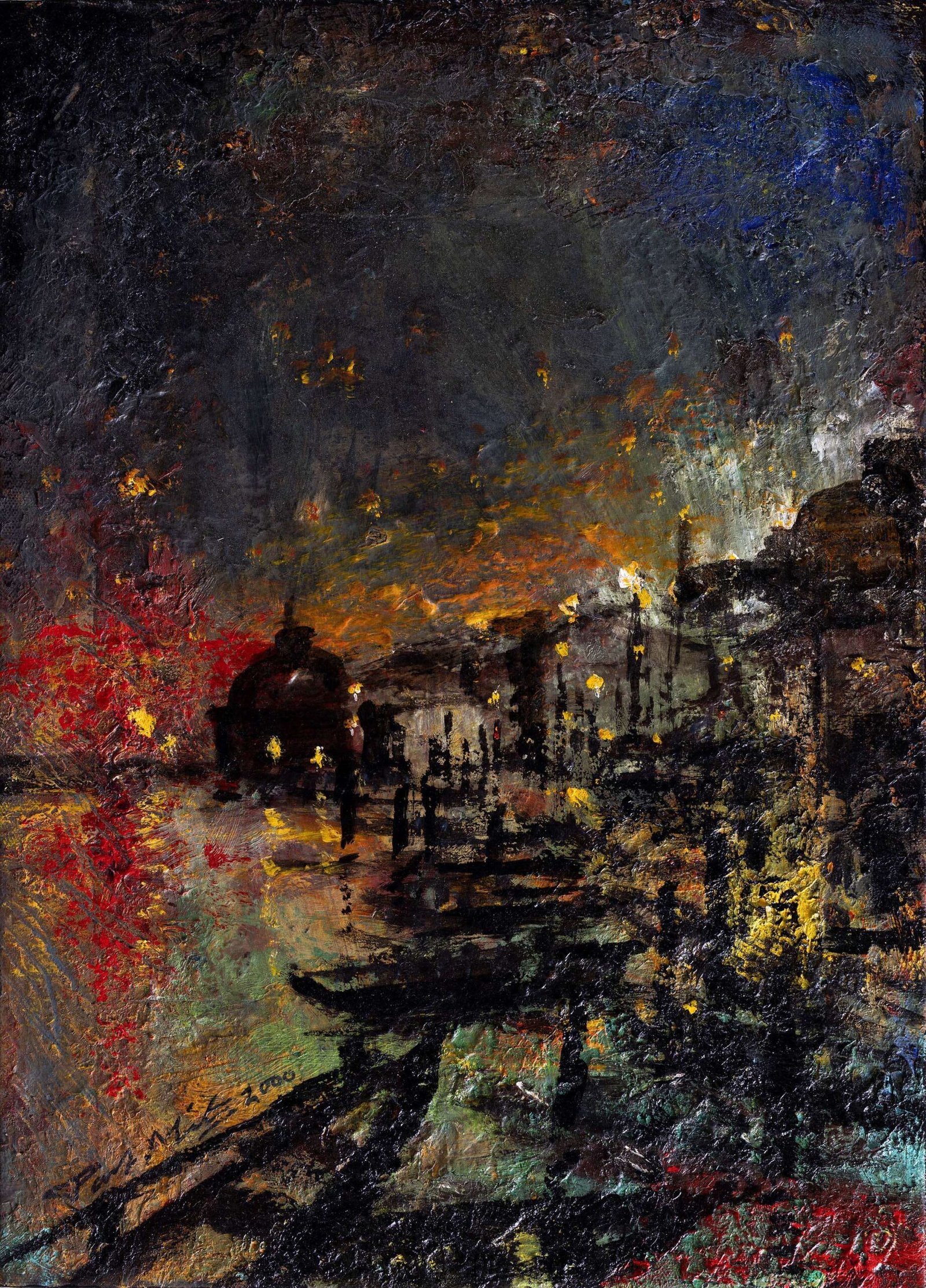
Can there be a city as evocative—and romantic—as Venice ? As actor and art lover Sharmila Tagore stood and gazed at Paresh Maity’s magnum opus of Venice compositions as resonant embers on canvas as well as dulcet drawings, Art Alive’s unveiling took on shades of memory, experience and historicity. And Sunaina Anand can well pat herself on the back for a design display that went beyond the beauty of vintage vitality.
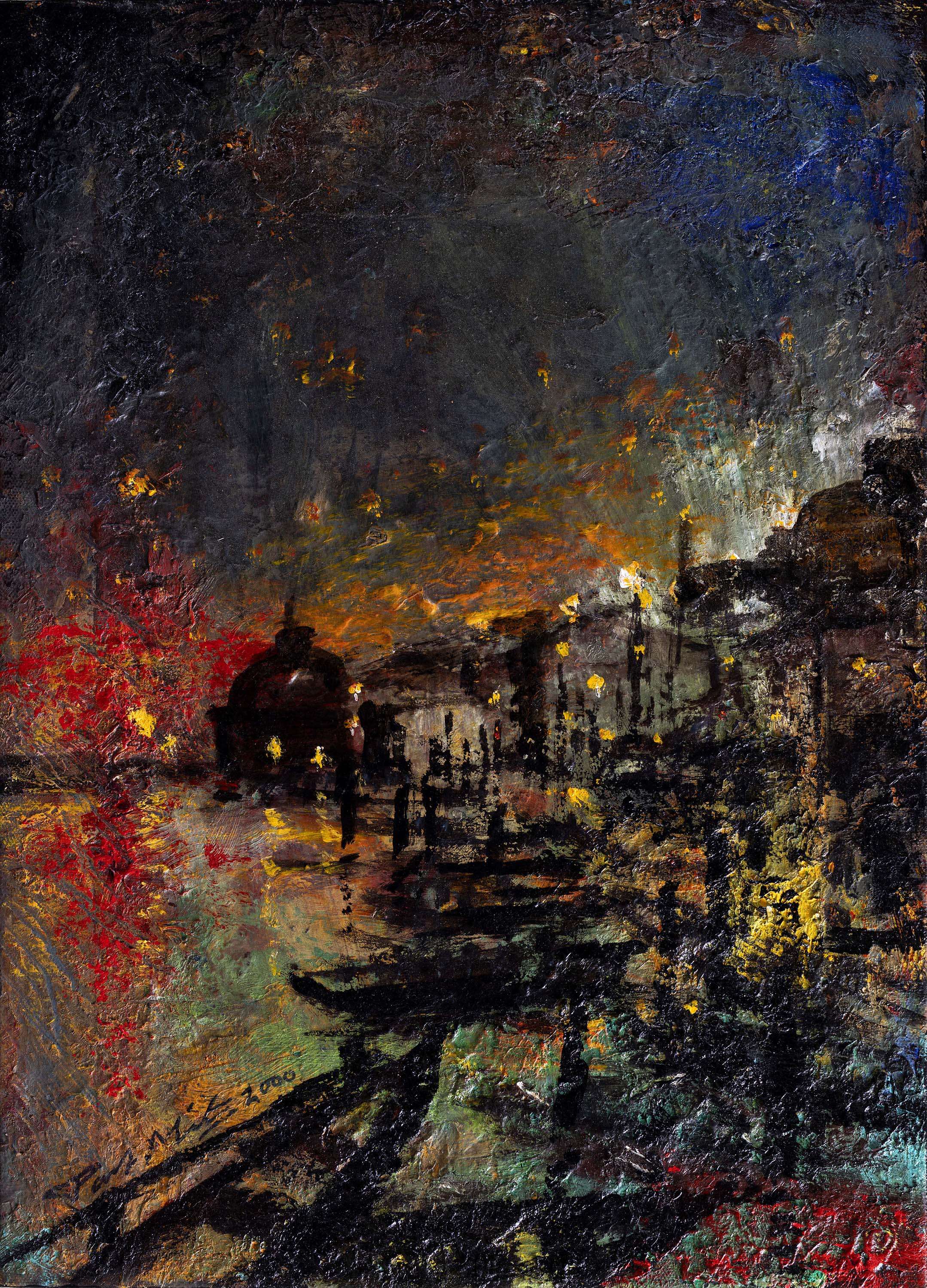

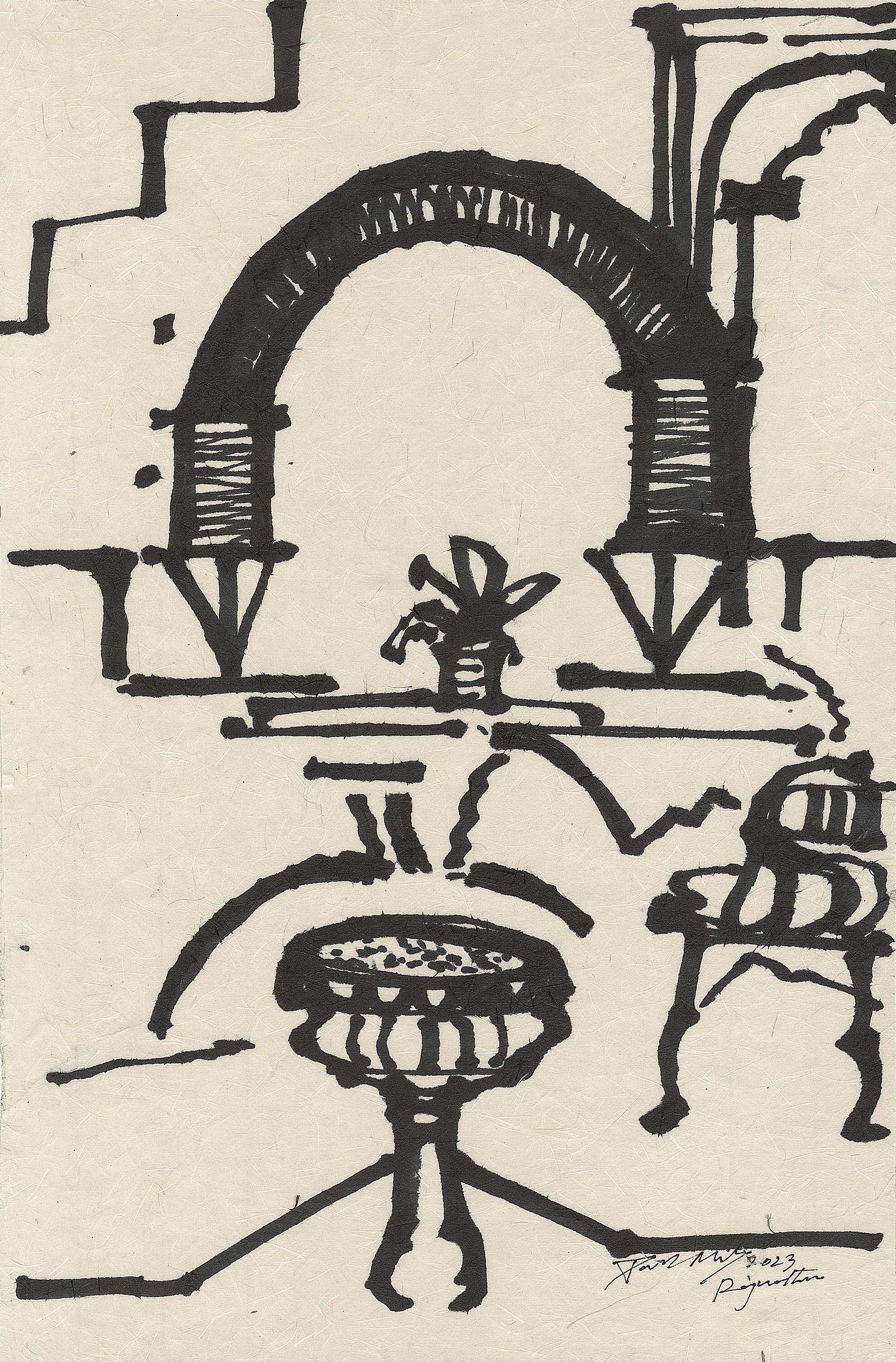
From the Renaissance Masters tondos to smaller slim frames that conjure up myriad images, Maity gave us an odyssey of a flashback more than decades old that brought alive Venice’s canals and scenic landscapes in impasto creations that were a double dip in nostalgia.
“ I wanted to go back to the places I loved,”said he as Sharmila stood and silently drank in the vignettes and vistas of Venice one by one.
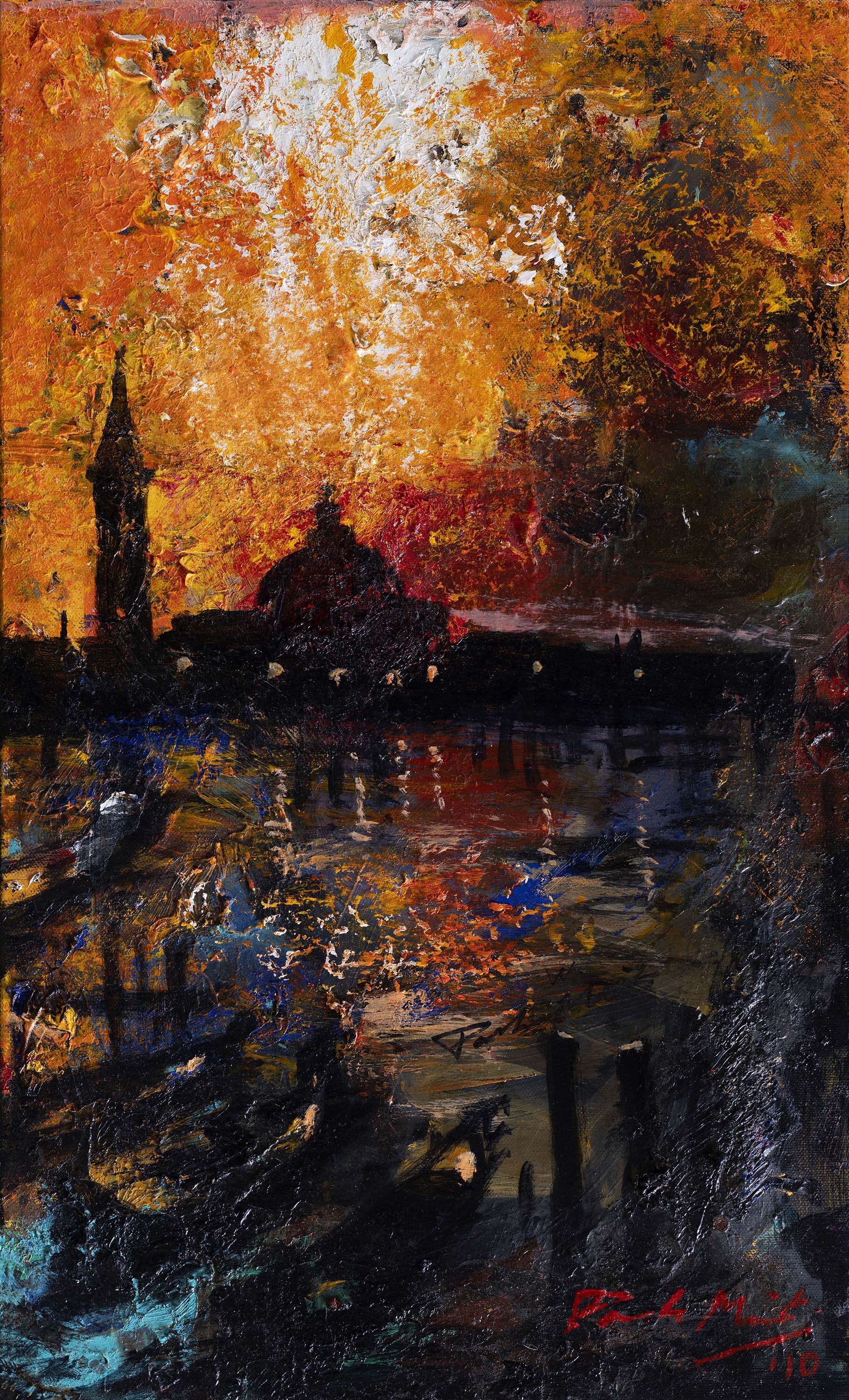

With a fine hand that weaves impressionist and abstract expresssionism, he hints at gondoliers that navigate the waters bordered by Gothic, Baroque, and Renaissance palaces. He reminds us of the glory of St. Mark’s Square—its Byzantine basilica and towering campanile—all reflecting the wealth and power of the centuries when the Most Serene Republic of Venice ruled the seas and coastline, all the way down to the Greek islands.
But that’s not all .You step into another room and Kashmir wraps itself around your senses. On canvas it is impressionist strokes that seize Maity’s brushes.His explorations embrace new paradigms on the horizon. For Maity art is a really important space to unpack questions of passive and passionate relationships to it.
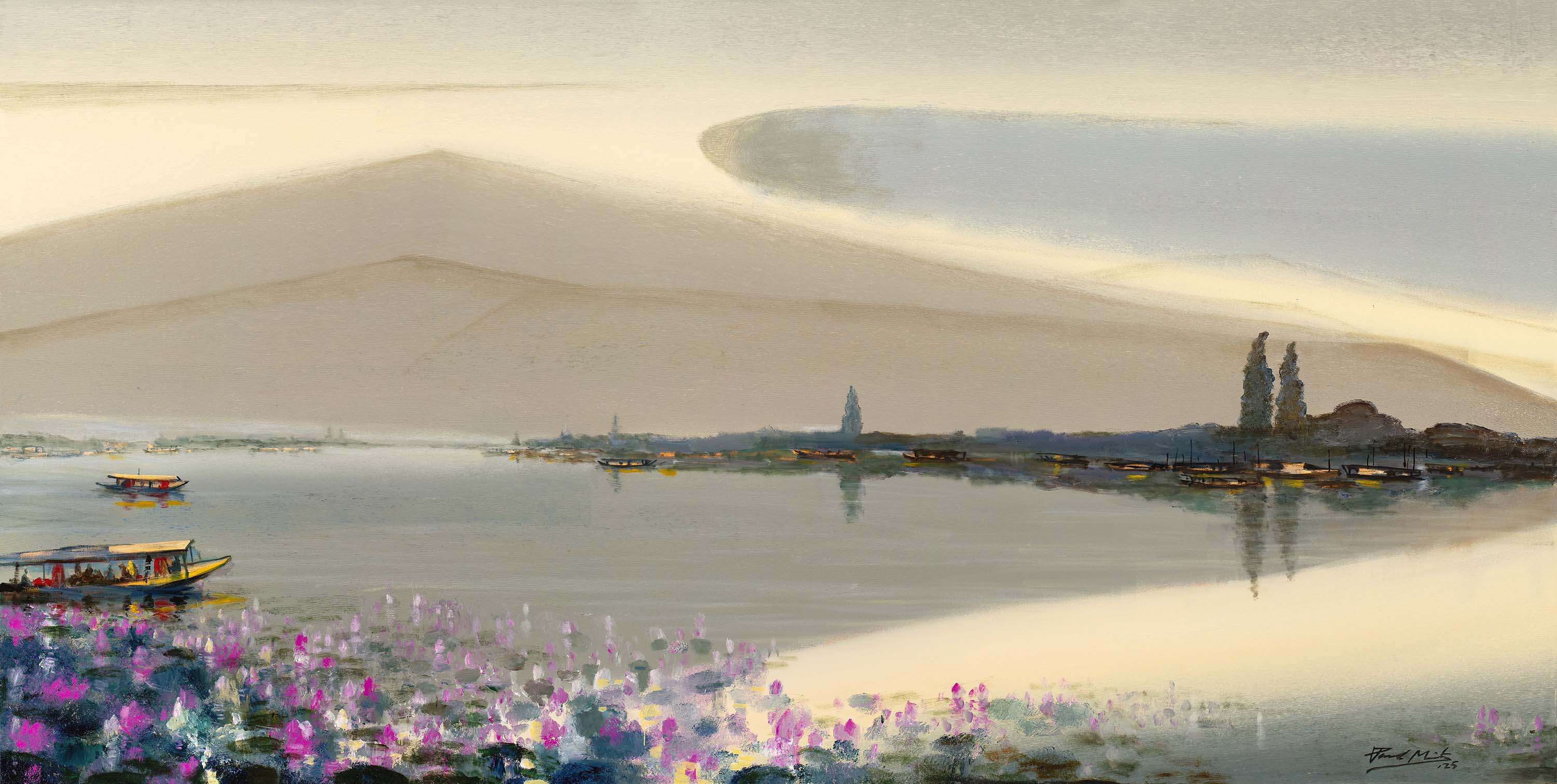

The Kashmir canvasses tell us that it’s important for artists not only to insist on being part of the conversation but even to develop new tools of scale.His brushes slide like satin across the canvas to create a buttercup yellow sky in resilient gold hues.Whispering feathery flowers float in silent sentience.Each room at Bikaner House’s CCA became a masterclass in painting as well as drawings with lithe lyricism.
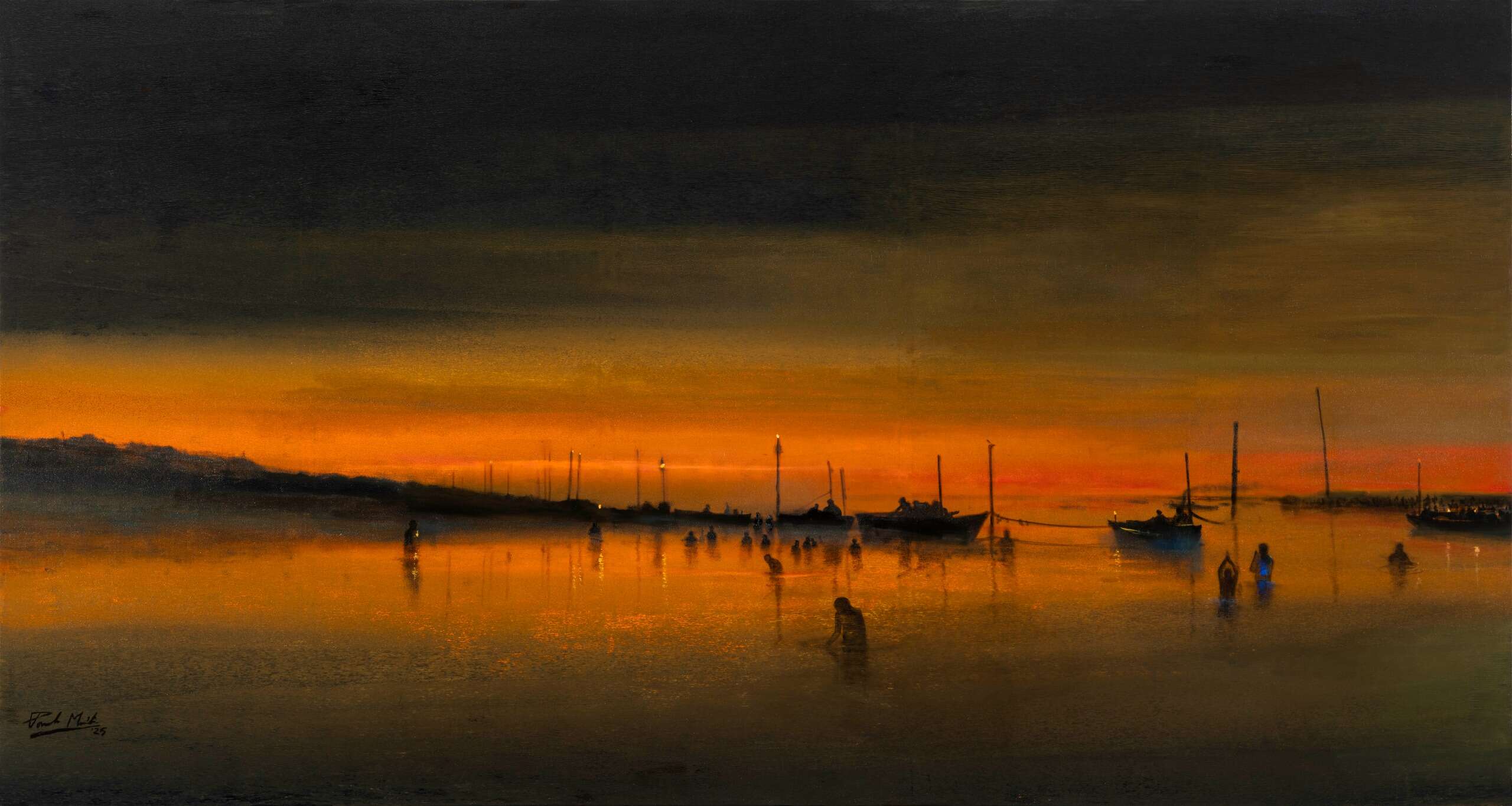

Varanasi
On the first floor at CCA Bikaner house was Varanasi that stood like a panoramic silent sentinel filled with the chants of mantras and the shades of bhakti. Varanasi for Maity is a prime example of relishing the material properties of paint. In the orchestration of thinly applied paint in the background contrasting with the thick impasto used for the drifts of colours on the skyline you can sense the incantations of the sandhya raaga. Indeed the sunset in Varanasi is ‘older than history, older than time.’
His extraordinary command of his medium is brought to bear upon an image whose very themes — reflection, illumination, doubling — suggest the associative and summative effects of recollections.
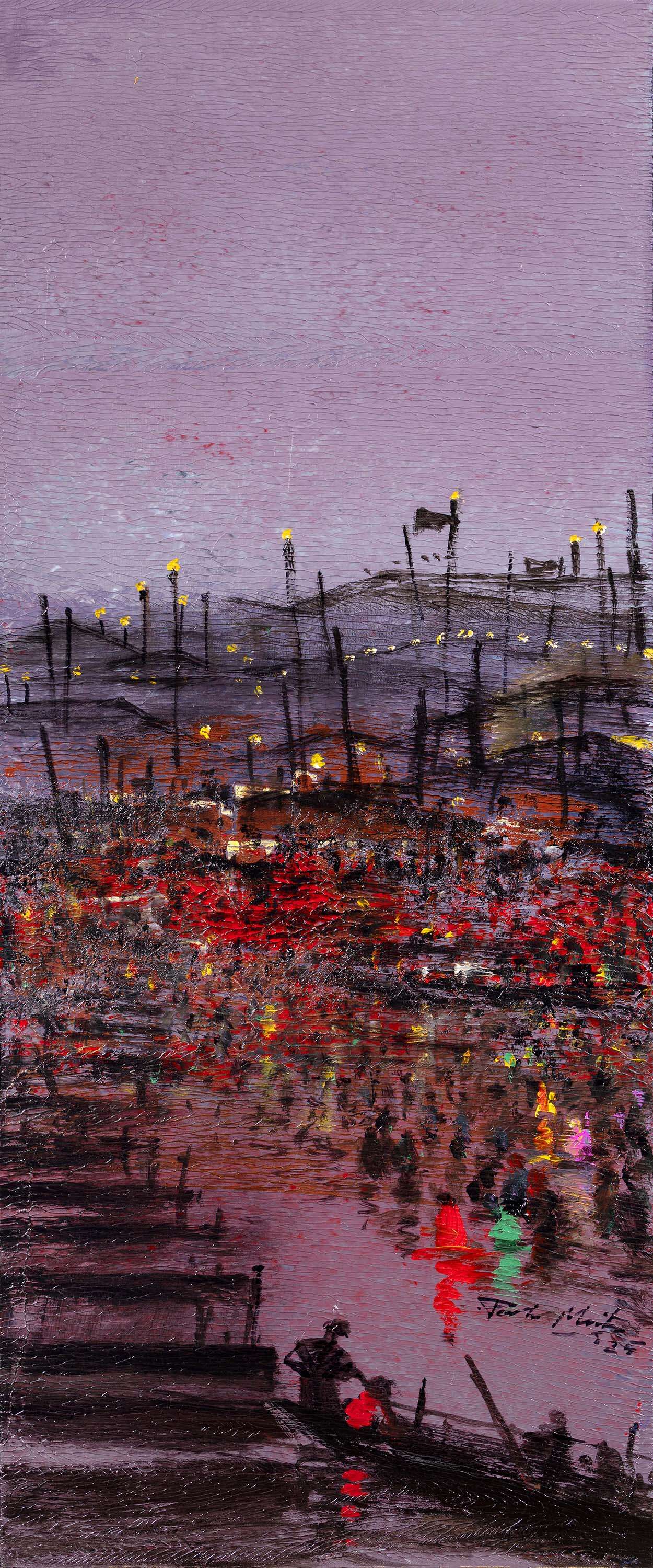

Mahakumbh and its alchemy
According to gallerist Sunaina Anand this solo exhibition is present is a deliberate dialogue with art history. Maity’s division of the canvas planes suggests his admiration for the works of world European masters. Between pictorial planes and the intricacy of gestural engagement lingering in its layered colours each room is an offering laced by light.
In his Mahakumbh works, paint becomes memory and memory becomes paint. Tinged with traces of passages from the past, the Kumbh room speaks directly to the act of art-making itself.
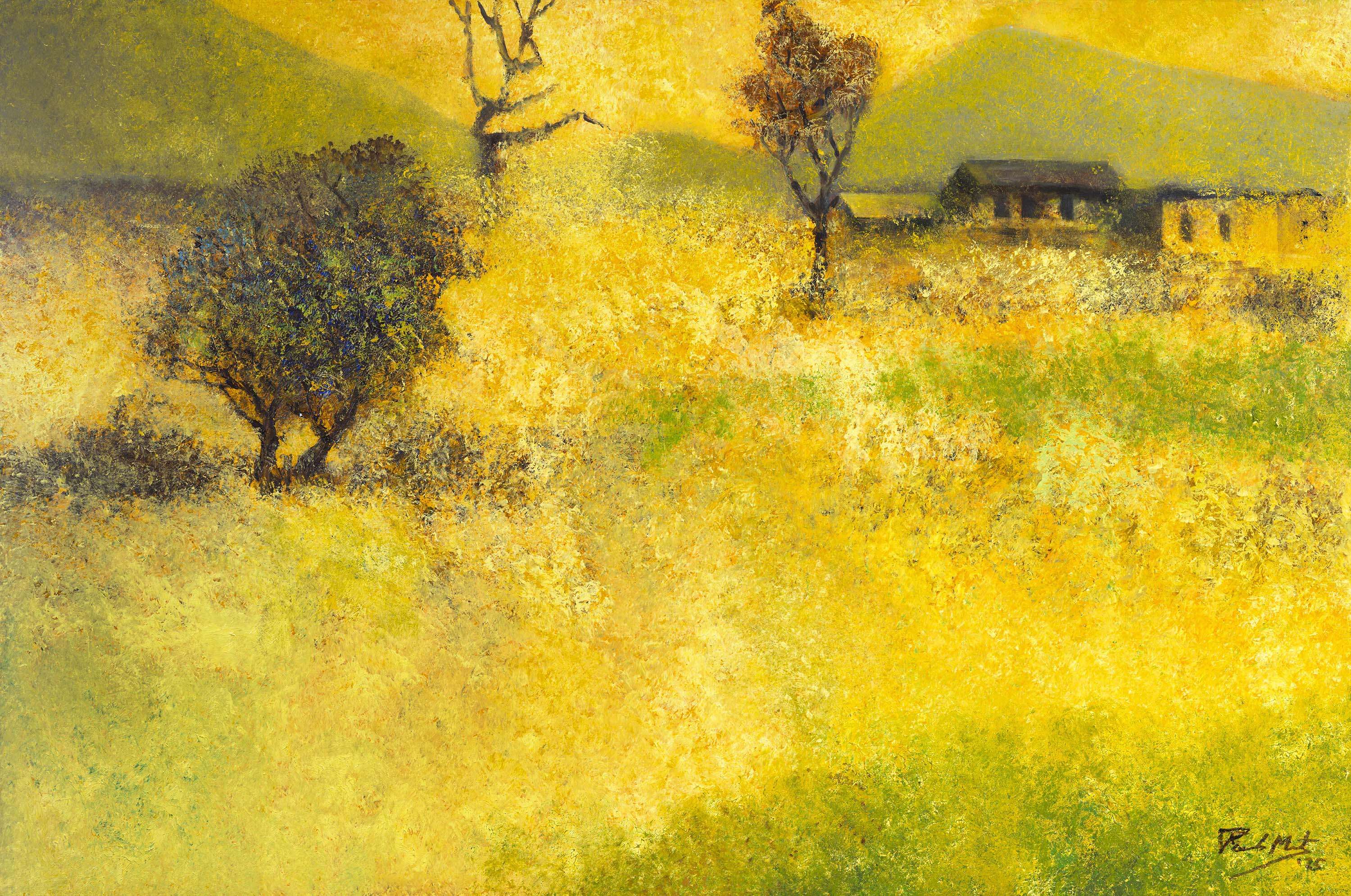

Mustard fields of Rajasthan
The exhibition spans years as far back as 1998 to 2026. Maity’s many paintings of Rajasthan, a mustard yellow feast form one of the richest themes in his mature work, a testament to one of the most compelling encounters of an artist who travels many places to create his own artistic history of Indian contemporary art.
Rajasthan in its dulcet hues is remarkable for its ingenuity and innovations, and unveils as some of Maity’s most magical works. The use of his pliant brush tells us that composition and subject matter are absolutely at one with each other.

Masterclass in alchemy
Within the myriad moods in each room you realise that much of art is about language—the narrative, the backstory, the lore that speaks. There’s certainly a history and a lot of that relies on narrative.
When you look at the perfection of the many frames, the drawings that go beyond practice—you realise what it means and where to contextualize it—rather than simply wanting to draw a desired place.
Look closer at his works and you realise this exhibition is not as much about luminosity; it is really about the trajectory of an entire art practice of a seminal artist. Indeed many of Maity’s works have their lineage within a meta-thesis around ideas. He explores the work of great masters and systems of the universe, as he tries to get at a truer nature of reality through his own gaze.
The viewer could walk away with a summation of an elegant emulation of remembered landscapes chosen as a series of intensely saturated hues, animated through the artist’s staccato execution, providing a tactile weight to the canvases.
He draws our attention to surfaces, between the broad, generous, and animated, they make us think of mysterious, internal energy, disciplined and controlled.We are compelled to think of landscapes of light. His penchant for paint has been applied in a variety of ways, ranging from fluid, broad strokes to weighty impasto dabs, giving works a vital sense of movement. This exhibition was a masterful control of colour, emotion and brushwork.
The frenetic energy of the canvases is felt in each harmonizing characteristic.Wherever he travels in the world when he picks up his brush Paresh Maity finds the true echo of his own sensibility in the expression of what is inchoate and inspirational.In the age of AI Paresh Maity proves originality is the key.
Disclaimer
Views expressed above are the author’s own.
END OF ARTICLE