Vinay Kumar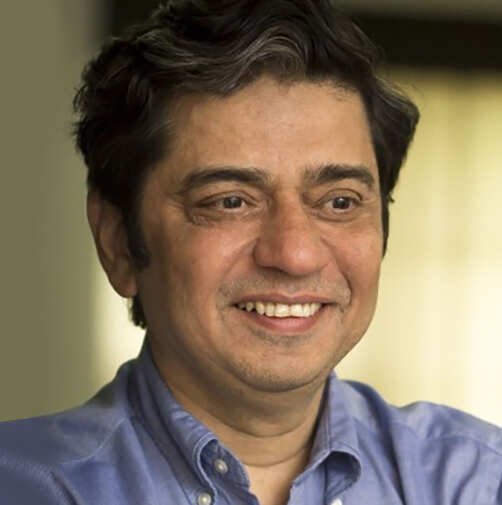
In a recent research study that I was involved in, we examined the content consumption of the coming generation, what has been labelled Gen Alpha, and found something interesting. This is a generation being brought up, above all, by content. And behind it, the algorithm.
The strongest influence being exerted on these young minds comes from the digital habitat they grow up in. The algorithm decides what their formative experiences should be. Parental presence and involvement exist, but parents are at a loss when it comes to figuring out exactly what role they need to play in mediating between their child and the digital world. They know that familiarity with, and even mastery over, this world will be a necessary precondition for life in the future. But they are also aware that they do not really know what kind of exposure their child is getting.
Parents grew up in a generation where their primary habitat was the physical world outside. Learning happened through contact and friction. The scraping of the knee while playing football, the smell of impending rain, the sound of feet trudging up a staircase. Distance was something the body measured through tiredness. Time was what it took for milk to go off, for the light to change from afternoon to evening. Space, time, and your place in both were taught to you by a world that followed rules it did not explain and did not adjust on your behalf. The monsoon was not curated for engagement.
There are many differences between the two modes of influence. For one thing, content never operates out of indifference. Nature, by contrast, simply exists, and that is all there is to it. The outside world is supremely disinterested in what we want, whether it is a hailstorm or a traffic jam. Your reaction is of no consequence. You are nobody. Encountering this indifference to our needs shapes us in a foundational way. We learn that making our way in the world requires many different capacities to come together. Patience, tact, force, charm, knowledge, and acceptance all have to work together for things to work.
This is far from true when it comes to content. It is always aimed at someone. It is designed to elicit a reaction. In this world, nothing merely is. If it exists, it is for a reason, and more often than not that reason involves pleasing us.
Even the concept of space changes. In the physical world, proximity is a measure of significance. What is nearer usually affects us more than what is further away. For content, physical distance is irrelevant. Neighbourhood becomes a matter of shared preference, which in turn is algorithmically driven.
The concept and experience of time also alter significantly. In the physical world, time was how we experienced context. The interminable wait in a doctor’s waiting room, the less-than-thrilling drone of a classroom lecture, and the minutes ticking by in a traffic jam. We did not consume time. We were embedded in it. And it moved as if it had a mind of its own.
Technology began the manipulation of time well before the smartphone. The ability to rewind a cassette, skip to a favourite song, pause a television programme. Each was a small lesson in the idea that time is something amenable to moulding, something on which we can impose our desires. And yet the structure of time stayed intact. A song had a beginning, a middle, and an end.
What the feed does is dissolve the structure itself. Time is broken up and served back to us on the basis of what the algorithm believes we would like. A post from a day ago sits next to one posted five minutes back. The iron grip of chronology has been loosened. Time has become a form of ambient content, something that is on rather than something you are in. And within this ambient wash, we experience time seesawing between a sense of control and one of passive acceptance as we let the feed wash over us.
How does the self form in such an environment? Earlier, growing up was a collage of discrete experiences and memories. A book one read, a film one saw thrice, a lesson learnt from a failure discrete enough to be remembered and weighty enough to be narrated. You could tell the story of how you became who you are because each constituent influence was individually significant.
The content-native self is formed by ten thousand micro-influences, none of which registers as an influence. One grows up in a blur, with the past having a shape but lacking a sense of the substance that fills it. A reel here, a tone absorbed from a creator watched for eleven seconds, an aesthetic preference acquired without a single recognisable moment of acquisition. One becomes oneself without any clear sense of how. One arrives without a sense of having travelled.
Memory becomes more orientation than anchor. It slants us towards certain preferences, predisposes us to certain choices, without it being clear what exactly shaped us. We sense what is familiar and what is not but struggle to pinpoint how we know that. And when memory loses its anchoring function, aspiration changes too.
This kind of self may have a fluidity and a comfort with change that earlier generations did not. It may well be better suited to the world technology is creating for us. But what is important to recognise is that this is not a linear change in the making. The next generation is growing up in a fundamentally new way.
Disclaimer
Views expressed above are the author’s own.
END OF ARTICLE