Vinay Kumar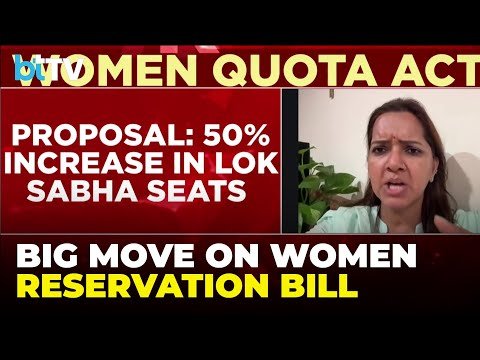
Higher political representation for women should not be based on outdated population stats
GOI’s twin objectives this Parliament session, 1) advance the delimitation exercise, that decides the number of representatives in Lok Sabha, and 2) change laws in order to roll out women’s 33% quota by 2029 LS polls, need parsing. For both of these to happen, constitutional laws need to be tweaked. Delimitation must be de-linked from the current Census. Women’s quota has to be delinked from delimitation, and, perhaps, even be re-linked to delimitation, basis Census 2011.
First, the women’s quota. When the law was passed, its implementation was tied to post-Census 2021/now 2027, delimitation. Even at the time, it wasn’t clear why women’s quota was linked to delimitation. The spirit of the women’s quota, is, for male MPs to not feel miffed that they’ll “lose out” to women. Empowerment is about sharing of resources, equitably. If GOI is keen to embellish its record of empowering women, the straightforward way would be to enforce the quota within the 543-seat Lok Sabha, and in state legislatures, right away. Rotating seats for reservation – every third constituency – is the most discussed design.
Delimitation, after Census 2027, is a fraught exercise. For states that had stabilised population, it meant losing LS seats. Delimitation + women’s quota presented itself as a double whammy for such states. So, for some, delimitation, basis Census 2011, may appear to make sense, going by political tea leaves. If divvied on outdated data of Census 2011, Parliament seats are set to go up to 816. This will increase, say, Kerala’s LS seats, from 20 to 30; ten reserved for women. It is all very well in the realm of theory, and speculation. Reality is, pushing constitutional amendments for political ends, may end up misrepresenting ground reality. Basing delimitation on Census 2011, disregards India’s massive urban expansion and internal migration the last 15 years. Delinking delimitation from Census also inserts, for the foreseeable future, a lag between population growth & distribution, and political representation. And, worryingly, these twin moves signal GOI’s uncertainty about Census 2027’s implementation, with all its new experiments – self-enumeration and caste census are just two of the most consequential ones.

Disclaimer
Views expressed above are the author’s own.
END OF ARTICLE