Vinay Kumar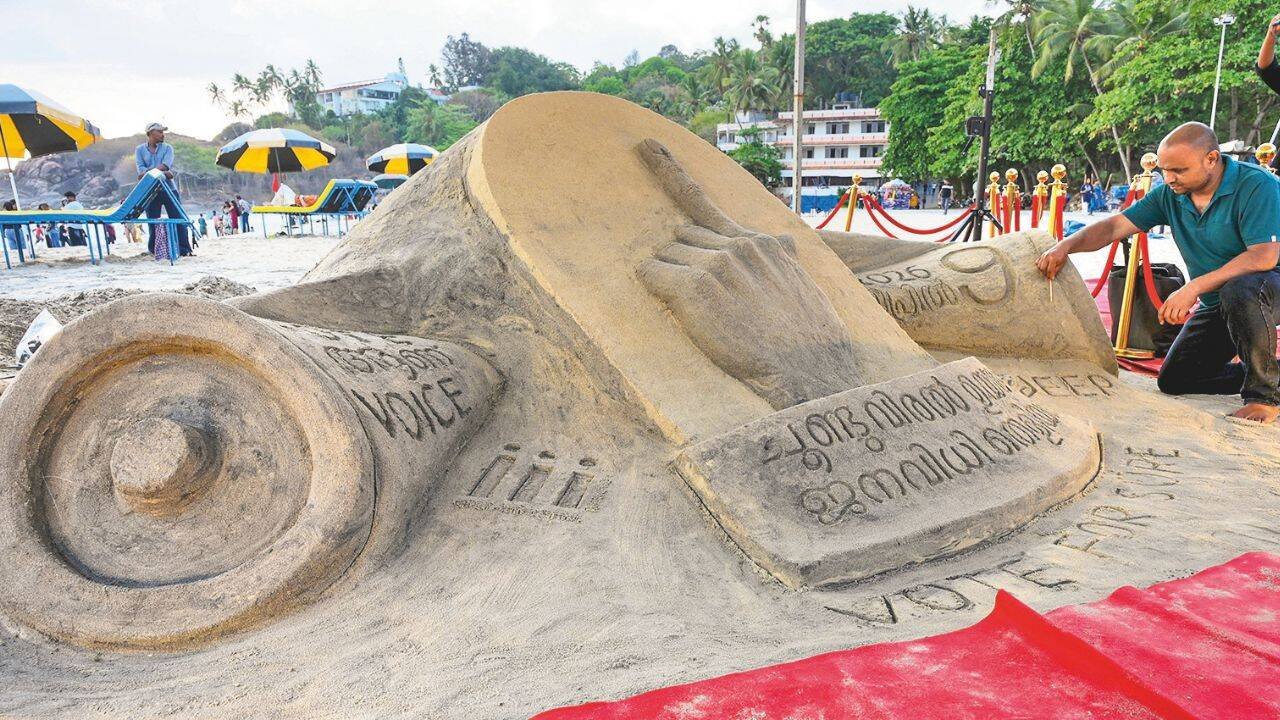
The key question in the 2026 Kerala assembly election is whether the state will return to its predictable cycle of power alternation, or whether voters will make history by electing the incumbent for a third consecutive time.
For decades, Kerala’s politics has largely been a contest between two coalitions — the CPM-led Left Democratic Front (LDF) and the Congress-led United Democratic Front (UDF) — and these coalitions alternated office every five years.
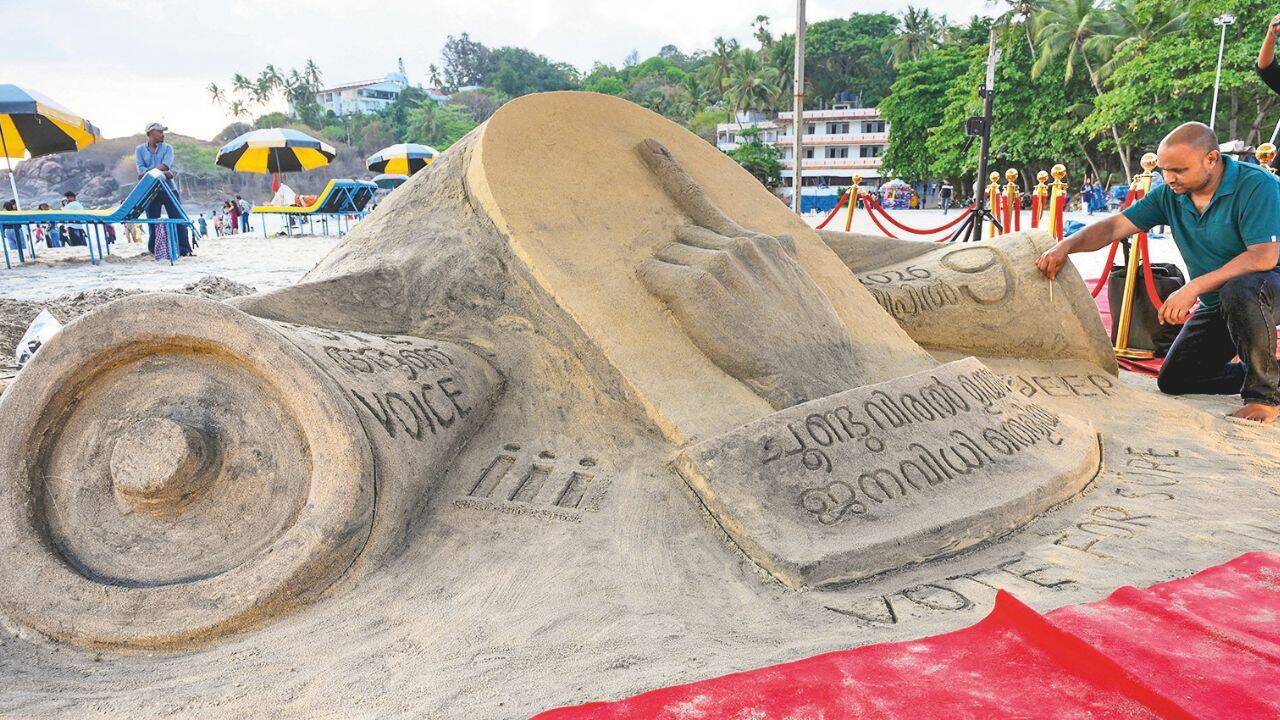

Battle lines: The state’s bi-nodal politics and social development agendas obscure many schisms
But the pattern changed with the LDF winning a second consecutive term in 2021. Before Pinarayi Vijayan, no Kerala CM had been in office for ten straight years.
How is Kerala likely to vote on April 9? Many observers have suggested that UDF has a clear edge as LDF faces 10 years of anti-incumbency.
Also, UDF’s performance in the 2024 LS election, in which the coalition won 18 of 20 seats (and had a vote share lead of over 10 percentage points), along with their impressive performance in the 2025 local body polls, indicates that the Left may be heading for a defeat.
However, the data suggests that it may not be as easy as it sounds.
First, UDF usually outperforms LDF in LS elections in the last three decades (except 2004). So, UDF sweeping the 2019 and 2024 LS polls in Kerala should be seen as part of a trend in which voters are more likely to vote for the Congress and its allies in national elections.
This should be a concern for the Congress, which has shown a tendency in the past two years of losing elections in states where it had an advantage after LS 2024 (for example, Haryana and Maharashtra).
Second, the vote share difference in assembly elections among the two coalitions used to be very small (less than three percentage points), which has almost doubled in the last two elections. LDF wins big and loses narrowly in Kerala assembly elections.
For example, in a 140-member assembly, LDF won 99 seats in 2021, 91 in 2016, and 98 in 2006, and lost narrowly in 2011 with 68 seats.
Also, there are 89 assembly seats that have remained with the same coalition in the last three elections. LDF has retained 50, and UDF has never lost 39. This suggests that UDF has a much tougher battle than is being made out to be.
LDF under Vijayan retains a credible narrative on governance. Its welfare programs and crisis management during floods and pandemics helped it win in 2021.
While there is a visible fatigue due to economic stagnation and concerns over administrative efficiency in the second term, he still commands more popularity in the state than any other face UDF may want to project.
A victory for the Left Front in Kerala is existential after being completely routed in West Bengal and Tripura.
Kerala’s bi-nodal politics and social development agendas of both coalitions in the govt have, largely, obscured a deeply fragmented electoral geography.
This poll may bring it into sharp focus. Northern Kerala remains UDF’s fortress, especially in Muslim-majority districts where the Indian Union Muslim League (IUML) continues to anchor its dominance.
Southern Kerala, with a more Hindu population, has largely voted for LDF, and Central Kerala, which is socially more diverse, has been the real battlefield. LDF has largely drawn its support among the Hindu voters, rural and lower income. UDF has long relied on a consolidated Muslim-Christian social coalition.
The increasing consolidation of Muslim votes in favour of Congress, is likely to push counter-polarisation among the Christians and Hindus in certain pockets.
It is here that an insurgent BJP may be a headache for both coalitions by adding a lot of uncertainty to predictable patterns of political mobilisation.
Despite having some organisational presence, especially in more urban pockets, BJP has been a distant third pole so far. But its vote share has steadily increased in the past decade.
It won the Thrissur LS seat in 2024, came second in Thiruvananthapuram, and registered impressive vote counts in many other seats. More recently, during the 2025 local body elections, it was able to win the Thiruvananthapuram mayoral election for the first time.
Rather than relying solely on its traditional Hindu consolidation strategy, BJP this time is making a cross-community outreach.
Its pitch to Christian voters is carefully constructed by emphasising shared concerns around minority security and identity politics, and high-visibility infrastructure commitments.
The local leadership is engaging with church leaders, particularly in central Kerala. This may not lead to any significant shift, but can disrupt the outcome in some constituencies.
This makes the 2026 assembly elections historic in the sense that, while the results next month may still produce a familiar outcome — an LDF or UDF govt —the path to that outcome could transform Kerala’s political landscape.
Verma is Fellow at the Centre for Policy Research (CPR), New Delhi. Views expressed are personal
Disclaimer
Views expressed above are the author’s own.
END OF ARTICLE