Vinay Kumar
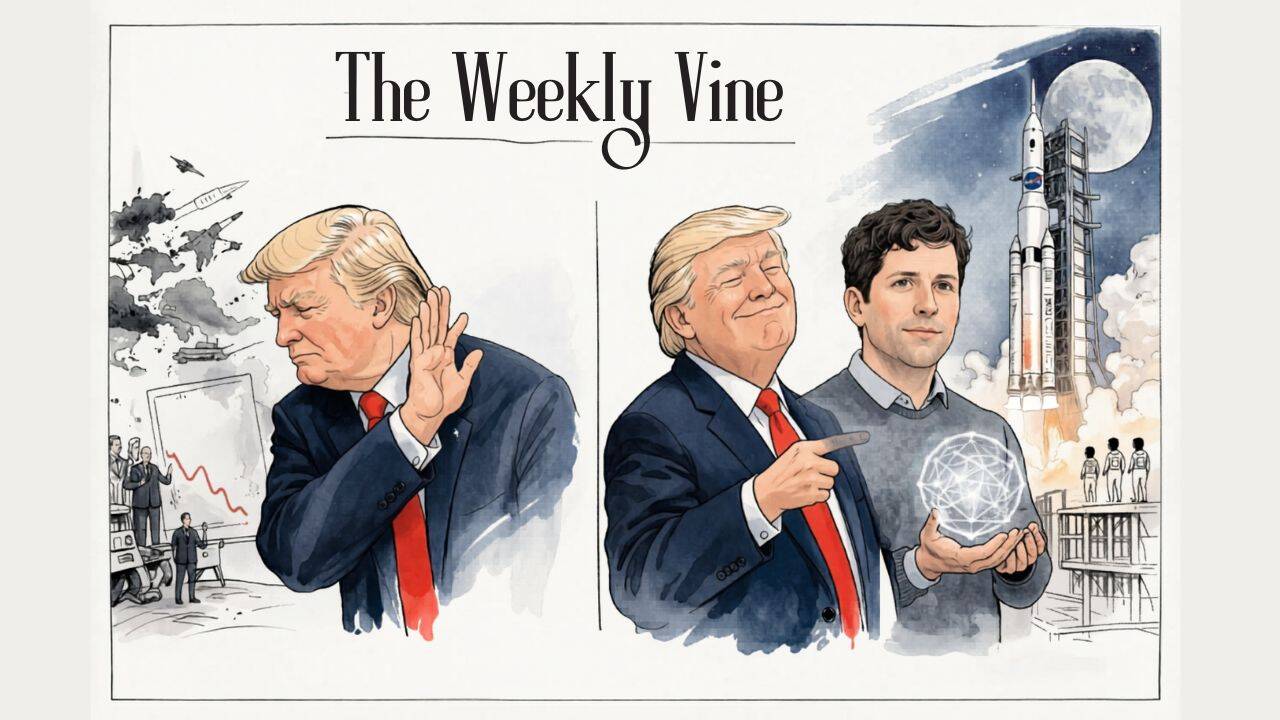

Hello and welcome to the 87th edition of the Weekly Vine. In this week’s edition, we track the brief history of memes, decode the many faces of Sam Altman, look back at a remarkable moon hoax, and discuss the Indian middle class’s unique woes.
A brief history of May Mays (or Memes)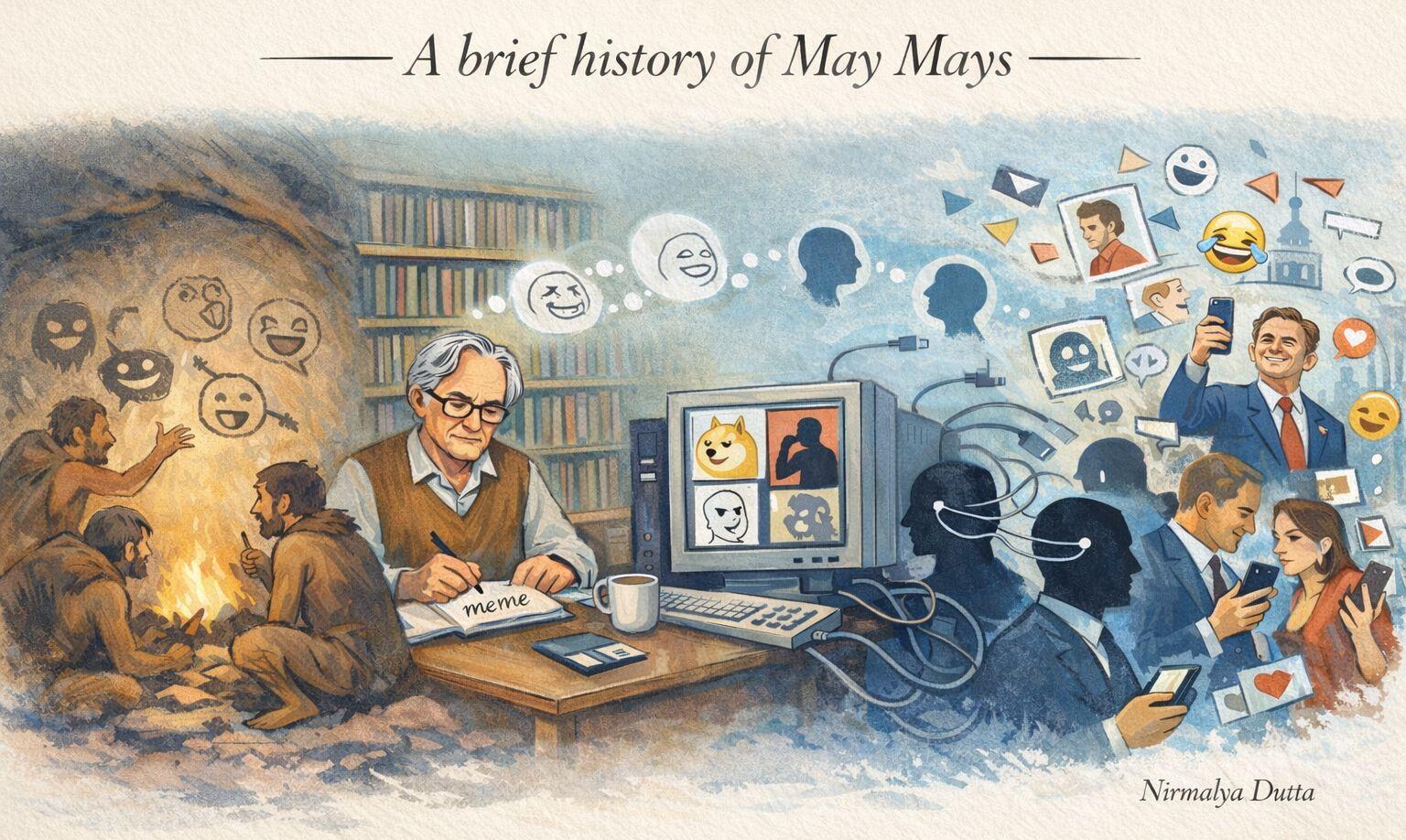

Now, with a ceasefire in the offing – hopefully a real one, though no one can tell anymore in this Schrödinger’s war – here is a brief history of memes.
Memes, colloquially known as “may-mays”, were a concept first introduced by Richard Dawkins in The Selfish Gene (1976), where he used the term to describe a unit of cultural transmission analogous to genes. In his formulation, memes are replicators that make copies of themselves, persist through those copies, and compete with other replicators for survival.
Genes do this biologically, copying themselves through reproduction and passing from one body to another across generations. Memes do this culturally, moving from one mind to another through imitation, language, and communication. Both follow the same underlying evolutionary logic in which variation, selection, and retention determine survival. Genes vary through mutation, while memes vary through reinterpretation or remixing. Genes are selected based on how they help an organism survive and reproduce, while memes are selected based on how effectively they capture attention and are transmitted.
A popular meme, such as the Drake “Hotline Bling” format, does not even require the user to know who Drake is or what “Hotline Bling” refers to. A good meme transcends the space-time and cultural origin of its creation and becomes universal.
Another important similarity is that both require a host.
Genes use living organisms as their vehicle, while memes use human minds. In that sense, humans are carriers of both biological and cultural information. Dawkins’ more provocative claim is that just as bodies can be seen as vehicles built by genes to ensure their survival, human minds can be seen as environments in which memes compete and propagate.
Finally, both can be described as “selfish” in a technical sense. A successful gene is one that spreads, regardless of whether it benefits the organism in any broader moral sense. A successful meme behaves similarly. It spreads because it is effective at spreading, not because it is necessarily true, useful, or beneficial.
And the success of the meme as a mode of communication is the fact that everyone – from dictatorial regimes to logorrhoea-induced fascists – prefers it to actual statements. Even Dawkins wouldn’t have predicted that memes would be the preferred mode of communication in the Information Age.
The many faces of Sam Altman
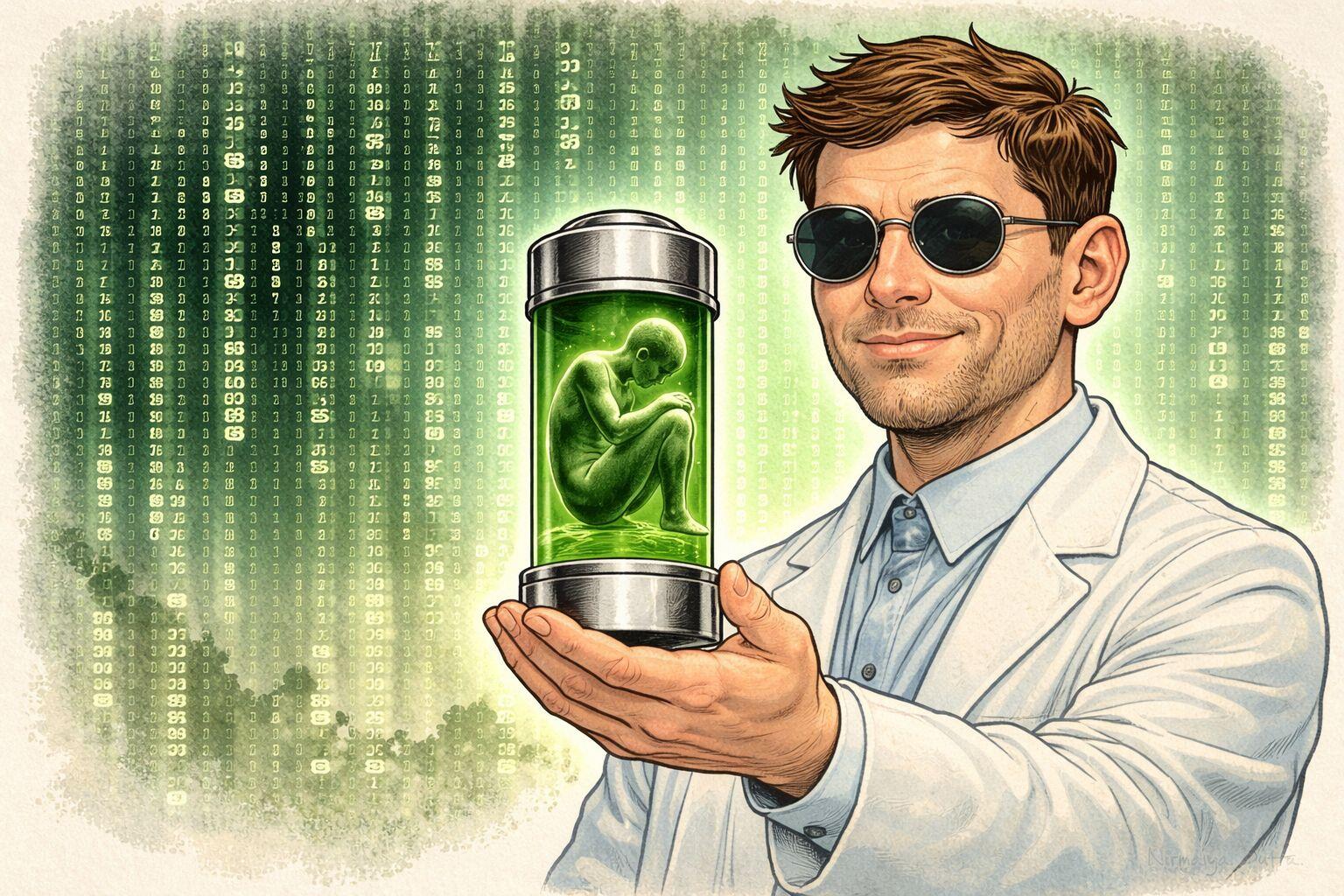

A few weeks ago, the Vine had wondered whether Sam Altman sees humans merely as batteries, the way the machines did in The Matrix. That might be the least problematic view Sam Altman holds. A recent New Yorker deep dive on Altman reveals the flawed portrait of the most powerful man in AI and his many departures from normative behaviour. Everyone knows the story of OpenAI’s non-profit beginnings before revising their relationship with Mammon, much to Elon Musk’s chagrin.
Ilya Sutskever – a former student of the father of AI Geoffrey Hinton – compiled numerous secret memos showing how Altman misrepresented facts to executives and board members and deceived them about internal safety protocols. A highlight among them was Microsoft releasing an early version of ChatGPT in India without safety protocols and then being economical with the board about its release.
Altman’s mendacity was so pervasive that there was an entire dossier on “Lying”. Sutskever, lest we forget, isn’t some disgruntled middle manager casting aspersions from the sidelines. He is one of the few people on this planet who fully understands what is being built, and how dangerous it can be.
Sutskever particularly worried about handing the keys of the kingdom to a person like Altman, who told the board what they wanted to hear, who was not “consistently candid in his communications”, and even lied about GPT-4 features, saying they had been approved by a safety panel (they had not). Altman continually prioritised products over safety – which might be banal for most software or social media – but not for a tool that is increasingly becoming part of every human’s digital activity.
Altman’s peccadilloes don’t stop at internal dysfunction but show a man who believes he is a civilisational force who, while talking the language of saving the world – as many demagogues are wont to do – pairs it with a messianic complex that makes one wonder if the arrival of AGI is a bigger worry than having a human in the loop who already thinks he’s God.
The Great Moon Hoax
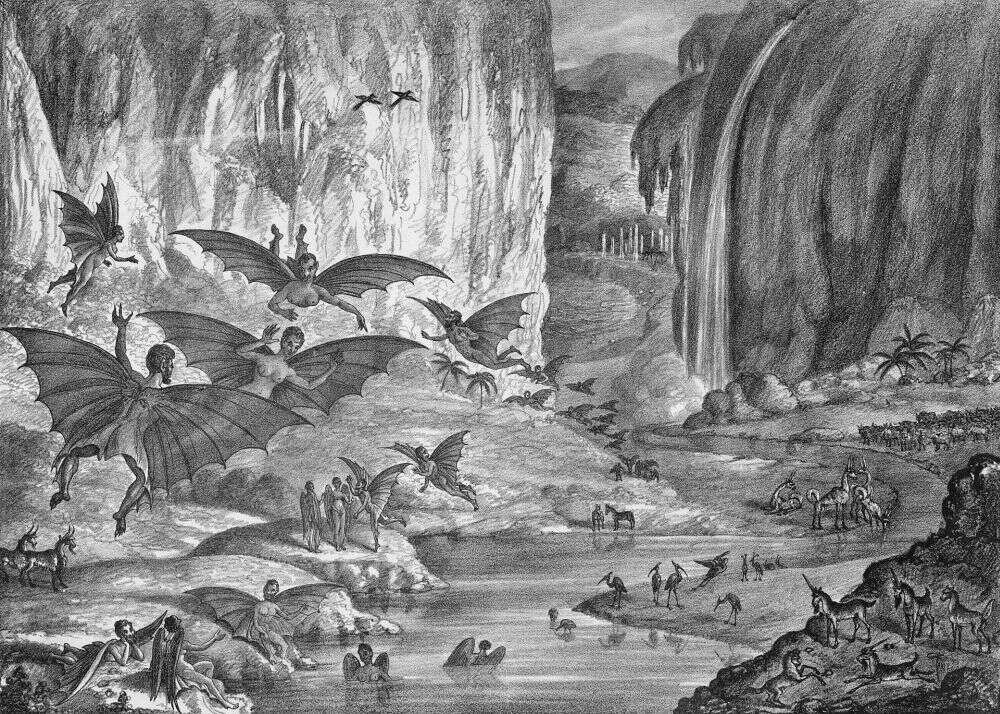

Man returned to the moon recently – or at least its vicinity – with the sororal-themed Artemis II. Now the moon has been the subject of many, many hoaxes, with many still believing that the 1969 landing was staged (and that it was actually directed by Stanley Kubrick) and that Neil Armstrong remembered a neighbour seeking oral gratification: “This one is for you, Mr Gorsky.”
But my favourite is the Great Moon Hoax of 1835. Long before social media came around to become the preferred tool for spreading misinformation, there were penny press newspapers. In August 1835, a newspaper called The Sun in New York – which is fitting for its modern-day namesake – published a report claiming the Moon was inhabited by single-horned goats, bipedal tailless beavers, and bat-like winged humanoids, all allegedly observed by Sir John Herschel through a telescope so absurdly magnificent that it should have been the first clue.
The telescope, the calm tone, scientific jargon, respectable names, and serialised revelations made many people believe it was completely real. One person who was miffed, though, was Edgar Allan Poe, who felt the reports seemed to have plagiarised his story Hans Phaal, which many consider the first instance of science fiction.
Poe was perhaps miffed that his story didn’t go viral like the hoax, and he produced his own writing, The Great Balloon Hoax, which also inspired Jules Verne to write From Earth to the Moon and Around the World in Eighty Days.
Sci-fi obviously always inspired science. In Verne’s novel From Earth to the Moon, a projectile carries humans from Florida to the Moon. Centuries later, Florida would become the base of NASA, from where real humans would go to the Moon.
From the hoax to Poe to Verne, we did eventually end up on the Moon. Sadly, there were no bat-like winged humanoids there, but the real lesson remains: even a hoax can spur you on to hitherto unimagined heights.

Postscript by Prasad Sanyal: Inside the middle class compression
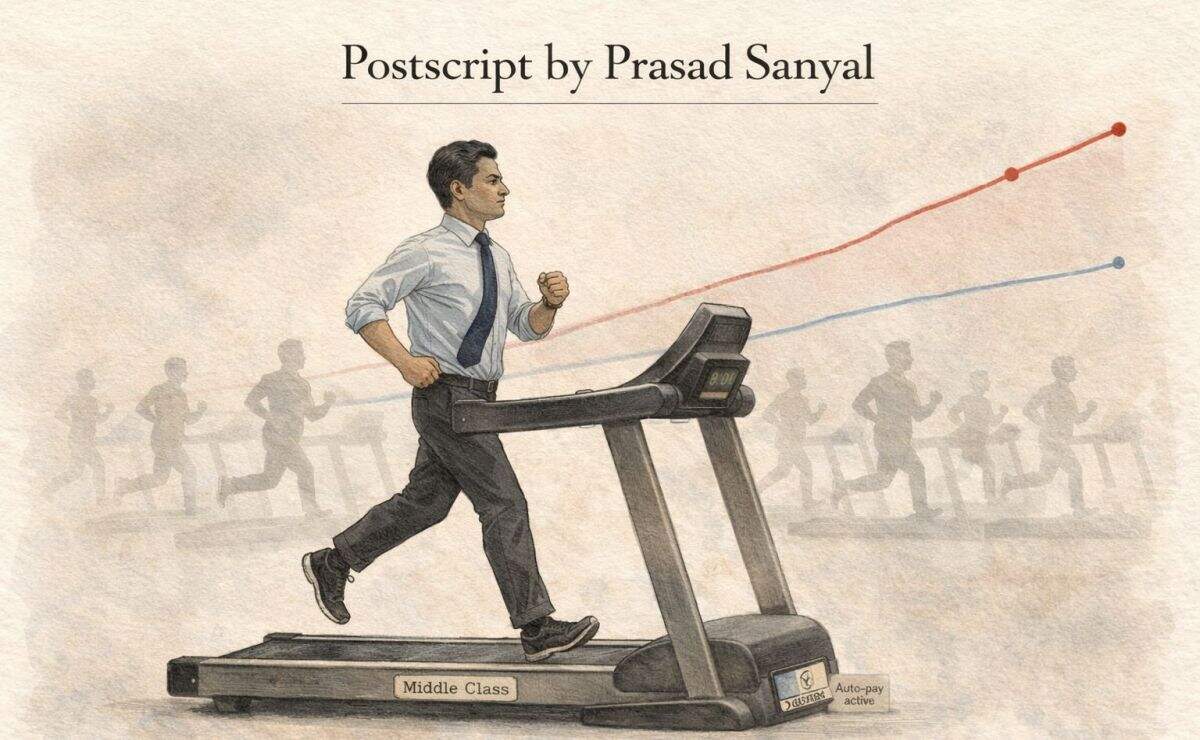

There is a particular kind of Indian optimism that survives every data point. It lives somewhere between the annual appraisal and the Diwali bonus, between the polite nod in a town hall and the quiet calculation on an EMI sheet. It is the optimism that says things will sort themselves out because they always have.
And yet, if one listens carefully, beneath the noise of quarterly growth, unicorn valuations, and the ceremonial ringing of stock exchange bells, there is a softer, more persistent sound. The sound of compression. Read full article.
Post Postscript
Word of the week: Kebab
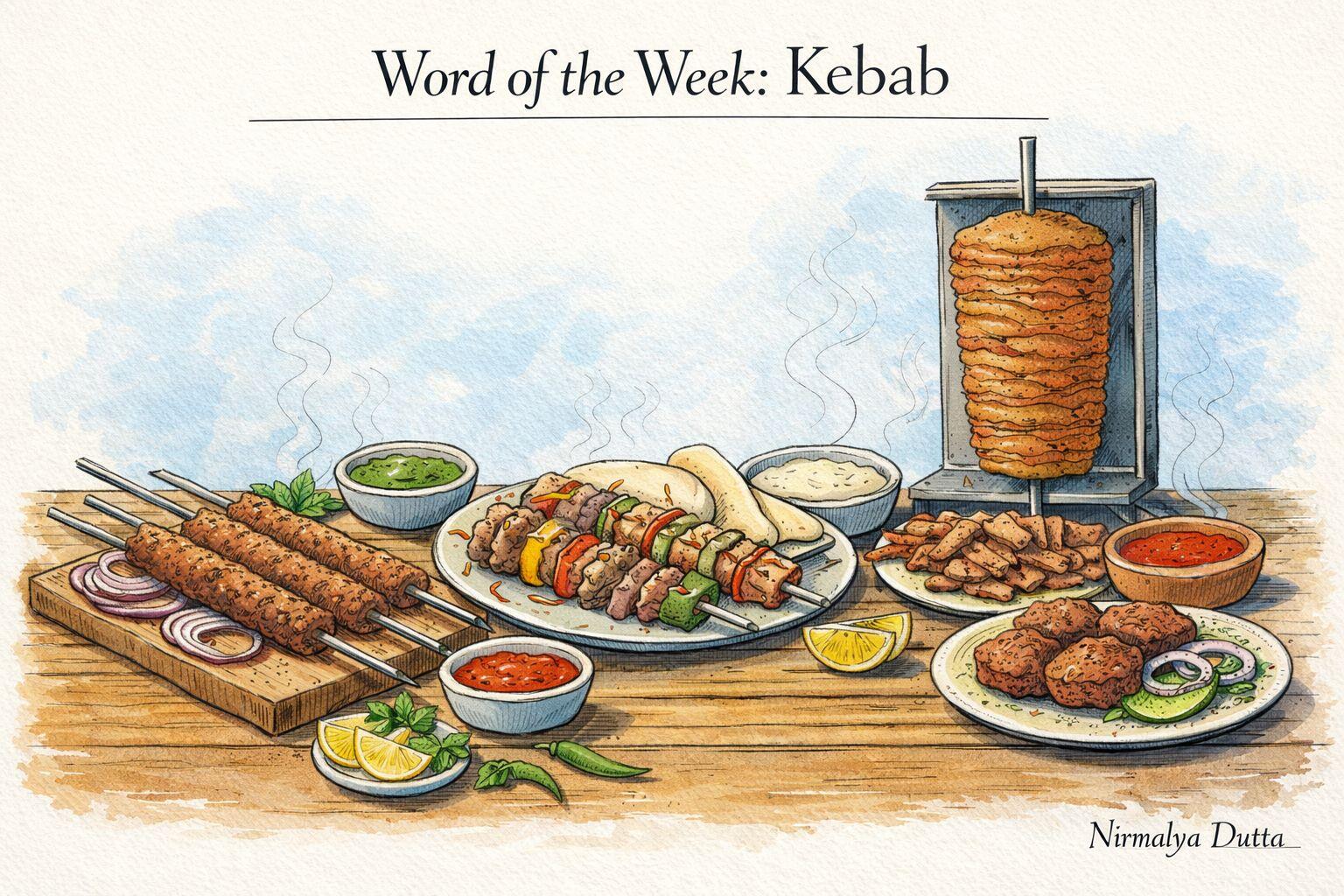
Kebab comes into English from Persian kabāb (کباب), meaning roasted or grilled meat. It entered English in the 17th century, likely through contact with the Ottoman world and through Indo-Persian usage during the Mughal period. Variants of the word exist across languages: Turkish kebap, Arabic kabāb, and the American spelling kabob.
The Persian term itself traces back further into Semitic languages. In Akkadian, kabābu meant “to burn” or “to scorch,” while in Aramaic kbabā carried a similar meaning. Across these languages, the core idea remains consistent: meat exposed to fire.
Originally, kebab referred to a method of cooking rather than a specific dish. Over time, as the technique spread across regions, it evolved into a category of foods. In the Ottoman Empire, this included forms like skewered meat and spit-roasted preparations. In South Asia, particularly under the Mughals, kebabs became more varied, incorporating minced meat, spices, and specialised techniques, leading to forms such as seekh and shami kebabs.
Today, the word kebab is used globally, but its meaning can vary depending on context, from grilled skewers to wrapped street food. Despite these variations, the underlying idea has remained stable across centuries: roasted meat.
Book of the Week: To Kill a Mockingbird
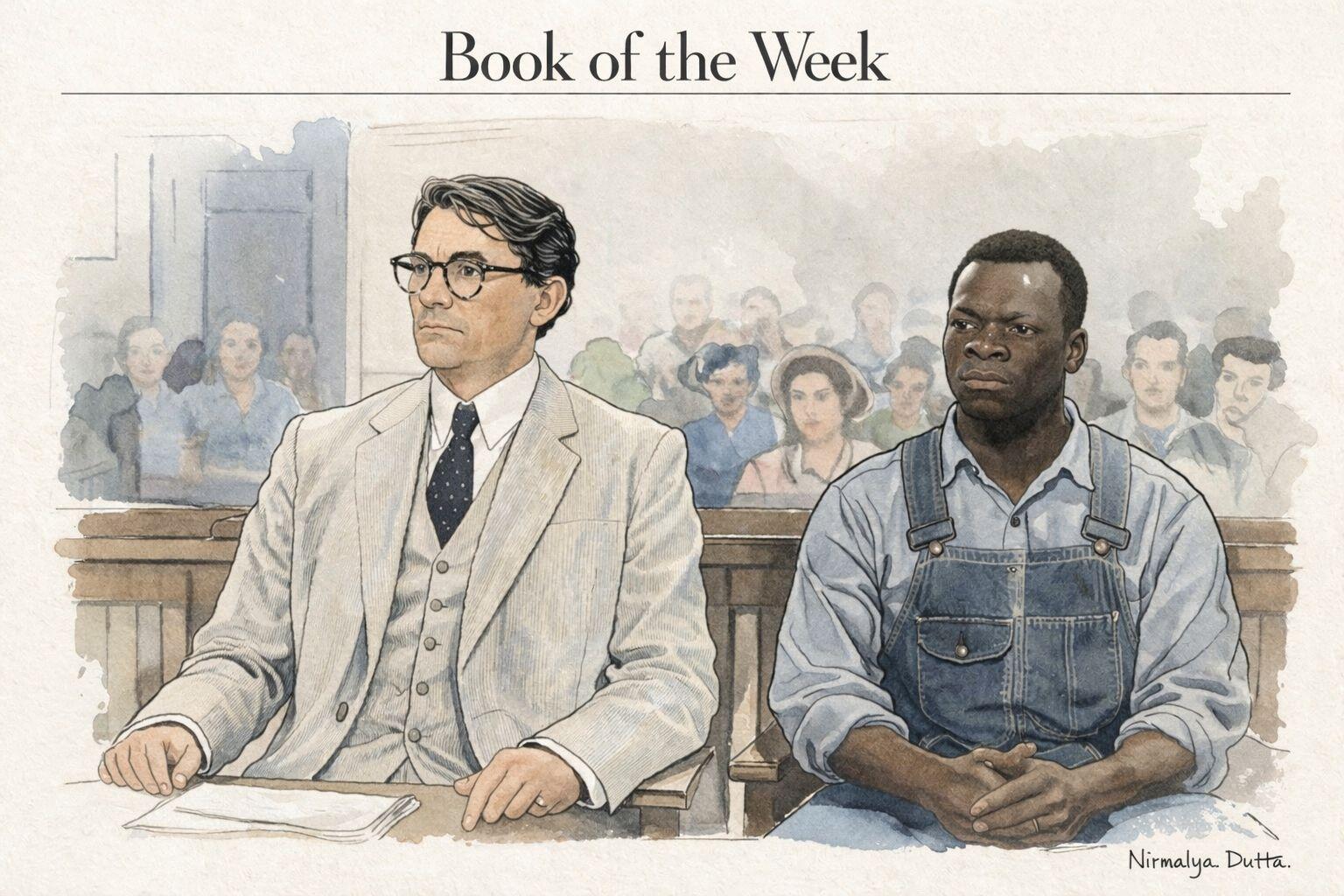
Some authors write one book, and it changes how we perceive literature. There is J.D. Salinger’s Catcher in the Rye, the perfect amalgamation of phoney existential angst. A similar book on the subject is To Kill a Mockingbird by Harper Lee, a remarkable account of segregation and racism in America, seen through the eyes of its young protagonist. It’s one of those rare books – like The Godfather or The Exorcist – where the movie lives up to the book, with Gregory Peck’s portrayal of Atticus Finch becoming the Jungian archetype for hero figures. It’s a book that I read every few years, and it’s like discovering a different layer of brilliance every time I read it. Just do yourself a favour and don’t read its sequel: Go Set a Watchman.
Meme of the Week: TACO
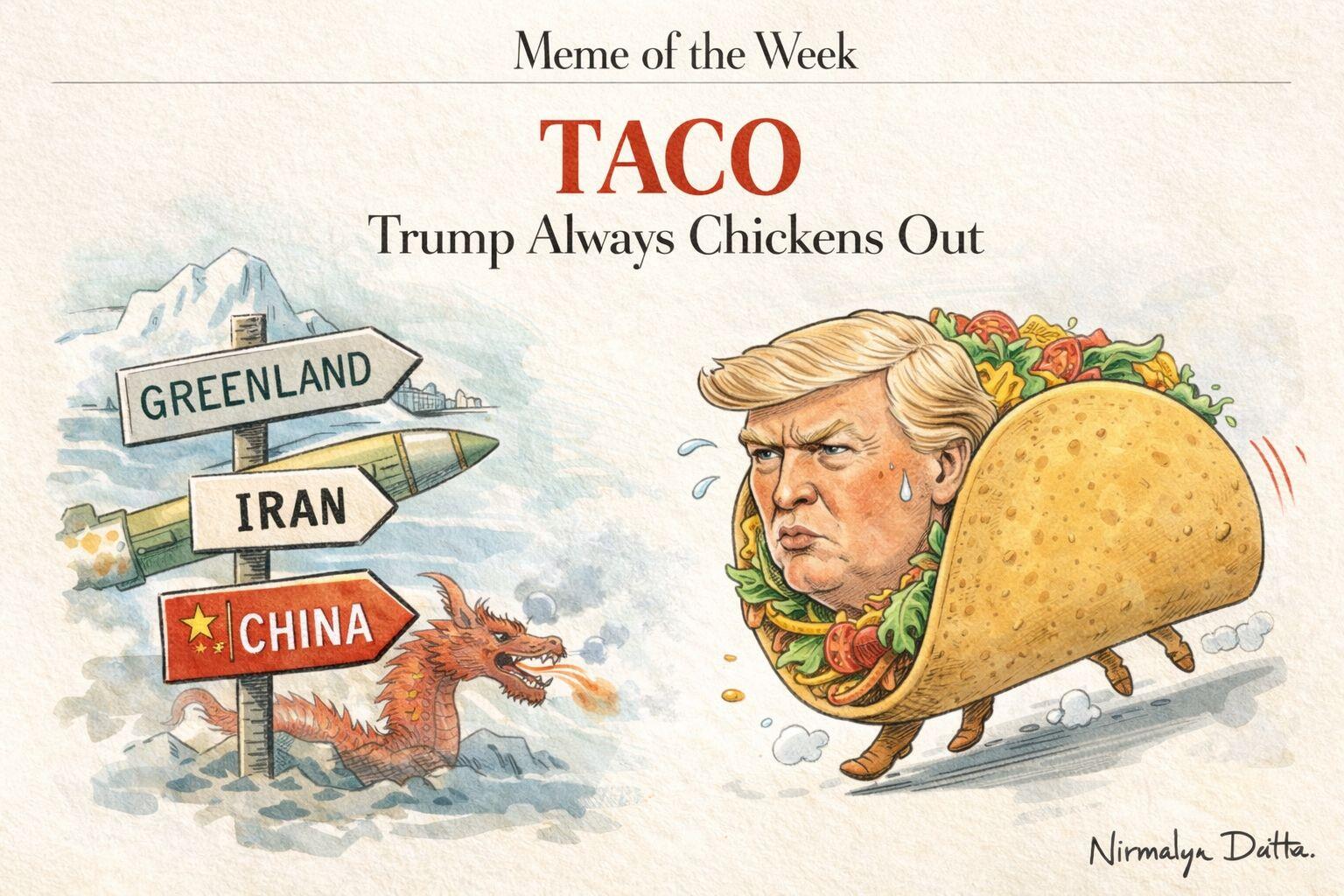
Trump Always Chickens Out (TACO) is a pejorative description mocking Donald Trump for making threats and then reneging on them. The phrase became popular in May 2024 during the trade war, particularly against China, and has also been used about his threats to annex Greenland, and the last-minute ceasefire deal for the Iran War.
Disclaimer
Views expressed above are the author’s own.
END OF ARTICLE