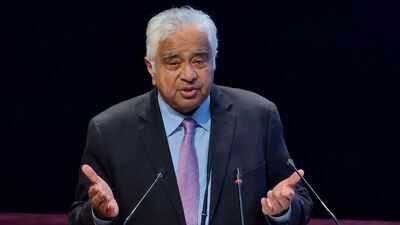
 Vinay Kumar
As the world’s 3rd largest energy consumer India faces the dual challenge of meeting its growing energy demand while minimising its dependence on fossil fuels.
India’s energy sector is heavily reliant on fossil fuels, particularly coal, oil, and natural gas. This heavy dependence on non-renewable energy sources, not only poses significant environmental risks, but also makes the country vulnerable to fluctuations in global energy markets.
Problem on the LPG front
The ongoing geopolitical tensions in West Asia, particularly disruptions in the Strait of Hormuz have exposed India’s vulnerability to the Liquefied Petroleum Gas (LPG) shortages. LPG is a flammable mixture of hydrocarbon gases used as fuel in heating appliances, cooking equipment, and vehicles.
India consumes 3.1 crore tonnes of LPG per year, 3/5th of which being met through imports, a 5th of which comes through the Strait of Hormuz. Its choking has forced India to identify sources other than Qatar, the UAE, Saudi Arabia, and Kuwait, increasing more expensive imports from the US, Argentina, and Australia.
India’s dependence on West Asia
India is one of the world’s largest LPG consumers in the world. However, domestic production meets only part of the country’s demand. Data from the Petroleum Planning and Analysis Cell (PPAC) shows that domestic production of LPG remained significantly lower than consumption in January 2026. while India produced 1.158 million tonnes of LPG in January 2026, it imported 2.192 million tonnes.
Disruption in the Strait of Hormuz and shipping risks
The war is reported to have increased risks for vessels travelling through the Strait of Hormuz, a narrow waterway between Iran and Oman, and a critical global energy chokepoint.
Maritime insurers are reported to have either withdrawn or sharply raised war-risk coverage for vessels operating in parts of the Gulf. A Reuters report stated that the premiums for war coverage have surged, in some cases by more than 1,000 %, prompting insurers to cancel cover for ships, thereby raising shipping costs and discouraging shipowners from accepting voyages in high-risk areas.
Shipping data and analysis by S&P Global also indicates that Tanker freight rates in the Persian Gulf have surged, as traffic through the Strait of Hormuz has declined following the conflict, reducing the number of ships willing to load LPG cargoes from Gulf producers, thereby increasing delivery costs and delays.
Effect on India’s LPG market
As LPG imports form a major part of India’s supply chain, any disruption to shipments affects domestic availability in the country. LPG in the country is being imported mainly by Indian Oil Corporation (IOC), Bharat Petroleum Corporation (BPCL) and Hindustan Petroleum Corporation (HPCL), which together supply more than 99 % domestic LPG cylinders.
To ease the situation & stabilise the supply, the Central Government has directed the refiners and petrochemical complexes to maximise LPG production by diverting certain hydrocarbon streams into LPG output instead of petrochemical feedstocks. The government has also invoked provisions under the Essential Commodities Act to prioritise LPG availability for households.
Structural vulnerability in storage
Unlike crude oil, LPG is said to be harder and more expensive to store because it must be kept in liquid form under pressure. It is thus stored in pressurised cylinders, spherical tanks, mounded storage bullets or underground caverns, requiring specialised infrastructure.
LPG Mounded bullets are horizontal pressure vessels which are used for the pressurised storage of LPG under ambient temperature, the precise, quantifiable temperature of air in a specific location.
India’s total LPG storage capacity is estimated to be around 1.9 million tonnes, equivalent to roughly 22 days of supply according to the S&P Global Commodity Insights, which is significantly lower than strategic crude oil reserves, the massive stockpiles of crude oil stored in underground rock cavern, the underground cavities formed in solid rock, typically using conventional mining techniques, which can be lined or unlined for storage purposes.
High infrastructure costs, geological requirements for cavern storage, and the dispersed nature of LPG distribution through bottling plants has constrained stockpiling. Rapid growth in LPG demand is also said to have outpaced storage expansion.
However, despite diversification, including sourcing LPG from the United States and other regions, India remains heavily dependent on West Asia. As such, if disruptions to Gulf shipping persist, India could face tighter LPG availability and higher import costs in the coming months, it is opined.
Biogas as a credible alternative to LPG
The recent geopolitical situation in Western Asia has led to a sudden disruption of supply of LPG with a ripple effect on the everyday life of the common man. Under these circumstances, in the opinion of the experts, Biogas can prove to be a potential alternative to LPG, a renewable energy source, produced through the Anaerobic Digestion, involving decomposition in the absence of oxygen of the organic matter like, Cattle dung, food waste, sewage, green waste, and agricultural residues.
The biogas advantages claimed
In the opinion of experts, transition towards Biogas offers a multi-dimensional solution to India’s energy crisis including:
· Biogas can be produced in rural backyards or urban community centres, eliminating the need for complex pipeline or cylinder logistics;
· It converts wealth from waste, by utilising agricultural stubble and municipal solid waste;
· Apart from gas for cooking, the process produces enriched organic manure, the slurry, which reduces the farmer’s dependence on expensive chemical fertilisers.
· Since the fuel i.e. waste is locally sourced, the cost of biogas remains insulated from global oil price shocks.
The experts therefore have been advocating transition from LPG to Biogas as an alternative to take care of the LPG crisis.
Epilogue
The current West Asia conflict serves as a wake-up call for India’s energy planners. In the opinion of experts, while LPG remains a clean transition fuel, true Self-reliance in energy security lies in leveraging India’s massive biomass potential. They opine, by integrating biogas into the mainstream energy grid India can transform a geopolitical threat into an opportunity for rural empowerment and environmental sustainability.
Disclaimer
Views expressed above are the author’s own.
END OF ARTICLE