 Vinay Kumar

Dayanita Singh, Venice Pillar 1, 2026
© Dayanita Singh/Archivio
For the first time in its history, the Archivio di Stato in Venice opened to the public as an exhibition venue with Dayanita Singh’s ARCHIVIO.ARCHIVIO is Dayanita Singh’s tribute both to the Italian archives she has photographed over the past decade and to her own evolving archive of images made in Italy over the last 25 years.Continuing till July, at the Archivio di Stato in Venice, the exhibition brings together two intertwined bodies of work: Singh’s long engagement with institutional archival repositories and her decades-long visual conversation with Italy’s architecture, interior spaces, artworks, friends, archivists, flowers, and more.
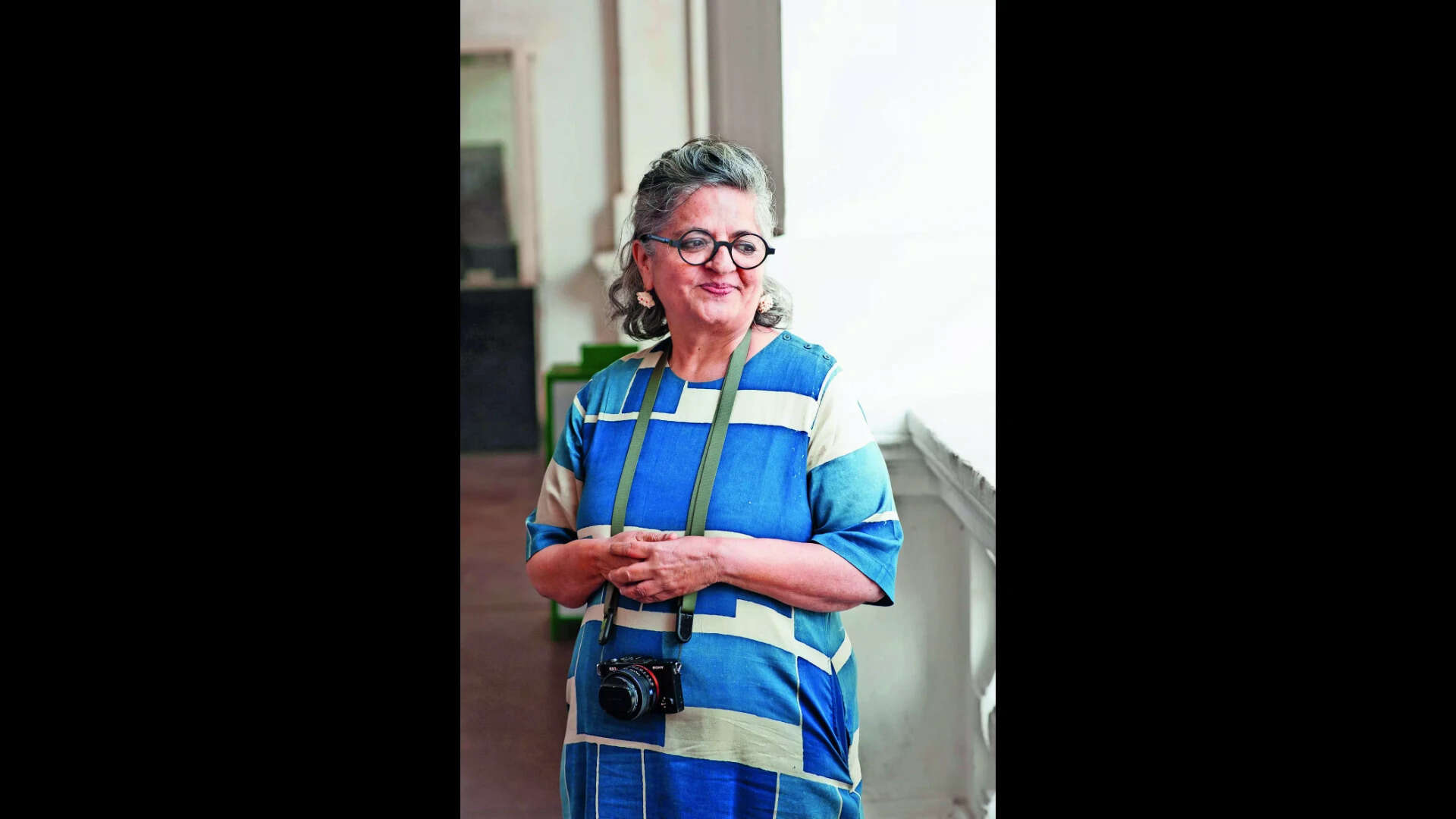
Dayanita Singh

Andrea Anastasio, director of the Italian Cultural Institute in Delhi
Curated by Italian Cultural Institute director Andrea Anastasio, the exhibition will travel, following its Venice presentation, to the Museo Nazionale Etrusco di Villa Giulia in Rome, the MAO – Museo d’Arte Orientale in Turin, and the Istituto Italiano di Cultura in New Delhi.In ARCHIVIO, the act of photographing becomes a form of cataloguing—an ongoing attempt to understand how memory is shaped, structured, and preserved. Singh revisits images she has made in Italian cities since the late 1990s, placing them in dialogue with her extensive studies of archives in India and elsewhere. Through this encounter, the exhibition proposes the archive not as a static storehouse but as a living organism, continuously rearranged through editorial play, display structures, and the resequencing of images.

Dayanita Singh, From Venice Pillar 3© Dayanita Singh/Archivio
This is the quiet radicality of her gaze: in places burdened by history, she finds the present. In cities saturated with representation, she uncovers anonymity: Andrea AnastasioAndrea Anastasio situates Singh’s practice within the broader question of how cultural memory is constructed. Andrea Anastasia shares,” She has been persistently photographing Italy. This long-duration engagement has unfolded without spectacle, without proclamation, almost as a parallel archive – one that has grown through friendship, trust, and the slow sedimentation of looking. From Venice to Bologna, from Florence to Milan, from Naples to Turin, Como, and Rome, Singh has approached Italian cities not as monuments to be recorded but as living organisms to be listened to.Crucial to this long engagement has been the role of friendship. Access – to private houses, hidden libraries, family collections, storerooms, and spaces otherwise inaccessible – has been granted to her not through institutional commission alone, but through relationships cultivated over decades. Friends have opened doors; they have entrusted her with their histories, their interiors, their Silences. In doing so, they have become, in a profound sense, her patrons This patronage is not economic in the classical sense, though it echoes the Italian tradition of artistic support. It is a patronage of care and reciprocity. Singh cares for the spaces and lives she photographs; in return, her friends care for her unfolding practice. The exchange is subtle but foundational. The archive that emerges from her Italian years is therefore not institutional but intimate – built on trust, sustained by mutual attention.What emerges from twenty-five years of photographing Italy is therefore not a survey, nor a documentation, but a relational cartography. It is a map drawn through attention, through patience, through return. Singh’s Italian archive does not claim authority over these cities; it inhabits them lightly. It listens more than it declares.And perhaps this is the quiet radicality of her gaze: in places burdened by history, she finds the present. In cities saturated with representation, she uncovers anonymity.”
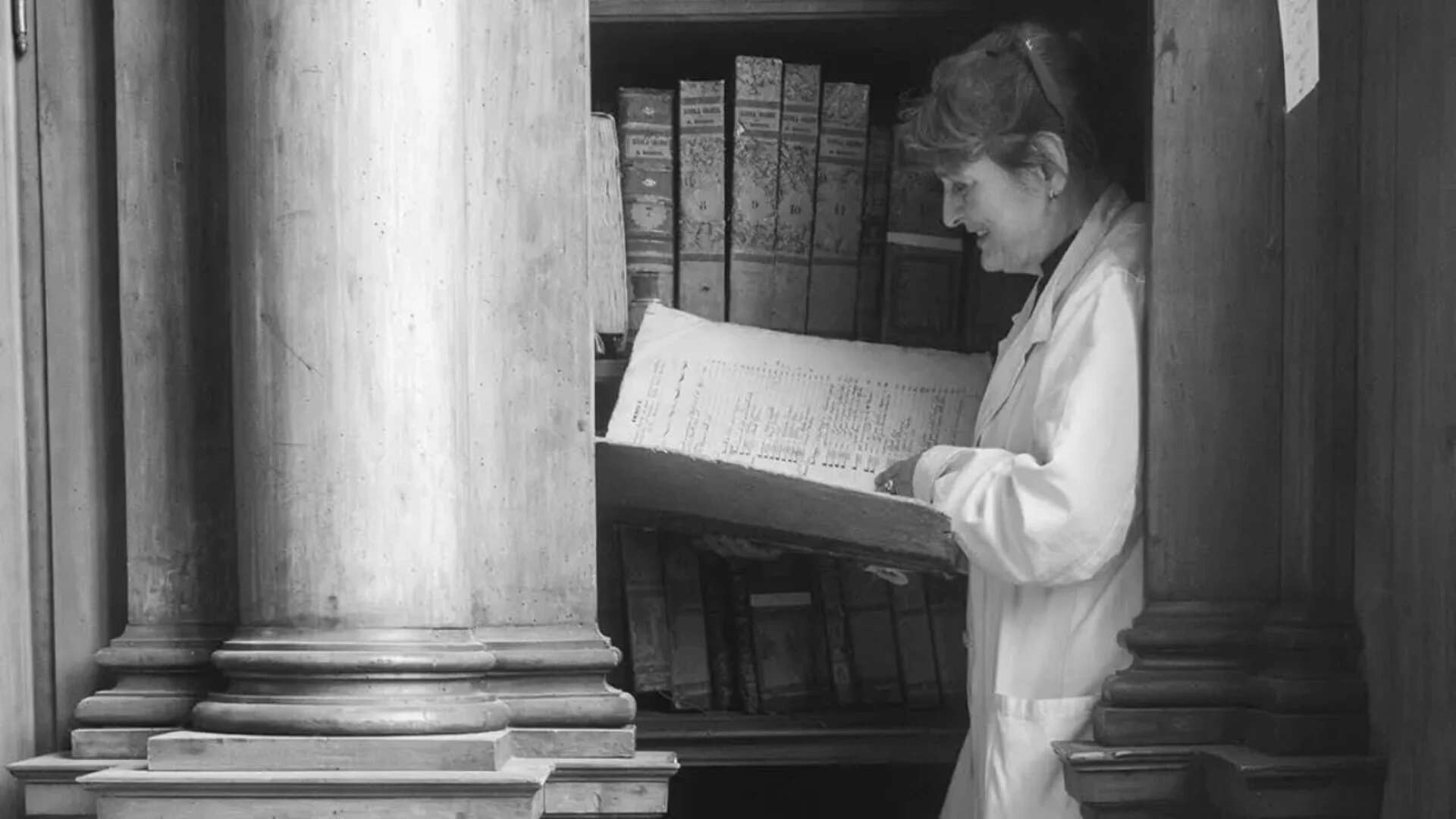
© Dayanita Singh/Archivio
The Archive as a Living FormAndrea Anastasio writes,”Dayanita Singh’s work unfolds at the intersection of photography, book-making, architecture, and memory, persistently challenging the conventions through which images are classified, preserved, and made meaningful. Over the course of more than three decades, Singh has redefined not only the status of the photographic image, but also the very idea of the archive itself. In her practice, the archive ceases to be a neutral repository of the past and becomes instead a living, mutable form-one that is activated through sequencing, circulation, and intimate encounters with viewers.Photography has long been bound to archival logic. From its earliest institutional uses-scientific documentation, ethnography, surveillance, and state administration-the photograph has been invested with evidentiary authority. It promises fixity, permanence, and truth. Singh does not reject this history; rather, she reworks it from within. Her images retain a deep respect for photography’s capacity to bear witness, yet they resist the static and hierarchical structures that traditionally govern archives. In her work, photographs do not merely record; they migrate, recombine, and generate meaning through their relations with one another.”