Vinay Kumar
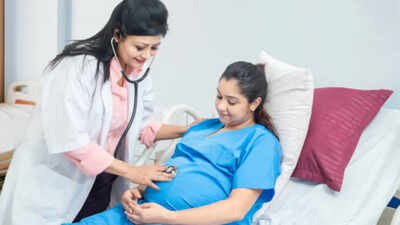
Despite a mandate for free maternal services in public healthcare, out-of-pocket expenditure for maternal care remains a significant burden on Indian families, primarily incurred for medications and diagnostic procedures, as per a journal published at the U.S. National Institutes of Health’s National Library of Medicine last year. In public health centres, the largest proportion of OOPE — 36 per cent — was allocated to unspecified “other” categories, followed by 26 per cent to medicine, 13 per cent each to transportation and hospital stay, and 11 per cent to tests. Conversely, private healthcare centres allocated the highest proportion of OOPE to hospital stays (34 per cent), followed by medicine (19 per cent), tests (16 per cent), others (22 per cent), and transportation (9 per cent).Moreover, between 3% and 7% of Indian households fall below the poverty line every year due to healthcare costs, and maternal care is a meaningful part of that story, as per the Observer Research Foundation (ORF). Further, funds released under the National Health Mission, which is the primary vehicle for maternal and child health services, have stagnated since 2019-20, as per the government data, even as the rhetoric around universal healthcare grows louder each budget cycle.The gap between policy intent and financial reality was exactly what a recent panel of public health professionals and economists set out to examine at the Times Future of Maternity 2026, organised by Times Internet and Pregatips.The panel looked at two Indias that barely speak to each other. In metros, the problem is a system that funds delivery but ignores everything before it. Aviral Shrivastava, founder of healthcare services marketplace for women MomKidCare, put it plainly, “Government is covering the events, they are not covering the journey.” Insurance schemes, public and private, reimburse hospitalisation and childbirth. Preventive care, mental health support and pre-conception counselling sit entirely outside the protocol.He pointed to the growth of IVF chains in urban centres as one consequence, with couples going for expensive fertility treatment without basic health screening, cycles fail, costs multiply, and the psychological toll on women goes unaddressed. “There is a huge cost which is involved in this process and again the mental stress for the mother who has failed IVF cycles,” he said.The second India is harder to look at. Dr Vandana Prasad, founder of the Public Health Resource Society and a community paediatrician with over three decades of work in deep rural and Adivasi areas, brought numbers that make the abstract concrete. “I have a line list at this point about 3,500 pregnant women in a very tribal location of India, where 22 per cent are teenage pregnancies. I have three or four girls who are 14 and are already mothers, while there have been five maternal deaths in the last six or eight months. That’s huge. And we don’t have maternal death audits.”Moreover, frontline ASHA workers, who are supposed to provide continuity of care from antenatal to postnatal, are under-capacitated. The private sector either doesn’t exist in these areas or operates in an informal, unregulated space, noted Dr Prasad.The financing picture that holds both realities together is one of consistent underinvestment. Prof. (Dr) Indranil Mukhopadhyay of OP Jindal Global University put India’s per capita public health spending at roughly $28, with China spending 15 times more per person and Sri Lanka more than three times.He pointed to the National Health Mission directly — since 2019, he said, the union government’s budgetary allocation to NHM has not increased in real terms, even though the majority of the population depends on the public system for childbirth.Reinforcing the accessibility dimension, Prof. (Dr) Sunita Reddy, Centre of Social Medicine & Community Health, JNU, said, “If we don’t finance public health systems, then we cannot reach the 70 per cent of the population who are in the rural and marginalised sections.” She also identified a specific distortion with state insurance schemes channelling money to the private sector rather than strengthening public facilities that most people actually use.Mukhopadhyay used caesarean section rates to illustrate how financial incentives distort care. Some districts in Chhattisgarh, Madhya Pradesh and Jharkhand record C-section rates as low as 3 per cent. In parts of urban India, over three-quarters of all deliveries are surgical, climbing above 90 per cent among the wealthiest, most educated urban families. These rates are largely in the private sector, while public system rates run at 10 to 16 per cent.His preliminary research, using machine learning on NFHS data, suggested that nearly 68 per cent of these private-sector caesareans may not be clinically indicated, though he was careful to note the manuscript is not yet published.The driver isn’t clinical judgment. It’s the insurance market. “The package rates for caesarean section are way higher compared to a normal delivery. So why would a hospital or a gynecologist go for a normal delivery if they get paid much more through caesarean section?” In the same system, 80 to 85 per cent of gynaecologist and paediatrician positions in some community health centres sit vacant.Prasad, on the other hand, didn’t frame the underfunding as administrative failure, but she named it a political choice. “All political parties say they are going to put 2.5 per cent of the GDP, not one has done it, not one, it’s not just this government, not previous government, not previous to previous government.”Coming to the accountability part, which connects affordability and access, while the schemes exist, the targets are announced repeatedly, but the money hasn’t followed the promises, according to the experts. Fundamentally, the panel was clear on the aspect that India’s maternal care problem is not a knowledge gap but a question of political will, and of who gets to decide it matters.