Vinay Kumar
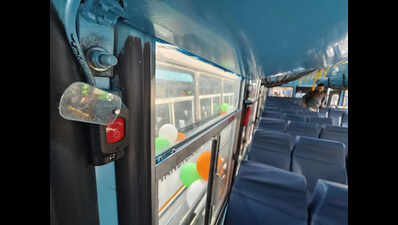
CHANDIGARH: Panic buttons installed in public service vehicles for use in life-threatening emergencies have largely become a source of false alarms, with over 13,600 activations recorded in April alone — none of which involved genuine distress or emergencies.According to a senior UT official, around 80 of these cases involved passengers seeking some form of intervention, such as complaints about fare disputes or incorrect drop-offs. These were addressed promptly by authorities.“Nearly all of the 13,600 were not genuine,” the official said. “Most of these ‘fake’ panic alerts were triggered out of mischief or by mistake. School buses and cabs accounted for the highest numbers.”The official stressed the need for a public awareness campaign, particularly targeting children travelling in school buses, on the proper use of the panic button.Integration with police emergency system stalledThe panic button system, part of the Vehicle Location Tracking Device (VLTD) and Emergency Alert System (EAS) project, is intended to automatically send alerts to both the VLT command-and-control centre and the Chandigarh Police’s Emergency Response Support System (ERSS-112) for immediate assistance.However, panic alerts have not been received at the ERSS-112 portal since July 31, 2024. A transport department official raised the issue during a recent meeting with police officials, emphasising that connecting the systems is essential for the project’s success.The police department has so far been reluctant to integrate the systems fully due to the flood of fake alerts. It has asked the UT transport department to first filter such messages and forward only those that require police intervention.Transport officials pointed out that there is currently no mechanism or Standard Operating Procedure (SOP) issued by the Ministry of Road Transport and Highways (MoRTH) for filtering panic alerts, and every alert is supposed to be treated as genuine.In their latest meeting on the issue of transport and police department, the transport department had again stressed the connecting of the panic button alerts with the ERSS-112.“We are now looking at ways to improve awareness and possibly introduce filtering mechanisms to make the system more effective and reduce misuse,” said the official.UT chief secretary H Rajesh Prasad has directed the transport department officials to ensure early resolution of issues related to panic alert integration with ERSS-112 in coordination with Chandigarh Police.BOX1: Drivers’ concernsCab drivers have expressed dissatisfaction with the existing setup, complaining of no or delayed responses from authorities when the button is pressed. They also view the mandatory installation as an additional financial burden. “The Chandigarh administration should re-think its implementation. Also, the Punjab registered cabs also have this feature but there is no command control centre for them,” said a cab driver.BOX2: ABOUT THE SYSTEMVLT Control CentreA 24×7 VLT Control Centre has been established at the office of the State Transport Authority, UT Chandigarh. It tracks the location of public service vehicles for the safety of passengers, especially women and children. An alert is generated when passengers press the panic button installed in the vehicle during an emergency.Key Figures (April 2026):– Total VLTD installed in commercial vehicles (mandatory): 9,219– Total panic alerts received: 13,640 (April 1 to 30, 2026)