
 Vinay Kumar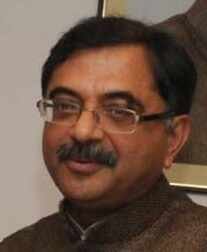
Now, under the leadership of the Akhil Bharatiya Vanvasi Kalyan Ashram (the world’s largest non-Christian tribal organization), 500,000 tribal people from all corners of India have gathered at Delhi’s Red Fort for the largest protest since independence. The gathering will be addressed by home minister Amit Shah and various tribal leaders. People from all eight Northeastern states, as well as border areas near Myanmar, Bangladesh, Bhutan, Thailand, and Pakistan, have braved Delhi’s extreme summer heat with one clear demand: protect their religion, culture, and traditions. They argue it is unconstitutional for individuals who abandon tribal faiths and convert to another religion to receive “double benefits” as both a religious minority and a Scheduled Tribe (ST). They demand an end to this practice.
This demand was first raised by Shri Kartik Oraon, a scholarly tribal leader from the Lohardaga region and a minister in Indira Gandhi’s cabinet. He argued that anyone who leaves tribal traditions to become Christian or Muslim should be removed from the Scheduled Tribe list—a view also shared by Dr. B.R. Ambedkar. Kartik Oraon even presented a memorandum signed by 235 Members of Parliament along with a draft Scheduled Tribes Amendment Bill to Prime Minister Indira Gandhi, but ostensibly under pressure from Christian MPs and took no action.
Leaders like Sardar Patel were true visionaries. The Advisory Committee constituted by the Constituent Assembly on Minorities Rights, Fundamental Rights etc. headed by Sardar Vallabh Bhai Patel had classified that barring Anglo Indians, all other Christians of India would fall under the category of Indian Christians and they would not be given any benefit under Reservation Policy. Commenting on it, Dr Babasaheb Ambedkar said that Muslims had been getting the benefit of protection starting from 1892 fora period of at least 60 years. Christians enjoyed the facilities since 1920 for 28 years. Harijans had been getting benefits since 1935 for a shorter period, and he recommended it to be continued further. Referring to Scheduled Tribe, Dr Ambedkar further said “I am ready to give the benefits to the scheduled tribe for a longer period” It clearly shows that the Indian Christians enjoying the benefits of the reservation is unconstitutional and hence, highly condemnable.
Few realize that the villages lining India’s borders—from Jaisalmer and Jodhpur to Tawang (Arunachal Pradesh), and from Ladakh to the Andamans—are inhabited entirely by tribal communities. They are the nation’s first line of defense, facing enemies even before the army arrives. During the Kargil War, it was tribal shepherds who first reported the Pakistani intrusion. India’s overall growth and security are deeply tied to the development of these communities. If the tribal population is destabilized by foreign conspiracies, the entire country suffers.
For the last 40 years, Naxalite-Maoist Communist terrorists ruled across tribal regions in 13 states, instigating armed rebellion and bloodshed against India. The government spent thousands of crores of rupees deploying security forces against them, losing more soldiers to internal Maoist violence than in multiple wars with Pakistan and China combined. For the first time, under Home Minister Amit Shah’s decisive leadership, these Maoist networks are being dismantled, freeing the tribal people from their grip. Furthermore, Prime Minister Narendra Modi declared the birthday of Bhagwan Birsa Munda—the legendary tribal deity of Jharkhand known as “Dharti Aba” (Father of the Earth)—as National Tribal Pride Day (Janajatiya Gaurav Divas). This move honors Birsa Munda’s fierce resistance against British rule and foreign attacks on tribal faith and culture. The current government draws its inspiration from his life and sacrifice.
The massive tribal gathering at Delhi’s Red Fort is a cry from the nation’s soul. This is the very community that helped Lord Rama defeat Ravana and stood firmly with Lord Shiva and Maharana Pratap against foreign invaders. Tribal heroes from Nagaland, Arunachal, Manipur, Meghalaya, Assam, and Tripura, alongside elite athletes, have consistently brought glory to India. They are not just cultural displays for the Republic Day parade; they are the true guardians of India’s national security and civilization. Ignoring their voices would endanger the future of the entire country.
To better understand the historical context of the text, here are the key individuals mentioned and their specific contributions to the tribal community:
1. Shri Kartik Oraon
-
An eminent tribal leader, scholar, and politician from Jharkhand (Lohardaga region) who served as a Union minister in Indira Gandhi’s government. He was the pioneer of the “De-listing” movement. In the late 1960s and 1970s, he fiercely advocated that tribal individuals who convert to Christianity or Islam should lose their Scheduled Tribe (ST) reservation benefits, arguing that reservation was meant to protect indigenous culture and faiths. He successfully mobilized 235 MPs to sign a petition for this amendment, though it was not enacted into law at the time.
2. Dr. B.R. Ambedkar
-
The father of the Indian Constitution and India’s first Law Minister.While framing the Constitution, Dr. Ambedkar laid down the legal foundations for Scheduled Tribe benefits. As noted in the text, he maintained that tribal reservation benefits were inherently linked to preserving the distinct, indigenous cultural and religious identities of the tribes, supporting the logic that changing to a major organized religion alters that indigenous tribal status.
3. Bhagwan Birsa Munda (“Dharti Aba”)
-
A 19th-century folk hero, tribal freedom fighter, and religious leader belonging to the Munda tribe of the Chota Nagpur Plateau. He spearheaded the Ulgulan (The Great Tumult) rebellion against British colonial exploitation and land grabbing in the late 1890s. Beyond fighting the British, he actively defended tribal faith (Sarna) against forced religious conversions and sought to restore tribal self-respect. He is revered today as a spiritual figure and the ultimate symbol of tribal pride and sovereignty.
4. Amit Shah (Union Home Minister)
-
Credited in the text with executing a zero-tolerance policy against Left-Wing Extremism (LWE). By giving security forces a free hand, his administration significantly weakened the 40-year-old Maoist/Naxalite insurgent networks in the tribal “Red Corridor,” aiming to restore safety, state governance, and development infrastructure to isolated tribal villages.
5. Narendra Modi (Prime Minister)
-
Elevated tribal heritage to the national stage by institutionalizing Janajatiya Gaurav Divas (National Tribal Pride Day) on November 15 (Birsa Munda’s birth anniversary). His government has focused on symbolic and structural integration—such as establishing tribal museums across India, promoting tribal freedom fighters in history curricula, and heavily funding border village developments.
Disclaimer
Views expressed above are the author’s own.
END OF ARTICLE


![‘Jana Nayagan’ box office collection Day 13 [Live]: Vijay and Pooja Hegde starrer eyes the Rs 180 crore India net milestone after amassing a worldwide gross of Rs 300 crore | Tamil Movie News](https://worldstoriesweb.com/wp-content/uploads/2026/08/132852853.jpg)
