 Vinay Kumar
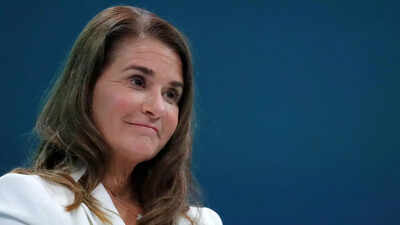
Melinda French Gates, philanthropist and co-founder of the Bill & Melinda Gates Foundation, has offered an advice that can help people steer past their difficult times: Keep learning and stay open to change. At first, the words seem pretty straightforward. But sit with them for a moment, and they carry a quiet weight. In a single sentence, two things are connected – something that people often treat separately: the act of learning and the willingness to change.
Quote of the day by Melinda French Gates (former wife of Microsoft founder Bill Gates )
“The most important thing you can do is to keep learning and stay open to change.”
What Melinda French Gates’ quote actually means
The quote is built around two distinct but deeply connected ideas: learning and openness. Learning, in this context, is not limited to classrooms or formal education. It is the ongoing process of gathering experience in life, updating your understanding and building on what you already know. It happens in conversations, in failures, in new responsibilities and in moments that do not go the way you expected.Openness to change is what makes that learning useful. Without it, new information has nowhere to go. A person can read, observe and experience but if they are not willing to let those experiences shift how they think or act, very little actually changes. Together, the two ideas form a kind of operating principle for navigating life as it actually is, rather than as we wish it would be.
Why this quote feels personal to so many people
Most people can recall a moment when they held on too tightly to the way things were. A familiar job, a comfortable routine, a belief that had gone unexamined for years. And most people can also recall the discomfort that came when circumstances forced something to shift.They may have experienced that tension – between the comfort of the known and the demands of the new. This is exactly what this quote addresses. It does not dismiss the difficulty, does not promise that change will always feel good, rather what it does instead is point toward something actionable: the choice to keep learning and the decision to stay open.This is why the quote resonates beyond any single profession or stage of life. A student stepping into a new environment, a professional navigating a shifting industry, a parent adjusting to a child growing up and away: all of them are being asked, in their own way, to do exactly what Melinda French Gates describes.
Learning as a lifelong practice, not a phase
One of the quieter implications of this quote is that learning does not end. There is no point at which a person can reasonably say they have learned enough and can now coast. In school, you study the basics to be prepared for the college life. In college life, you learn life skills and in job, over the years, you learn how to survive.So learning while you are living is not a discouraging idea. It means that every stage of life holds the possibility of growth. It means that not knowing something is not a failure; it is simply a starting point. And it means that the people who tend to handle change well are not necessarily the most talented or the most experienced, they are often simply the most curious.In practical terms, this looks like asking questions rather than assuming answers. It looks like seeking out perspectives that challenge your own. It looks like being willing to be wrong, and treating that moment not as an embarrassment but as information.
Staying open to change
While staying open to change is harder than it sounds as it asks something real of people, its the only way to survive in the ever changing world. Change often arrives uninvited. It disrupts plans, upends expectations and asks people to let go of things they may have worked hard to build. Even when change is ultimately for the better, the transition period is rarely comfortable.What Melinda French Gates’ quote offers is not a guarantee that change will be painless. It offers something more durable: a perspective. When a person is genuinely open and not resigned, but actively willing, change loses some of its power to destabilise. The uncertainty is still there, but the relationship to it is different. This is the difference between being pulled along by events and moving through them with some degree of intention.
How this reflects Melinda French Gates’ own life and work
The quote does not come from someone observing these ideas from a distance. Melinda French Gates has spent decades working on some of the most complex and entrenched challenges in the world: global health, poverty, gender equity, and education in under-resourced communities. Work of that kind demands both qualities she describes. It requires continuous learning, because the evidence changes, the contexts shift and solutions that worked in one place do not automatically transfer to another. And it requires genuine openness to change, because holding rigidly to a single approach in the face of new information is not commitment — it is a liability.Her own life has also reflected this principle in a more personal way. Following her highly public divorce from Bill Gates, she has rebuilt her philanthropic identity independently, launching Pivotal Ventures and continuing her advocacy on her own personal terms.