 Vinay Kumar
The decision of the newly formed Tamil Nadu government under Vijay’s leadership to cancel licences of liquor shops located near temples and schools has generated considerable public support, particularly among women voters across several constituencies. For many communities, these outlets symbolised not merely the sale of alcohol but the everyday visibility of addiction, harassment, indebtedness, and domestic distress. In that sense, the move carries both political and moral resonance. It signals responsiveness to long-standing demands from women who have often borne the social and economic consequences of alcohol dependence within families and neighbourhoods.
Yet the larger question remains: can addiction be meaningfully addressed through closure of shops alone?
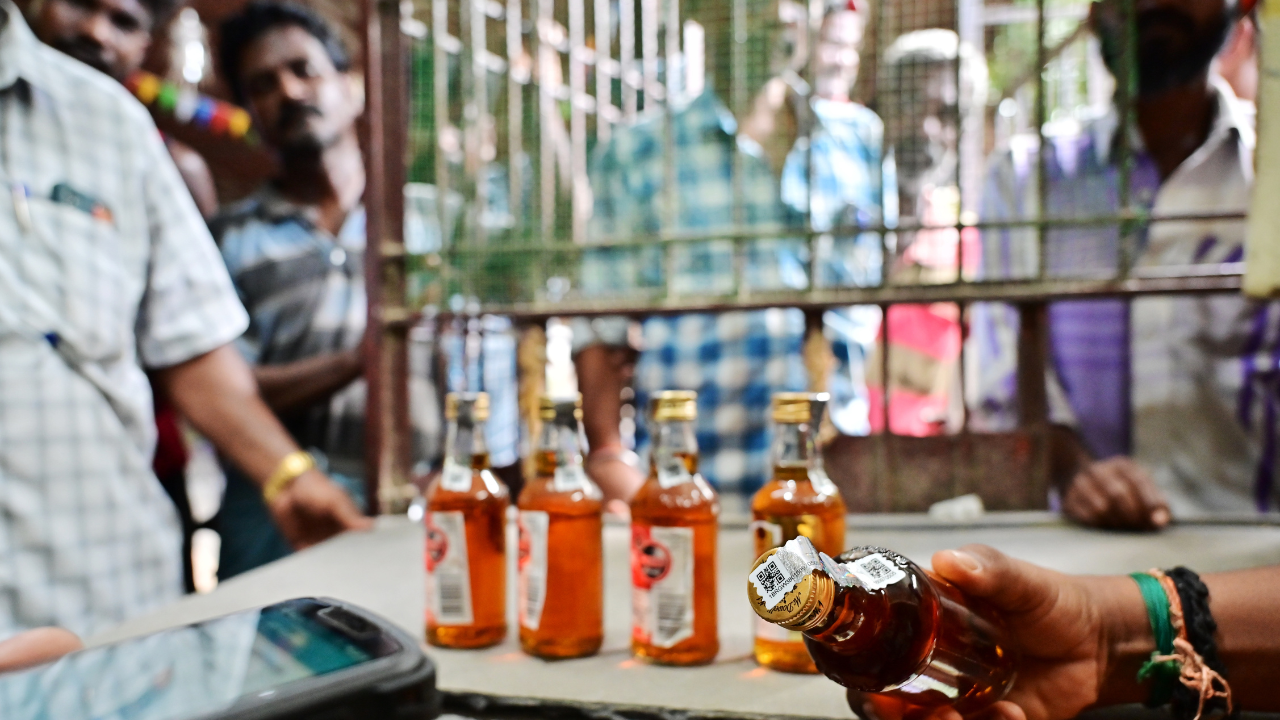

India’s alcohol policy has long oscillated between two extremes — state dependence on liquor revenue on one hand, and periodic prohibition or restriction on the other. Neither approach has adequately confronted alcoholism as a complex public health and social issue. Across several Indian states, including Kerala and Tamil Nadu, per capita alcohol consumption remains high despite repeated attempts at regulation or moral campaigns against drinking. The persistence of harmful alcohol use suggests that addiction cannot simply be legislated away.
The experiences of states such as Gujarat and Bihar illustrate this contradiction. Gujarat has long maintained prohibition, yet reports of bootlegging, illicit alcohol networks, and alcohol-related liver disease continue to emerge periodically. Bihar’s prohibition policy similarly produced mixed outcomes, including concerns regarding illegal trade and the disproportionate impact of enforcement on poorer communities. Restricting supply without addressing demand often pushes alcohol consumption into less visible and potentially more dangerous channels.
The public conversation on alcohol in India also tends to remain narrowly moralistic. Drinking is often framed either as an issue of individual weakness or as a law-and-order problem. Far less attention is paid to the social and psychological conditions that shape addiction. Alcohol dependence frequently intersects with unemployment, precarious labour conditions, migration, loneliness, social isolation, and mental distress. In many urban and peri-urban settings, liquor shops function not only as commercial spaces but also as social spaces tied to labour networks and masculine sociality. Simply shutting shops without preparing communities for behavioural transition may therefore produce unintended consequences.
This is particularly important because sudden restriction or reduced access can also generate withdrawal-related harms among dependent users. Public health evidence globally has shown that abrupt cessation without adequate medical or psychosocial support can lead to severe health complications, including anxiety, aggression, and medical emergencies among individuals with chronic alcohol dependence. Families already living under economic or emotional strain may experience new forms of instability if states implement restrictive measures without parallel investments in support systems.
Women’s demands for regulating alcohol must nevertheless be taken seriously. Across India, women’s groups have historically led anti-liquor movements because they directly experience the consequences of harmful alcohol use — domestic violence, depletion of household income, neglect of children, unsafe neighbourhoods, and social insecurity. Their concerns are not abstract moral anxieties but grounded experiences of everyday harm. However, responding to these demands only through symbolic closures risks simplifying a much deeper crisis.
What remains largely absent in Indian alcohol policy is a comprehensive public health framework. States continue to focus disproportionately on licensing, taxation, policing, and revenue generation while neglecting de-addiction infrastructure, mental health services, behavioural counselling, and community-based prevention programmes. Public hospitals often lack accessible addiction treatment services, particularly for poorer and marginalised populations. Families coping with addiction frequently navigate the crisis alone, often under stigma and silence.
A serious policy response would therefore require moving beyond the binary of unrestricted sale versus prohibition. It would involve sustained behavioural-change campaigns, school- and community-based awareness programmes, expansion of mental health and addiction services, and investment in rehabilitation systems that are affordable and locally accessible. It would also require recognising alcoholism not merely as an individual failing but as a social and health condition shaped by wider economic and cultural pressures.
Equally important is the need for transition planning whenever restrictive alcohol policies are introduced. If governments anticipate reduced access to alcohol, they must simultaneously prepare health systems and communities for the consequences. This includes strengthening withdrawal management services, training primary healthcare workers, supporting families, and preventing the emergence of illicit and unsafe alcohol markets. Without such preparation, policy measures may simply displace harm rather than reduce it.
There is also a deeper contradiction in how Indian states approach alcohol. Governments often rely heavily on liquor revenues to finance welfare and development programmes, even while publicly acknowledging the social harms associated with alcohol consumption. Tamil Nadu’s own history with TASMAC reflects this tension between welfare politics and revenue dependence. As long as states remain financially dependent on alcohol sales, policy responses are likely to remain fragmented and politically inconsistent.
The current move in Tamil Nadu may therefore be understood as an important symbolic beginning rather than a complete solution. Restricting liquor outlets near schools and temples may reduce localised exposure and respond to community concerns about public space and neighbourhood safety. But addiction itself requires a much wider social response. Without addressing the structural conditions that sustain harmful alcohol use — unemployment, distress, mental health burdens, gender inequality, and weak public health systems — closure of shops alone is unlikely to produce long-term transformation.
If India is serious about reducing alcohol-related harm, it must move beyond episodic prohibition politics and towards a coherent public health approach rooted in care, prevention, rehabilitation, and social support. Otherwise, alcohol policy risks becoming an exercise in symbolic governance while the deeper crisis of addiction continues unresolved beneath the surface.
Disclaimer
Views expressed above are the author’s own.
END OF ARTICLE