Vinay Kumar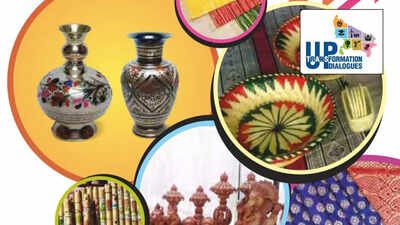
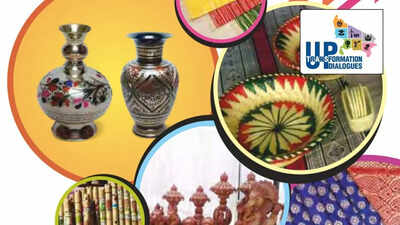
Uttar Pradesh has a wide and varied base of traditional crafts across its districts. From brass metalwork in Moradabad to Banarasi silk in Varanasi, zari-zardozi embroidery in Lucknow, glass beads in Firozabad and wooden toy carving in parts of Varanasi, the state’s 75 districts reflect a deep concentration of long-standing artisanal skills. For many years, however, these artisans had limited access to wider markets and often worked without formal branding, credit support or design inputs. ODOP — One District One Product — was introduced to address these gaps.
What is ODOP?
ODOP (One District One Product) was started by the Government of Uttar Pradesh in 2018 as an economic initiative that assigns one signature product per district and supports its development across the entire value chain. This includes access to raw materials, training in skills, product design, branding, packaging, and support for exports. Later, the programme was adopted at the national level by the Government of India under the Ministry of Food Processing Industries and expanded across states.District-level products are chosen based on existing local production, strength of the artisan or producer base, export possibilities, and potential for employment generation. Some examples include leather goods from Agra, peda from Mathura, knives from Rampur, jaggery from Bijnor, and flutes from Pilibhit.
Who benefits?
The programme focuses on the wider ecosystem connected to each product, such as artisans, small manufacturers, weavers, farmers, traders, and logistics workers. Primary support is directed toward micro and small enterprises (MSMEs) and individual craft workers in rural and semi-urban regions. Special attention is given to women entrepreneurs, SC/ST communities, and first-time business owners.Support measures include subsidies for capital investment (margin money support up to Rs 25 lakh for projects up to Rs 50 lakh), interest subsidies on loans, assistance in Geographical Indication (GI) tagging, help with design and packaging improvement, participation in trade fairs, and access to e-commerce platforms like Amazon, Flipkart, and government marketplaces.
How to apply
Artisans and MSMEs can access ODOP support through the following channels:
- ODOP Portal: Register on odopup. in as a beneficiary under your district’s product category.
- District Industries Centre (DIC): Apply locally for margin money subsidy and skill development programmes.
- MSME Facilitation Centre: Get assistance with loan applications, cluster registration, and export documentation.
- Common Service Centre (CSC): Use for Aadhaar-linked registration and support for e-commerce onboarding in rural areas.
From Moradabad to Dubai: export success stories
ODOP has contributed to growth in Uttar Pradesh’s export sector. In Moradabad, known as the ‘Brass City’, support for the brassware cluster has enabled artisans to access GI tagging, co-branding under the “UP Crafts” mark, and listings on global e-commerce platforms such as Amazon Global. Products that were earlier sold mainly in domestic wholesale markets are now being exported to countries including the UAE, UK, and the USA, often at higher value realization. Many participating artisans report an increase of around 60–80 per cent in export earnings compared to domestic sales.In Varanasi, Banarasi silk sarees have been repositioned for global markets under the ODOP framework. GI registration, design support through government-backed institutes, and export clusters at events such as the UP International Trade Show have helped weavers access higher-value markets and improved pricing outcomes compared to earlier years.
The 2026 vision
The Government of Uttar Pradesh aims to achieve Rs 25,000 crore in ODOP-linked exports by 2026. With 75 districts mapped to 75 products and a state branding system under the “UP Crafts” label, the programme is being positioned as part of the state’s broader economic development strategy.ODOP is also being linked with the PM Vishwakarma Yojana, a central government initiative for traditional artisans, to create a combined support system covering training, credit access, and market linkage for the informal craft sector.