 Vinay Kumar
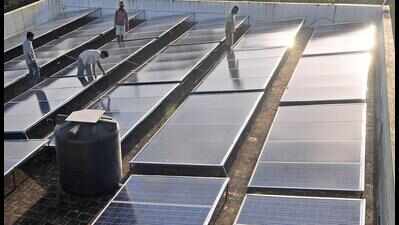
T’puram: Kerala State Electricity Regulatory Commission (KSERC) has granted approval to the KSEB proposal to set up the 250 MW grid connected battery energy storage system (BESS) at the 220 kW substation premises at Brahmapuram, Ernakulam.The facility is being set up utilizing the viability gap funding (VGP) under the power system development fund (PSDF) constituted by the central govt. The commission gave KSEB the go-ahead to proceed with the L1 tariff of Rs 1,81,000/MW/month quoted by Shreyas Sortex Industries Pvt Ltd.The scheduled commissioning of the project is within 18 months. The commission asked KSEB to try to get the project commissioned at the earliest even if it means the board will have to pay incentive for early commissioning. KSEB, as the buying entity, shall provide the electricity required for charging BESS during the entire 15-year term of the agreement.The Union power ministry had in 2022 notified the ‘Guidelines for Procurement and Utilization of Battery Energy Storage Systems as part of Generation, Transmission, and Distribution assets, along with Ancillary Services’. These guidelines recognized BESS as a critical infrastructure for integrating renewable energy into the grid and ensuring system stability. Under the scheme, Kerala was allocated 500 MWh of capacity with a financial support rate of Rs. 18 lakh per MWh, totalling Rs 90 crore. The proposed project is engineered for high-intensity grid support, featuring a two-hour discharge duration and a duty cycle of 420 cycles per year over its 15-year operational life. The system will be installed within Brahmapuram Diesel Power Plant premises in Kochi, a strategic location that allows robust connectivity and efficient energy management for Ernakulam.At present, market prices during solar hours are significantly low; hence, whenever cheaper power is available in the market, it will be utilized for charging to minimize the levelized cost of storage.Furthermore, during the daytime, KSEB often surrenders tied-up power as part of maintaining the load-generation balance and cost optimization. Instead of such surrenders, this power can be effectively utilized for charging the BESS, ensuring better resource utilization and financial efficiency, KSEB said.