
 Vinay Kumar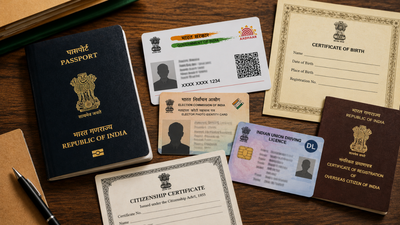
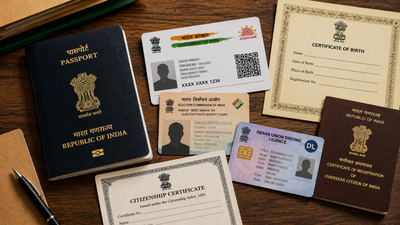
NEW DELHI: A clarification by the ministry of external affairs (MEA) that a passport is “primarily a travel document” and not proof of citizenship has renewed attention on a longstanding legal question – what documents establish Indian citizenship?Speaking at an event marking the 14th Passport Seva Divas, senior MEA official said a passport attests the nationality of Indians when they are abroad but should not be treated as a citizenship document. The remarks come amid wider debates around citizenship documentation and electoral roll verification.
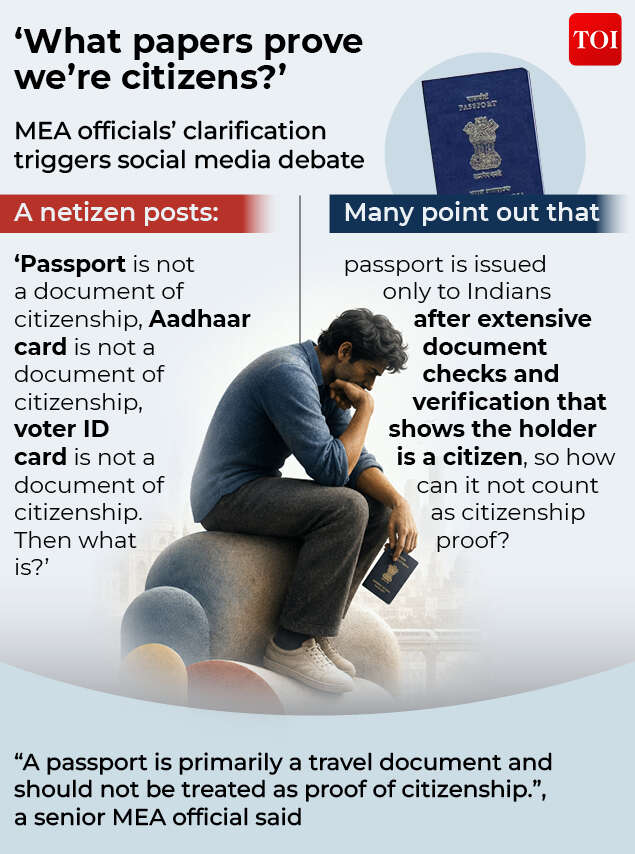
Last September, the Supreme Court declined requests from political parties seeking a direction to the Election Commission (EC) to treat Aadhaar as a standalone document for establishing citizenship during the special intensive revision (SIR) of electoral rolls in Bihar. The court observed that Aadhaar’s legal status could not be expanded beyond what is provided under existing law and refused to mandate its acceptance as sole proof of citizenship for voter enrolment.
Some FAQs on citizenship:
Q. How can Indian citizenship be acquired?
According to a PIB Q&A on the National Register of Citizens (NRC), Indian citizenship can be acquired in five ways under the Citizenship Act, 1955:
Q. Is there a single document that proves Indian citizenship?
No. India does not issue a single, universally held document that serves as definitive proof of citizenship for all citizens. Citizenship is established based on how it was acquired and the supporting records available under the Citizenship Act.
Q. What is direct proof of Indian citizenship?
For people who became Indian citizens through registration or naturalisation, a citizenship certificate issued by the government serves as direct proof of citizenship.
Q. Is a citizenship certificate issued to every Indian citizen?
No. Citizenship certificates are generally issued to people who acquire Indian citizenship through registration or naturalisation. Most Indians who are citizens by birth or descent do not possess a citizenship certificate.Q. What about Indians who acquired citizenship by birth or descent?Most Indians acquire citizenship by birth or descent and may never possess a citizenship certificate. In such cases, citizenship is established through a combination of documents relating to date and place of birth, parentage and nationality.
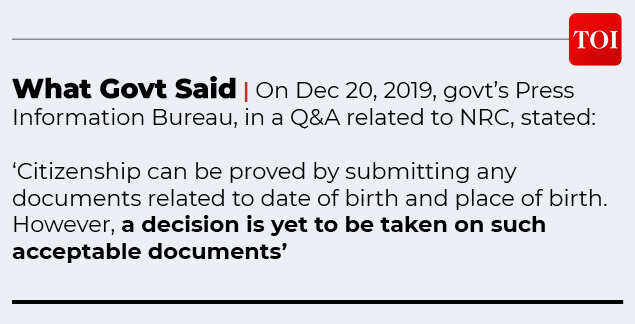
Q. Which documents can help establish citizenship?
Depending on the case, these may include:
Q. Can an Indian passport be used in citizenship-related applications?
Yes. The ministry of home affairs’ citizenship guidelines refer to Indian passports and citizenship certificates as proof of Indian citizenship in applications involving spouses, children or parents of Indian citizens.
Q. Are Aadhaar, voter ID and driving licence proof of citizenship?
No. Aadhaar cards, voter IDs and driving licences primarily establish identity, residence or electoral registration. They are not considered conclusive proof of citizenship on their own.
Q. Why don’t identity documents automatically prove citizenship?
Documents such as Aadhaar, voter ID and driving licence are issued for specific purposes such as identity verification, electoral registration or driving privileges. They are not designed to determine citizenship status and therefore are not treated as conclusive proof of citizenship on their own.
Q. Why did the MEA say a passport is not proof of citizenship?
The MEA clarified that a passport is primarily a travel document that attests the holder’s nationality abroad. Legally, citizenship is determined under the Citizenship Act, while a passport is issued under the Passports Act and does not by itself constitute definitive proof of citizenship in all circumstances.