Vinay Kumar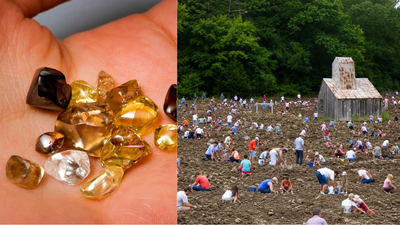
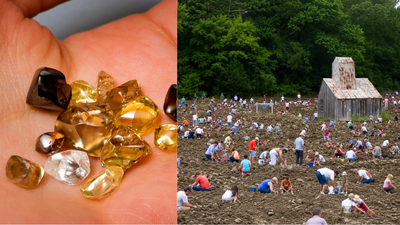
Most tourist attractions leave visitors with photographs and memories, but one state park in the United States gives them the chance to uncover a natural diamond and take it home. The latest success story came when Florida couple Scott and Jennifer Freitas discovered a 3.36-carat white diamond, now named the Dash Diamond, during a visit to Arkansas’ Crater of Diamonds State Park. Just weeks earlier, Pennsylvania visitor Keshia Smith unearthed a 3.09-carat white diamond. These remarkable discoveries are only the latest examples of why the park has become one of America’s most unusual tourist attractions, where visitors search for natural diamonds and get to keep whatever they find.
The only park of its kind
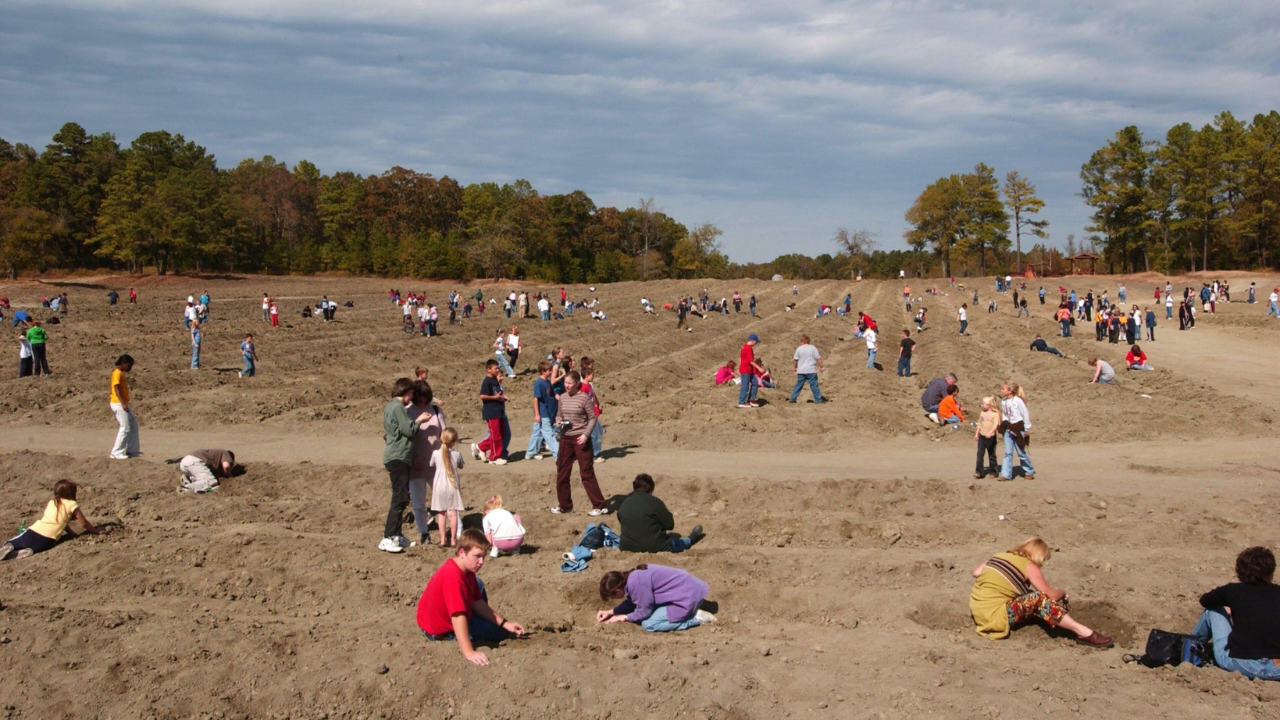
Located in Murfreesboro, Arkansas, Crater of Diamonds State Park is the world’s only public diamond-bearing site where visitors can search for natural diamonds in their original volcanic source and legally keep any gems they discover. Unlike traditional mines, the park operates under a unique “finders keepers” policy, allowing anyone to take home whatever diamonds, gemstones or minerals they uncover.Instead of simply viewing exhibits, visitors can spend the day digging, surface searching or wet sifting across a 37-acre ploughed search field. The park rents out tools such as shovels, buckets and screens for beginners, while experienced visitors are welcome to bring their own equipment. Staff at the Diamond Discovery Center also identify and register every suspected diamond free of charge, helping visitors distinguish genuine gemstones from ordinary rocks. On average, visitors discover around two diamonds every day, although thousands of other minerals, including amethyst, agate, jasper and garnet, are also found throughout the year.
How diamonds were first found there
The story began in 1906 when local farmer John Huddleston discovered two unusual sparkling stones on his property while searching for a better farming site. The stones were later identified as diamonds, sparking a wave of excitement that became known as Arkansas’ “diamond fever”. Prospectors, investors and mining companies soon descended on the area, hoping to uncover a commercially viable diamond deposit.Although several mining companies attempted to extract diamonds commercially over the following decades, none managed to sustain profitable operations. The volcanic soil proved difficult to mine on a large scale, and ownership of the property changed hands several times. In 1972, the State of Arkansas purchased the site and transformed it into Crater of Diamonds State Park, giving the public a rare opportunity to search for natural diamonds themselves rather than leaving the land to commercial mining.
The numbers that make it special
Since becoming a state park in 1972, visitors have registered more than 37,377 diamonds. Looking further back, more than 75,000 diamonds have been unearthed from the site since the first discoveries in 1906. Park officials estimate that visitors continue to find more than 600 diamonds each year, with many discoveries ranging from tiny white crystals to multi-carat gemstones.The diamond search area covers approximately 37 acres, making it one of the world’s very few places where members of the public can search for naturally occurring diamonds in their original volcanic source. The field sits atop an eroded volcanic pipe known as the Prairie Creek lamproite, which brought diamonds from deep within the Earth’s mantle millions of years ago.The largest diamond ever discovered in the United States also came from this site. Known as the Uncle Sam Diamond, the rough stone weighed 40.23 carats when it was found in 1924. After being cut into a 12.42-carat emerald-shaped gem, it became part of the Smithsonian National Museum of Natural History’s mineral and gem collection, where it remains today.
Why visitors still go
The park’s biggest attraction is its simple “finders keepers” policy. Every diamond, gemstone or mineral discovered by visitors legally belongs to the person who finds it, regardless of its size or value. That rule has turned the park into a bucket-list destination for amateur treasure hunters, geology enthusiasts and families from around the world.Guests can search using several methods, including surface searching, dry sifting and wet sifting, with the latter being one of the most successful techniques for recovering diamonds because it separates heavier materials from lighter soil. After a potential diamond is found, park geologists examine the stone and officially register qualifying discoveries before visitors take them home.Although there is no guarantee of finding a diamond, the possibility keeps visitors returning year after year. Many arrive with no mining experience at all, yet the park regularly produces notable discoveries by tourists, reinforcing the idea that anyone could become the next person to uncover a valuable gemstone. Weather conditions, particularly heavy rain, often improve the chances of finding diamonds because rainfall washes the soil away and exposes stones closer to the surface.
Famous diamonds found at the park
Crater of Diamonds State Park has produced several famous gems over the past century, many of which have become part of American gem history.The Uncle Sam Diamond remains the largest ever found in the United States. The Star of Arkansas, discovered in 1956, weighed 15.33 carats before being cut into a 7.54-carat gem. The Amarillo Starlight, discovered by a Texas visitor in 1975, weighed 16.37 carats and was later fashioned into a 7.54-carat marquise-cut diamond, becoming the largest diamond found by a visitor since the site became a state park.Another celebrated discovery is the Esperanza Diamond, an 8.52-carat rough white diamond found in 2015 by Colorado visitor Frenchie Bordelon. After being expertly cut and polished, it became a flawless 4.6-carat gem and is regarded as one of the finest diamonds ever recovered from the park. Another iconic find is the Strawn-Wagner Diamond, discovered in 1990. Although the rough stone weighed only 3.03 carats, it achieved the rare distinction of being graded as ideal cut, D-colour and flawless, making it one of the world’s most perfect diamonds.More recently, visitors have continued to make headlines. Pennsylvania resident Keshia Smith discovered the 3.09-carat Za’Novia Liberty Diamond in May 2026, while Florida couple Scott and Jennifer Freitas found the 3.36-carat Dash Diamond in July 2026, now the second-largest diamond registered at the park this year. As of the latest park update, 332 diamonds have been registered at Crater of Diamonds State Park in 2026, proving that remarkable discoveries are still being made by ordinary visitors every year.