 Vinay Kumar
At some point, very quietly, the world decided that thirty-nine was no longer an age but a warning label. In sport it is meant to be the beginning of the soft exit: the ambassadorial smile, the carefully managed minutes, the documentary crew arriving while the violins tune up for one last montage. In professional life it is the point at which people start using the word reinvention with the expression of a dentist introducing the subject of a root canal.
Lionel Messi, being Lionel Messi, appears not to have received the circular. This is a document I know well, having been cc’d on it several times myself.


Argentina were two goals down to Egypt in Atlanta, a quarter of an hour from the exit, and the football world had already begun reaching for its obituary adjectives, the brave, glorious, final vocabulary people reserve for burying you politely. Messi had seen a first-half penalty saved by Mostafa Shobeir, his second miss of the tournament, which made him the only man ever to miss two spot-kicks in a single World Cup.
For one uncomfortable stretch he looked almost human, which is always alarming in a player who has spent two decades treating physics as a mid-level functionary. Then Romero scored, from a ball Messi had threaded. Then Messi scored. Then Enzo Fernández headed in during stoppage time, and the old man had not merely survived the evening but quietly rearranged its furniture. Shakespeare, who knew something about late acts, has Edgar conclude in Lear that ripeness is all. Messi seems to have read this not as a meditation on mortality but as a team-talk.
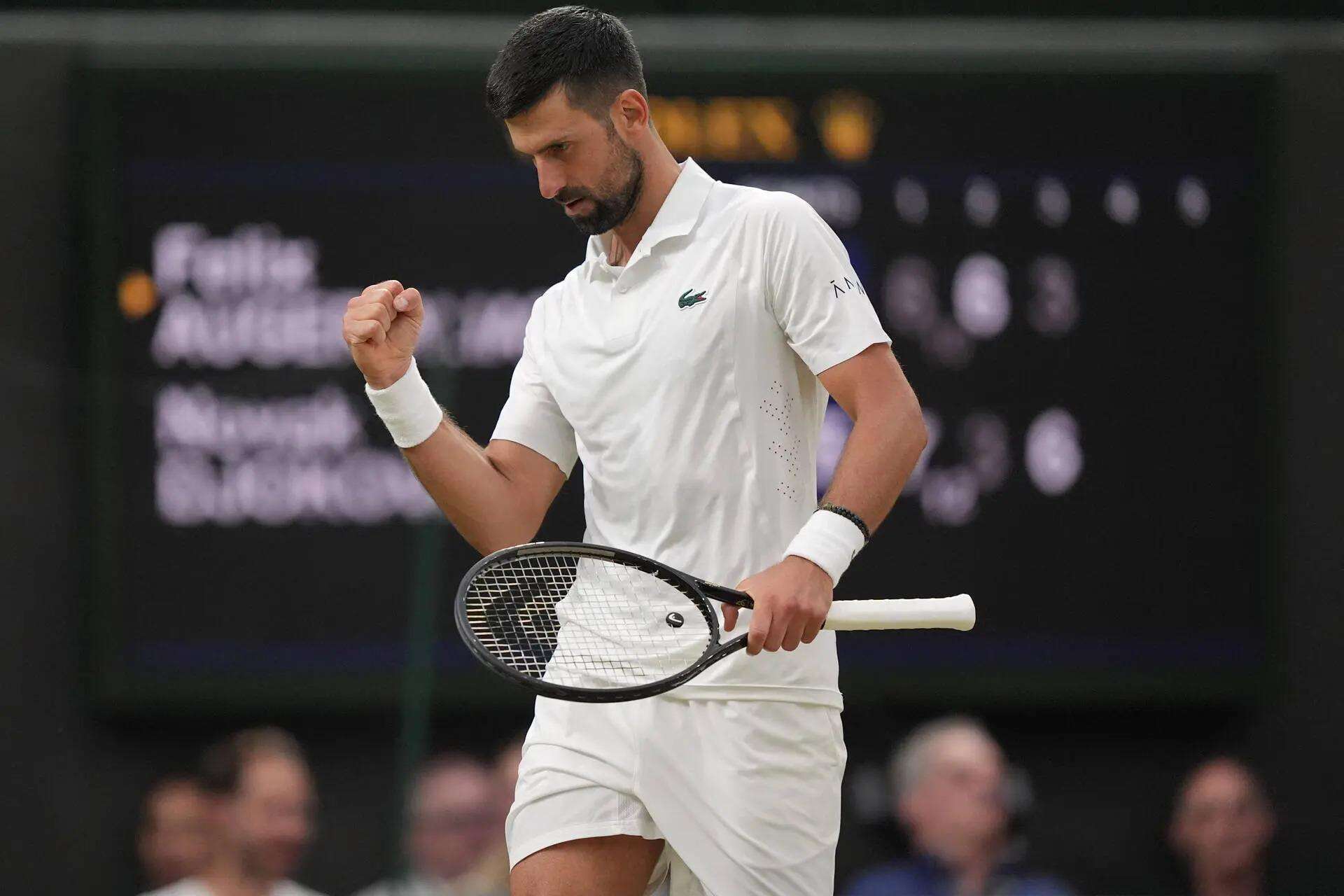
A few hours later Novak Djokovic walked onto Centre Court and spent five hours and fifteen minutes establishing that tennis, too, has a paperwork problem with age. Against Félix Auger-Aliassime, twelve years his junior and seeded above him, in the longest quarter-final in Wimbledon’s history, Djokovic lost the thread, found it, lost it again, and settled the thing in a fifth-set tie-break with the calm of a man who has done this in every time zone. Yeats grumbled that an aged man is but a paltry thing, a tattered coat upon a stick, unless soul clap its hands and sing. Djokovic’s soul, on the evidence of that final breaker, remains in irritatingly good condition.

The temptation is to make all of this about the body. Ice baths, sleep coaches, cryotherapy, recovery metrics, oxygen tents, and whatever else is now required to postpone the moment a great athlete becomes a motivational post. But that explanation is too easy. The body matters, of course; the body does not on its own explain a man finding the equaliser minutes after having his penalty saved, or another summoning one more clean tie-break after five hours of professional suffocation.
What both men still possess is pattern recognition.

Messi no longer runs like the boys around him, but he knows which run is the one that counts. Djokovic no longer wins by being the strongest man on the court; he wins because he understands, a rally before everyone else, exactly where the match has started to tilt. Their greatness now is not a matter of doing more than younger players. It is a matter of wasting less.
Which is where, regrettably, I must drag journalism into it, since every middle-aged columnist eventually discovers that every essay is autobiography with better line editing.
I am forty-six, more than twenty-five years into a profession built on deadlines, only to find that the deadline was for the profession itself. I began in a newsroom with no search engine worth the name and no Gmail at all; Google was still a rumour, email belonged to somebody else’s company, and a good story was found by wearing out shoe leather rather than a keyboard. This is worth mentioning only because I have already been declared obsolete once, by the arrival of the very tools the young now cannot imagine working without, and I have the mild satisfaction of reporting that I am still here, filing. Search no longer behaves as it once did. The social platforms have become unreliable landlords. Artificial intelligence now answers the reader before the reader can reach the publication that paid someone to go and ask the question in the first place.
The Reuters Institute’s Journalism, Media, and Technology Trends and Predictions 2026, its annual audit of the industry’s anxieties, puts the unease with admirable understatement, noting that publishers expect AI to reshape discovery, distribution, audience behaviour and the underlying economics of the business. This is not the old print-to-digital migration, with its farewell speeches and its shiny new content management system. It feels more like glancing down to discover that the floor beneath the desk was auctioned some time ago, while one was still sitting at it.
At such moments experience begins to feel less like an asset than like luggage. Twenty-five years of judgement (the corrections, the elections, the market crashes, the newsroom wars, the launches that worked and the certainties that did not) can be made to look quaint by a person in immaculate sneakers describing an AI-first workflow with the confidence that comes only from never having had to get a newspaper, or a website, out during a national emergency.
And yet Messi and Djokovic suggest another way of counting. Experience is not memory. Experience is compressed judgement: recognising the important sentence before the paragraph has finished, knowing which panic is real and which is theatre, which number is lying, which quote matters and which silence matters more, and which revolution is only last year’s disappointment in this year’s vocabulary.

This is why the old craftsmen were once valued. The master carpenter needed fewer measurements, the senior surgeon fewer movements, the good editor removed more words than he added. Time, properly used, does not simply accumulate. It distils.
None of which guarantees relevance. Plenty of people are obsolete well before forty, having confused habit with wisdom and nostalgia with principle; journalism is not short of veterans who still regard the internet as a passing inconvenience. The old cannot beat the new by refusing to learn it. But the reverse holds too. The new does not win by default.
Messi is not twenty-five. Djokovic is not twenty-five. That is precisely the point. Their greatness now contains time; it has absorbed the defeats, the repetitions, the injuries, the boredom and the doubt until instinct has become almost indistinguishable from intelligence. Watching them this week, one thought less of youthful brilliance than of something rarer and less photogenic: the sheer efficiency of accumulated experience.
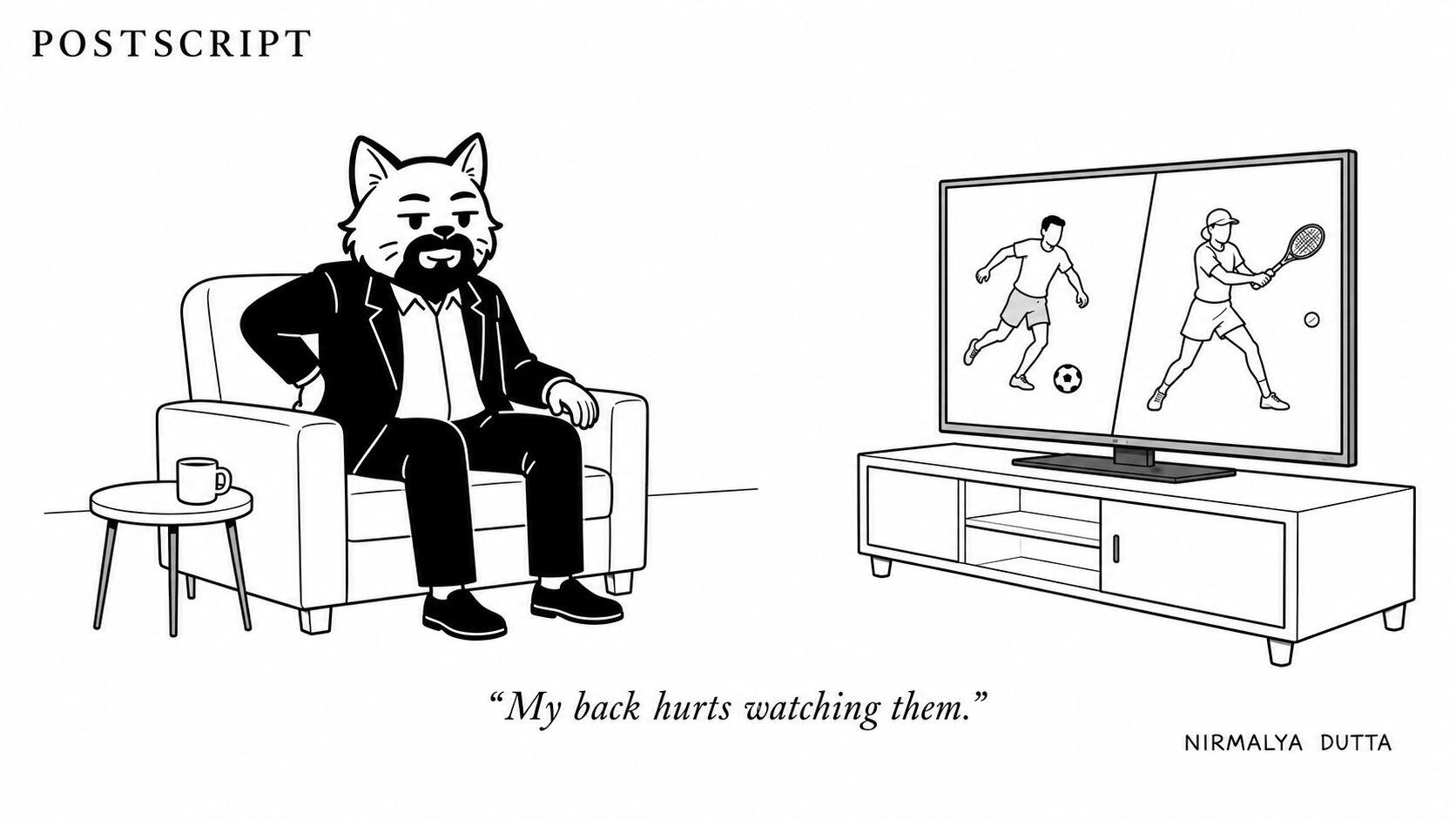
At forty-six I find this more consoling than I expected, though my lower back has asked that no further sporting analogies be made on its behalf. Nobody is requiring me to play five hours of Wimbledon tennis, which is fortunate, since I now require a strategic pause before rising from a low sofa.
Still, the question lingers. Who, exactly, keeps telling these thirty-nine-year-olds to slow down? Presumably the same people who insist that every profession belongs to the young, that each technological revolution demands the orderly evacuation of everyone who remembers the last one, and that experience is valuable chiefly as raw material for farewell speeches. History has not, on the whole, been kind to that sort of confidence. The future has an awkward habit of arriving through precisely the people everyone had finished writing off.
Messi appears to know this. Djokovic appears to know this. And those of us who were declared finished by the last revolution, and filed through it anyway, have learned to treat the circular with the respect it deserves: we read it, and then we get back to work.
Disclaimer
Views expressed above are the author’s own.