
 Vinay Kumar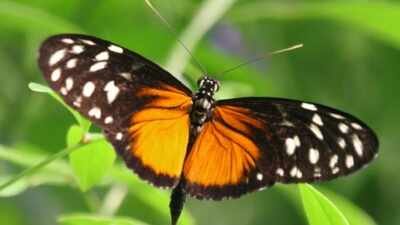
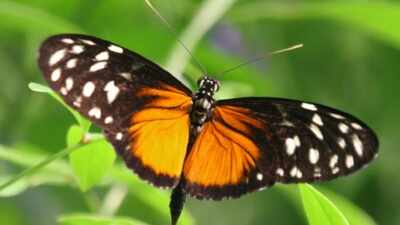
For a while, longevity discussions have carried a familiar mascot: it’s Bryan Johnson, the American tech entrepreneur and venture capitalist turned millionaire biohacker. The 48-year-old longevity enthusiast has been dominating the field, thanks to his numerous, extraordinary, and expensive health experiments in a quest to unlock “immortality.” However, Johnson’s approach relies mostly on cutting-edge technology and its advancements.But as it turns out, nature might hold secrets to healthy ageing that are… more natural!Enter the butterflies!Butterflies, nature’s one of the most beautiful creatures, barely last a few weeks as adults before their lives wrap up — blink, and you’ll miss them. But researchers have now zeroed in on a group of tropical butterflies that break the mold, living up to a year without any obvious signs of wear and tear. This discovery has scientists buzzing, since these butterflies could reveal something big about living longer and better.Per Science Daily, the stars of the show are Heliconius, better known as longwing butterflies. They stand out for their one-of-a-kind diet: they eat pollen, not just sugary nectar like almost every other butterfly. Mixed in with some evolutionary tweaks, that pollen habit seems to help them live much longer than their relatives. Their secrets could change how we think about ageing — not just in butterflies, but maybe even in humans someday.
What did the research say?
This research, led by the University of Bristol and published in Nature Communications, compared lifespans in several related species. The gap was huge, as Heliconius hewitsoni almost managed a full year (348 days) and Dione juno (a closely related species) made it just 14 days as an adult. That’s a 25-fold difference, which is almost unheard of among creatures this closely related outside of fish.But it’s not just about how long these butterflies last. Many Heliconius butterflies maintained strong wings and good flying skills rather than falling apart physically as they got older. In other words, they didn’t just live longer — they aged better.To figure this out, the scientists got inventive. They built a gadget called the “Pullinator” to measure how much power the butterflies’ wings produced as they flew. The team tested the same butterflies over time, watching for changes in performance, and found that the long-lived Heliconius held onto most of their strength throughout their lives.
The secret behind the longevity
So, what made those butterflies survive longer and better?The researchers’ main focus is what they consume. Heliconius butterflies have a diet of pollen, which is a total rarity because butterflies don’t have jaws for chewing. They use their long, straw-like tongues (proboscis), mix pollen with enzymes and saliva, and slurp up the good stuff. Pollen adds proteins, amino acids, and vitamins (the building blocks for keeping bodies running well), while nectar is just sugar.Now, there’s a catch. Some non-pollen-feeding butterflies fed on rich diets in the lab still don’t live as long as Heliconius. So, scientists figure it’s more than just the food. Evolution probably gave the longwings special biological tricks to use that nutrition wisely and slow down ageing.
What does this mean for us?
Now, someone might ask, how does longevity in butterflies matter for us?Well, ageing is still a giant question mark in biology. Most labs rely on fruit flies, worms, and mice. But Heliconius butterflies bring something different — natural longevity in the wild, not just because scientists tweaked something in a cage. Unlocking their secrets could point toward cellular and metabolic pathways that might work in lots of animals, maybe even people.So, these butterflies don’t just live longer. They stay sharp and agile well into old age. That’s something ageing researchers dream about: not just more years, but better years. For now, Heliconius butterflies keep scientists hooked with their strange habits and resilience.However, scientists caution: don’t rush out and start eating pollen yet. Human ageing is a far more complex tangle of genes, diet, environment, and more. This isn’t a one-to-one leap, but it’s a neat new clue that evolution can pack a lot of healthy years into a life, even for insects.But, as the Heliconius butterflies have turned out to be an unexpected window into the mysteries of lifespan — who knows?In time, they might help unlock just what it takes to age well and stay healthy for longer.