
 Vinay Kumar

This week, we are tracking:
- PK wins Bankpiur bypoll, upends Bihar politics
- Akhilesh’s new alphabet: P is for Pandit too
- Why your trading screen goes haywire at 3:15pm
- If UPI is free, who is paying for it?
1 bypoll, 3 warnings: Why PK’s win in Bankipur matters beyond Patna
We should be wary of reading Bankpiur upset as the beginning of a new trend in politics. In the end, it’s just a bypoll and BJP has a very bad track record at it.
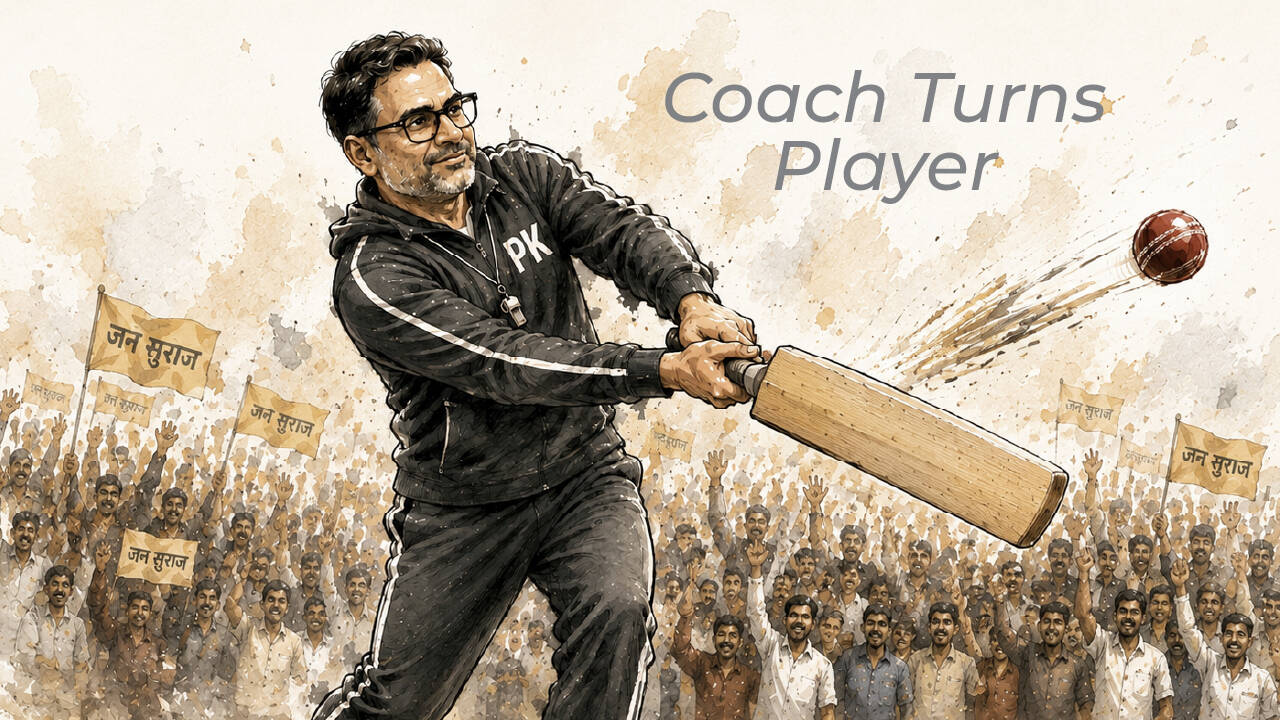

Yet, it’s significant for many reasons:
- Prashant Kishor is here to stay. He has become the first psephologist to make a successful transition to politics.
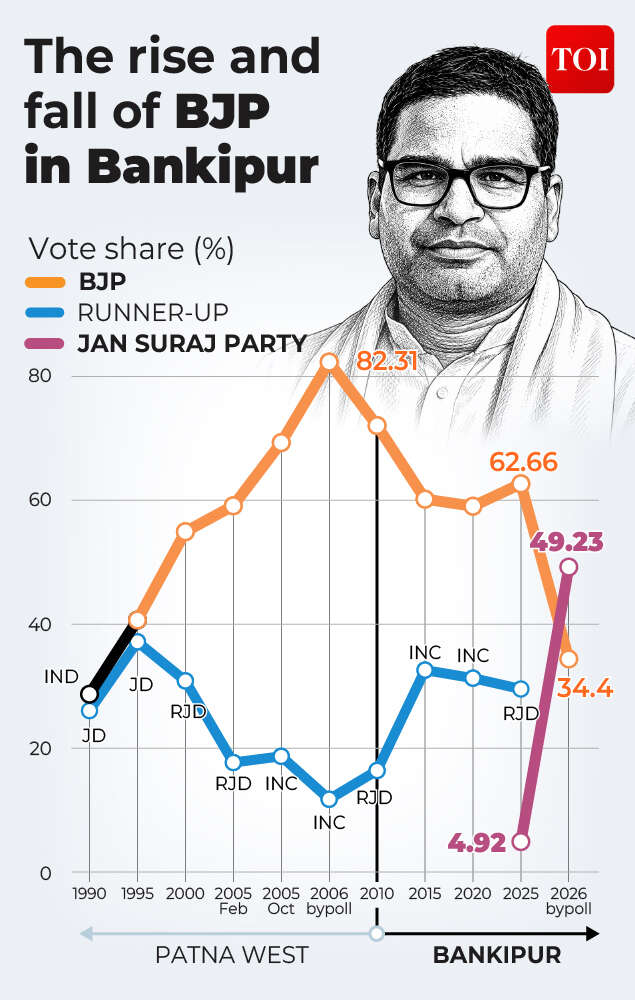
- Bankipur was as “safe” a constituency as any party can hope for. BJP had not lost here in over 30 years. It’s urban, educated and with a high population of upper castes: All 3 tick boxes for BJP.
- It’s party president Nitin Nabin’s home turf. He represented it for 5 consecutive terms. The loss is personal for him.
- Why did BJP lose in Bankipir? Was it because of recent Gen Z protests? We don’t know. Was it because of perceived neglect of its core base by the saffron party? We will have to wait for post-poll opinion polls to have a definitive answer to these questions.
- Bankipur has put RJD on the notice too. It’s not a default option if voters decide to dump BJP. PK’s Jan Suraaj is set to break the duopoly of NDA and INDIA bloc in Bihar.

The 3 warnings:
- No party can take its supporters for granted.
- Opposition just can’t keep opposing and waiting for its turn. It must come with its own ideas to woo voters.
- Gen Z is comping up fast as a new vote bloc and it may upset many traditional political calculations.
Read more:
Prashant Kishor: From a poll strategist to storming BJP’s citadel
Prashant Kishor meets NCP chief Sunetra Pawar after bypoll win, BJP upset
‘Gen Z protest’ may have aided Bankipur win: Prashant Kishor after BJP bastion falls
From 2025 washout to historic sweep: How Prashant Kishor put Jan Suraaj on Bihar’s electoral map
How Prashant Kishor breached BJP’s bastion
PDA gets a Pandit: What’s behind Akhilesh’s new alphabet politics in UP
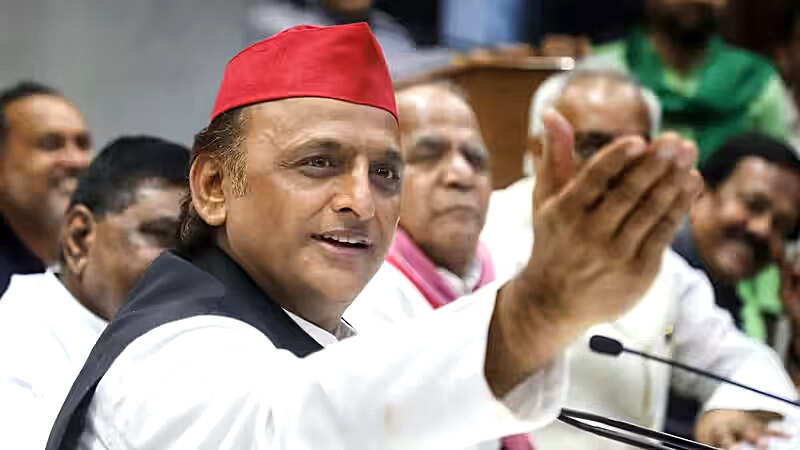

Taking a cue from the Bankipur bypoll, Akhilesh Yadad has made a gambit for the upper caste votes in UP.
“People keep redefining PDA after losing to it. But they have forgotten that ‘P’ also stands for Pandit,” the Samajwadi Party chief said at an event marking socialist leader Janeshwar Mishra’s birth anniversary.
SP’s PDA originally stood for Pichhde, Dalit and Alpsankhyak. It helped party build a coalition that won 37 seats in the 2024 Lok Sabha election, the party’s best-ever parliamentary performance.
Going beyond the MY combination
For decades, SP was identified with the Muslim-Yadav(MY) combination. That coalition gave it a durable base but also created a ceiling: Many non-Yadav backward groups, Dalits and upper castes saw it as representing someone else.
PDA was designed to break that ceiling. It allowed SP to retain its traditional voters while presenting itself as a much broader platform for groups that felt excluded by the BJP’s political outreach.
Why Brahmins
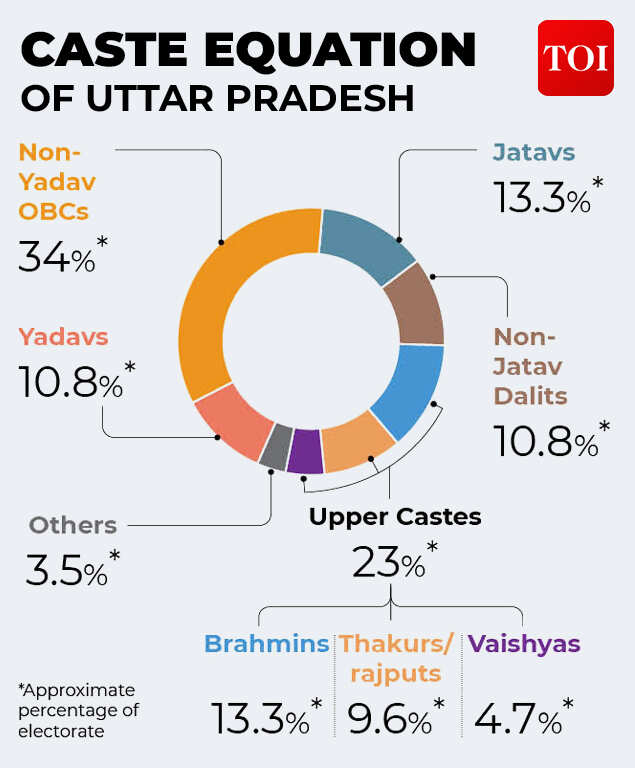

BJP’s own Brahmin flank has shown visible cracks. In December, a gathering of nearly three dozen BJP MLAs and MLCs from the Brahmin community set off enough unease that the party’s state leadership had to move quickly to downplay it.
Brahmins are numerically dominant among upper casters in Uttar Pradesh. They also possess political influence and high symbolic value. Even a limited shift can matter in a close election.
In the 2007 UP elections, a chunk of Brahmin votes swung to Mayawati under her famous “social engineering” experiment, helping BSP win a majority on its own.
The timing is important too. There is some unease in BJP’s core supporters. We have seen it during the Gen Z protests and in Bankipur too. Akhilesh is trying to capitalise on it.
The test comes with tickets
Akhilesh will have to do the great Indian rope trick if he keeps expanding his alphabet politics. Acronyms can signal belonging, but communities eventually ask harder questions: Who receives party tickets? Who gets organisational positions?
BJP and BSP will surely be planning their alphabet soups too.
Read more:
PD is short form for Pandits in SP’s PDA, says Akhilesh Yadav
BJP to use Akhilesh’s Kannauj to launch its campaign to counter PDA narrative
PDA will get justice only when BJP is voted out of govt: Akhilesh
The Rs 2,000 question: Is UPI’s free lunch nearing its end?

The UPI and QR codes are ubiquitous in India. We no longer keep asking for loose change. Just take out your phone and it’s done. To top it all, it’s free.
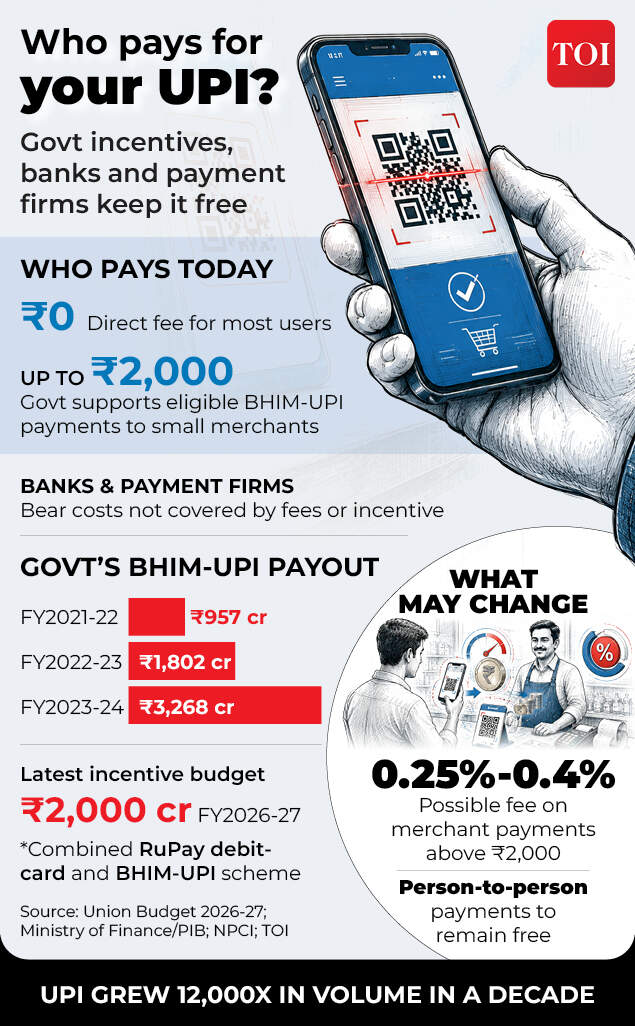
But that might be coming to an end. The Lok Sabha has passed a legislation that has removed the existing legal prohibition on charging a merchant discount rate, or MDR, on notified payment modes such as UPI and RuPay cards.
This does not mean that you will have to suddenly pay for your next UPI payment. As of now, UPI payment up to Rs 2,000 is expected to remain free. The discussion is centred on payments made to businesses, particularly transactions exceeding Rs 2,000. Even if UPI payment becomes chargeable, merchants, not customers, are supposed to pay for it.
However, there is a caveat here. The “merchant pays” does not necessarily mean “customer unaffected”. A shopkeeper may discourage larger UPI payments or quietly ask customers to cover the charge. The fee may not appear separately on the bill, but it could still travel down the chain.
Read more:
UPI charges: Lok Sabha passes bill for government to make changes
Will you have to pay to use UPI? FM Sitharaman clarifies who bears MDR
Government may allow fees on UPI payment above Rs 2,000
Merchant Discount Rate on UPI transactions? Amendments to payments act may pave way – what it means
Closing-bell confusion: Why the Nifty now has a surprise ending
No one can predict markets and sudden movements in short times are expected during trading hours. But something unusual is happening at Nifty.
That is not a glitch. It is the result of a new Closing Auction Session, or CAS, which began on August 3 for more than 200 shares with futures and options contracts.
What exactly has changed?
Until now, the official closing price of a stock was generally calculated using its volume-weighted average price, or VWAP, during the final 30 minutes of trading.
What is CAS


Under CAS, the exchanges now conduct a special auction near the end of the trading day. For F&O segment, continuous trading stops at 3:15pm, and a separate 20-minute auction process kicks in to find stock’s official closing price.
The Sebi framework is meant to strengthen price discovery and align India with international markers.
What it means for investors
For a long-term investor, the change is unlikely to alter the basic decision of whether a company is worth owning. But it matters more for intraday traders and anyone placing orders near the closing bell.
Read more:
Why stock market’s close is now an auction – explained
Will Nifty & Sensex continue to diverge? What new stock market timings, closing auction session mean
New stock market timings from August 3: What has changed?
No rollback of closing auction session: Sebi
Editor’s picks: Some of our most and must-read articles
‘Grievance of Gen Z genuine’: RSS chief defends protest as way of ‘reaching consensus’ in democracy
‘Will be a pressure group’: CJP announces nationwide ‘Kya Bolti Public’ campaign from September
‘Apologised to minister’: Meta official on PM Modi post removal; Zuckerberg sorry for deepfakes
India to get its first plastic notes next year: RBI governor shares timeline, explains benefits
Rs 15.56 crore: The money behind the medal at 2026 Commonwealth Games
Delhi court acquits Brij Bhushan, Vinod Tomar in women wrestlers sexual harassment case
Over 50 nations, 3 continents: Has World War III already begun?
Disclaimer
Views expressed above are the author’s own.


