Vinay Kumar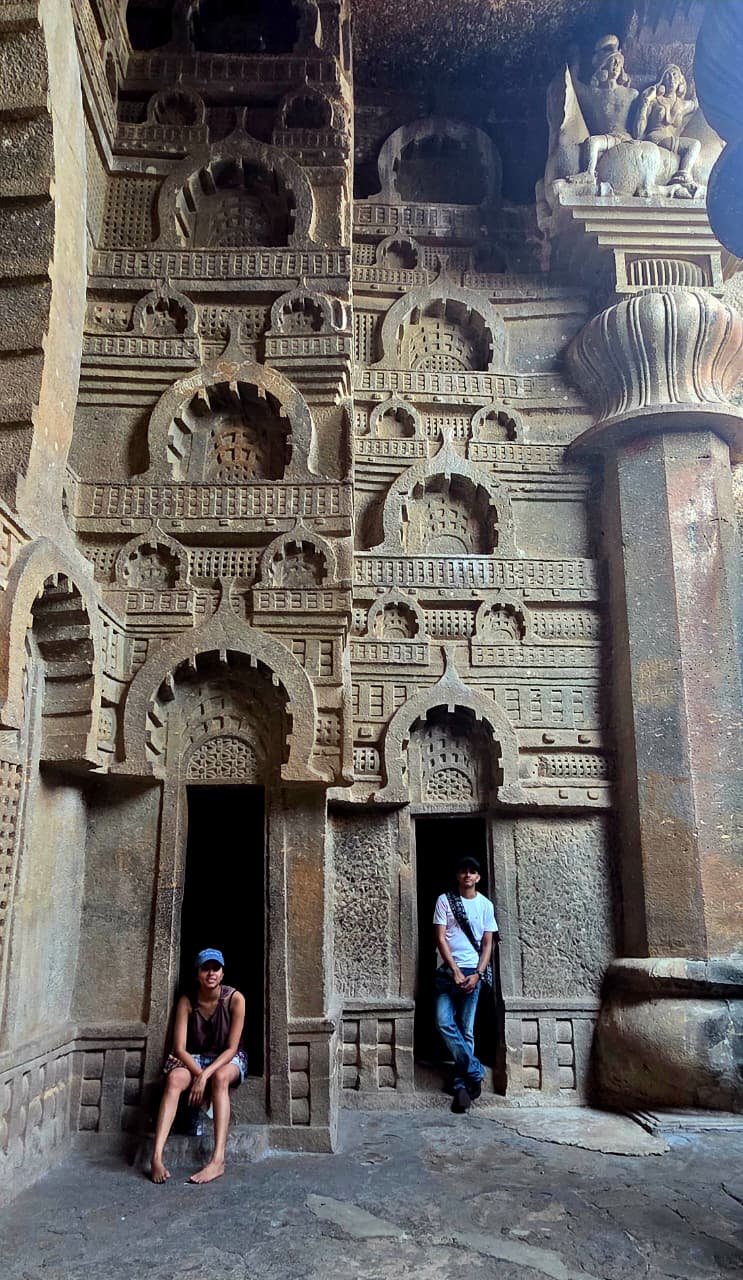
Our journey continued from Lavasa toward the ancient caves—a transition not just in geography but in inner experience. It took us about two and a half hours to reach Bedsa Caves near Kamshet. The first hour of the drive felt almost dreamlike as we moved through forested hills, the road gently curving alongside a quiet lake that mirrored the sky. Nature seemed unhurried, inviting us to slow down and absorb its rhythm. As we moved ahead, the landscape opened into vast plains dotted with simple village life, grounding us back into the earthy reality of rural India.

The climb to Bedsa Caves was steady and purposeful. Around 450 steps led us upward, each step peeling away a layer of distraction. When we finally reached the top, I was greeted by a sight that felt both artistic and sacred. Through the rugged rock face emerged beautifully carved pillars adorned with animal motifs—horses and bulls that seemed to symbolize strength, endurance, and grace.
The Chaitya hall stood in quiet elegance, its tall pillars aligned with a sense of order that felt almost meditative. From the hilltop, the valley stretched endlessly, a vast expanse fading gently into the horizon. The silence there was not empty. It was alive, almost tangible. It held you, embraced you.
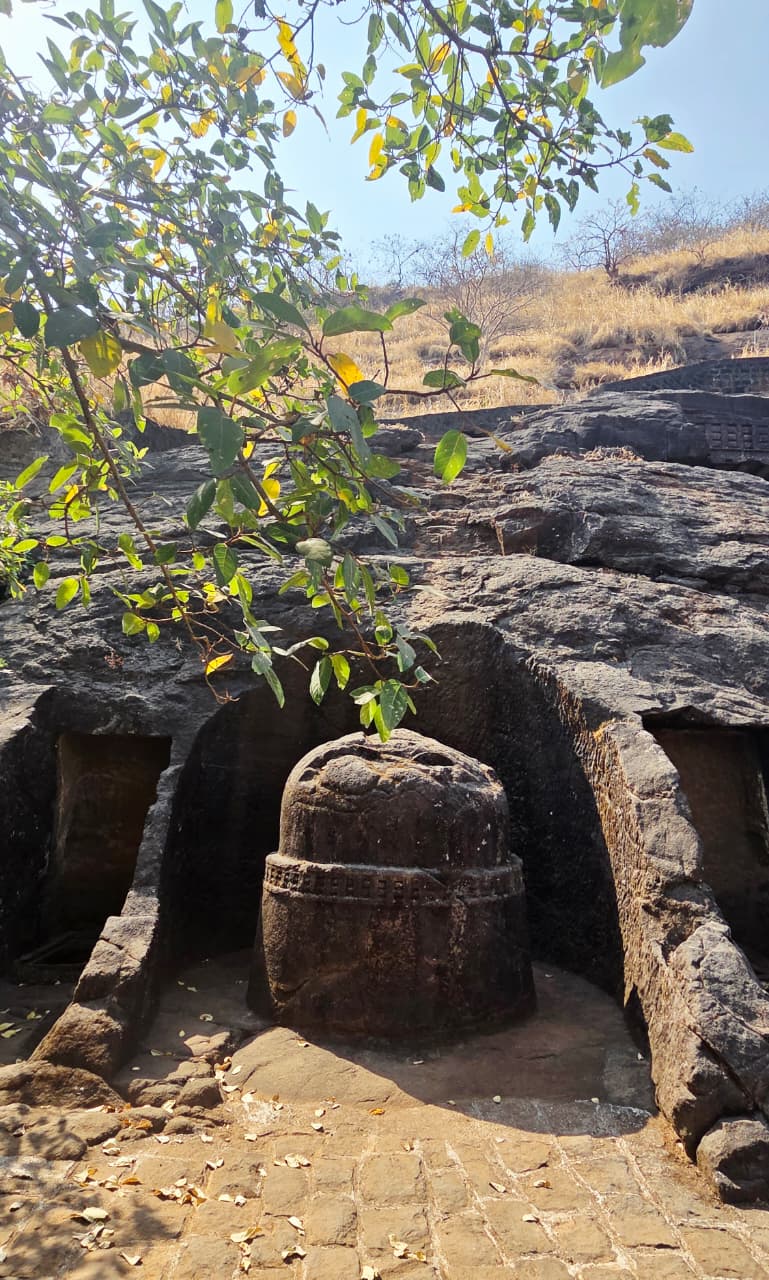

We sat in meditation inside the hall. Time seemed to dissolve. Outside, the rock face revealed carved steps leading further up the mountain, and to one side stood a solitary stupa open to the sky. There was a stillness that invited lingering—a gentle pull to remain a little longer, to simply be.
From Bedsa, we drove toward Bhaja Caves near Malavli. The shift in energy was immediate. Bhaja felt older, quieter, and more inward. There was a sense of intimacy, as if the space was not meant to impress but to introspect.
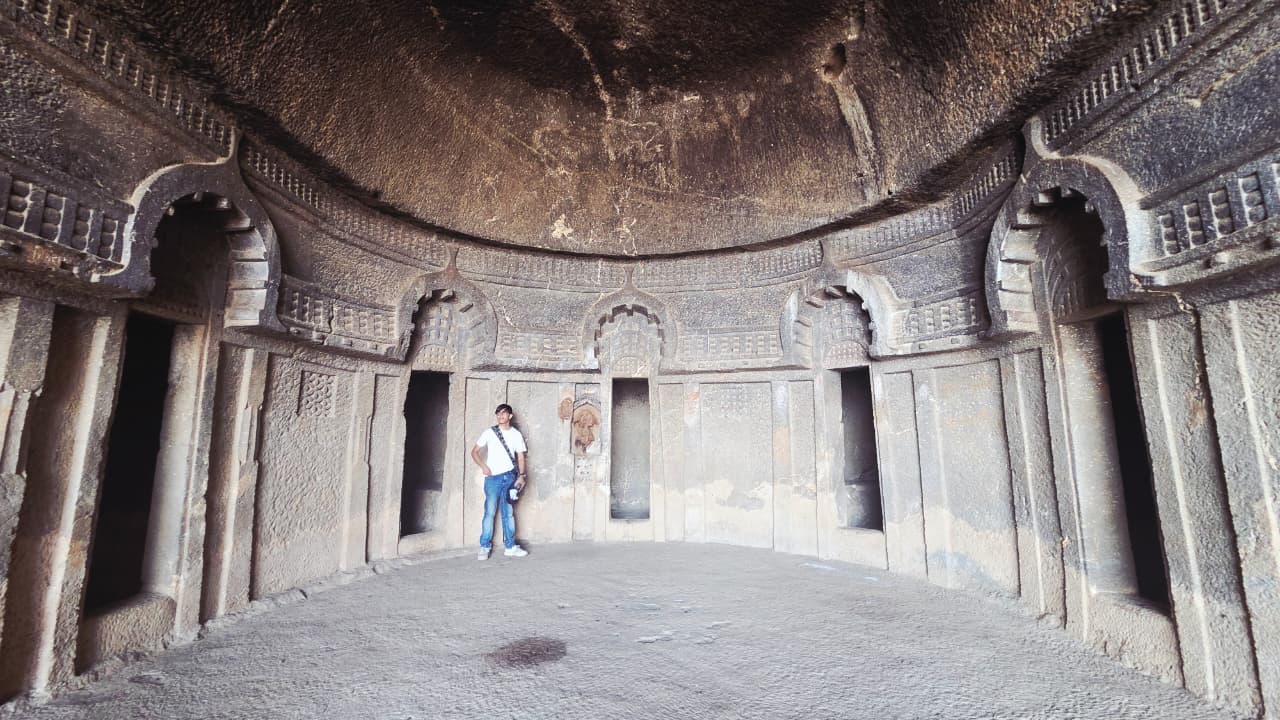

The horseshoe-shaped arch of the Chaitya hall framed the incoming light in a way that felt almost mystical, as though it blurred the boundary between the outer world and the inner self. The viharas—simple monk dwellings—spoke of lives shaped by discipline, silence, and contemplation. A cluster of small stupas stood nearby, believed to honoUr departed monks. Their simplicity touched me deeply. There was dignity in their restraint, a quiet acknowledgment of lives lived without display.
Bhaja whispered a profound truth: greatness does not always seek grandeur. Sometimes it rests gently in simplicity, in restraint, in silence.
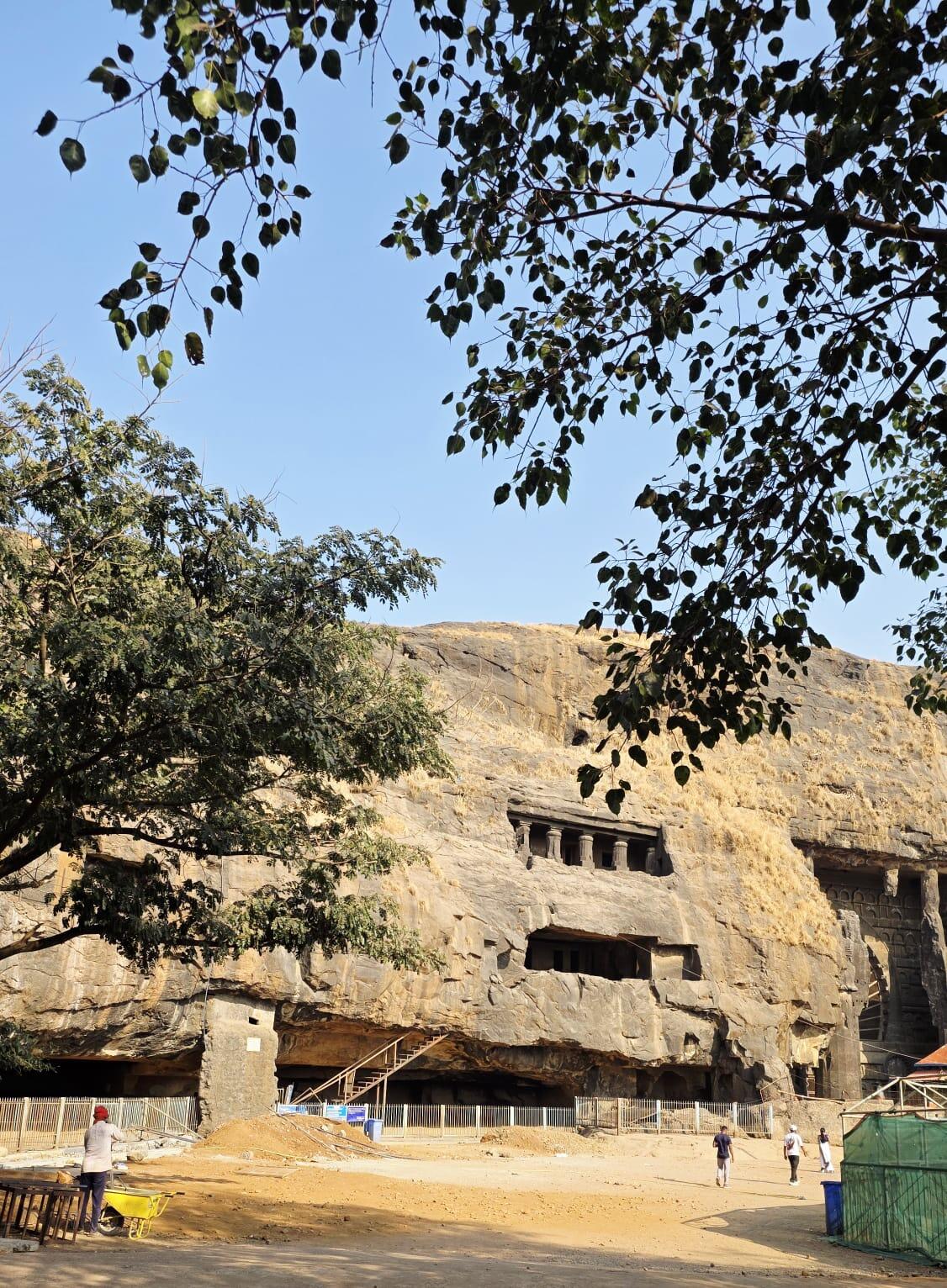

Just a short distance away lay Karla Caves, one of the most remarkable examples of early Buddhist rock-cut architecture, associated with Hinayana Buddhism and dating back to around the 2nd century BCE to the 2nd century CE.
Among the three, Karla stood apart in scale and presence. As I approached its towering façade, I felt a sense of awe that was difficult to describe. It was not just the size, but the weight of time that it carried. Carved more than two thousand years ago, these caves did not feel like ruins. They felt alive.

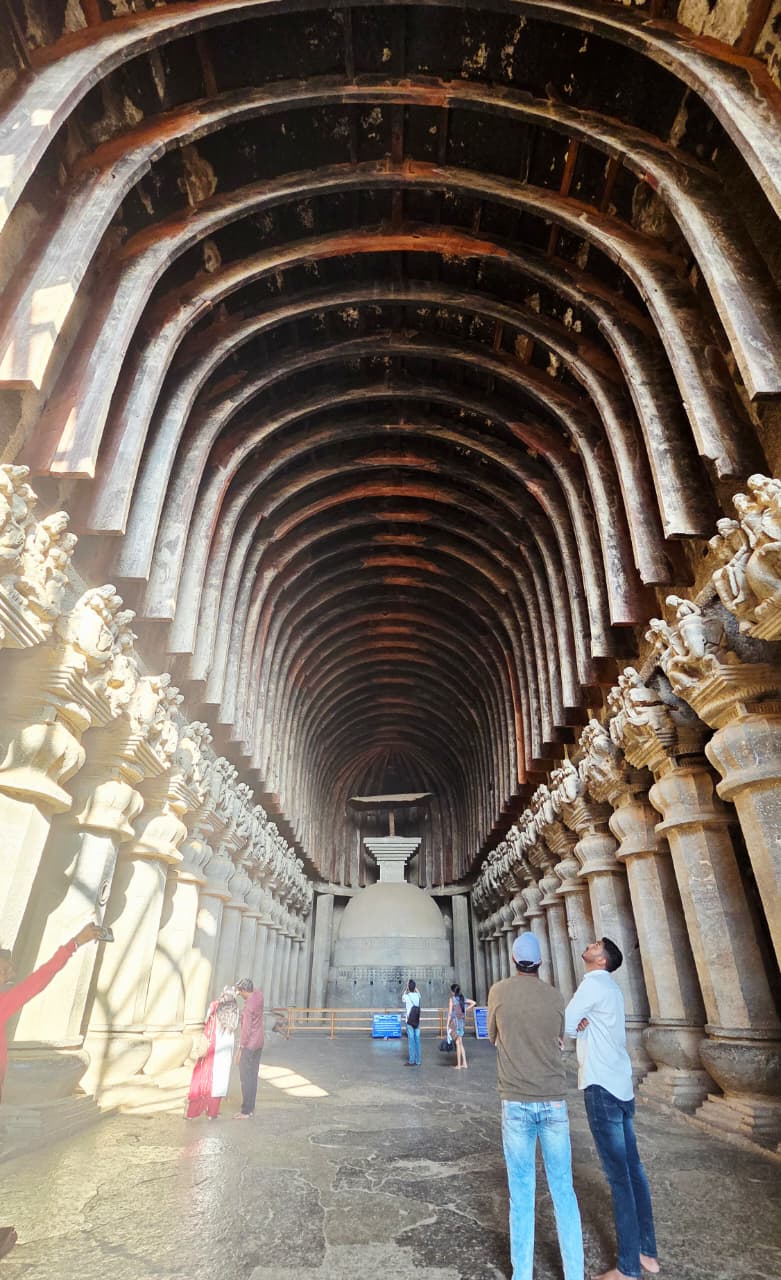
Inside the grand Chaitya hall, massive pillars rose like silent guardians. The ancient wooden ribs on the ceiling, astonishingly preserved, seemed to whisper stories of monks, merchants, and travellers who once gathered here along thriving trade routes. The central stupa radiated a quiet authority, commanding stillness without effort.
Karla was not intimate like Bhaja. It was expansive, almost monumental. It felt like a cathedral carved out of living rock—a declaration that faith, when aligned with purpose, transforms into timeless creation.
Standing there, I reflected on how human aspiration shapes not only stone but destiny itself.

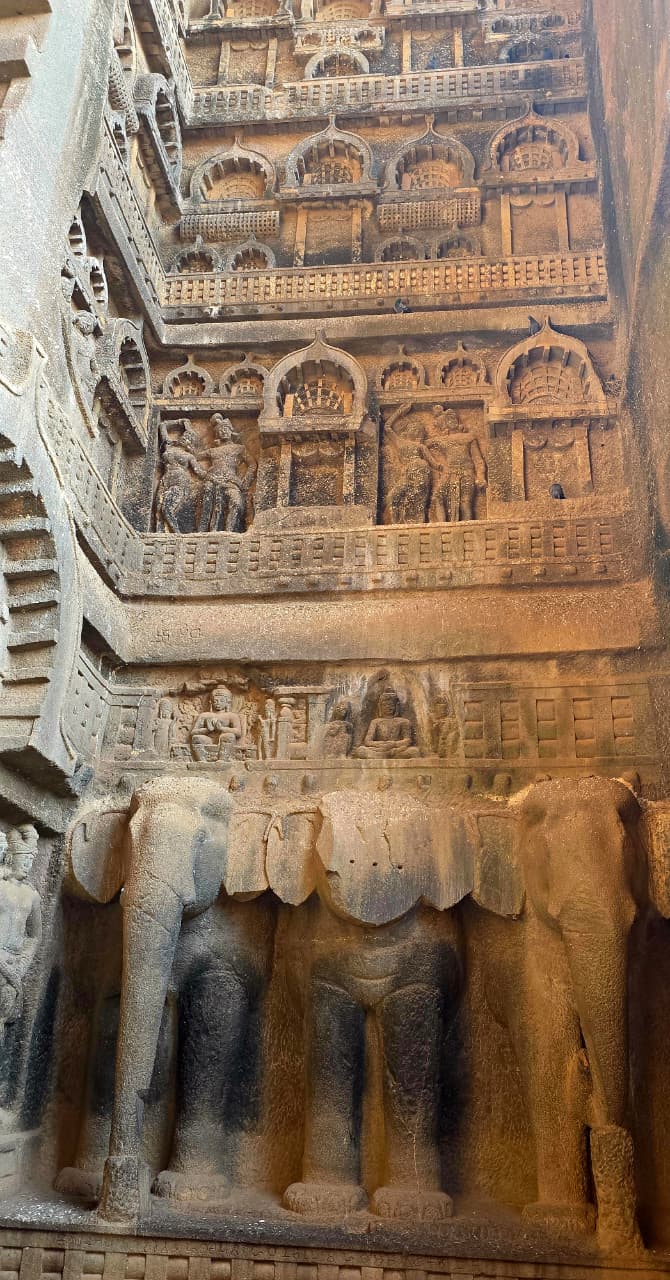
The climb to Karla involved around 350 steps, and unlike the earlier sites, this path was more crowded and noisier. I was amazed to see three-storeyed viharas (accommodation) built for monks thousands of years back. Just outside the cave complex stood a temple dedicated to a female deity. The contrast was striking. The quiet, contemplative atmosphere of the ancient Buddhist space met the vibrant, bustling energy of contemporary worship.
This divergence stirred a deeper reflection within me. I found myself thinking about sacred spaces and the role of silence within them. In most monasteries and churches, silence is preserved as an integral part of the spiritual experience, allowing one to turn inward and connect deeply. Here, the noise, the activity, and the clutter felt at odds with that inward journey.
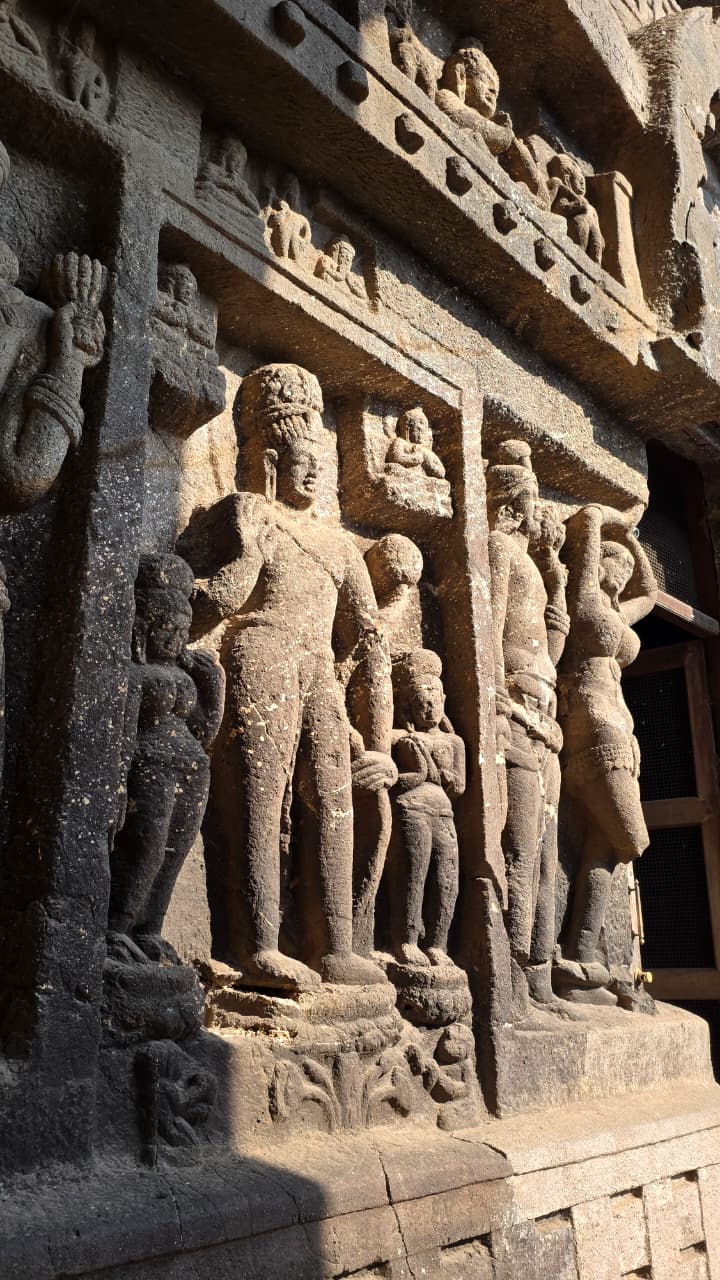

It made me wonder whether true devotion lies only in expression, or also in the ability to create spaces of stillness, purity, and mindful presence. Perhaps every tradition carries its own way of connecting with the divine, yet the longing for peace, silence, and inner clarity remains universal.
As we drove back to Mumbai, I carried with me not just memories of ancient caves, but a deeper contemplation on silence, simplicity, and the many ways in which the sacred reveals itself. As the stones held centuries of silence, I carried back a fragment of that stillness within me.
Disclaimer
Views expressed above are the author’s own.
END OF ARTICLE