Vinay Kumar
An Iran–Israel–US conflict would not stop at the battlefield. Through polluted seas, disrupted shipping, fuel shocks, and damaged marine ecosystems, its environmental and economic aftershocks could hit the Indian subcontinent hard.
A widening Iran–Israel–US conflict is often discussed in terms of missiles, deterrence, and oil prices. But that framework is far too narrow. Wars in West Asia do not remain confined to maps of combat. Their consequences travel through the air, across sea lanes, and into the everyday lives of millions far from the battlefield. For the Indian subcontinent, the real danger is not only geopolitical instability. It is the environmental and economic fallout of a large-scale regional war.
India and its neighbours are deeply connected to the Gulf. Oil and gas imports, shipping lanes, fertiliser supply chains, fisheries, remittance economies, and maritime trade all bind South Asia to the stability of West Asia. Any major conflict involving sustained bombing, missile exchanges, ship strikes, or damage to oil and gas infrastructure would therefore produce a chain reaction. Even if no bomb falls on South Asian soil, the region could still suffer a serious ecological and developmental shock.
The first danger lies in the atmosphere. Large-scale bombing of refineries, petrochemical complexes, storage depots, gas fields, or ports can trigger massive fires and release soot, sulphur dioxide, nitrogen oxides, and toxic chemicals into the air. These pollutants may not arrive dramatically over the subcontinent as visible clouds, but they can still intensify regional atmospheric stress. South Asia already carries one of the world’s heaviest air pollution burdens. Any additional loading of particulates and ozone-forming pollutants would worsen respiratory disease, cardiovascular stress, and labour losses, while also damaging crops and ecosystems.
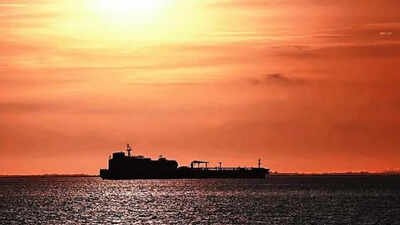
The second danger comes from the sea. A conflict marked by missile misfires, damaged tankers, mined approaches, sunken vessels, or burning cargo ships in the Gulf or Arabian Sea would sharply raise the risk of marine contamination. Oil spills, chemical leaks, and floating debris would not remain local events. They would threaten fisheries, marine biodiversity, and fragile coastal economies across the wider Indian Ocean region. For India, Pakistan, Sri Lanka, Bangladesh, and the Maldives, this is not an abstract concern. Millions depend directly or indirectly on healthy seas for food, work, and income.
The third danger is shipping disruption. The Strait of Hormuz remains one of the world’s most critical energy choke points. If commercial shipping is interrupted or insurers begin to treat the region as a war-risk zone, tankers and cargo vessels will be delayed, rerouted, or withdrawn. Longer maritime routes mean higher fuel consumption, higher freight costs, and greater emissions. That creates a perverse situation in which a war meant to secure strategic interests ends up producing both fuel scarcity and more pollution.
For India, the energy implications are especially serious. A significant share of its crude oil, LPG, and related imports depend on Gulf-linked transport corridors. Disruptions in the region can quickly translate into higher import costs, supply shortages, and pressure on household energy access. In such moments, governments and industries often revert to dirtier alternatives—more diesel generation, more coal dependence, and more environmentally damaging emergency responses. Thus, a conflict in West Asia can worsen South Asia’s emissions profile without any direct attack on the region itself.
Agriculture, too, would feel the impact. Higher oil and gas prices affect fertiliser production, irrigation costs, transport, and food prices. South Asia’s farm economy is highly sensitive to energy costs, especially in already climate-stressed areas. If fuel prices rise sharply while shipping bottlenecks intensify and pollution increases, farmers will face a double burden: costlier inputs and more hostile ecological conditions. In a region where rural livelihoods remain precarious, that could become a significant social and political problem.
There is also a public health dimension that deserves much greater attention. Port workers, seafarers, coastal fishing communities, and low-income households dependent on affordable fuel would be among the first to feel the impact. Contaminated marine food chains, polluted air, and disrupted energy access can combine to deepen vulnerability among populations already living close to the edge. This is why the issue must be understood not only as a foreign-policy crisis but also as one of environmental justice.
What should be done? The international community must stop treating environmental protection as an afterthought to war. It should instead be placed at the centre of crisis diplomacy.
First, environmentally critical infrastructure—oil terminals, gas fields, petrochemical complexes, ports, desalination facilities, and major shipping nodes—must be treated as protected civilian assets. Their destruction has consequences that extend far beyond military objectives. International law and diplomacy should make this explicit.
Second, the UN, IMO, and relevant regional bodies should urgently establish an emergency maritime environmental protection mechanism for the Gulf, Gulf of Oman, and adjoining sea routes. This must include protected navigation arrangements, rapid spill-response systems, real-time reporting of attacks or leaks, and joint monitoring of hazardous incidents at sea.
Third, South Asian countries should not wait passively for the fallout. India and its neighbours need coordinated contingency planning for fuel reserves, fertiliser supplies, fisheries protection, coastal monitoring, and public-health readiness. Regional resilience must become part of foreign policy.
Fourth, independent environmental monitoring should begin immediately in any conflict zone. Satellite surveillance, marine tracking, air-quality observation, and transparent data-sharing are essential both for immediate response and later accountability. Wartime environmental damage is often underestimated in the present and disputed in the future.
Finally, major powers must widen their strategic lens. The question extends beyond simply controlling a conflict militarily. It is whether its ecological shockwaves can be prevented from engulfing millions who had no role in starting it.
For the Indian subcontinent, that is the real warning. A war in West Asia may begin with missiles and military targets. But its true legacy could be polluted seas, toxic air, stressed agriculture, disrupted livelihoods, and a deeper regional vulnerability layered atop climate insecurity. The battlefield may be elsewhere. The consequences will not be.
Disclaimer
Views expressed above are the author’s own.
END OF ARTICLE