Vinay Kumar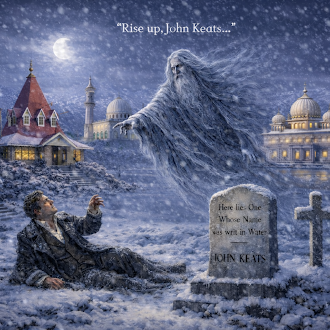
A fictional spiritual journey imagines snowy winter travelling across cultures and faiths
The dreary-nighted winter month was restless as it arrived at the Cimitero Acattolico, the Roman cemetery, to meet John Keats, who had lain buried beneath a cold Protestant stone since February 23, 1821. The air was heavy, cold, and wrapped in silence. Winter knelt near the epitaph, whispering through the frozen air into the deep grave, urging the beloved Romantic poet to rise once more and rewrite his landmark poem, “In drear-nighted December” (1817). 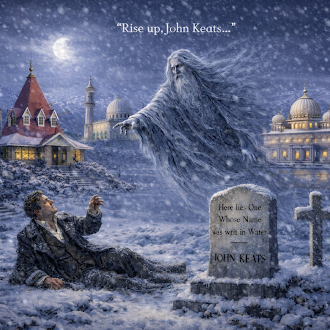

Keats was stunned as he spoke: “I cannot return to rewrite, but if your devotion is true, take your prayer to India, the land of many faiths. Visit the dargah of Hazrat Nizamuddin, the patron saint of Delhi. There, meet the Mughal princess Jahan Ara Begum and my contemporary poet Mirza Ghalib. He was born but two years after me and has rested eternally since 1869 near the gates of the dargah.”

Transitions: From Pain to Art
Winter, in search of lyrical redemption and filled with longing for Keats, began its journey eastwards. It appeared heavy, burdened by a snow-laden breath. As it reached the gates of the Nizamuddin Dargah it found a serene figure drifting amidst red and white roses.
She was the Mughal princess Jahan Ara Begum, a scholar of Sufism. The princess, who has rested eternally under snowy marble since 1681, just a few yards from the saint’s grave, was draped in silks dusted with frost. She spoke with authority: “You carry longing and grief for John Keats and wish for him to romanticize your beauty. You must develop the maturity to understand your beloved Keats, who romanticized pain to feel it, and then transcended that pain by shaping it into art.”
“If you want closure for your sorrow,” she continued, “then travel to Kashmir for a week. The snow will guide your devotion. Begin in the Valley of Shepherds, then ascend to the mountain temple. Listen to shinshin, the Japanese term for the sound of snow falling, amid hymns of devotion. Stand beside the frozen Dal Lake and look towards the Zabarwan mountains, their peaks mirrored in the snowy glass ice. Then, return here to complete your plea at this sacred Dargah.”
Winter’s Journey to Kashmir
Winter moved to Gulmarg. St. Mary’s Church, built in 1902 with grey bricks and a green roof, shimmered gently in the valley. The warm wooden interior radiated a fragile light in the frozen world. Winter knelt before the cross and uttered Keats’s own words: “Too happy, happy tree, thy branches ne’er remember their green felicity.” Keats had contrasted winter’s blissful harshness with human longing. He wished that people forget past joys and endure sorrow like trees, which do not recall the summer green leaves but endure the harsh cold without complaint.
The Realization of Healing
From the church, the leafless season took icy steps to the Mohineshwar Temple, the abode of Lord Shiva and Goddess Parvati, who presided over hills wrapped in snow. Winter pondered the lines of Keats that had begun to haunt the frigid air: “The feel of not feeling it, where there is none to heal it.” Winter realized the intense meaning behind the words: emotions do not disappear because pain ends, but because of the realization that some things cannot be healed.
The pilgrimage then took Winter to the Gurdwara Chatti Patshahi in Srinagar. As petals of memory, the snow mingled with the cold wind. While seeking blessings, Winter remembered Keats’s verse: “Thy bubblings ne’er remember Apollo’s summer look; but with sweet forgetting, they stay their crystal fretting.” The season awoke to the fact that it is better to relish happiness by living in the present, like the brooks, unlike humans who suffer through the weight of memory and loss.
Beauty Entwined with Loss
Finally, Winter visited the Hazratbal Shrine, standing beside the frozen Dal Lake while the Zabarwan Range looked at its reflection in the silent mirror of ice. Winter knelt once more and urged to allow Keats to live again, but suddenly realized that beauty is always entwined with loss. The lines returned: “Never, never fretting about the frozen time.” Winter saw that the brook never complains about the cold; it flows calmly, without the burden of remembering the summer.
The Return to Delhi
The silent season returned to the Dargah of Nizamuddin in March, and encountered Mirza Ghalib. Though his life overlapped with Keats’s, Ghalib was bound by a similar understanding of grief.
“Your journey in Kashmir has taught you well,” Ghalib said. “You wished for Keats to return and rewrite you, but you now carry the messages of many faiths. When I walked this world, I died in poverty, counting every coin in regret. Now, in death, they call me one of the greatest poets.”
Winter understood then that the desire for Keats’s resurrection was an absurd dream. Keats had already given winter its voice, not by praising its beauty, but by revealing its silence, endurance, and restraint.
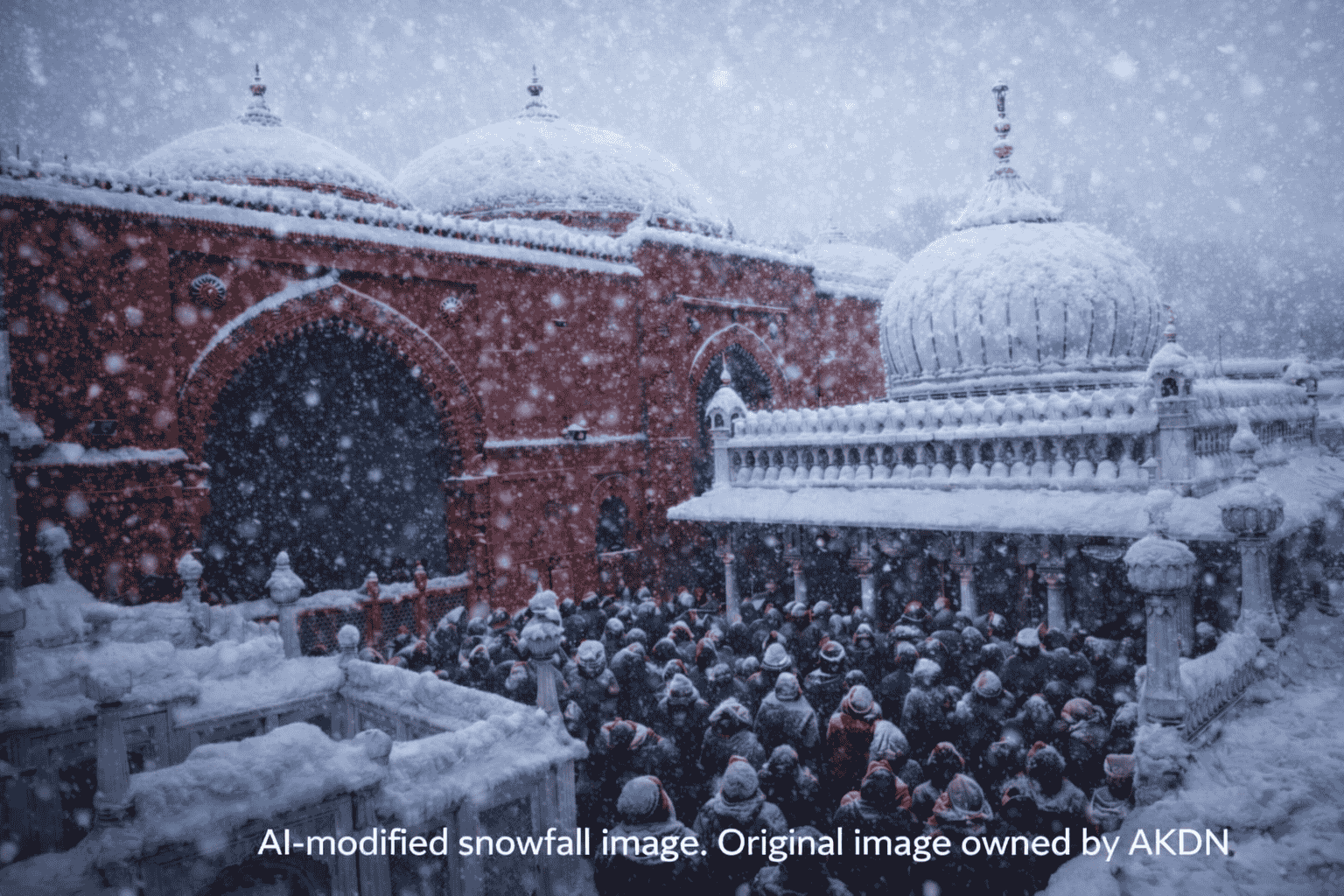
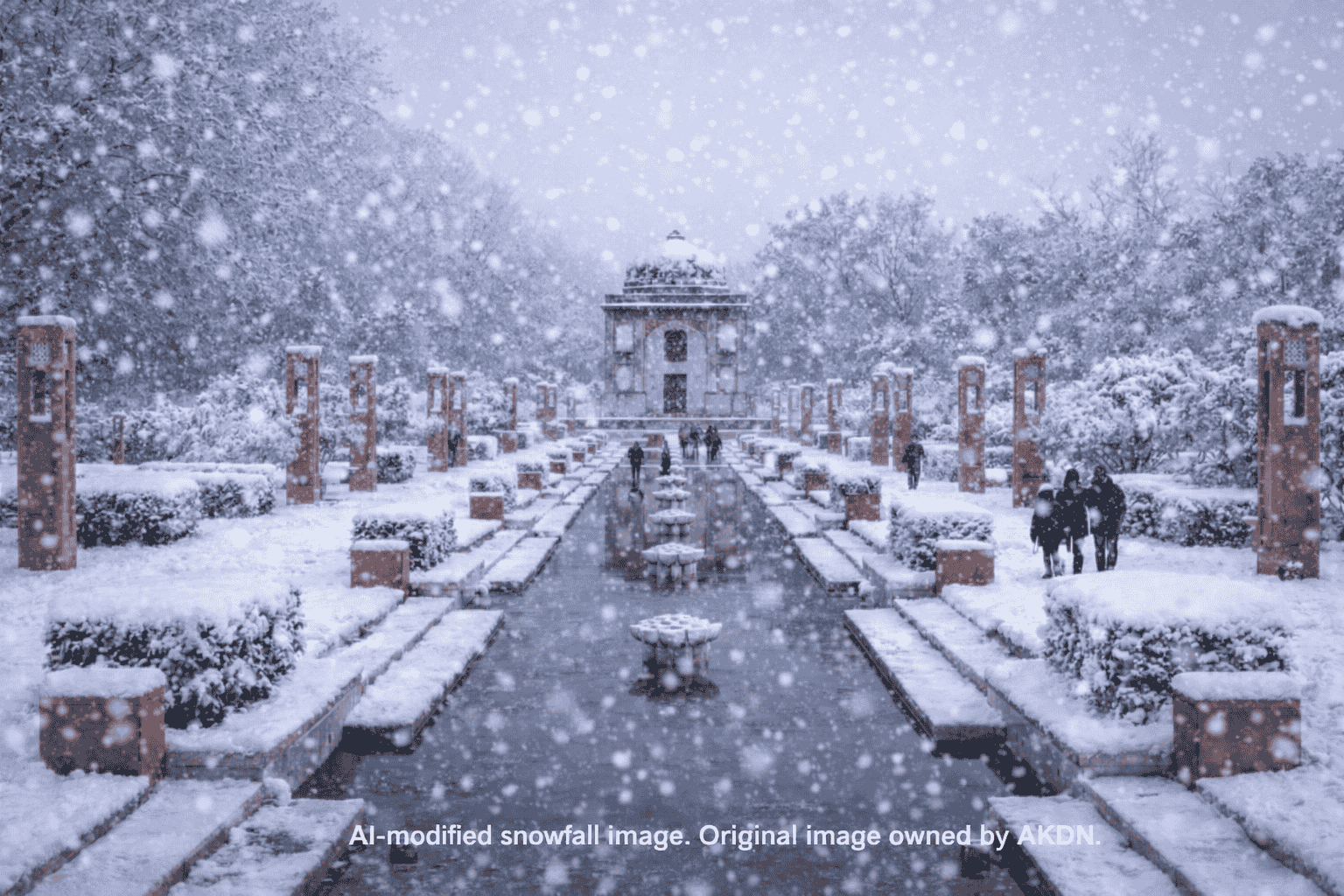
Finally at peace, it ushered in a soft snowfall over Delhi. White flakes carpeted marble floors and crowned the dome of the Dargah, turning the surrounding monuments in Sundar Nursery, Humayun’s Tomb, Lodhi Garden, Sabz Burj, and Safdarjung’s Tomb into a seamless expanse of snowy white.The snowfall showed that beauty comes from acceptance, not longing. Yet, winter met a new fate, it had quietly fallen in love with Kashmir.
Princess Jahan Ara Begum whispered this tale to this writer from her grave at the Dargah, as snow fell softly upon the shrine
Disclaimer
Views expressed above are the author’s own.
END OF ARTICLE