 Vinay Kumar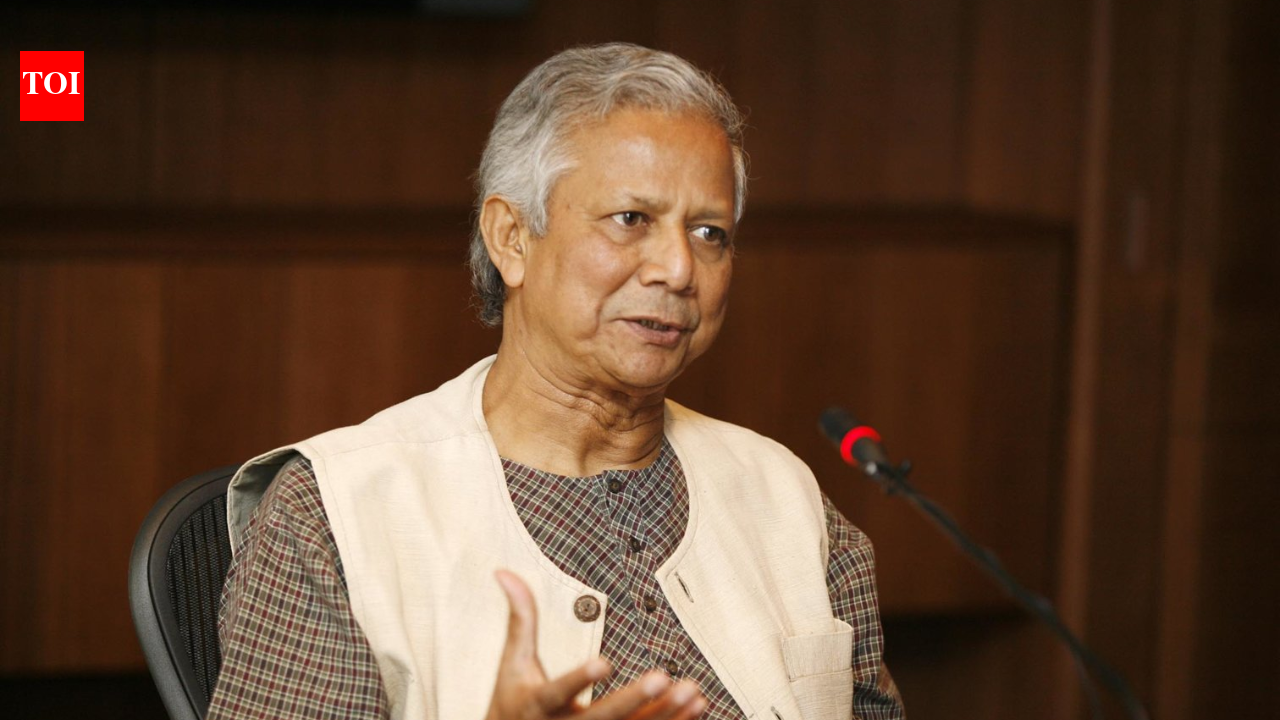
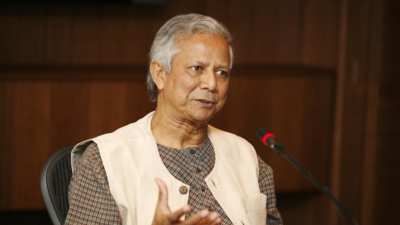
Bangladesh has delivered a decisive verdict, with the Bangladesh Nationalist Party (BNP) sweeping the parliamentary election and positioning Tarique Rahman to become the next prime minister. For Nobel laureate Muhammad Yunus, who stepped in as chief adviser of the interim government after the 2024 uprising that toppled Sheikh Hasina, the vote marks the culmination of a turbulent transition.Yunus has consistently maintained that he is a caretaker, not a political contender. As the country prepares for a new elected government, questions now turn to what lies ahead for the man who steadied Bangladesh through one of the most volatile phases in its history.
According to JNU Professor Rajan Kumar, Yunus is unlikely to disappear from the political landscape altogether.“I think he is likely to remain as an advisor because this government would be favourable to him and they’ll press no charges against him, whatever happened earlier,” Kumar said.“He fits perfectly into that structure. So he’ll remain in some capacity as an advisor — maybe some role of economic adviser, either formal or informal.”
A caretaker’s mandate nearing its end
Muhammad Yunus entered office in August 2024 after a student-led uprising forced Sheikh Hasina from power. Brought back from abroad at the request of protest leaders, Yunus took charge as “chief adviser” of an interim administration tasked with restoring order and organising credible elections.Throughout his tenure, Yunus reiterated that he had “no desire to be part of the next elected government”. His role, he said, was to ensure a peaceful and fair transition.With the BNP securing a commanding majority and the Election Commission preparing the gazette notification required for swearing in a new government, Yunus is now expected to step aside once constitutional formalities are complete.However, analysts believe that Yunus will not face political hostility under a BNP-led administration.“He has no threat, no pressure from this government, at least. So remaining in Bangladesh will not be a problem for him.”His departure from executive office would formally close the chapter on an interim experiment born out of crisis rather than electoral politics. But his public life may not end there.
Reform agenda and unfinished business
Yunus did not confine himself to election management. He inherited what he described as a “completely broken” political system and championed a reform charter aimed at preventing a return to one-party dominance.The proposed changes included:
- Two-term limits for prime ministers
- Stronger judicial independence
- Enhanced representation for women
- Neutral interim governments during elections
- Creation of a second parliamentary chamber
A referendum held alongside the general election sought public endorsement of these reforms.Whether the incoming BNP government embraces or sidelines these proposals will shape Yunus’s legacy. Professor Kumar suggests the BNP may incorporate Yunus within a broader anti-Hasina political alignment.“Anybody who is opposed to Hasina government, this BNP government will try to keep them as part of the larger political support structure. And Yunus fits in perfectly into that.”If institutional reforms gain bipartisan support, Yunus’s influence could continue indirectly. If they are diluted, his legacy may remain moral rather than structural.
Bangladesh’s foreign policy recalibration
The BNP victory comes at a delicate geopolitical moment. Bangladesh sits at the crossroads of competing influences from India, China and the United States.Relations with India cooled following Hasina’s exit. New Delhi’s perceived closeness to the Awami League leadership became politically contentious inside Bangladesh.Professor Kumar believes India will not surrender Sheikh Hasina to Dhaka despite calls from segments of Bangladeshi politics.“India will not hand over Sheikh Hasina — that can never happen. That would be considered a diplomatic blunder and surrender.”However, he does not foresee permanent deterioration in India-Bangladesh ties.“India will try to mend its ties with Bangladesh without any doubt. Gradually Bangladesh will also come to terms with the fact that you cannot ignore a neighbour which is so big, powerful and influential.”He added that while Hasina’s presence in India may remain “an irritant,” it will not define the bilateral relationship.“The rhetoric will be there. Statements will keep coming off and on. But gradually, with the new government, things are going to get better.”For Yunus, who attempted to maintain a delicate balance during the interim phase, this foreign policy recalibration now falls squarely on the shoulders of the BNP leadership.
India’s concerns: Stability, minorities and radicalisation
Kumar outlined India’s core concerns in the post-election scenario. First, minority safety — particularly of Hindu communities — will remain under scrutiny. Second, India will closely monitor any rise in radicalisation. “We have seen in the previous BNP government, 18–20 years back, Bangladesh was emerging as a hub of radical organisations like Lashkar-e-Taiba. India would like to ensure that that does not happen.”Third, India will seek to prevent excessive Chinese influence. “India would not like Bangladesh to pursue a very pro-Pakistan policy or allow China to become too influential the way it happened in Nepal.”For Yunus, whose tenure emphasised institutional stability, these dynamics represent challenges he helped temporarily stabilise but could not fully resolve.
Electoral participation and political legitimacy
While the BNP secured a strong mandate, early turnout figures suggested participation was not overwhelmingly high. Professor Kumar noted: “Voting percentage was not very high, which means a good number of people decided not to vote. That remains a challenge — how does BNP bring that population into a larger social and political framework?”Low participation reflects lingering polarisation and distrust, especially given the Awami League’s absence from the contest.The political competition now shifts between BNP and Jamaat-e-Islami — with the latter performing below expectations.“It’s a good thing for India that Jamaat has not come to power. But this government will pursue a very conservative religious policy and will not want to offend those elements.”Yunus’s interim period was marked by efforts to cool ideological extremes. Whether that equilibrium holds remains uncertain.
The military factor: Silent guardian or looming actor?
One recurring question during the transition was the role of Bangladesh’s military, particularly as Yunus’s appointment followed political upheaval.Professor Kumar describes the military as largely secular but institutionally influential.“Bangladesh military has both elements. It is considered largely secular. I don’t think it will play the kind of role the Pakistani military plays.”However, he cautioned that instability could alter that balance.“Military influence will increase if there is chaos, crisis or political instability. Otherwise, it will remain at the back foot.”For Tarique Rahman, maintaining civilian control while avoiding instability will be critical.Yunus’s interim administration functioned with tacit military backing. A stable BNP government may reduce overt military visibility — but the institution remains a decisive stabiliser in moments of crisis.
Economic headwinds and competition with India
Bangladesh’s economy faces new pressures. India recently strengthened trade arrangements with the United States in sectors such as textiles — a key export area for Bangladesh. Bangladesh may seek similar agreements to remain competitive. “Bangladesh realises that competing with India in economics and trade will not be easy. It would like to have a similar agreement with the United States, ” the expert said. Economic stability will determine whether the new government consolidates its mandate or faces renewed unrest.Yunus’s global reputation as founder of Grameen Bank and Nobel Peace Prize laureate gave him credibility with international institutions. If he assumes an advisory economic role, that credibility may still be leveraged.
From crisis manager to elder statesman?
At 85, Yunus stands at a crossroads. He stepped in during a period of extraordinary uncertainty. He leaves behind an elected government — the central promise of his interim stewardship.Kumar’s assessment suggests Yunus’s future may lie not in frontline politics but in advisory influence. “What exactly would be the role? We don’t really know. But maybe some role of economic adviser — formal or informal.”He is unlikely to be marginalised under a BNP administration and equally unlikely to pursue partisan office.His enduring relevance may lie in:
- Institutional reform advocacy
- Economic advisory capacity
- International diplomacy support
- Moral authority during crises
The road ahead
Bangladesh now enters a new five-year cycle under BNP leadership. The key tests will include:
- Managing relations with India without surrendering political autonomy
- Preventing radicalisation and minority persecution
- Balancing China’s economic influence
- Maintaining civilian supremacy over the military
- Reviving economic growth amid global headwinds
For Yunus, the story is less about power and more about legacy.
Will he be remembered as:
- A stabilising technocrat who guided Bangladesh through crisis?
- A reformer whose ideas outlived his tenure?
- Or a temporary custodian in a deeply polarised system?
That answer depends less on him now — and more on how durable the post-election settlement proves to be.However analysts suggests that Bangladesh should remain politically stable. Otherwise, instability will create regional problems — refugee crises, security concerns and economic disruption. Stability is in the interest of everyone.Yunus’s mission was to restore the democratic process. The BNP’s victory closes that chapter. Whether the next one delivers durable stability will define both Bangladesh’s future — and Yunus’s place in its history.