 Vinay Kumar
I returned to India after six years, travelling between 24th December 2025 and 4th January 2026. It was a short ten-day trip, but one I used deliberately, not as a tourist insulated by
hotels and private travel, but by moving on foot and public transport, among the common people. I wanted to experience grassroots reality and test the narratives about India that are so confidently circulated in the West against the reality on the ground.
Those narratives are familiar: India is dirty, poor, intolerant, unsafe for minorities, lacking civic sense, and sliding into religious extremism. Much of this is presented not as opinion, but as settled fact. What I witnessed, however, was far more complex and far more hopeful.
Christmas in India, according to reality
I flew from London to Bhagyanagar (Hyderabad), with a short layover in Bengaluru (Bangalore). The first surprise came immediately. As I landed, airport staff greeted passengers with “Merry Christmas”, and the duty-free area was adorned with elaborate Christmas decorations, including two lively Santa Clauses at 3.30 am! Hyderabad Airport took this even further, with festive décor inside and outside the terminal that was grander than anything I have seen in Britain.
The airports themselves were very clean, a dramatic change from what I remember as a child. It was a striking early indicator that India’s much-discussed Swachh Bharat (Clean India) initiative is not just a slogan.
I dwell on the Christmas decorations for a reason. In the UK and much of the West, we are repeatedly told that Christians are persecuted in India. Headlines routinely claim that “Hindu
extremists are trying to curtail Christmas.” And yet here I was, in a majority-Hindu country, surrounded by public Christmas celebrations, at airports, on streets, and in public spaces.

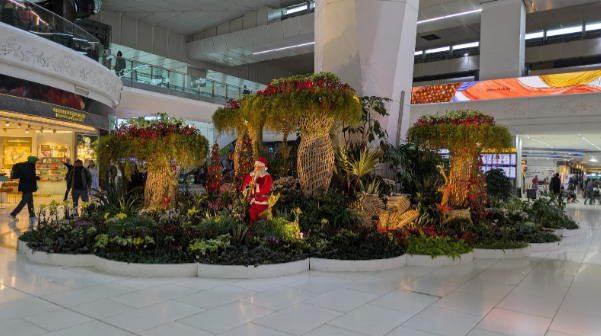

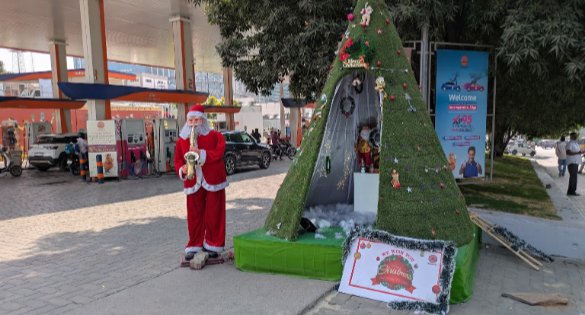
Yes, there are isolated incidents in certain regions. India is vast, with a population of 1.4 billion. But to portray these isolated incidents as evidence that religious minorities are unsafe across the country is not just misleading, it is malicious. India is a civilisation that does not merely tolerate difference; it accommodates it, celebrates it, and often participates in it. There are lessons here for countries that pride themselves on multiculturalism yet struggle to practice it.
On my return journey, I managed to capture a photograph that says more than any commentary ever could: a Muslim girl, freely wearing a hijab, posing in front of a Christmas tree in a Hindu-majority nation.
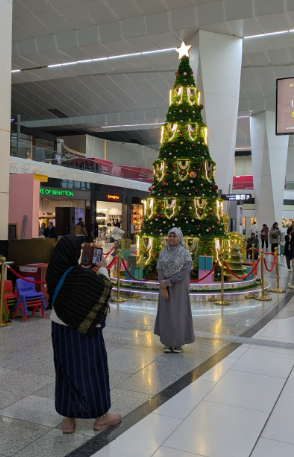

This is the India rarely shown in Western media, but it is the real one – a truly multicultural and pluralistic society.
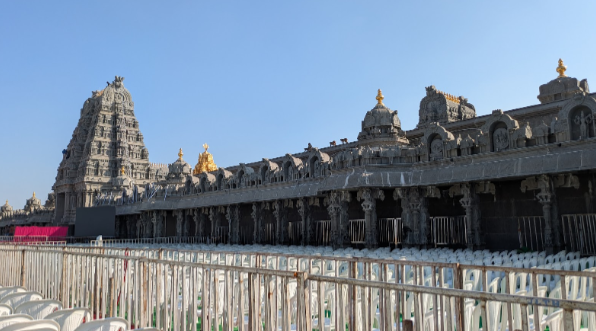
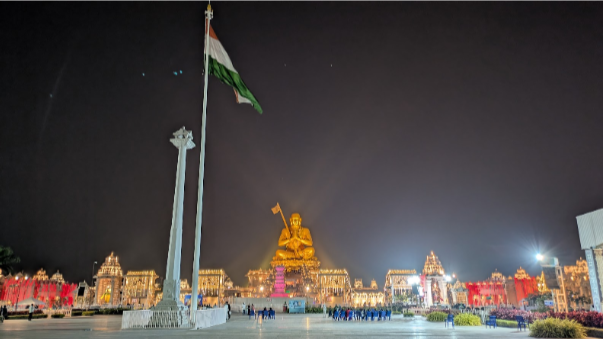
In Hyderabad, I joined a two-day tour. We visited the Yadadri temple, dedicated to Bhagwan Narasimha, and the towering Statue of Equality, honouring the 11th-century philosopher Ramanujacharya. Both sites were impeccably maintained, again reflecting the visible impact of the Clean India movement.


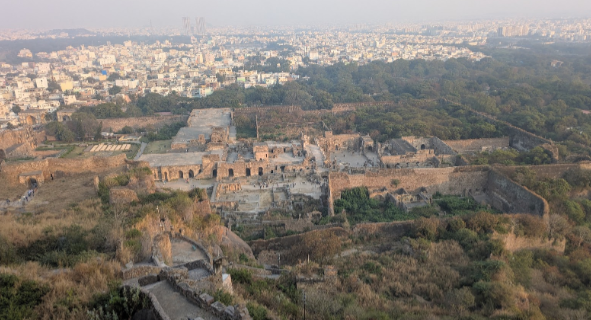
The second day took us to Charminar, Hussain Sagar, the Buddha Statue, and Golconda Fort. As we climbed Golconda, the azaan — the Islamic call to prayer — echoed across the city through loudspeakers. I paused. This was not the sound of a persecuted community hiding its faith, living in fear. This was the sound of religious freedom, exercised openly and confidently.

And yet we are constantly told that Muslims are unsafe in India. My lived experience suggested the opposite. Indian Muslims enjoy freedoms that many Muslim minorities elsewhere in the world can only dream of. Again, isolated incidents exist, as they do in every society, but they are nowhere near the scale or severity portrayed abroad, and unfortunately, believed by millions.
Hyderabad itself is rapidly transforming. Its Financial District and Hi-Tech City are brimming with global tech firms and startups. The metro system is clean, efficient, and modern. It is not an exaggeration to say that Hyderabad is emerging as India’s very own Silicon Valley.
Delhi: Crowds, faith, and a cultural confidence
My final three days were spent in Delhi. I’ll spare you another description of the airport — by now, the pattern is clear. On 1st January, I made my way to the iconic Akshardham Temple via the metro. Along the way, I noticed something striking: people of all ages wearing the tilak, tikka, bindi, and sindoor openly and proudly. Married women, young people, entire families. soon realised why. New Year’s Day, I was told, traditionally means visiting the temples. When I arrived at Akshardham station, I was momentarily disheartened. Overflowing bins, street food litter, and crowds everywhere. The Clean India journey, I realised, is uneven.
There is still much work to be done. Then I reached the temple entrance, around seven minutes’ walk from the station and saw at least a thousand people queuing to enter and gathered at the security and cloakroom sections. At first, I questioned whether I should even continue. How could one possibly enjoy a spiritual space amid such crowds? When I asked a security guard why it was so busy, his answer was: “It’s New Year’s Day. Everyone comes to the temple.”
This moment and the outward expression of faith saw earlier shattered another common narrative, that Hindus, especially the youth, are losing their culture and becoming “Westernised.” What I saw was the opposite. A civilisation deeply rooted in its Hindu identity, confident enough to express it publicly and peacefully.
India Gate, history and perspective
On 2nd January, I visited India Gate and the National War Memorial. Walking through unexpectedly quiet streets, I was struck by how clean the pavements and roads were, restoring some faith after the previous day’s disappointment.

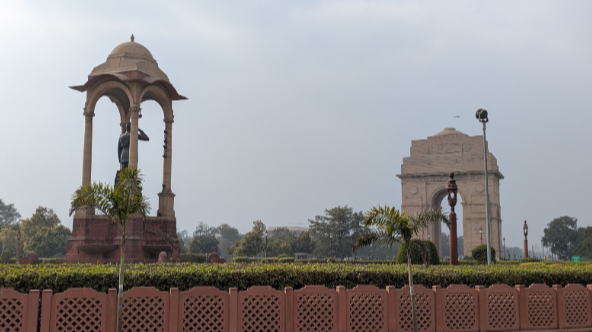
I noticed some road names along the way: Akbar Road, Shahjahan Road, Copernicus Marg. Former invaders, colonisers, and outsiders commemorated without bitterness. Few nations would do this. Fewer civilisations could.
This capacity to absorb, move forward, and not be consumed by historical grievance is uniquely Indian. At the War Memorial, I lingered at the section on the 1971 Bangladesh Liberation War. India sacrificed immensely to liberate East Pakistan and create Bangladesh. More than fifty years later, with rising anti-Hindu violence and hostility towards India in Bangladesh, the irony was painful. History, it seems, is not always met with gratitude.
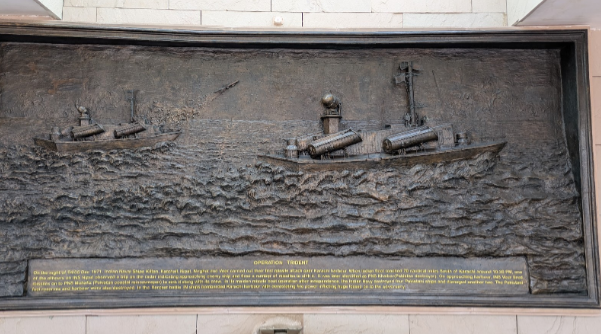


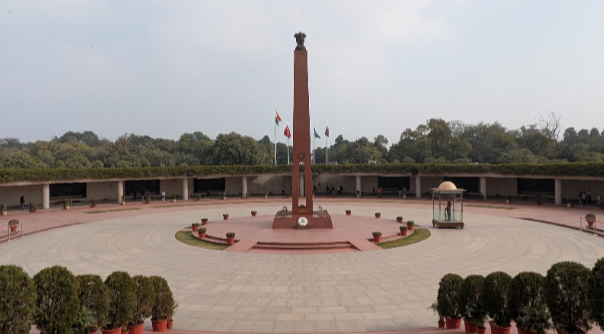
I then made my way to Akshardham later that afternoon, expecting a better experience. When I reached, I was stunned. Within 24 hours, the entire area had been cleaned. All the litter was gone. The transformation was undeniable. Should the mess have existed in the first place? No. But the fact that it was addressed so swiftly speaks volumes – my feelings on the Clean India movement were restored.
Delhi’s Pakistani-Hindu refugee camp: India’s invisible stateless people
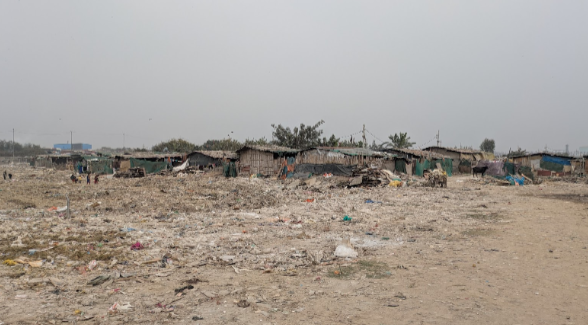
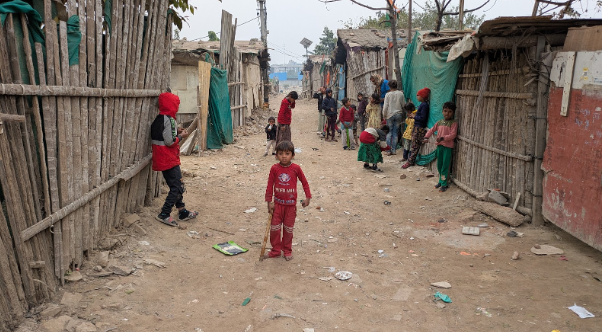
On 3rd January, I spent time in one of India’s many Pakistani-Hindu refugee camps and encountered a community that has escaped brutal religious persecution, only to become trapped in bureaucratic limbo. Hindus and other minorities in Pakistan face systematic violence, including forced conversions, abductions, rape, and targeted killings, realities that drive tens of thousands to risk their lives crossing into India. The camp near Adarsh Nagar, established in 2013, now houses around 350 Hindu families (nearly 1,500 people), mostly from Sindh province of Pakistan.
Despite trauma and hardship, the refugees remain resilient and steadfast in their faith, even refusing offers of material aid from Christian missionaries in exchange for religious conversion. Yet resilience does not translate into rights. Most families arrived after the 2014 cut-off for India’s Citizenship Amendment Act (CAA) and remain without citizenship, visas, or Aadhaar cards, effectively rendering them stateless. The consequences are severe: slum-like living conditions, reliance on wood fires for cooking as gas is not available for them, children barred from formal education, and annual flooding due to poor infrastructure. A single-room school run by a refugee teacher offers fragile hope. Though grateful to live free from religious persecution, many described their existence as peace without dignity, preferable tofear, but far from a future.’
What makes their plight especially painful is the inconsistency of India’s response. While persecuted Rohingya Muslims from Myanmar have largely been granted asylum and Aadhaar cards, Hindu refugees from Pakistan remain in limbo. With tightened border security following the Pahalgam terror attack, now preventing further escapes, thousands still trapped in Pakistan watch their last refuge close. If India is truly to honour its civilisational promise as a sanctuary for persecuted Hindus, these families cannot remain invisible.


A civilisation on the rise: Progress, not perfection
Civic sense remains India’s weakest link. Queue jumping, poor public space etiquette, and littering are still common. But change is underway. In a country of 1.4 billion people, behavioural transformation takes time. Education — especially in schools — will be key.
From what I observed, meaningful improvement is happening, and within another decade, the shift could be profound. India is a rising superpower and a resurgent civilisation, steadily breaking free from the weight of centuries of invasions, colonisation, and repeated attempts to erode its spiritual Hindu foundations. What I encountered was not the India of Western caricature, but a nation looking forward, confident in its identity, ambitious in its outlook, and increasingly influential on the global stage.
This is an India shaping global conversations, not retreating from them; an India striving for progress without severing itself from its civilisational roots. It is a country where diversity is not merely tolerated but woven into the fabric of everyday life, a living example of how a plural society can function without losing cohesion or purpose.
India has come a long way, and its trajectory is unmistakable. It deserves far more honesty and far less prejudice from those who observe it from a distance. For in understanding India more truthfully, the world may also glimpse a path towards a safer, more balanced, and more peaceful future.
Disclaimer
Views expressed above are the author’s own.
END OF ARTICLE