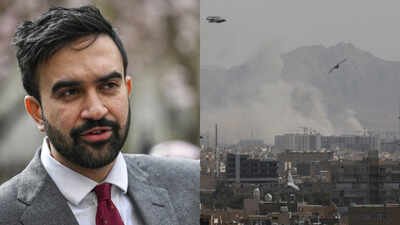
Vinay Kumar
Regardless of how some people of the Iranian diaspora in the West envision a lost golden period for Iran, the country has always been porous, just like every other nation on the earth. When you constrain Iran to a bounded cultural zone, you are subjected to cultural atavism. Alas! Culture is not a set of genetic traits. Cyrus and Darious did not have tails that may be triggered in the present. The diaspora, on the other hand, believes that the Cyrus cylinder is the sole channel for Iranian culture. But can Iran be properly understood without Iraq? Iran and Iraq are now recognised as key Shia centres, yet their common religious identity is only one aspect of a complex historical relationship.
When we think of modern Iraq, we are transported back to ancient Mesopotamia. It was here that humanity began to leave its mark on history. The Epic of Gilgamesh, often recognised as the first written literary work in history, is one of its most enduring achievements. The epic provided a fresh teleological imagination–of both beginnings and of the ends. The great deluge is fundamental to the epic. The water was turned from a source of life to a portent of death. It expanded the human imagination by transforming ecological pain into theological meaning. The character of Utnapishtim, the flood’s sole survivor, became an archetype that journeyed through civilisations, eventually becoming Noah in Abrahamic faiths and Manu in Indic mythology. Also, the flood was more than what simply happened. It foreshadowed what will happen again, this time decisively and universally. From here onwards, world’s religions started to have different terms of this final day in the form of Qiyamat in Arabic, Pralay in Sanskrit, Frashokereti in Avestan and Doomsday in English.
However, such institutionalised futures had not yet emerged in the early stages of civilisation. The end’s imagination could not be controlled by a single, centralised authority. Mesopotamia was never a cohesive entity, even at its height. It kept on breaking apart into smaller city-states, each with its own gods, customs and political aspirations, such as Ur, Uruk, Babylon, Nineveh, and Nimrud. Notably, though, all of these centres were situated in what is now Iraq.
Iran was not yet a political geography at this point. In latter centuries, Medes’ centres of authority and influence stretched far into Mesopotamia even after they were a well-known force. The Achaemenian dynasty followed the same trend. Despite being referred to as ‘Persian’ in retrospect, the Achaemenian Empire ruled over a large and varied region, with Mesopotamian regions frequently serving as its administrative and economic centre.
This pattern is very consistent in its repetition. From the capitals of Mesopotamia, the Parthians dominated. The Sasanians followed suit, and one of the most significant imperial hubs of late antiquity was Ctesiphon, which is close to present-day Baghdad. Put another way, Mesopotamia served as the gravitational centre of empire in ancient times, whereas what is today known as Iranian geography mostly served as a periphery or vassal zone. Terms like Persian, Median and later Iranian referred to peoples, customs and legendary ancestries rather than nation-states. Culture came before boundaries, and identity came before geography. Nationalist historiography frequently overlooks this important fact by retrojecting contemporary territorial awareness onto premodern societies that followed very different logics.
This trend didn’t change much during the Islamic era. When the Abbasids took control of Iran, they did it from Iraq once again. Baghdad became as the Islamic world’s administrative, intellectual and symbolic hub. Under Abbasid authority, Persian philosophers, poets and scientists thrived, but always within an imperial framework that prioritised Iraq. The migration of institutions, people and ideas was mostly from west to east.
A significant break in this common history is the Battle of Karbala. Karbala, which took place on Iraqi territory, turned political opposition into a sacred memory. Imam Hussain’s sacrifice transformed Shia Islam into an emotional cosmos focused on pain, injustice and resistance, rather than solely a political attitude. In Iraq, a sizable portion of the population progressively converted to Shia faith.
Shia faith came to Iran much later. Iran, at that time, was mostly a Sunni state. It wasn’t until the Safavids that it reached its pivotal point. Iran’s distinctive historical intervention was the extraordinary act of declaring Shia faith a state religion rather than the development of Shia theology or legislation or ritual. Otherwise, Iraq had all this in plenty. In Islamic history, where religious diversity and governmental power had long coexisted, this action was revolutionary. However, the intellectual core of Shia Islam remained Iraqi even after this change. The jurists, theologians and philosophers who influenced Shia philosophy in Iran were still produced by Najaf and Karbala.
Thus, Iran’s contribution to Shia identity was symbolic and mythical rather than theological. The story of Siyavash in the Shahnameh (Persian epic written by Firdausi in the early 11th century) is one of the many pre-Islamic tales that Persian culture brought with it. The innocent prince who was deceived and killed, Siyavash, turns into a potent symbol of unfair suffering. His narrative strikes an eerie chord with Imam Hussain’s martyrdom. These similarities gave Shia belief an emotional and artistic depth, enabling the reimagining of Iraqi holy history in Persian narrative traditions.
Thus, Shia Islam in Iran appears as a hybrid construction rooted in ‘Mesopotamian’ geography and Persian memory, born of Iraqi theology and Iranian myth, rather than as a merely religious or national phenomena. Extricating Iran from Iraq is therefore both theoretically and historically incorrect.
The Iranian diaspora is all set to turn history into retrojection via Cyrus, Darious, and Reza Pahlavi, even though history has been somewhat a different projection. It brings genetics into the realm of culture and history. It supports the beliefs previously promoted by Zionism and Hindutva. Perhaps the most important lesson of history is that civilisations are not based on particular places but rather on collective memories of origins and ends. Humanity continues to find purpose in the recollections of floods, martyrdoms and impending end times, even at the cost of losing its own origins.
Disclaimer
Views expressed above are the author’s own.
END OF ARTICLE