Vinay Kumar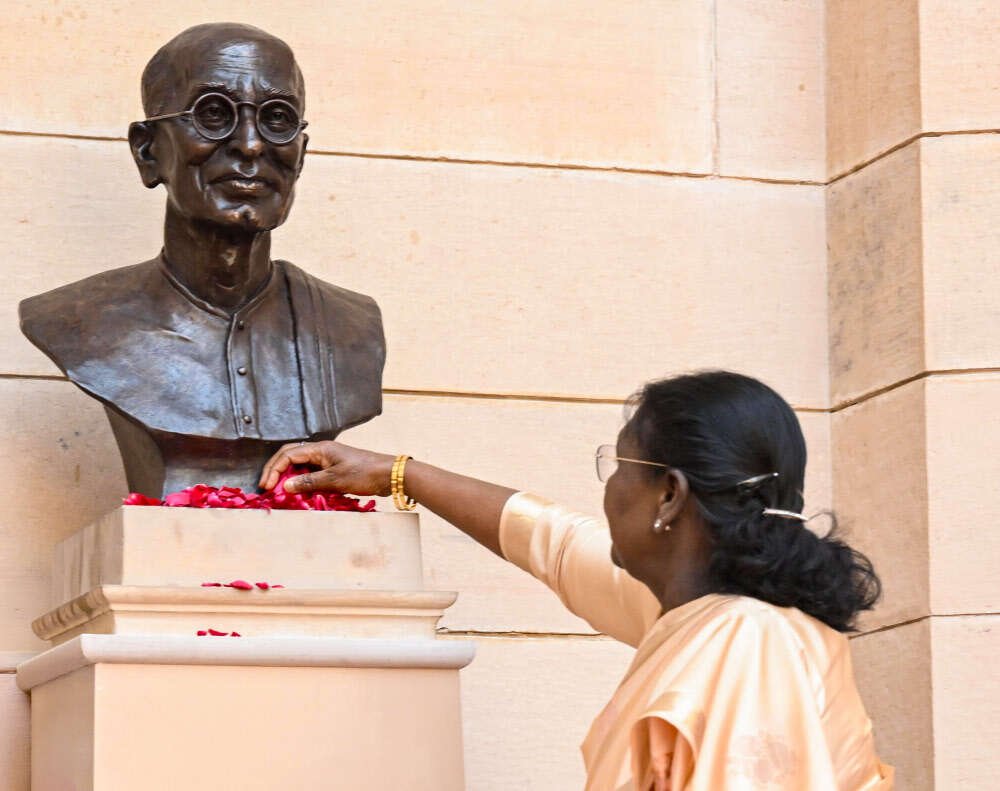
One of the serious cultural shortcomings with us argumentative Indians is that we are often quick to dismiss an issue without considering its full scope. The current debate on Indianising Indian history lies at the heart of the recent removal of Sir Edwin Lutyens’ statue at Rashtrapati Bhavan. Lutyens, along with Herbert Baker, was responsible for the layout of Delhi and designed most of the monumental public structures that lie in and around India Gate. In architectural terms, scale of construction and timelines, this was no small feat. By contrast, his sculpture, a small, insignificant bust in bronze, stood on a pedestal in the central courtyard of Rashtrapati Bhavan — the only artistic tribute to an architect recognised in his own country as the ‘greatest of the early 20th century’.
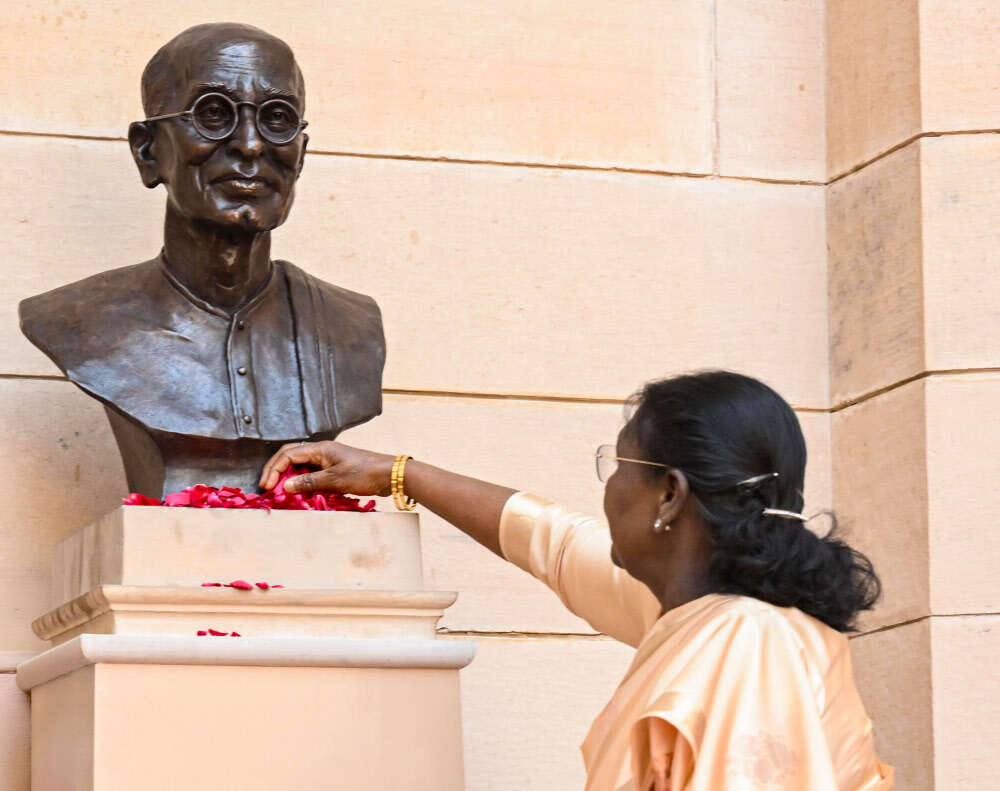

This Lutyens’ bust has now been replaced by a statue of C Rajagopalachari, India’s first governor general. No one would dispute Rajaji’s pivotal role in the country’s political life and the need for its visible public recognition. But the removal of Lutyens does stir up a debate on how best to deal with the remains of a 200-year-old colonial legacy.
Should India Gate be brought down because it commemorates Indian soldiers who fought for the Empire? Should the President of a free India reside in a building that was once the Viceroy’s house? Which indeed is the better view, erasure or the more moderate one of co-existence?
For the past decade, the world seems to have embarked on a crusade to eradicate historical figures now perceived as evil. Confederate heroes in the US have been kicked off public pedestals. The Smithsonian in Washington has been called upon to remove historical exhibits of slavery. In England, statues with racist links have been dumped into rivers. In our own country, names of streets, squares and whole buildings have been changed to reflect a past that is best forgotten. Or changed to suit the present.
Colonialism’s legacy was too complex and widespread in itself; it included the rail network, the bureaucracy, communications and cultural institutions, among other things. Lutyens was but a minor player in the scheme. Yet for all his narrow-mindedness and racism, his disparaging view of India and Indians, he was a great architect, and his contributions cannot be easily dismissed.
The past century has, in fact, brought three notably renowned foreign architects to India. Lutyens, Le Corbusier and Louis Kahn came at different times, but each infused the architecture of that period with new ideas and original thinking. Their private politics aside, their contribution was far- reaching and influential.
Lutyens’ association with India spanned over 20 years, in which time he made several trips to discuss his designs with the Viceroy, select construction materials, visit several historical monuments from which he drew inspiration and supervise the construction of his own finely detailed edifices. Though he referred to Indian architecture as ‘piffle’, he adopted it wholeheartedly into his own compositions, creating a hybrid monumentality that was more Indian than Western.
Whatever his political views and contemptible racism, Lutyens was first and foremost an architect. His work and contribution to India cannot be judged in purely political and ideological terms, the way Aurangzeb’s or Queen Victoria’s can. Doubtless his architecture played an important role in the cultural history of India, but he was not a Viceroy, as his grandson Matt Ridley pointed out recently. An architect of formidable ability and imagination, his place in our midst must be viewed from the perspective of world architectural history, not from the history of India. When all is said and done, the monumental structures he built will continue to be retained with loving care and celebrated as jewels of India’s capital.
If there is a fine line between architecture and history and politics, it disappears completely when one is used to support or embellish the other. Certainly, Lutyens was an employee of the British govt and owed his allegiance to it. But his professional instincts were wholly architectural, and it is for those that he is remembered in Delhi, much in the way Corbusier is remembered for Chandigarh. To remove his statue from Rashtrapati Bhavan may be a minor political act, but his imprint remains firmly engraved in the very same building. Only his symbolic presence has been removed. Perhaps, if he had chosen to settle down in a part of Delhi named after him, we might have been kinder to him.
Disclaimer
Views expressed above are the author’s own.
END OF ARTICLE