Vinay Kumar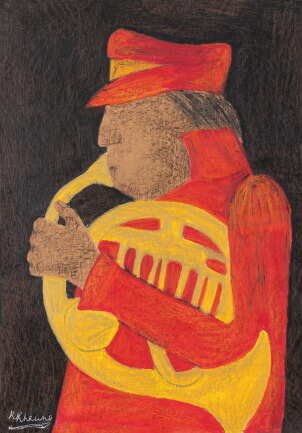
Opening in Singapore on 28th February is Jalsa, a modern and contemporary Indian art show that celebrates Indian masters as well as seasoned emerging voices.Top of the line are veterans like Krishen Khanna, Ram Kumar, Himmat Shah and Thota Vaikuntam while amongst emerging voices are the brilliant Phaneendra Nath Chaturvedi, meditative Ompal Sansanwal known for his tree landscapes and the feisty creator of a carnival of animals, Yashika Sugandh and surreal master Sitanshu Sutar.

Krishen Khanna
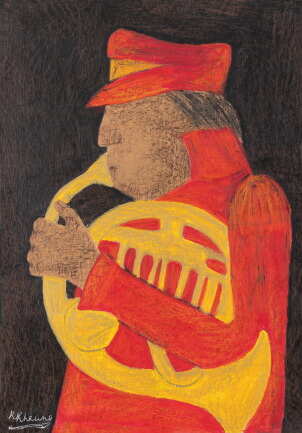
Krishen Khanna the 100 year old author, critic and eminent artist is represented by a host of paintings as well as sculptures belonging to his treasured Bandwallah series. Within his creations one reckons a love for the wind instruments and the bugles and the uniforms all have a zesty ensemble of colour and gaiety. Khanna has lived a life loving and creating his own series on human lives and the pages of living through his own observations that run a sensibility of sensitivity and human fervour.One can glimpse and savour both colour and contour within the hand of narratives that creates leaves of both time past and time present within the last of the Indian Progressive Masters.

Himmat Shah
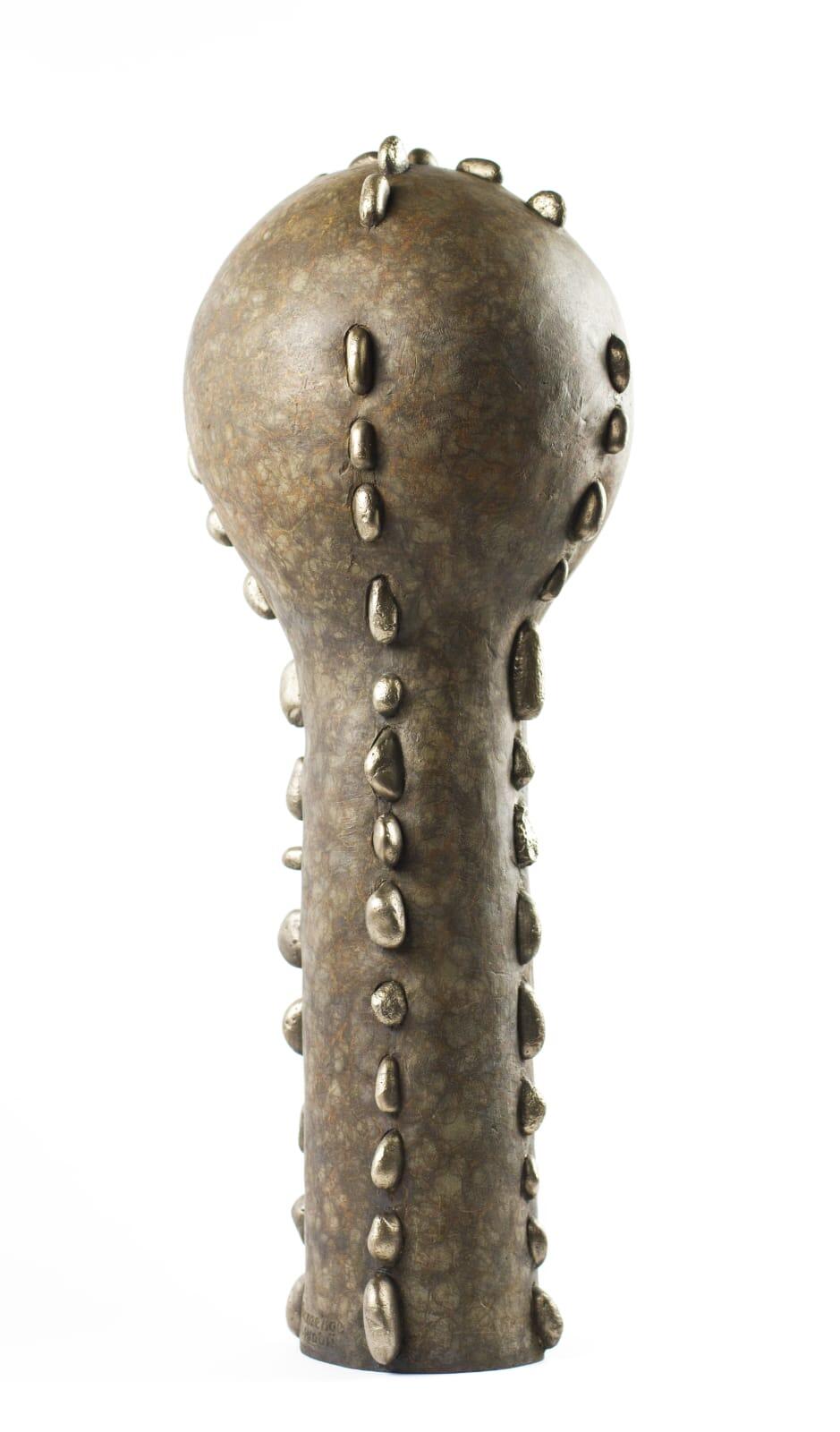
Himmat Shah’s bronze sculpture is a pared down vista of an abstract study done in London.When you see the contours, the fine edge of simplicity and his love for what is measured you realise that his understanding of sculpture was more about the medley of melancholia as well as the timbre of memory within and without. Himmat said that everything he created was born of what he believed was transformation from his own experience. He wanted people to have their own views and descriptions of his works which were always a result of the metaphorical. He had the ability to transform the low or the simple into higher equivalents of the varied discourses of the aesthetics of art. Studying the work of Himmat Shah, India’s seminal master sculptor is also a study of the growth of modern Indian art and its interactions with Indian contemporary trends .

Vaikuntam’s paintings and sculptures
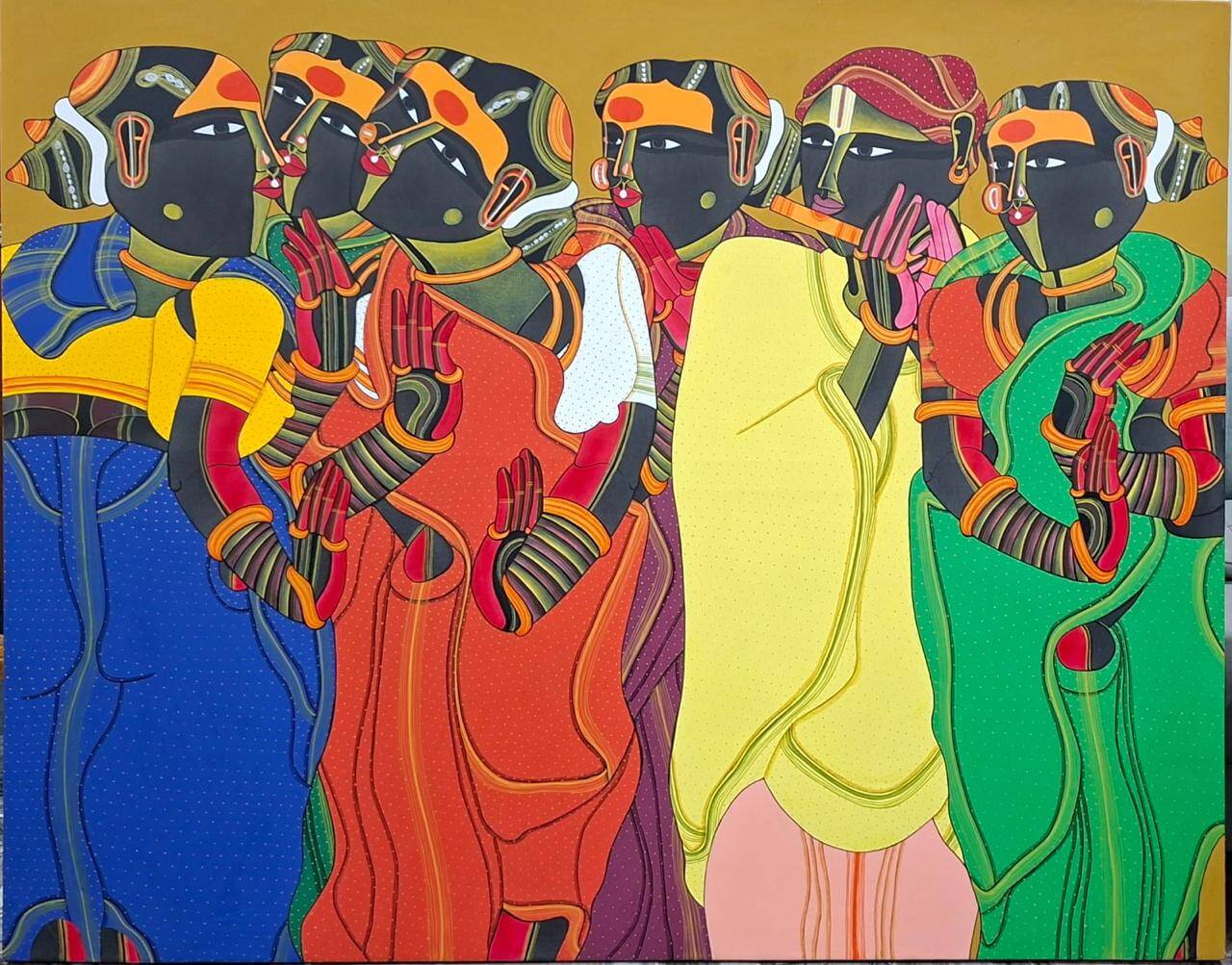
In Jalsa are a series of Thota Vaikuntam paintings as well as bronze heads that are stellar and deeply emotive. His tableau of a group of women with a male flautist dressed in a yellow vastra with a light pink dhoti is a heady painting that is a testimony to tradition and tribal indigenous accents that are robust as well as resonant and filled with the ripples of music and sacred intensity.Vaikuntam’s women are a set of deeply evolved individuals happy in their ornamentation as well as love for their own traditional cultural fabric.His bronzes are cubist renditions of contoured beauty and embody the sacred gaze as his signature.

Phaneendra Nath Chaturvedi
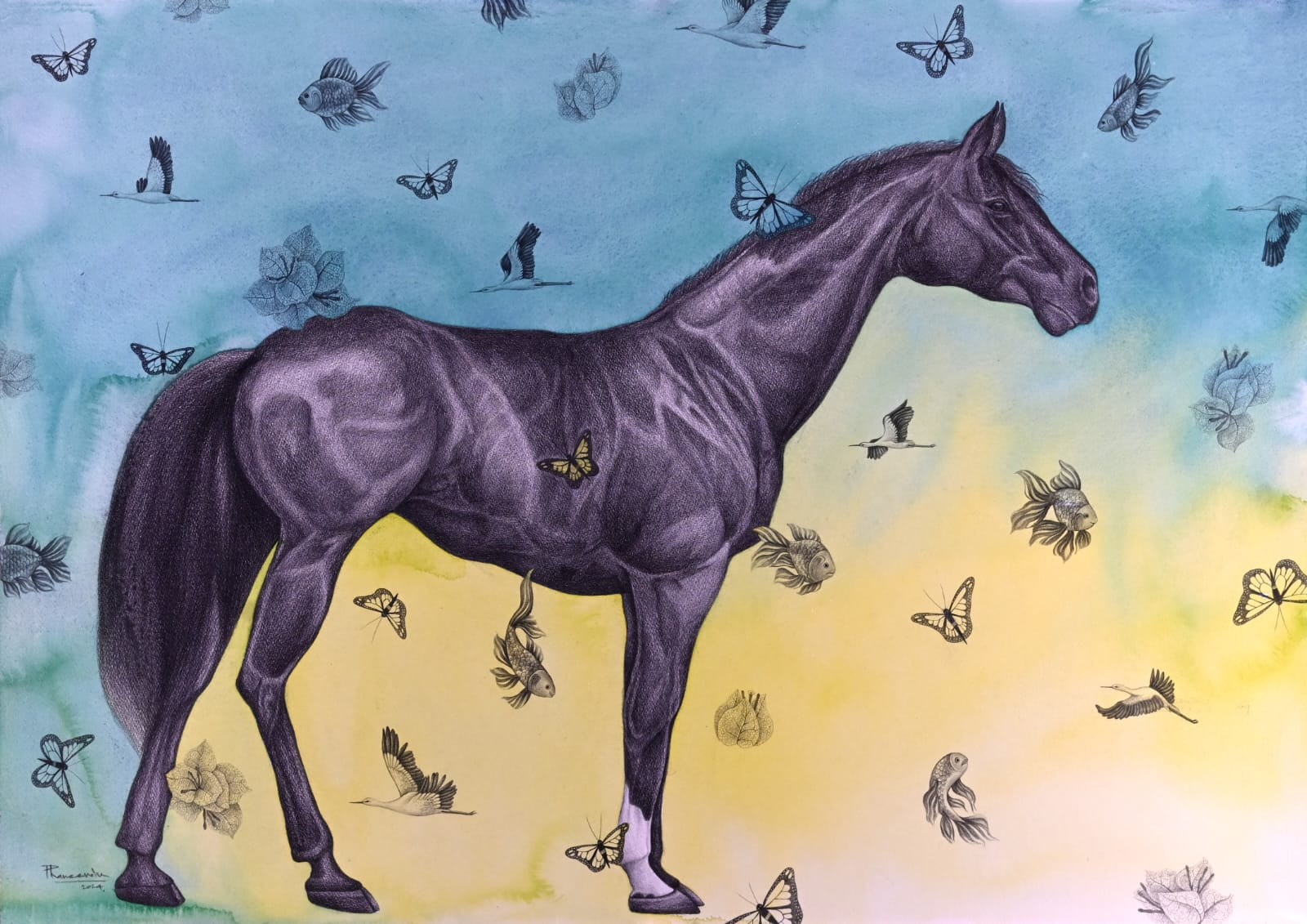
Adrift on a sea of Memory is a lone horse that stands in solitude.But it isn’t merely the horse that holds our attention it is the perfected elements that float in the frame of expression. that serve as scaffoldings for swaths of colour, fish, birds and butterflies all created in magical monochromes of brushy paint, creating a textural tenor , which coalesce into delicate, animal-like forms that fill the surface of support. Intuition is everything for Phaneendra. The thinking mind, the rational, problem-solving mind, all become the catalyst of his love for drawing and painting the horse as his perfection for form.

Ompal Sansanwal
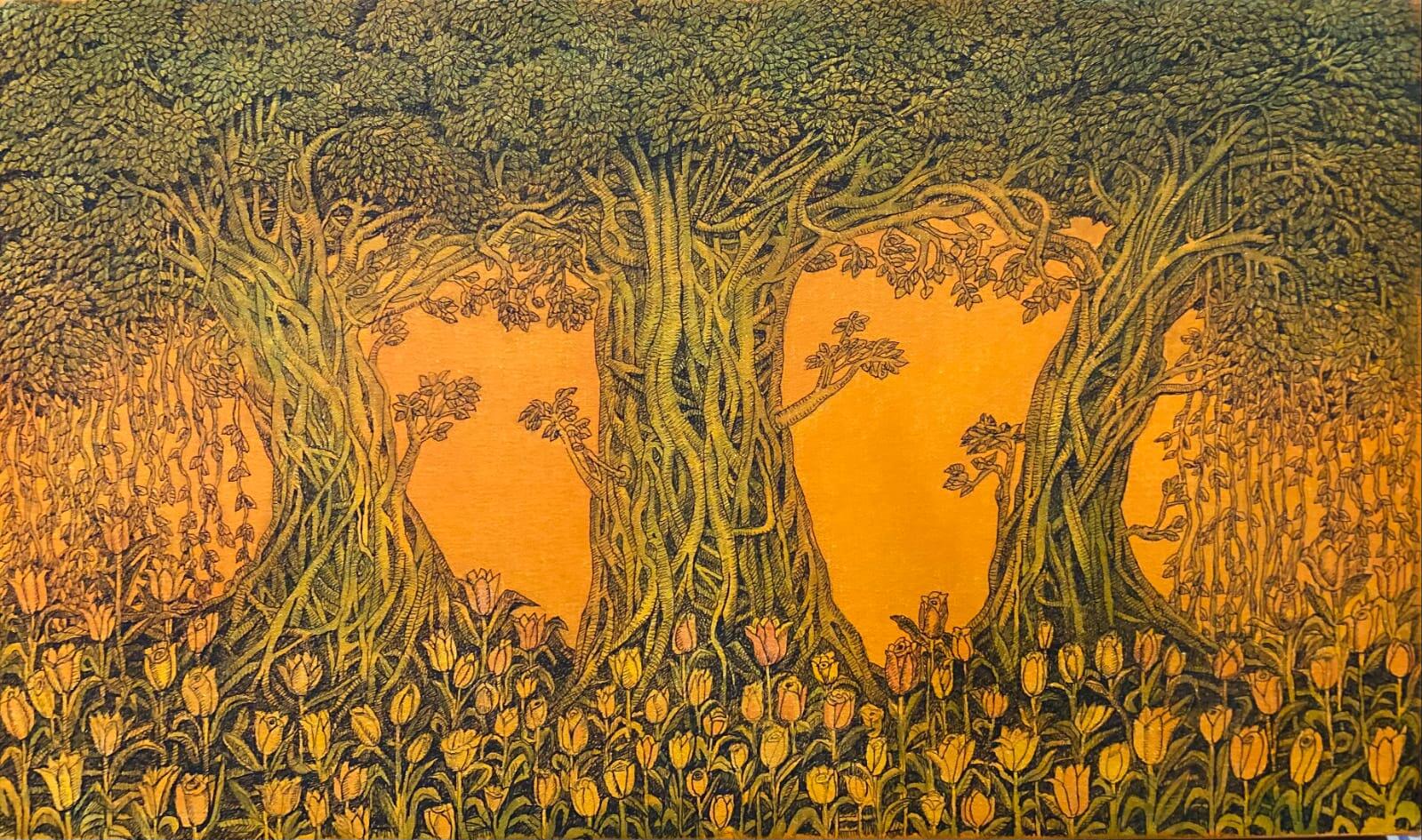
An Ompal Sansanwal painting is many things, but it is more than a set of enchanting trees and flowers. When you walk amongst his ochre toned canvas you walk through a kind of twilight lit dream jungle where the botanical atmosphere is mottled and streaked with sinuous filaments that may or may not cohere into something you think you recognise. Sansanwal is a lover of nature, a hermit who is happy to create in the solitude of his own identity within his walks amidst nature’s bounty.Here is an artist who lives by the principle words of Hermann Hesse when he said: ‘ Trees are sanctuaries.’

Yashika Sugandh
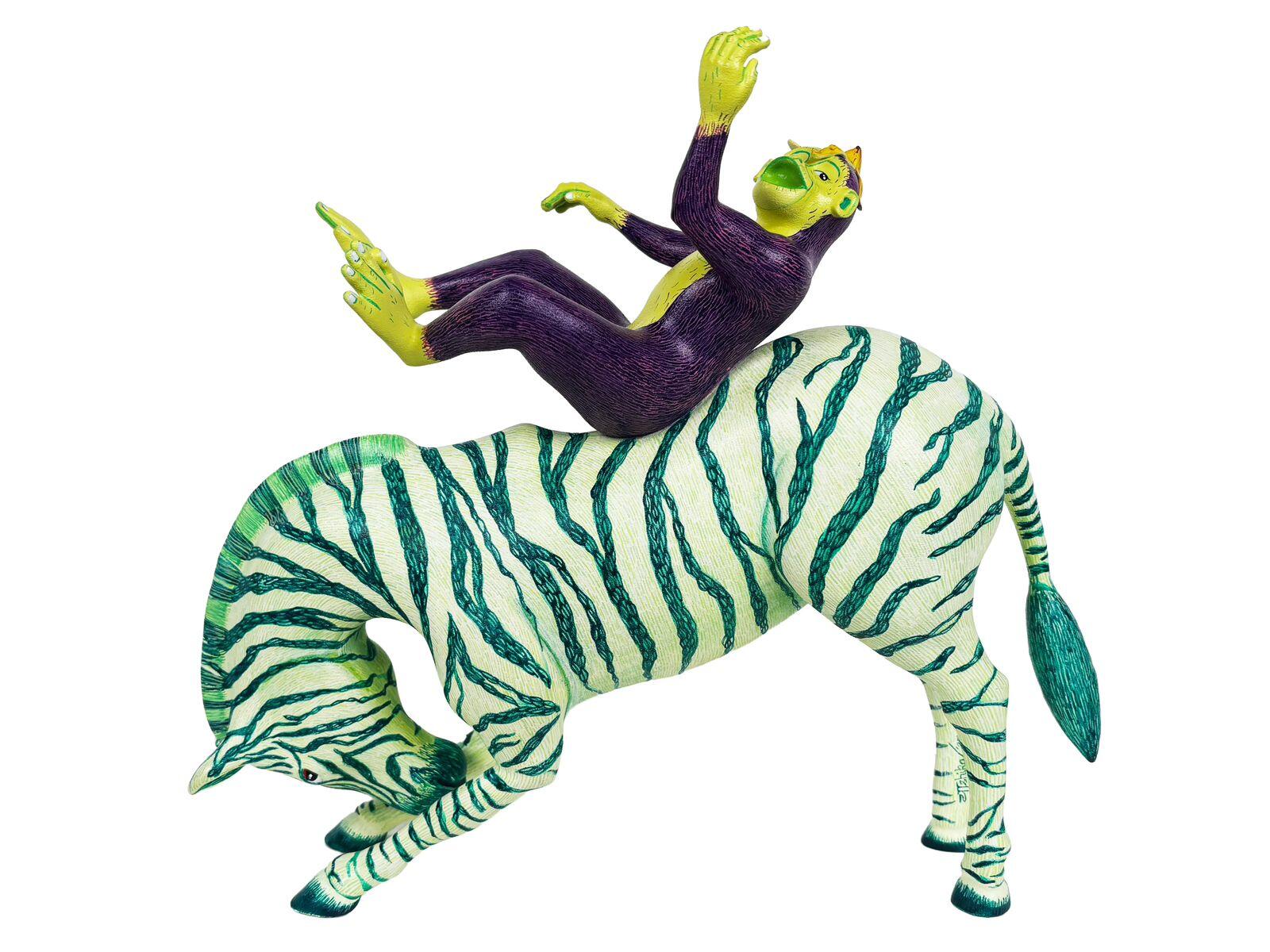
Sculptural brilliance and compositional clarity are the hallmark of young emerging star Yashika Sugandh who lives between a carnival of animals and birds in her contemplative adopts. You have to admire her painterly craft and slow-art maneuvering. It’s almost as if it feels good to listen to the works tell so many funny nowhere stories it can’t wait to share.
Her dexterity at handling botanical and zoological forms becomes a broad organising principle. Shades of detailed constructed figuration and other art-historical references and associations come through in these sculpted and painted , frontally oriented figures. Her constant working and reworking of the formal and compositional elements in her works present also her natural associations that are part of her own, open and deliberative method of painterly accumulation and adaptation, whereby she constantly reacts and responds to the process of creation itself in her vocabulary of forms.
Lines, shapes, and blots of colour momentarily read like anatomical accents but form distinct visual components. Her penchant for creating and playing with figural masses creates its own rhetoric and resonance.
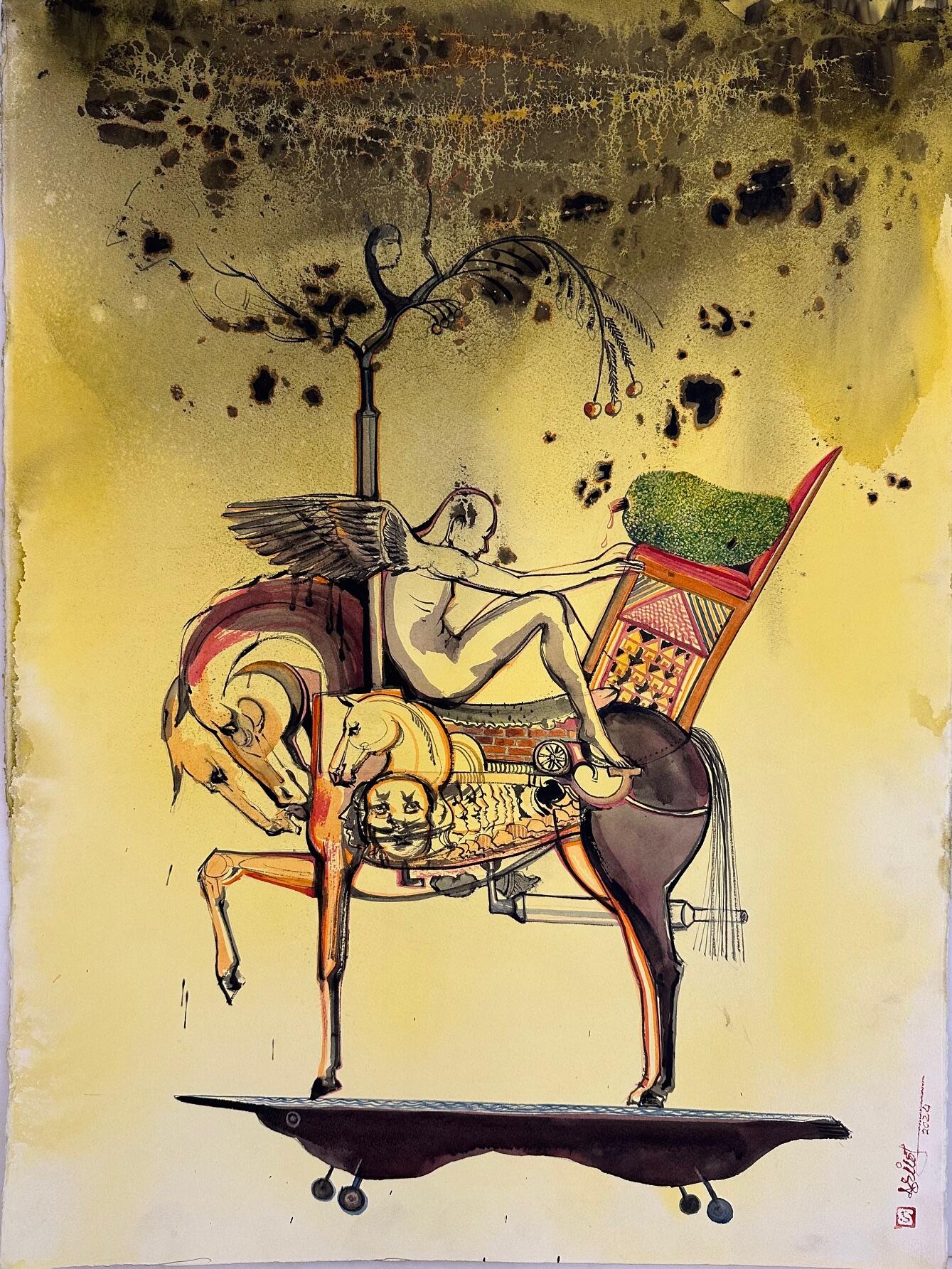

Sudhansu Sutar
In his painting, Sudhanshu Sutar plays with figurative elements—that emerge as central compositional structures. A pair of horses with a winged human and a jackfruit all become a part of an act of a narrative that features thin lithe contour lines. Sutar builds up a surreal signature within the forms, even a bathtub with wheels until they achieve a loose balance between assembled wholes and disparate parts, establishing a dynamic tension in the work between cohesion and dissolution.
Disclaimer
Views expressed above are the author’s own.
END OF ARTICLE