Vinay Kumar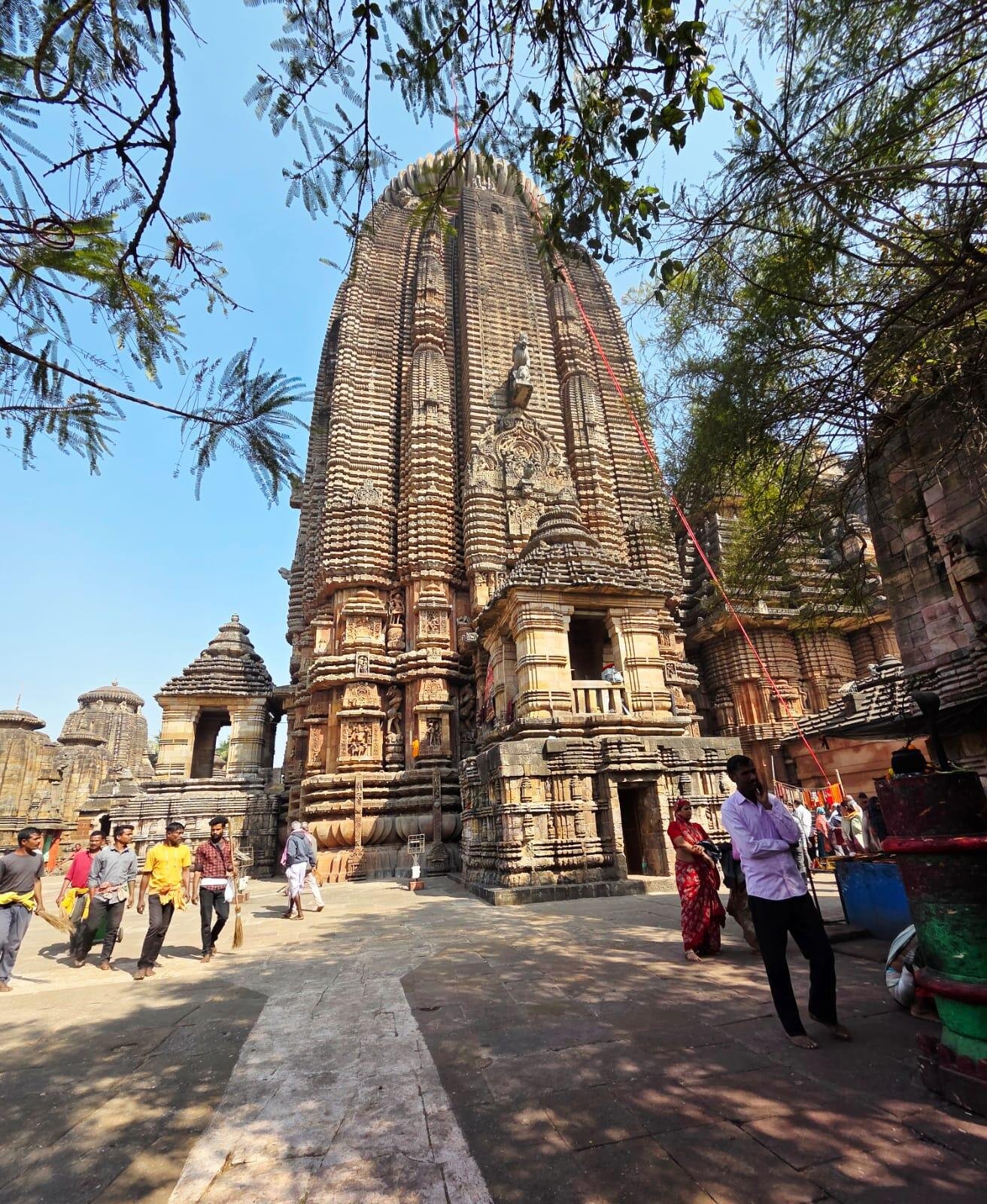
I visited Bhubaneswar for the first time, though I had visited Puri and Konark 30 years back. When I arrived at Bhubaneswar railway station, I attempted to book an auto. None of the drivers were willing to pick me up from the station premises. Several informed me over the phone that app-based autos are not allowed to operate freely at the station due to resistance from local auto drivers. Some drivers stated that they had previously faced threats and even physical assault for attempting pickups there. Whether officially sanctioned or informally enforced, the effect was the same: app-based competition appeared restricted in that zone. Meanwhile, the local autos stationed outside were quoting fares approximately three to three-and-a-half times higher than the Uber app rate for the same distance. With limited alternatives available, passengers were effectively left with inflated pricing.

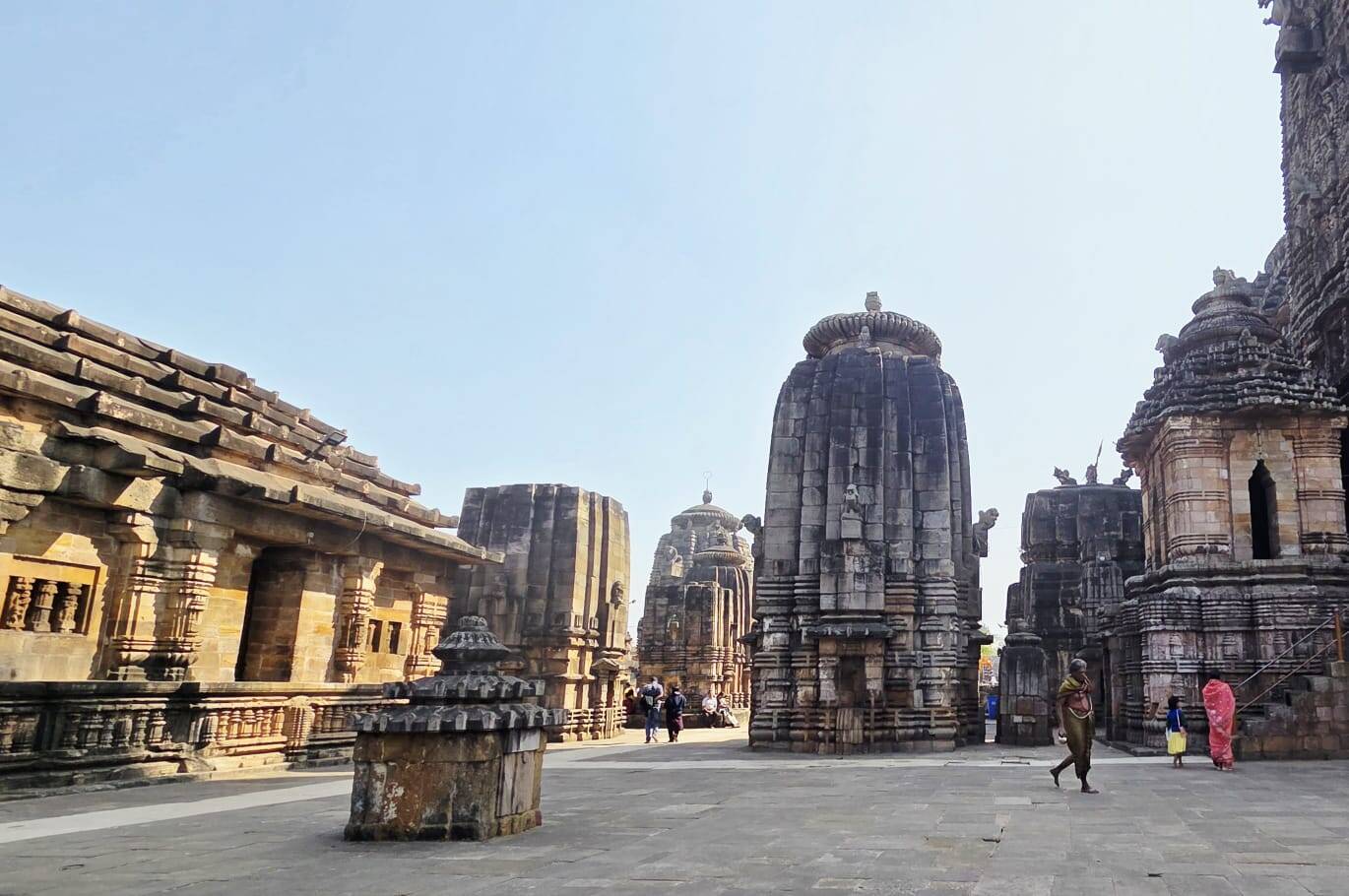
After a shower, I decided to go to Lingaraja temple, a UNESCO World Heritage Site. It is dedicated to Shiva and is one of the oldest and largest temples in Bhubaneswar. The presiding goddess, Parvati, is referred to as Annapurna or Girija. The temple represents the quintessence of Kalinga architecture, culminating in the medieval stage of this architectural tradition. The temple was built by kings of the Somavamsi dynasty. King Jajati Keshari is believed to be the founder of the temple. There are four components—Vimana (the structure containing the sanctum), Jagamohana (assembly hall), Nata-Mandira (festival hall), and Bhoga-Mandapa (hall of offerings)—each increasing in height, with the tallest reaching 180 ft. The temple complex houses 108 other shrines and is enclosed by a large compound wall. Lingaraja temple is maintained by the Temple Trust Board and the Archaeological Survey of India (ASI).
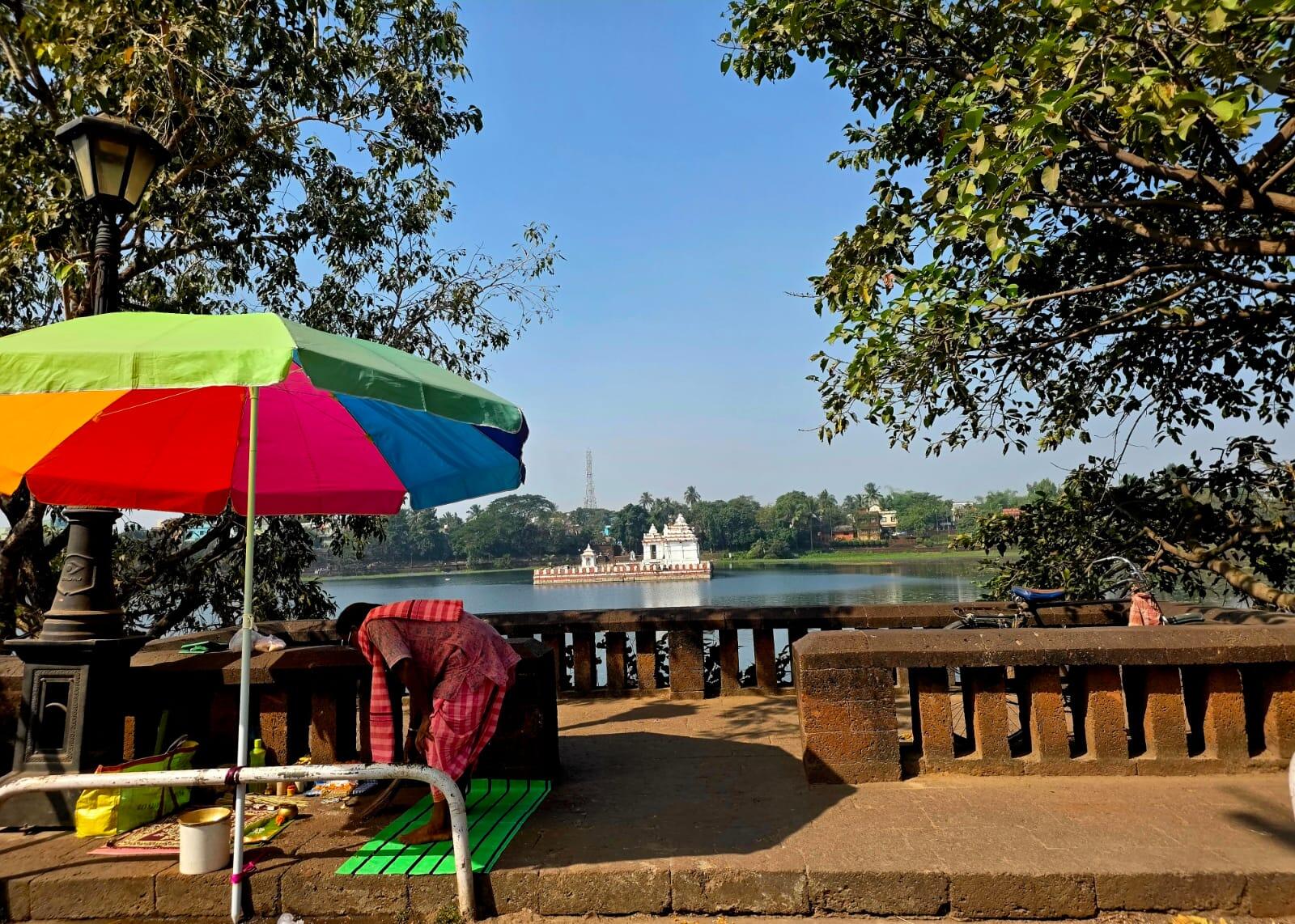

On the way, I crossed Bindusagar Lake, a sacred water body closely tied to the rituals of Lingaraja Temple. It is regarded as the spiritual heart of the “Temple City.” The lake holds both mythological reverence and architectural significance.
The deity of Lingaraja was originally worshipped under a mango tree. Ekamra Purana, a Sanskrit treatise of the 13th century, mentions that the presiding deity was not seen as a lingam (an aniconic form of Shiva) during the Satya and Treta Yugas, and that only during the Dvapara and Kali Yugas did it emerge as a lingam. The lingam in the temple is a natural, unshaped stone that rests on a Shakti.
I then headed to the Mukteshwar temple, one of the most exquisite and artistically refined temples in Bhubaneswar, often called the “Gem of Odisha Architecture.” Built around the 10th century CE, it represents a crucial transition in Kalinga temple architecture.
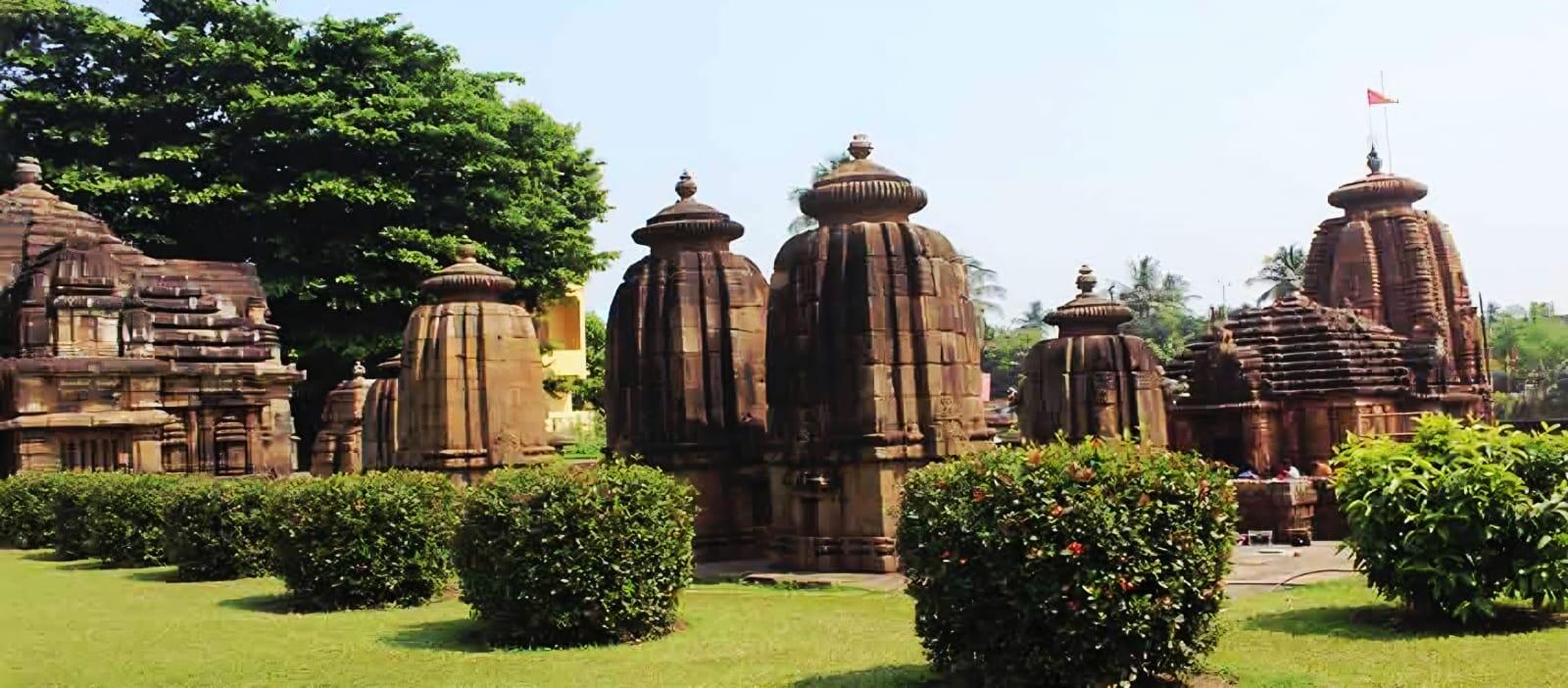

Though modest in size compared to the towering Lingaraj Temple, Mukteshwar possesses a refinement, grace, and artistic maturity that leaves a deeper, quieter imprint on the soul. It is a temple where architecture transcends stone and becomes meditation.
Built in the 10th century CE, Mukteshwar represents a turning point in Kalinga temple architecture. It is small, but it’s intricacy is astonishing. Every inch of its surface seems alive. The most captivating feature is the elaborately carved torana, a rare arched gateway in Odisha temple design. The arch, delicately sculpted with scrollwork, floral patterns, and miniature figures, feels almost weightless despite being carved from solid stone.
The temple’s walls narrate silent stories—ascetics in meditation, celestial maidens in fluid movement, playful monkeys, serpentine naginis guarding the portals. Each carving radiates grace and balance. Some panels even depict fables reminiscent of Panchatantra tales, a rare inclusion in temple sculpture.
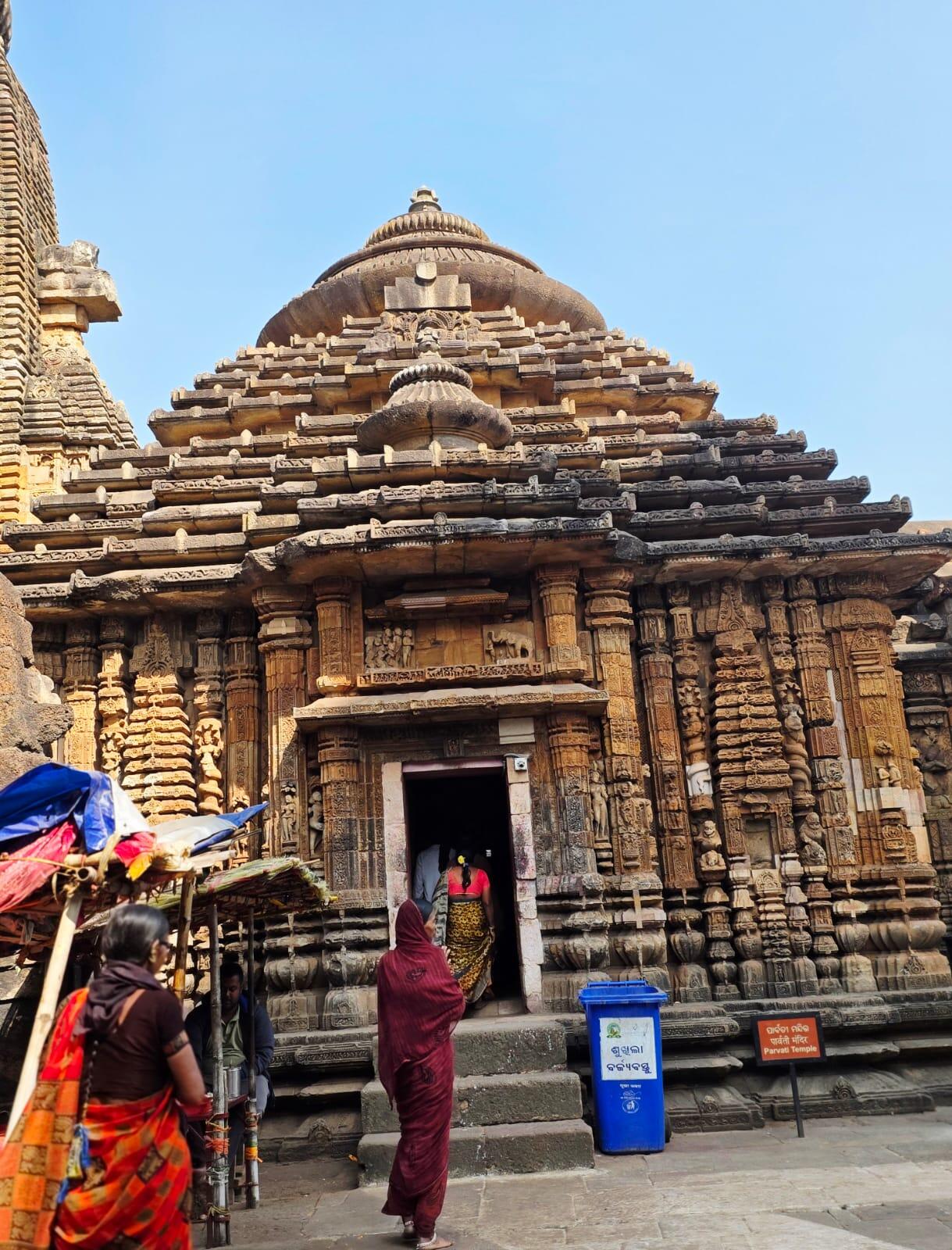

One can sit quietly in its courtyard, absorb the silence, and feel a deep stillness descend. The temple breathes. The name “Mukteshwar” means “Lord of Liberation.” The experience here is inward, not imposing.
The annual Mukteshwar Dance Festival adds another dimension to its beauty. When Odissi dancers perform against the softly lit temple backdrop, stone and movement converse. The temple that once echoed with Vedic chants now vibrates with rhythm, bridging centuries of devotion and art.
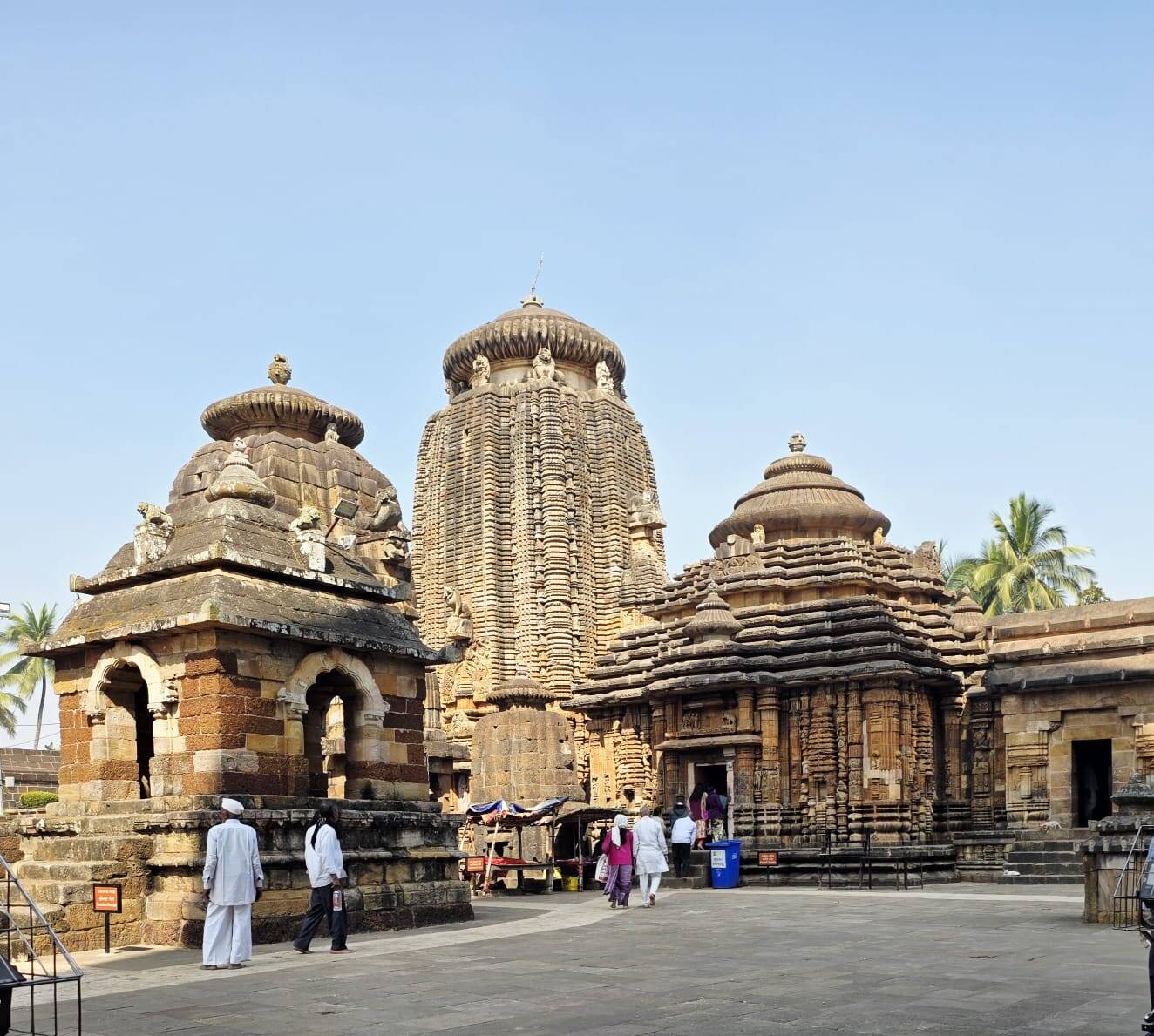

When I entered Mukteshwar Temple, I did not feel as though I was stepping into history; I felt the pulse of centuries in the carvings. Inside the sanctum, the Shiva lingam radiated quiet power. No elaborate ornamentation was needed. The energy felt grounded, steady, ancient. Unlike grand pilgrim centres where the rush of devotees creates intensity, here the divinity felt intimate. I could sit, breathe, and simply be.
The play of light and shadow fascinated me. As the sun shifted, carvings revealed new dimensions—a hidden smile on a celestial figure, the curve of a serpent’s body, the discipline in an ascetic’s posture. It felt as though the temple was alive, revealing itself gradually to those willing to look closely.
There was also a sense of continuity. Nearby lay Bindusagar Lake, whose sacred waters reflected the surrounding temples. The spiritual ecosystem of Bhubaneswar is interconnected. Each shrine complements the other, forming a sacred mandala of devotion. Walking through these temple pathways, I felt transported to an era when architecture was not merely construction, but consecration.
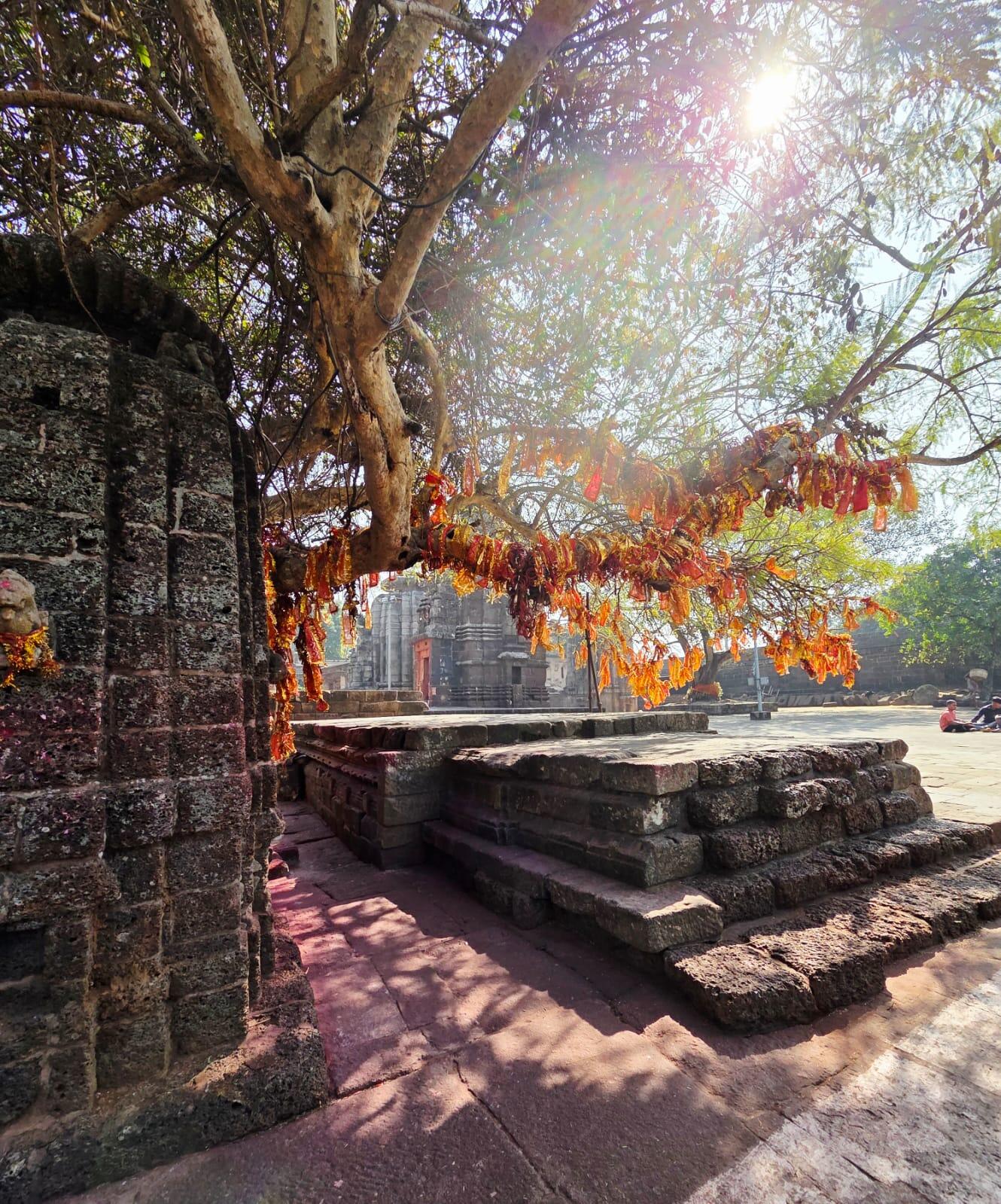

The experience stirred both pride and gratitude within me—pride in the artistic brilliance of our ancestors, and gratitude for being able to witness their legacy firsthand. In that quiet courtyard, time dissolved. There was no past or present, only presence.
From there, I wanted to go to the Chausath Yogini Temple, 20 km away. A similar situation arose when I attempted to travel from Mukteshwar Temple to Chausath Yogini Temple. Local auto drivers demanded nearly four times the normal fare.
To avoid overpayment, I booked an app-based auto. The driver began the journey but, after covering some distance, asked for the destination again. Upon confirmation, he demanded nearly three times the app-displayed fare and insisted on a substantial waiting charge. In an effort to address his concern about return passengers, I offered to return with him if he did not secure another booking. Despite this, he maintained his demand for a significantly higher amount. When I declined and stated that the revised demand was unfair, he stopped on a relatively isolated road and left me there. I was compelled to contact the police emergency helpline to ensure my safety and exit the situation.

The same pattern repeated when I later attempted to return to the railway station: difficulty securing app-based pickups and local autos quoting fares well above standard rates.
For a city celebrated for its sacred heritage and hospitality, such transport practices risk undermining visitor confidence. Greater regulation, transparency, and enforcement of fair-fare norms would significantly improve the experience for travellers. But still, the good outweighs the bad—not because imperfections do not exist, but because the spirit of the place is stronger than its challenges.
Disclaimer
Views expressed above are the author’s own.
END OF ARTICLE