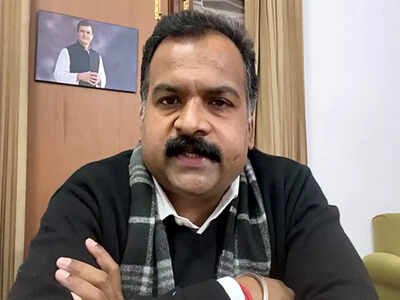
 Vinay Kumar
Monetary policy has been relentlessly focused on ways to increase the flow of credit to the productive sectors of the economy. Against the backdrop of a resilient economy and low inflation, keeping the repo rate unchanged at 5.25 percent and maintaining a neutral stance was expected. What is unique about monetary policy is its role in galvanizing the lending ecosystem to ensure a steady, durable flow of credit to the economy’s productive sectors. The RBI also indicated that policy rates will remain at low levels for an extended period, depending on the macroeconomic impact of geopolitical headwinds.
The buoyant economy and low inflation enabled the RBI to revise its GDP growth projections upward to 7.4% for FY26, up from 7%. Inflation is projected at 2.1 % in FY26, with an upward bias in Q1 and Q2 of FY27. The RBI further highlighted the economy’s drivers, including resilient private consumption, firm construction, strong services, a manufacturing revival, and agriculture aided by reservoirs/rabi sowing.
The HSBC India Manufacturing PMI rose to 55.4 in January 26, marginally up from 55.0 in December, indicating signs of expansion from faster output/new orders. PMI services too increased to 58.5, up from 58, driven by strong new business, international orders, and hiring.
Early results from IT companies suggest improved performance, with net sales growth rising to 8.4 per cent in Q3:2025–26 from 6.7 per cent in Q2:2025–26, and operating profit growth increasing to 10.3 per cent from 7.2 per cent in the previous quarter. As per the quarterly order books, inventories, and capacity utilisation (OBICUS) survey of the RBI, seasonally adjusted capacity utilisation (CU) of the manufacturing sector at 74.8 per cent in Q2:2025-26 was above the long-term average of 73.9 per cent
On the liquidity front, it is comforting for lenders that the RBI has assured proactive, continuous liquidity management and has committed to maintaining surplus conditions to anchor the weighted average call money rate (WACR) closer to the repo rate. It was further emphasized that “ample and sufficient liquidity” is essential for economic productivity and smooth policy transmission, without announcing any specific new infusions.
The policy transmission is a work in progress. Against a cumulative 125 bps cut in the policy repo rate, the weighted average lending rate (WALR) of banks declined by 105 bps for fresh rupee loans during February-December 2025 (the interest rate effect34 is 94 bps)35. The weighted average domestic term deposit rate (WADTDR) on fresh deposits declined by 95 bps, while that on outstanding deposits softened by 41 bps over the same period.
System liquidity is in surplus by Rs 70000 crores after prior actions, including Rs 3.5 lakh crore in OMO purchases and $15.1 billion in swaps. The cumulative repo rate cut of 125 basis points has eased borrowing costs, and the transmission of policy measures is still in progress, with interest on term deposit rates declining faster.
What it means to banks:
When growth is strong and inflation is benign, demand for credit tends to surge, and borrowers’ repayment capacity increases. The active digital connection between lenders and credit information companies (CICs) underscores the importance of building a strong credit history, which can potentially lower borrowing costs.
In this durable shift, banks and non-banks have built a historically strong capital adequacy, asset quality, and profitability. They may have a higher appetite for credit risk. As a result, the total flow of funds to the commercial sector increased to Rs. 29.6 trillion during FY26, compared with Rs. 23.3 trillion in the corresponding period of the previous year.
Bank credit growth was 13.8% YoY, while deposit growth lagged at 12.7% YoY as of December 25, 2025. Even the latest data on January 15, 2026, show the same trend. Credit growth was 13.1%, and deposit growth was 10.6%, highlighting lingering gaps in resource structure.
As a result, banks had to raise a record Rs 13.17 lakh crore through Certificates of Deposit (CDs) in calendar year 2025 (as of Dec 26), driven by deposit growth lagging credit demand amid CASA pressures.
Regulatory measures:
A blend of long-term and immediate regulatory measures can empower banks to increase credit flow, such as raising the limit on collateral-free loans to MSMEs from Rs 10 lakhs to Rs 20 lakhs. The RBI removed registration requirements to reduce compliance costs for small Type- 1 NBFCs that operate without public funds and do not have a customer interface when their asset size is below Rs. 1000 crores. RBI will review and harmonise existing guidelines on the engagement of recovery agents and related recovery practices to improve the conduct. The lead bank scheme will also be reviewed to establish a unified portal for data reporting.
Long-term measures include a proposal to establish a regulatory framework that would allow new credit market derivatives (total return swaps and corporate bond indices) to be issued for public feedback, thereby deepening the bond markets when enforced. Investments under the Voluntary Retention Route (VRR) will now be counted within the overall General route limit for FPIs. Commercial banks will be permitted, after a consultative process, to lend to listed REITs and shall harmonise the prudential rules with those applicable to InviTs to improve funding and liquidity for REITs/real estate projects.
A stronger, more sustained stage has been established to enable banks and non-banks to coordinate and work together to increase credit flows to productive sectors, harnessing the economy’s full potential. When deposit growth cannot keep pace with credit growth, improving customer service quality and expediting grievance resolution will be important for attracting deposits. The tagging of core and non-core business to only
It will be recalled that during Budget 2026-27, the government proposed establishing a “High Level Committee on Banking for Viksit Bharat”. In the meantime, banks should think strategically and act swiftly to align their multidimensional institutional capacity with the needs of realizing the vision of Viksit Bharat 2047, while focusing on the near-term goal of increasing credit flows by exploring the opportunities.
RBI’s monetary policy clearly outlined the critical role of lenders in harnessing the economy’s potential, underscoring its long-term thrust toward realizing the vision of Viksit Bharat – 2047. Banks need to adopt a multipronged strategy. Focus on building capacity to realise the vision of Viksit Bharat and provide credit support to the productive sectors of the economy.
Disclaimer
Views expressed above are the author’s own.
END OF ARTICLE