Vinay Kumar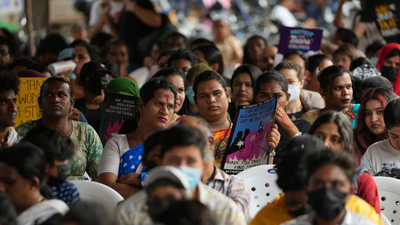
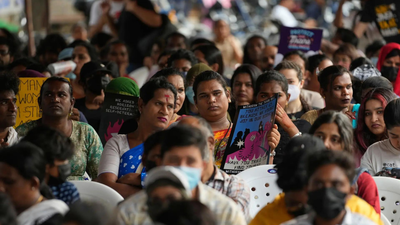
NEW DELHI: Amid the raging debate and growing protests from the community over the proposed amendments to the Transgender Persons (Protection of Rights) Act 2019, The National Council for Transgender Persons members from the community in a meeting with senior officials of the ministry of social justice and empowerment on Saturday strongly reiterated that “self-affirmation of transgender identity, as upheld in the NALSA judgment, must remain the foundation of transgender identification”.The TG (Protection of Rights) Amendment Bill 2026 was introduced in Lok Sabha on March 13. Since then vociferous demands for withdrawal of the Bill have been raised. On Sunday, a Jan Sunwai (public discussion) was held at the Press Club of India to demand the withdrawal of the Bill where a large number of community members gathered and spoke.Meanwhile, community representatives Abhina Aher, Vidya Rajput, Raveena Bareeha and Kalaki Subramanyam who are members of National Council for Transgender Persons – a statutory body under the law attended the meeting called at short notice by the ministry on Saturday. According to Aher the community members in the Council were not consulted before the bill was brought to Parliament.The members highlighted the absence of the social justice minister Virendra kumar who they were told would be chairing the meeting. “We were told that the minister was unable to attend due to ill health and a reported family emergency,” Aher said.According to Aher, at the meeting led by joint secretary Yogita Swaroop, Senior Economic Advisor in the ministry, govt officials raised concerns about identifying “genuine” transgender persons and referred to biological markers such as chromosomal combinations (XX/XY). “NCTP members clarified the concept of gender incongruence/dysphoria, mental health aspects, and the impact of stigma, though they felt that a gap in understanding of transgender issues was observed among the officials,” she added.The TG Council members also emphasised at the meeting that the proposed definition is not inclusive and must explicitly include transgender men and transgender women; use respectful terminology and recognise diverse regional identities like Nupi Manabi and Nupi Manba (Manipur).On the proposed recommendation regarding screening by a medical board NCTP members initially called for the removal of the provision. “However, considering the govt’s position, members proposed that any assessment should be limited to mental health support, it must not involve invasive physical examinations, and it should uphold dignity and remain aligned with the NALSA judgment,” Aher said. The need for gender-neutral laws to address violence against transgender persons was raised vociferously.Meanwhile, at the Jan Sunwai (public discussion) on Sunday organised by ‘Rachnatmak Congress, the party’s dedicated platform for engagement with civil society groups, its chairperson Sandeep Dixit made a strong pitch for the Bill to be a parliamentary standing committee. Congress party’s Lok Sabha MP Renuka Chowdhary joined the meet in solidarity.Rajya Sabha member from RJD Manoj Jha warned that the BJP led NDA govt does not have a good record of sending Bills to standing committees, so a street protest is the need of the hour. CPI(M)’s John Brittas mentioned Prime Minister Narendra Modi’s appreciation of the 2019 Act and how it gives people a right to live with dignity, and questioned why this sentiment had suddenly changed.Demanding the withdrawal of the bill, Anish Gawande, National Spokesperson of the NCP asserted “Our identity is our right and this flows from our Constitution.”The discussion saw wide participation from members of the LGBTQI+ community. Samar, a trans man, questioned how a medical board can decide what he feels and how he wishes to live his life. How can his identity be questioned by the State, by doctors and the society?Grace Banu, a trans Dalit activist, was also present at the meeting. She spoke of the struggles that they have faced since 2009 in gaining recognition and the right to live a dignified life. She, along with others, went through the scrutiny of the medical boards and police violence in 2009. “In 2014 after a long fight the Supreme Court in NALSA finally said that you are not others, not an alien entity, but you are humans and gave the trans community the right to self-identify and live a dignified life. However, after all these years, we are standing at the same spot again, being asked to prove our gender identity and getting told that they do not deserve the same rights as everyone else,” Banu said. She ended her address on a collective note, “We don’t want your sympathetic welfare, we need fundamental rights!”