Vinay Kumar
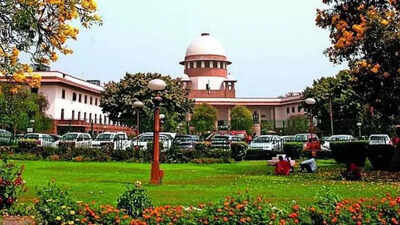
NEW DELHI: Criminal proceedings bring strain and social stigma, the SC said on Thursday, urging courts, particularly trial courts, to show “clarity and courage” to discharge an accused at the framing of charges itself when the material on record fails to make out a prima facie case.A bench of Justices Sanjay Karol and N K Singh said that judicial process itself should not become a punishment, and the courts must remain alive to the human consequences of their decisions and to the trust society places in them. The court passed the order while discharging a person under SC/ST Act after it found that ingredients of the offence under the special law was not met but it allowed trial court to proceed for offences under IPC.The top court said charges are to be framed only if the court forms an opinion that there is a ground for presuming that the accused has committed an offence and said HCs should also apply their mind on discharge plea and not to reject it mechanically.“…at the stage of framing of charge or considering discharge, the court is not dealing with an abstract legal exercise. It is dealing with real people, real anxieties and the real weight of criminal prosecution. Judicial responsibility at this stage calls for care, balance, and an honest engagement with the facts on record. The power to frame a charge is not meant to be exercised by default or out of caution alone. When the material placed before the court, taken at face value, does not disclose the ingredients of an offence, the law expects the court to have the clarity and courage to say so and to keep such a case aside,” Justice Karol, who wrote the judgment for the bench, said. The bench said discharge is not a technical indulgence “but an essential safeguard”.“The court must consciously distinguish between a genuine case that warrants a trial and one that rests only on suspicion or assumption or for that matter without any basis. To allow a matter to proceed despite the absence of a prima facie case is to expose a person to the strain, stigma, and uncertainty of criminal proceedings without legal necessity. Fidelity to the rule of law requires the court to remember that the process itself can become the punishment if this responsibility is not exercised with care,” it said.The bench said the responsibility weighs the heaviest on trial courts. “For a litigant or an accused, the trial court is not just one level in a hierarchy. It represents the face of the judiciary itself. The sensitivity, fairness, and legal discipline shown at this stage shape how ordinary citizens understand justice. The impression a trial court creates, through its approach to facts and law, often becomes the impression people carry of the entire judicial system. That is why, at every stage and especially at the threshold, trial courts must remain alive to the human consequences of their decisions and to the trust that society places in them,” it said.