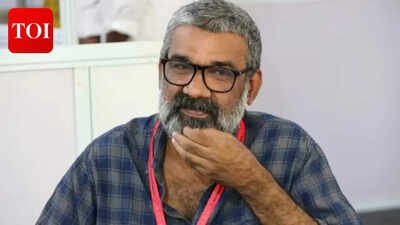
Vinay Kumar
In March, I arrived in St. Louis for a bridge tournament with my usual Danish and part‑Swedish team, but my head was elsewhere. My memoir had been published five months earlier, and the PR demands were consuming me. I did not feel mentally geared to summon what I call my “bridge brain” for a high‑level tournament.
My coach and partner, Morten, ever patient, said something during our early‑morning calls from San Francisco to Denmark that stayed with me.
“Think about what you do with your idle time,” he said.
“Please explain,” I asked.
“There is a lot of idle time during the play of a hand — what are you doing during that time?”
I was puzzled. A hand in bridge is over in seven minutes. Where was the idle time?
The answer revealed itself slowly. Even before we set foot in the tournament hall, we practiced at our Airbnb with the full team. It turned out to be exactly what I needed. My teammates are young, dynamic, and accomplished players. Playing against the best — and playing with Morten in person — sharpened everyone. We were also unusually receptive to each other’s feedback, which is rare and healthy for team dynamics.
During one practice hand, Emil — an opponent in this home game — was taking a long time to think. I caught myself wondering what he might be thinking about. Then I stopped. Why was I spending energy on a question only he could answer? He sees his cards; I do not. In bridge, the number of possible hand combinations is enormous. Trying to imagine his problem was not just futile — it was a drain. Bridge demands that you stay anchored in real information, not imaginary reconstruction.
There are certain things in bridge that must simply be set aside to conserve the brain’s energy for what actually matters — just as in life. I also noticed something uncomfortable: occasionally, not often, I would lose track of the bidding — the structured exchange of information that tells you what your partner and opponents hold. Forgetting that thread early is costly. Remembering it sounds easy, but in the heat of things, one can forget.
Letting go of what I could not know — and ignoring the noise in my so‑called idle time — freed my mind to focus on what was relevant and real. For my bridge, it is another peg in the ground. Whether I can repeat it consistently, only time will tell.
The same principle drives modern AI, inspired by the architecture of the brain itself. Neural networks mimic the way biological neurons fire and connect, weighting certain signals and suppressing others — not every input deserves equal attention.
AI learns which parts of the input are relevant — and which to filter out. The model’s intelligence is not just in what it attends to. It is equally in what it ignores.
The brain is the GPU — raw processing power. But a GPU burning energy on irrelevant computation is a waste.
This is precisely what Morten was asking me to do at the bridge table.
The discipline of ignoring — actively, intentionally practiced — makes room for what Kahneman calls slow thinking. It creates the conditions for higher‑level judgment and offers a fighting chance of freeing us from the predictable errors that cost us most.
The question AI has not answered — and perhaps cannot — is the one Morten posed in St. Louis: what do you do with your idle time?
In Silicon Valley, as at the bridge table, judgment depends less on what you know and more on what you choose not to chase. Ignoring the wrong things is often the most strategic decision a leader makes.
Disclaimer
Views expressed above are the author’s own.
END OF ARTICLE