Vinay Kumar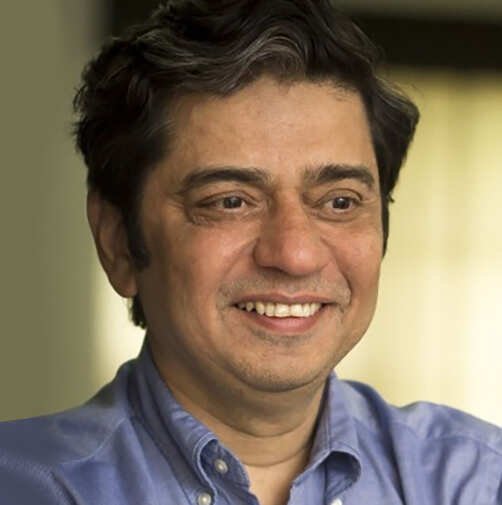
A few weeks ago, this column looked at how time has changed in shape and form. We now have two kinds of time— hard, that comes with fixed boundaries and imposes itself on us, and soft, that fluid, almost liquid time we spend streaming, scrolling and clicking on our phones. In the latter, time is not really allocated but extracted from within whatever else we are doing.
We also saw how this changed the nature of relationships, where at one level we are constantly connected, but at another there is an absence of any depth and actual presence. There are many more changes that this shift towards soft time is bringing about— in how we consume news, in politics, religion and everyday life.
Take news. There was a time when it was set in hard time. The morning newspaper, which gave us the illusion of order, with the world neatly folded and slipped under our doors, or the nine o’clock news, where we could collectively absorb a shared sense of nowness. Today’s news is a gushing stream, popping out of our timelines, insinuating itself into our consciousness. It is now a part of soft time and comes without the authority that once backed it. Not being a shared synchronous experience has made it feel ragged and disjointed, as each of us constructs our own individual way of absorbing not only news that we are interested in but also news that we like.
Politics too, in soft time, is a different beast. There was a time when we could set aside politics; it was a specific section in our emotional library, a place we visited once in a while. We could relate to people who held views radically different from ours, even be good friends with them. Politics set in hard time was an important but separable part of our lives. No longer. Now it infiltrates every moment, every activity, and makes us an extension of itself. We react with emotion to these driblets of political input even as we sit in meetings, watch shows, or wait for a doctor’s appointment. Polarisation is a function of soft time, as we are unable to escape being defined by our views.
This has hollowed out the power of institutions. Parliament set in hard time is now theatre with low viewership and meaning, with most people getting their political fix through the soft feed of news and commentary. A court might be the final arbiter of fortunes, but discussion now roams free, and public judgment can form and even inform the verdict before it takes place. Schools seek hard time, but much of the learning happens in the soft time when students follow their curiosity rather than the school syllabus.
Religion reveals the same split. By being an ambient experience within which we live, it drips into our consciousness steadily, making us more of what we already are. Ambient soft time devotion reinforces our religious identity without seeming to, as we sink deeper into seeing the world through that lens. Belonging is easy and comes without any effort or cost. We feel our religion more viscerally and find ourselves wearing that identity more consciously and assertively, as it gets to define us without our noticing it.
We are seeing a peculiar inversion. Those who do not have control over their lives are trapped in hard times, while those who do actually make a deliberate choice to sometimes impose it on themselves when they go for curated experiences like concerts, wellness retreats and the like. The middle is where anxiety lives, caught in a tentative zone of semi-soft work and guilt, being acutely aware that they oscillate between hard and soft time, doing justice to neither.
At a more structural level, soft time rearranges our memories. We no longer remember things in the same way. We cannot remember more than a handful of videos we may have spent our scrolling through. Hard time etches itself, cutting grooves in our minds. It has a definite shape, a before and after. An exam, a court date, a wedding, a lockdown, a pilgrimage, a big illness. It is something we enter, undergo and exit. Our sense of our own life is as a sequence of such events. As our life blurs into soft time, it begins to look like a fog where only vague outlines can be seen. The photo galleries on our phones testify to a surfeit of images that hold only a handful of memories.
Using the lens of hard and soft time is a lens that might allow us to make sense of what is happening in a new way. It opens out new questions. What kind of time does any activity demand? What kind of activity merits the allocation of hard time? What are the different effects produced by the two kinds of time? Has it moved from one type to the other? Who controls that time now? What happens to memory, meaning, and community when so much of our life takes place in soft, reversible time rather than hard, consequential time?
Much of the modern world is still speaking to us as if it owns our hard time by right. Increasingly, we are answering from inside a soft time that prefers to stay loose, keep its options open, and only occasionally, for something that feels exceptional, allow itself to become solid again.
Disclaimer
Views expressed above are the author’s own.
END OF ARTICLE