Vinay Kumar
As Ukraine marked 1,500 days of resilience against Russia’s full-scale invasion, one question continued to surface in political and media debate: when did Vladimir Putin actually decide on this war?
Recently Ukraine also commemorated the fourth anniversary of the liberation of Kyiv region by Ukrainian defenders — a reminder that Russia’s attempt to seize Kyiv in a matter of days collapsed in the face of Ukrainian resistance.
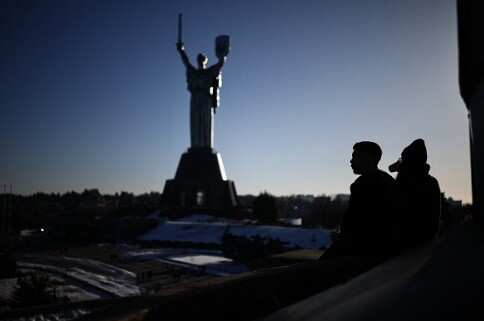

The full-scale invasion launched on 24 February 2022 was not conceived overnight. It was the culmination of a much earlier decision, reflected in troop build-ups, offensive planning, logistical preparation, and the Kremlin’s conviction that Ukraine could be subdued by force. What Moscow presented as a swift campaign has instead become a neo-imperial war that set Russia on its path to its biggest strategic failure.
Possible answers to this question depend on each individual’s perception of the situation that existed at the time in Ukrainian-Russian bilateral relations, their understanding of the global security environment then, and, of course — how it could be otherwise — conspiracy theories and amateur psychological exercises. This prompted me to join this discussion and share my personal analysis, formed on the basis of well-known facts and with due regard to the limits of my own competence.
Thus, it is perhaps worth beginning with Putin’s Munich speech at the Security Conference, delivered on 10 February 2007. Today, experts regard it as a programmatic manifesto of Russia’s “return to greatness” and a prologue to a new Cold War. It was, in effect, a kind of MAGA — only in a Russian version. But what conditions had taken shape that led Putin to deliver this speech?

Putin was already in his seventh year as President of the Russian Federation. A so-called “peace deal” had been concluded with Chechnya, whose leadership had been entrusted to an ambitious and loyal Kremlin appointee. Nearly all the democratic gains of his predecessor, Yeltsin, had by then been effectively dismantled by former KGB operatives, whom Putin had placed in key positions across the state apparatus and major business. Yeltsin himself had sunk into political oblivion and was facing serious health problems.
The Dissenters’ Marches, which had begun in December 2006, were continuing. This series of opposition protests, organized by the coalition The Other Russia, was taking place in Moscow, St. Petersburg, and other cities. It brought together a broad spectrum of forces — from liberals to the radical left — united in opposition to Vladimir Putin’s policies, demanding free and fair elections and civil liberties, and was often met with harsh arrests. In Russia, the symptoms of a “Weimar syndrome” were gradually beginning to emerge and intensify.
Despite all this, Putin continued to enjoy considerable prestige among world leaders and in 2006 hosted them at the G8 summit at the Constantine Palace, located in the suburbs of his native St. Petersburg. Russia had also repaid the Soviet Union’s debts to the Paris Club ahead of schedule. The “gas wars” with Ukraine and Belarus, the orchestrated referendum in Crimea on Ukraine’s possible accession to NATO, as well as sanctions imposed on Georgia, were all meant to secure the loyalty of Kyiv and Tbilisi to the “Russian tsar” through instruments of economic pressure.

In December 2006, the 15th anniversary of the Belovezha Accords was marked — the agreements that sealed the collapse of the Soviet Union. In 2005, Putin described that event as “the greatest geopolitical catastrophe of the century.” The Moscow summit in July and the Minsk summit in November 2006, both held within the framework of the CIS, increasingly demonstrated the inability of this artificial interstate formation to replace the Soviet Union in the geopolitical space.
And this is precisely what troubled Putin most. He believed that the Soviet Union’s defeat in the Cold War at the hands of the collective West had reduced Russia to a secondary power, cast it onto the margins of history, and pushed it to the periphery of the global agenda. Hitler harboured much the same feelings after Germany’s defeat in the First World War and the humiliation of Versailles.
Putin’s speech at the Munich Security Conference on 10 February 2007 simultaneously shocked Western leaders, set in motion irreversible processes of expanding Russia’s military machine, and formally signalled the new Russian dictator’s readiness to single-handedly revise the foundations of the international order and law.

As early as 14 July 2007, President Putin signed a decree on suspending Russia’s participation in the Treaty on Conventional Armed Forces in Europe and related international agreements. On 29 November 2007, the Duma obediently passed the corresponding law.
The first practical test of Putin’s new strategy to restore Russia’s dominance in its “traditional domains” came in Georgia in August 2008. Georgia’s pro-Western leadership irritated Putin, and by April 2008 relations between Russia and Georgia had entered a stage of deep diplomatic crisis. Entirely in the spirit of what would later be described as the “Gerasimov Doctrine,” Russia — through hybrid actions and its proxies in South Ossetia — instigated an armed confrontation between separatists and government forces in the Tskhinvali region.
Publicly, Russia accused Georgia of “aggression against South Ossetia” and, on 8 August 2008, launched a large-scale land, air and sea invasion of Georgia under the guise of a “peace enforcement” operation. On 26 August 2008, Russia officially recognised the independence of Abkhazia and South Ossetia, cynically referring to the “free expression of the will of the peoples.”
The world was shaken by this short war on the periphery of Europe. But its response was strikingly weak. Leading European leaders and the US administration expressed “deep disappointment” with Russia’s actions in Georgia and condemned Moscow’s “illegal” and provocative decision to interfere in the internal affairs of a neighbouring state.

For Putin, this weak response confirmed what he saw as the “impotence of the collective West” in the face of Russia’s direct use of military force beyond its borders. The near absence of any real punishment only encouraged the Kremlin’s foreign-policy ambitions and sharpened its appetite. Putin’s gaze then turned to Ukrainian Crimea. His attempt in September 2003 to build a dam between the Taman Peninsula in Russia’s Krasnodar region and the Ukrainian island of Tuzla in the Kerch Strait was met with a firm diplomatic and military response from Ukraine.
Thus, in 2006 Putin stated that Crimea was part of Ukraine, recognising neighbour’s borders and renouncing any territorial claims. He stressed that Russia would not interfere in Ukraine’s internal affairs, describing ideas about revising Crimea’s status as dangerous for the redrawing of borders in the CIS.
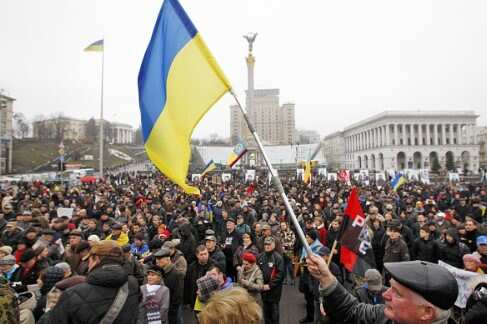
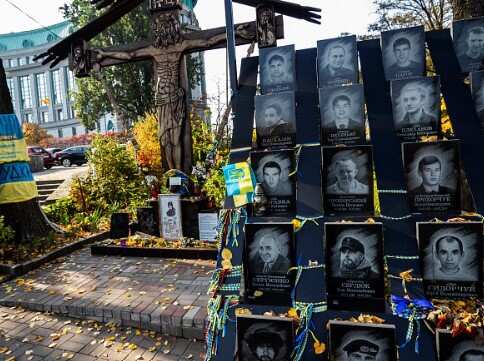
However, Ukraine’s Revolution of Dignity in 2014, the escape of the pro-Russian puppet Yanukovych to Russia, and the temporary paralysis of authority in Kyiv unexpectedly opened a “window of opportunity” for Putin — one he was quick to seize.
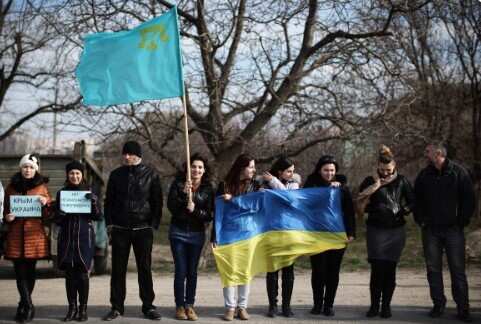
In late February and early March 2014, units from the Crimean bases of Russia’s Black Sea Fleet, together with military units transferred from Russia — the so-called “little green men” — occupied Ukraine’s Crimean peninsula with virtually no resistance from the Ukrainian side.
Today, it is reliably established that the “little green men” belonged to the 31st Guards Air Assault Brigade, the 98th Guards Airborne Division, the 76th Guards Air Assault Division, and the 45th Guards Spetsnaz Regiment of the Russian Airborne Forces; the 18th and 15th Separate Motor Rifle Brigades; as well as units of the 58th Army of the Southern Military District of the Armed Forces of the Russian Federation.
Following the Georgian scenario, and “responding to the will of the people of Crimea,” Russia moved without delay to approve Crimea’s entry into the Russian Federation as a constituent entity on the basis of a fake “referendum.” Russia’s geographical “gains” were formalised in its Constitution on 11 April that same year.
The cost of these aggressive “achievements” was entirely acceptable to Putin. The occupation of Crimea led to Russia’s suspension from the G8, a format in which Putin had felt uncomfortable in any case, preferring meetings in the G20 format. The United States and the European Union put into effect a multi-stage sanctions plan against Russia, but these measures had no immediate effect on its economy.
At the same time, Putin still had at his disposal a Kremlin-controlled “cancerous tumour” in Ukraine’s Donbas in the form of a frozen armed conflict along the border. In the territories of the occupied parts of Donetsk and Luhansk regions, the 1st and 2nd Army Corps were created, directly subordinated to Russia’s Southern Military District and staffed with career Russian officers in positions from company commander level and above. The total strength of the 1st and 2nd Army Corps amounted to up to 35,500 troops. These formations later became the first echelon of the Russian Armed Forces’ offensive grouping on the Donetsk axis in February 2022.
The “victories” achieved in Georgia, in Ukrainian Crimea and Donbas, as well as the weak reaction — or, more precisely, the near absence of any reaction — from the “collective West” to these events, finally convinced Putin of the impunity of his neo-imperial ambitions. His confidence and cynicism were further reinforced by the lack of a tough response from the international community to the downing on 17 July 2014 of Malaysia Airlines Flight MH17, a Boeing 777, by Russian sabotage groups, which killed 298 people, including 80 children.
Therefore, it was approximately in the second half of 2014 that Putin made the fundamental decision and gave instructions to begin planning a military operation against Ukraine aimed at creating a land corridor between Russia and occupied Crimea and, under favourable conditions, seizing Ukraine’s Black Sea coast, including Mykolaiv, Kherson and Odesa regions, in order to extend that “corridor” to the unrecognised Transnistria.
This plan was in line with the propaganda idea of “restoring Novorossiya,” which his aide Vladislav Surkov obligingly fed to the leader in order to justify aggressive designs aimed at “restoring historical justice and reclaiming the lands of Russian Empire.” On 17 April 2014, during his public appearance, Putin referred to “Novorossiya” for the first time, claiming that these territories had been transferred to Ukraine by the Soviet government in the 1920s and expressing concern about the fate of Russian-speaking people in the region. Repeating this mantra after Putin, on 25 September 2014 Russia’s Foreign Ministry officially referred to Ukraine’s Luhansk and Donetsk regions as “Novorossiya” for the first time.
As part of preparations for an offensive operation against Ukraine, Putin, approximately in the summer of 2014, approved a decision to deploy a strike grouping of troops near the border with Ukraine under the cover of “countering the increase of NATO forces near Russia’s borders.”
First of all, on 13 November 2014, in accordance with Putin’s decree, the previously disbanded 1st Guards Tank Red Banner Army was re-established, with its headquarters in Odintsovo, Moscow Region, as the core component of this strike grouping. In addition, the command of the 20th Guards Combined Arms Army was redeployed to the border with Ukraine.
Between 2014 and 2016, three new divisions of the Russian Armed Forces were formed near Ukraine’s borders: the 144th Guards Yelnya Red Banner Order of Suvorov Motor Rifle Division in Smolensk Region and the 3rd Motor Rifle Division in Belgorod and Voronezh Regions, both within the 20th Guards Combined Arms Army; and the 150th Guards Motor Rifle Idritsa-Berlin Order of Kutuzov Division in Rostov Region, within the 8th Guards Combined Arms Army.
Thus, by the start of the full-scale invasion on 24 February 2022, Russia had created strike groupings of troops near Ukraine’s borders — including in Belarus and in occupied Crimea and Donbas — comprising more than 120 battalion tactical groups, with a total strength of over 200,000 troops.
According to Ukrainian intelligence and international analytical centres, the force massed along Ukraine’s borders included:
- Tanks: around 1,200–1,300, primarily T-72B3s, T-80U/T-80BVMs, and T-90As.
- Armoured fighting vehicles: more than 3,000, including BMP-2/3 infantry fighting vehicles, BTR-80/82A armoured personnel carriers, and Tigr armoured vehicles.
- Artillery and multiple-launch rocket systems: around 1,600, including Msta-S and Akatsiya self-propelled howitzers, as well as Grad and Uragan multiple-launch rocket systems
- Aviation: more than 330 aircraft and 240 helicopters — including Ka-52s, Mi-28s, Su-25s, and Su-34s — deployed at airfields in Belarus, Crimea, and Russia’s border regions.
Russian propaganda portrayed the deployment of this powerful strike grouping as a response to the “buildup of NATO forces in the immediate vicinity of Russia’s borders.” However, the number of tank and airborne units within it indicated that this was not a defensive grouping of forces, but an offensive one.
In order to conceal its plans and actions related to the deployment of a strike grouping of troops along the borders with Ukraine, on 10 March 2015 the Russian Federation announced the suspension of its participation in meetings of the Joint Consultative Group under the Treaty on Conventional Armed Forces in Europe. Thus, as the Russian Foreign Ministry stated, Russia’s suspension of the CFE Treaty, announced in 2007, became complete. In this way, Russia rid itself of the Treaty-mandated inspections of its forces by foreign experts — inspections that were dangerous to its aggressive plans.
Russia also withdrew from the Open Skies Treaty on 18 December 2021, citing the United States’ withdrawal from the agreement as the reason. This decision further undermined the arms control system in Europe.
At the same time, Russia was secretly developing new offensive weapons, including the 9M729 ground-launched cruise missile (NATO designation: SSC-8), known today as the Iskander-K variant, which Russia now uses to terrorise Ukraine by striking civilian targets. The Russians began testing this missile in 2008, and in 2017 full-scale training and combat launches of the system took place at the Kapustin Yar military range.
Russia withdrew from the Intermediate-Range Nuclear Forces Treaty on 2 August 2019, following the United States, after mutual accusations of violating the Treaty’s provisions, in particular over Russia’s development of the 9M729 missile.
In this connection, it is also worth recalling that on 22 February 2023 Russia suspended its participation in the Treaty on Measures for the Further Reduction and Limitation of Strategic Offensive Arms (New START), effectively crippling the last major nuclear arms control agreement. Putin took this decision in order to blackmail the West, thereby halting inspections and data exchanges on nuclear arsenals and fuelling nuclear hysteria. Formally, the Treaty was to remain in force until February 2026.
In conclusion, I would argue that Putin wanted and prepared this war as what he saw as a “final solution to the Ukrainian question” — a task his predecessors failed to accomplish, from the Moscow tsars to the blood-soaked Soviet dictator Joseph Stalin (Dzhugashvili), whom Putin openly admires and seeks to emulate.
Putin must be held accountable for these decisions as a war criminal, as recognised by the International Criminal Court. Alongside him, all his accomplices at every level of Russia’s criminal state apparatus must also be punished. A new Nuremberg awaits them. The “axis of evil” formed by Putin and his allies must be dismantled. Otherwise, the world will continue to be gripped by the fever of war unleashed by modern dictators.
Disclaimer
Views expressed above are the author’s own.
END OF ARTICLE