Vinay Kumar
Naysayers may say whatever they wish, but the overwhelming impression at the India AI Impact Summit is one of awe—bordering on disbelief—at what India has achieved, delivered, and now promises to build.
Speaker after illustrious speaker—comprising global technology leaders, industry titans, policymakers, and heads of state—marvelled at India’s transformation over the past decade. The French President spoke with particular admiration about UPI: its scale, its simplicity, and its sheer inclusiveness.
That a country where a vast number of people did not even have bank accounts a decade ago now executes billions of real-time digital transactions every month is not merely progress; it is a structural shift in how a nation functions. He described India’s digital public infrastructure and digital economy as models for the world—proof that scale and inclusion are not mutually exclusive, but mutually reinforcing.
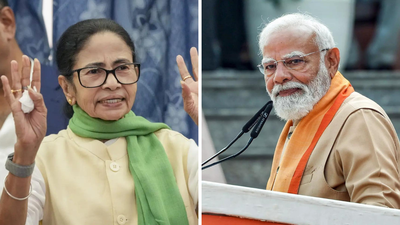
This transformation did not happen by chance. It has been the result of sustained political vision and unwavering institutional push over more than a decade. Prime Minister Narendra Modi has been at the forefront of this journey, consistently emphasizing that technology must be used as an instrument of mass empowerment, not elite convenience.
From financial inclusion through Jan Dhan, to digital identity, to the creation and global scaling of UPI, to the broader Digital India initiative, and now the push toward artificial intelligence, his focus has remained steady: to position India as not merely a consumer of technology, but a creator, innovator, and global standard-setter. Irrespective of what critics may say, his pursuit of making India stand out as a nation that uses technology for the betterment of its people has been relentless—and the results are now visible to the world.
Yet, embedded within the praise at the summit was also a subtle geopolitical undertone. The French President did not miss the opportunity to point out how technology—and especially semiconductors—has increasingly become a geopolitical instrument, even a weapon. His reference to India’s expanding global partnerships and what he called an “intelligence convergence” was more than diplomatic courtesy. It was an acknowledgment that India is no longer merely participating in the global technology order—it is helping reshape it.
What was equally evident was India’s emergence as the natural leader in developing practical, scalable, and tactical AI solutions—not just for itself, but for the Global South. Unlike many parts of the world where AI conversations often remain confined to theoretical debates or future risks, India’s approach is grounded in real-world application. AI here is being built to solve immediate problems: bridging language divides, improving healthcare access, enhancing agricultural productivity, strengthening governance delivery, and expanding financial inclusion.
This is precisely why countries across Africa, Southeast Asia, and Latin America are watching India closely—and increasingly partnering with it. Rwanda stands out as an early and important example. Recognizing the power of India’s digital public infrastructure model, it has actively collaborated with India to build scalable digital systems and explore AI deployment suited to its own developmental needs. This reflects a broader shift: India is no longer merely exporting software; it is exporting a proven framework for inclusive digital transformation. India’s experience in building population-scale systems such as Aadhaar, UPI, CoWIN, and ONDC has given it both credibility and responsibility. It is now uniquely positioned to lead the development of AI that serves societies broadly, rather than concentrating advantage narrowly.
Yes, there were logistical challenges. Managing such unprecedented numbers inevitably brings strain, and Day 1 saw its share of missteps. But anyone who has attended global conferences—from CES to Web Summit to Davos—knows that first days are often chaotic. The difference here is scale. Few events anywhere in the world attempt to engage such massive numbers of students, developers, and young innovators. And fewer still succeed in sustaining their engagement in meaningful ways.
What stood out most was not the glitches, but the energy.
The summit ultimately belongs not to the dignitaries, nor the CEOs, nor the policymakers—but to the millions of young Indians who showed up. They came not as spectators, but as participants. They came to learn, to build, to collaborate, and to prepare themselves for a future they fully intend to shape. They immersed themselves in ideas, interacted with emerging Indian AI leaders such as sarvam.ai
and others, and engaged with technologies that will define the coming decades.
They could not be bothered by the cynicism of those who politicise everything. Nor are they naïve. They understand what is unfolding. They comprehend the scale of opportunity. And most importantly, they will remember.
India today is no longer trying to catch up. It is taking the lead—especially in developing tactical, scalable, inclusive AI solutions for large populations. The world has taken note. The Global South is watching. And increasingly, it is turning to India not just for inspiration, but for partnership.
India is no longer asking for a seat at the table. It is helping design the table itself.
Those who recognize this shift will help shape the future. Those who don’t risk being left behind—and marginalised even further.
The momentum is unmistakable. And the generation that will carry it forward is already here.
Disclaimer
Views expressed above are the author’s own.
END OF ARTICLE