
 Vinay Kumar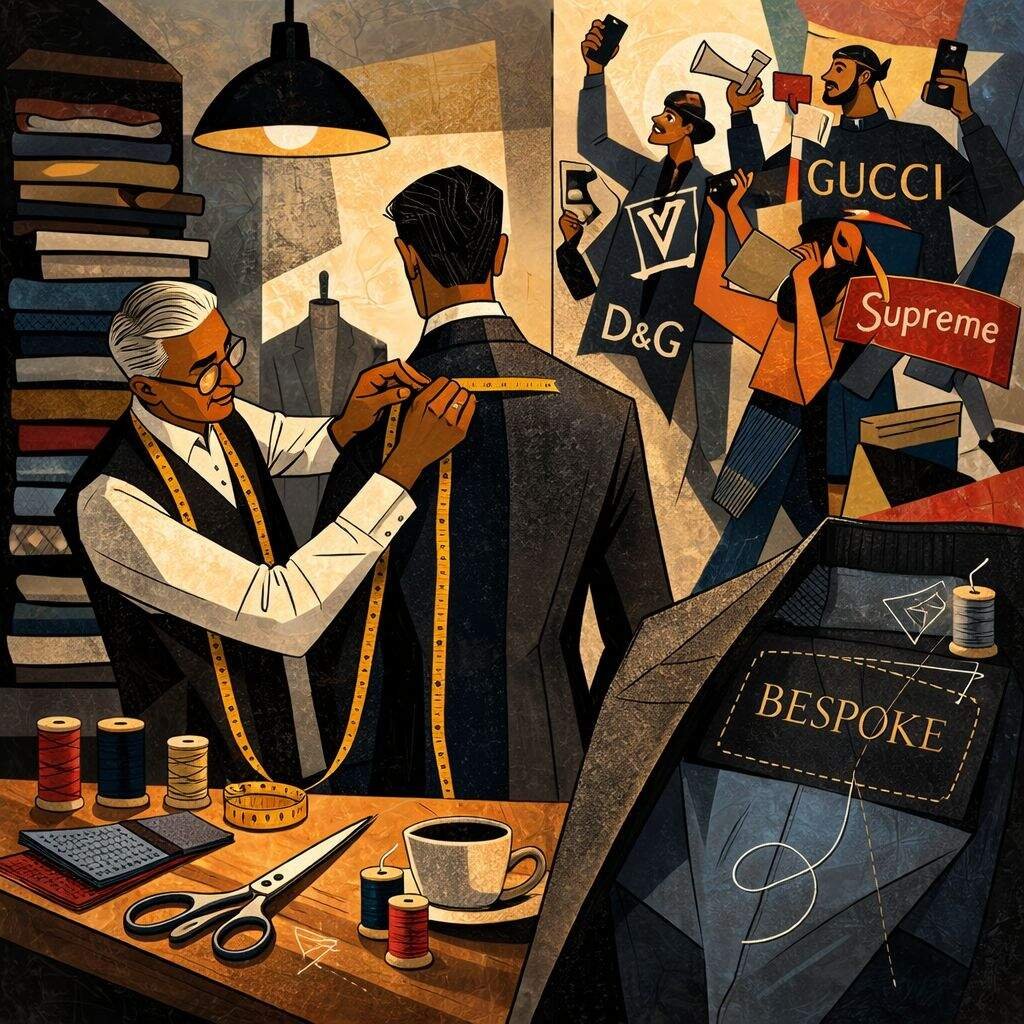
To walk into a tailor’s shop today is to commit a small act of cultural rebellion, not the dramatic sort that involves barricades or slogans, nothing that will trouble the stock market, but rebellion nevertheless.
In a world where clothing has been industrialised into algorithms, size charts and seasonal ‘drops’, the act of standing patiently while a man measures your shoulders with a tape feels faintly insurgent.
Modern fashion has solved the problem of clothing with ruthless efficiency. Walk into a store, locate a rack marked ‘42 Regular’ and emerge ten minutes later with a shirt that has been produced somewhere far away by a machine calibrated to fit millions of broadly similar bodies. It is efficient, democratic and astonishingly convenient.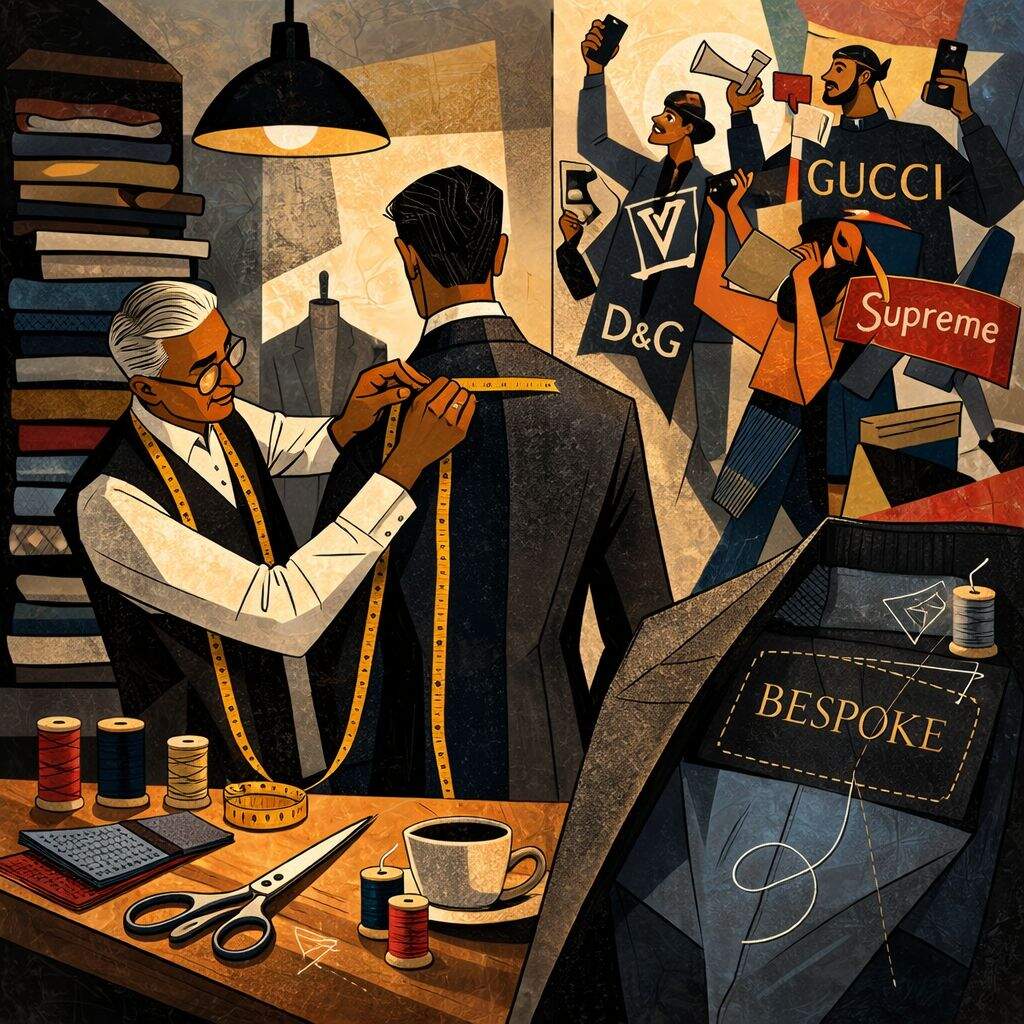

The process begins with observation. A good tailor studies the human body the way a geographer studies terrain. Shoulders slope, one arm is slightly longer, the neck tilts. Years spent leaning over laptops have quietly altered the human spine. The human body, inconveniently for the apparel industry, refuses to be symmetrical. Ready-made clothing solves this problem through approximation. Tailoring solves it through attention.
The word ‘bespoke’ itself comes from the old practice of cloth being ‘spoken for’. A customer chose a piece of fabric, and the tailor marked it aside for that particular garment. The idea became famous in London’s Savile Row, where aristocrats, diplomats and the occasional eccentric poet ordered suits cut precisely to their measurements.
The garment adapted to the man. Modern retail reverses this relationship. The man adapts to the garment.
If the shoulders pinch slightly or the sleeves end somewhere in the general vicinity of the wrist, the consumer is advised to consider this ‘a good fit’. I get it – life is short, move on.
Tailors, however, refuse to move on. They examine shoulders with monastic seriousness. They adjust patterns by fractions of an inch. These adjustments are invisible to Instagram but immediately visible to the person wearing the garment.
Then comes the cloth. Perhaps a length of herringbone tweed, with the faintly aristocratic suggestion of winter libraries and early morning fog. A piece of fine Merino wool labelled “180s”, perhaps, light enough to float yet structured enough to command a room.
In modern retail, fabric is inventory. In tailoring, fabric is biography.
And then there is the label.
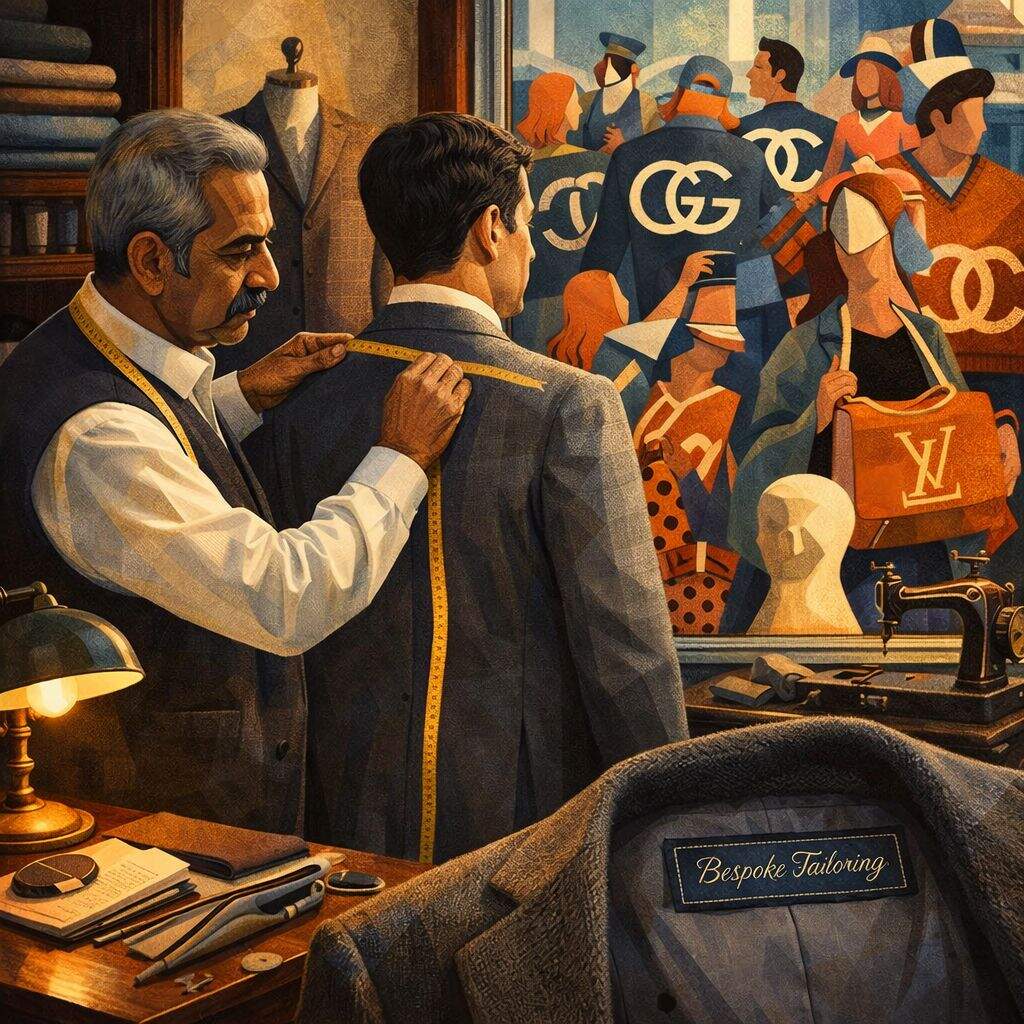
Walk into most luxury stores today and clothing has developed a curious habit of shouting. Logos spread across chests and sleeves with the enthusiasm of billboard advertising. The garment seems less interested in clothing the wearer and more interested in announcing itself.
Thorstein Veblen, in The Theory of the Leisure Class, described this more than a century ago as conspicuous consumption — the public display of wealth through visible goods.
Modern branding has perfected the art. Look at me. Recognise what I cost.
Tailoring belongs to a different moral universe. The label exists, of course. But it sits discreetly inside the shirt or jacket, stitched quietly into the lining. No one sees it except the wearer and the tailor. It does not scream. It merely acknowledges authorship.
Popular culture, curiously, understands this better than fashion influencers do. Consider Barney Stinson from How I Met Your Mother, television’s greatest evangelist for suits. Barney approached tailoring with the religious conviction of a medieval monk. His philosophy was simple and frequently delivered with evangelical enthusiasm: suits were not merely clothing but a way of life.
“I think tonight is going to be… wait for it… legendary,” Barney would declare, usually while adjusting a perfectly cut lapel.
Barney’s suits worked not because they were loud but because they were precise. The joke of the character was that beneath the absurd confidence and outrageous one-liners lay a surprisingly old-fashioned idea: a man should look properly put together.
Modern capitalism, unfortunately, has taken a slightly different direction. Clothing is no longer about fit but about signalling. Logos have become social shorthand. The garment tells the world what brand you belong to.
Tailoring quietly refuses this logic. It suggests that identity might come from the way something fits rather than from what it announces.
India, interestingly, has had a complicated relationship with the suit. It arrived with colonial bureaucracy and club culture, a European garment transplanted into tropical climates and enthusiastic Indian wardrobes. Over time it became deeply embedded in professional life. Lawyers wore it to court. Professors to lectures. Civil servants to offices that smelt faintly of paper and authority.
Yet history has its ironies.
In recent decades Indians have made a great effort to shed colonial vestiges. Roads are renamed. Statues of British governors quietly disappear into museums and storage rooms. Entire debates unfold about rediscovering civilisational authenticity.
And yet, at weddings across the country, one encounters a curious sight. Men who loudly reject colonial hangovers often arrive wearing imported three-piece suits in enthusiastic shades of burgundy, emerald and occasionally something best described as ‘aggressively maroon’ (best paired, it seems, with tan shoes).
My own small rebellion happened many years ago at my wedding. To the visible disappointment of my in-laws, I refused to wear a suit. I turned up instead in a dhoti and kurta – what Bengalis would more precisely call a panjabi – exactly as my father and his father before him had.
It felt, in that moment, both traditional and quietly radical. Which is perhaps the larger point.
Tailors understand this instinctively. Their work is not about trends but about proportion, patience and individuality.
A bespoke garment is not manufactured. It is constructed. Measurements are taken, patterns drawn, cloth cut, basted, fitted and adjusted. Sleeves shortened by millimetres; collars reshaped until the fabric sits naturally on the neck.
The process takes weeks. There is more often than not a ‘trial’ where a half-finished suit is marked in chalk by the master tailor and the minutest of adjustments are made.
In a culture where groceries arrive in ten minutes and opinions arrive in three seconds, this delay feels almost philosophical.
Walter Benjamin once observed that mechanical reproduction strips objects of their “aura”. Mass production removes the sense that an object belongs to a particular time, place and individual. Clothing illustrates this rather well. A ready-made jacket can be purchased by thousands of people across the world in identical form.
A tailored jacket cannot. It carries the small irregularities of the body it was made for. It remembers posture. It accommodates habits.

Tailors understand something the modern clothing industry occasionally forgets: human beings are inconveniently unique and, therefore, their clothes probably should be too.
None of this is strictly necessary, of course. The republic will survive without hand-cut lapels and carefully adjusted cuffs. The world functions perfectly well in ready-made clothing.
But every now and then, standing in front of bolts of cloth while a tailor chalks lines across fabric with quiet authority, I am reminded that civilisation is not built entirely on efficiency.
Some pleasures exist precisely because they resist it. A tape around the chest. A piece of cloth set aside. A discreet label stitched quietly inside. Not for the world to see. Just for the man wearing it.
Disclaimer
Views expressed above are the author’s own.
END OF ARTICLE