Vinay Kumar
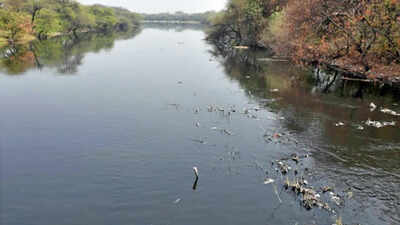
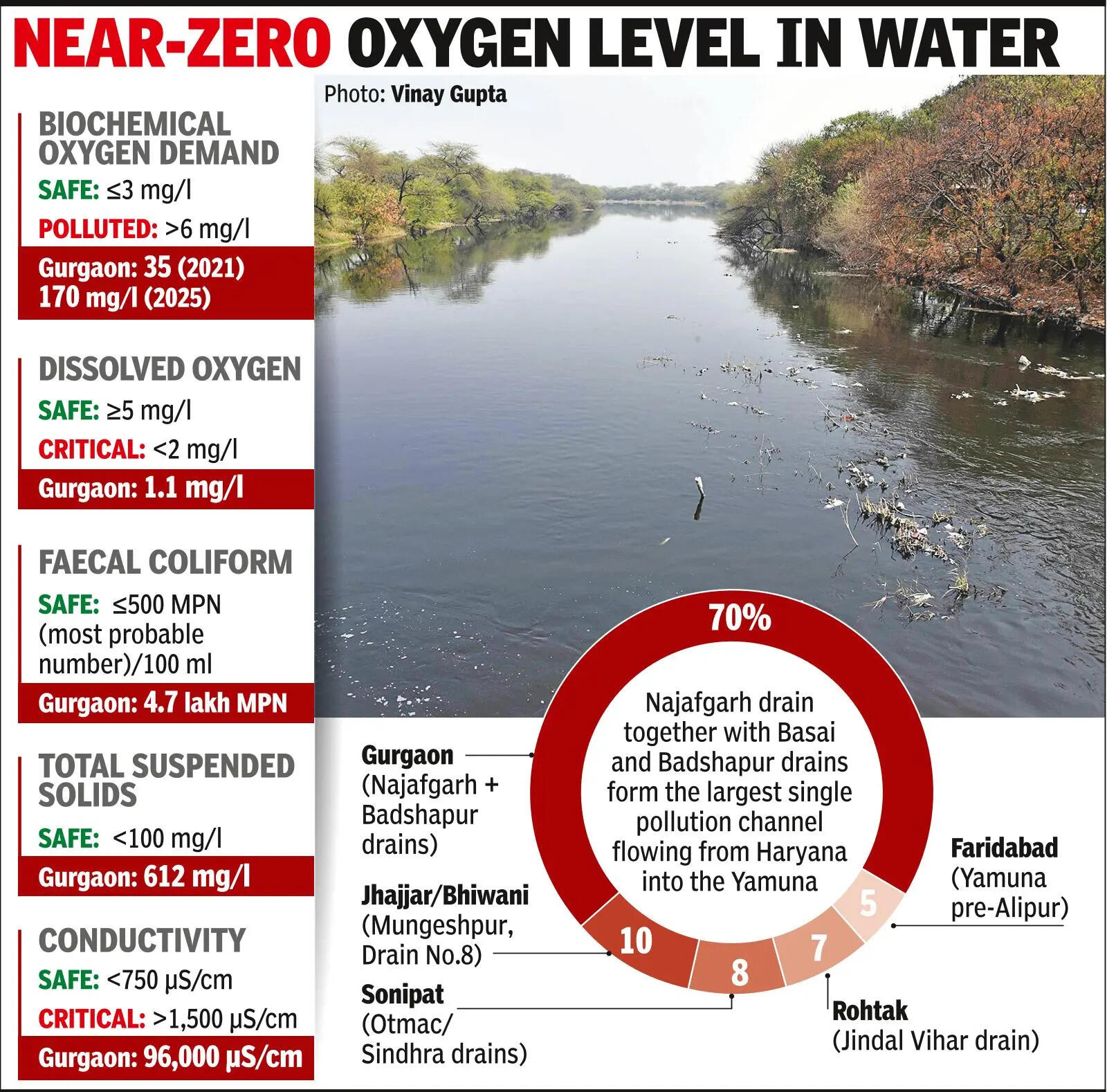
GURGAON: Gurgaon alone accounts for nearly 70% of the pollution load entering the Yamuna from Haryana, but the river’s collapse before Delhi is not the work of one district alone. Pollution board data shows a widening chain of sewage and industrial discharge from Sonipat, Jhajjar, Bhiwani and Faridabad as well, turning the river into a heavily contaminated flow long before it reaches the capital.Monitoring by Haryana State Pollution Control Board (HSPCB) between 2021 and 2025 has shown a sharply uneven but cumulative pattern. Gurgaon’s Najafgarh drain legs I, II and III, along with Basai and Badshahpur drains, have remained the biggest conduit of pollution. But parallel inflows from Sonipat’s drain network and smaller yet chemically intense discharges from Jhajjar, Bhiwani and Faridabad have been preventing the river from recovering downstream.By the middle of 2025, dissolved oxygen had fallen to near zero in several stretches of Delhi, a level at which aquatic life cannot survive, the survey shows.
Sonipat, Jhajjar, Bhiwani & Faridabad Add Sewage, Industrial Waste
In Gurgaon, the scale is stark. BOD, a key indicator of organic pollution, rose from 35-45 mg/L in 2021 to 170 mg/L in 2025 in major drains. That is nearly 50 times the safe river-water limit of 3 mg/L and far above the 6 mg/L level associated with gross sewage pollution. Total suspended solids touched 612 mg/L, while faecal coliform reached 4.7 lakh MPN per 100 ml, pointing to heavy discharge of untreated sewage.An HSPCB official said the worsening numbers reflect pressure from rapid urbanisation and weak sewer connectivity. Interception and diversion works are underway, the official said, but some drains are still carrying untreated wastewater.Badshapur drain, for instance, captures the mixed nature of Gurgaon’s pollution. Its BOD climbed to 120 mg/L, while conductivity touched 96,000 S/cm, suggesting a toxic blend of domestic sewage and industrial effluents.Sonipat, though less discussed, is emerging as a critical contributor because of where it sits in the basin. Data from drains such as Otmac and Sindhra shows BOD rising from 28-42 mg/L in 2021 to 110 mg/L in 2025. Unlike Gurgaon, where sewage is the dominant problem, Sonipat’s load appears more mixed – untreated urban wastewater, agricultural runoff and partial discharge from sewage treatment plants. Suspended solids crossing 300 mg/L indicate a heavy particulate load that further worsens water quality downstream.Jhajjar and Bhiwani discharge smaller volumes, but their chemical burden is severe. In Mungeshpur drain and drain No. 8, BOD rose to 72-145 mg/L by 2025, while hardness reached 4,450 mg/L, indicating industrial waste rich in dissolved salts.Faridabad’s profile is more stable, but persistently polluted. BOD ranged from 40 to 72 mg/L, conductivity stayed above 2,000 S/cm, and faecal coliform rose to 24,000 MPN per 100 ml in 2025, showing continued sewage inflow.In Rohtak, too, the Jindal Vihar drain adds 7% of the pollution load into the river, the survey shows.Environmental activist Varun Gulati said the figures point to a systemic failure, not isolated lapses. “The Yamuna has been receiving untreated waste from multiple entry points. Even if one city improves treatment capacity, the cumulative load from neighbouring districts ensures the river remains biologically dead by the time it reaches Delhi,” he added.