Vinay Kumar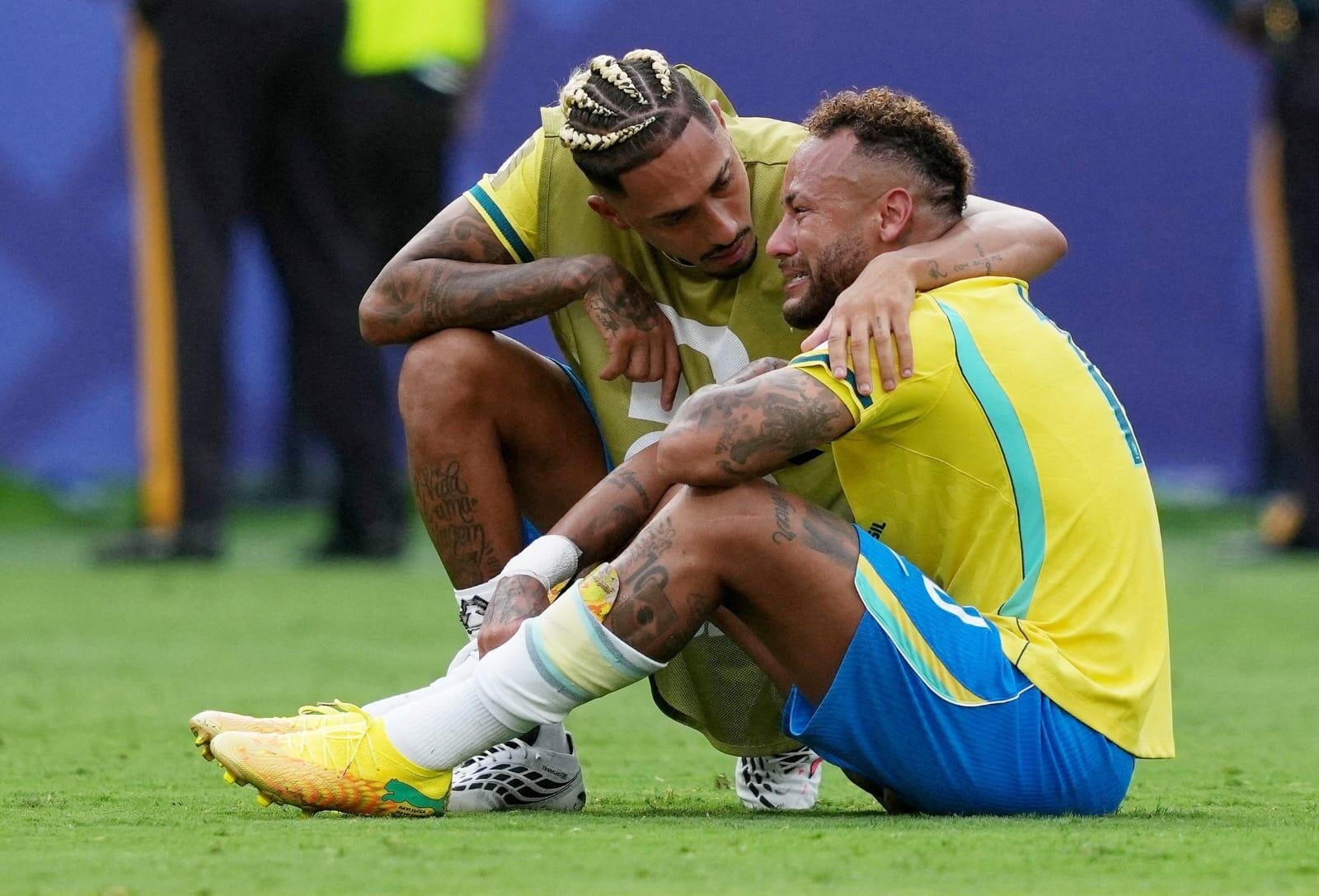
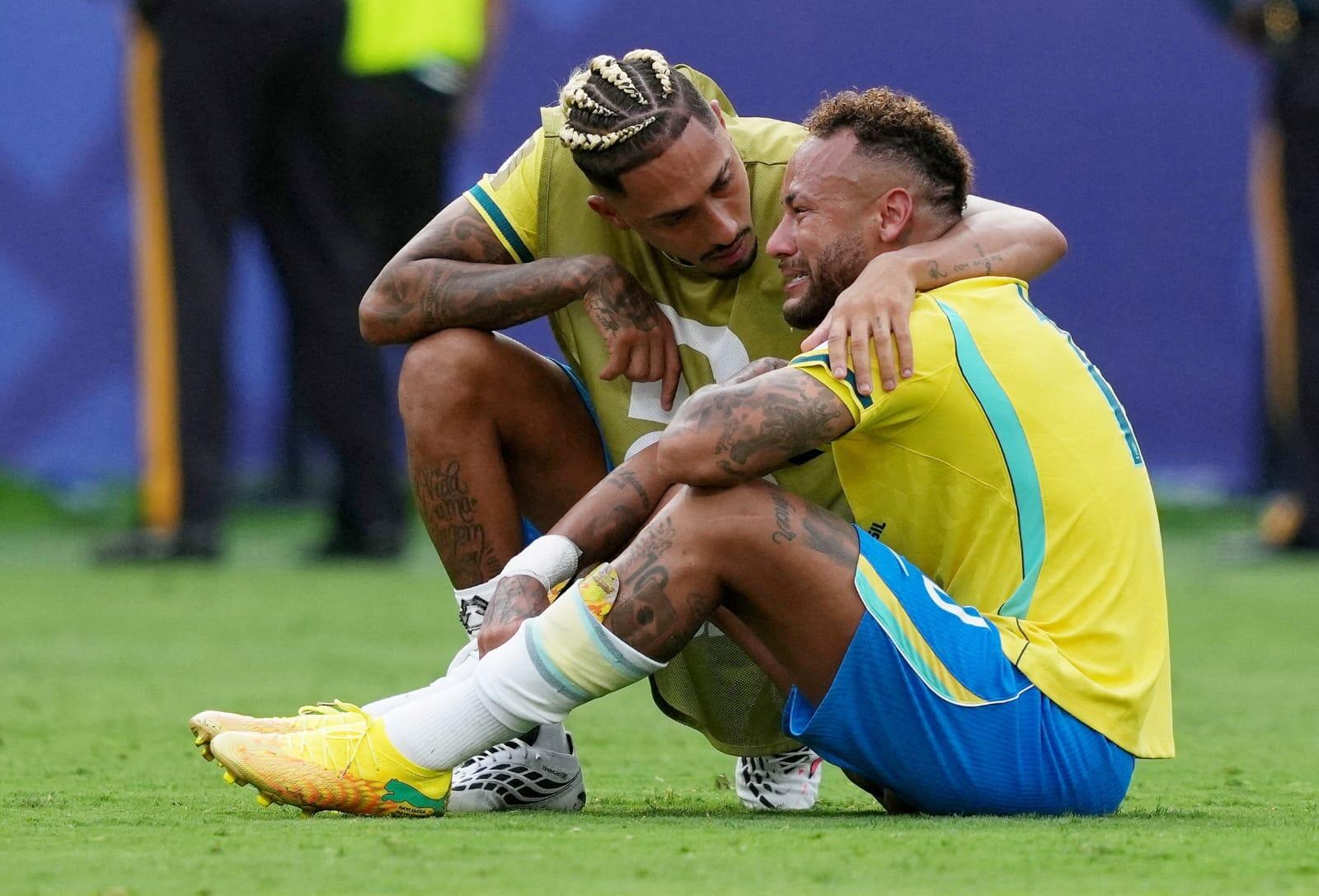
Neymar beat his chest and pointed to the badge. Brazil had just conceded the second goal, the game was lost, and the player who had defined Brazilian football for a generation was arguing with a goalkeeper rather than chasing a miracle. It was the image of an era ending — not gracefully, not on his terms, but in the most fitting way possible for a World Cup campaign that was never quite his to lead. The future, everyone in that stadium already knew, belongs to Vinícius Júnior.

Brazil had been disciplined and dangerous in the first half, creating chances, and should have been ahead by the break. The second half changed everything. More chances missed, and when Rayan came off and Neymar entered, the right flank was left exposed. Schjelderup found the space, crossed freely, and Haaland headed in. One decision, one goal, one elimination. The second was just confirmation of what had already been decided.
The loss keeps an uncomfortable similarity with recent eliminations — losing to Belgium in 2018, to Croatia in 2022. All three quality European sides, but all three countries with considerably less tradition than Brazil. Since 2006, every time Brazil has faced a European side in a World Cup knockout game, it has lost: France, the Netherlands, Germany, Belgium, Croatia, and now Norway. The manner of each exit is always debated in Brazil. But the pattern of the opponent is becoming harder to ignore.
In Brazil the next morning after the Norway match, the elimination landed with the weight of another generation’s failure. Estadão’s front page said it in two words: “Brazil sinks”. O Globo called it the worst World Cup in 36 years. And Meia Hora, the tabloid that captures the national mood in a headline better than most, put it this way: “Era Garrincha, era Pelé, era Romário, era Ronaldo… e já era” — the Garrincha era, the Pelé era, the Romário era, the Ronaldo era, and that’s the end of that era. Social media flooded with one word: vergonha — shame. Neymar’s provocation against Nyland was called pathetic by fans and press alike, the mood a mix of disbelief, disappointment and anger. The earliest exit since 1990, when Brazil fell to Argentina, and the drought now stretching to six World Cups without a title — 24 years and growing.
From here, the project belongs to Vinícius Júnior, Endrick and Estêvão. Neymar announced this was his last World Cup and his last game for Brazil. His generation — Casemiro, Alisson, Marquinhos, Danilo — exits with him, and with it the entire leadership structure of the dressing room. Vinícius inherits the shirt but has never been a captain figure. Leadership needs to be built, not just assumed.
There is a saying in Brazil that the national team is about current form — pick who is playing well now and let the pieces fall into place. It was never consistently true. Every recent world champion — Argentina in 2022, France in 2018, Germany in 2014, Spain in 2010 — was built over time, not assembled. Brazil has talent. Not the generational superstar cluster of Ronaldo, Romário, Ronaldinho and Rivaldo, but stars from the biggest clubs in the world nonetheless. Scolari built a world champion in a year in 2002, so it is not impossible. But Ancelotti inherited a squad that was already mid-transition and structurally incomplete. He fixed some of what was broken — the hierarchy around Vinícius, the defensive shape, the midfield protection — but he was patching problems that should not have existed in a properly built team. Norway exposed what the patches could not cover. Now he has four years to build what was never properly there.
In his post-match press conference, Ancelotti was candid about what that rebuild requires: “It is very evident that in midfield we have to move some players. We need young talent, we need high-level players coming into Brazilian football.” There are names to work with. In central midfield, Andrey Santos, 22, at Chelsea, and André and João Gomes, both at Wolverhampton, are the most advanced candidates. Breno Bidon, still developing at Corinthians, is a name to follow closely. At fullback, Kaiki, at Como, is emerging on the left; Wesley, injured before this tournament, returns on the right; Yan Couto at Borussia Dortmund and Vanderson at Monaco offer further depth. Estêvão — injured for this World Cup — is the most likely candidate to inherit the number 10 role, a position he has consistently said he wants to occupy. Rodrygo, also absent through injury, returns to the squad for the next cycle.
Ancelotti enters that cycle under scrutiny he has not faced before. The result will be read as shameful in Brazil regardless of the statistics, and the 2028 Copa América will be the first honest test of whether the rebuild is real. The CBF confirmed he stays, with coordinator Rodrigo Caetano asking for “a cycle that proceeds normally, with a little more calmness”. In 2030, when the World Cup celebrates 100 years, Brazil will try again — 28 years without a title by then, the hexa — the sixth title — still waiting, and the pressure only growing.
Disclaimer
Views expressed above are the author’s own.