
 Vinay Kumar
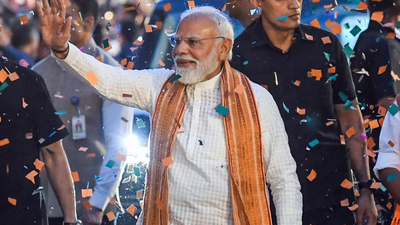
NEW DELHI: What was once a distant ambition for BJP has turned into a defining milestone. With its breakthrough victory in West Bengal in 2026, the Bharatiya Janata Party (BJP) has completed a symbolic arc in eastern India, stretching across Bihar (Anga), Bengal (Banga), and Odisha (Kalinga).The win is not just electoral; it marks the consolidation of a long political project that began in 2014 under Narendra Modi and has steadily expanded into regions once considered resistant to the party’s ideological and organisational reach.With control across Anga, Banga and Kalinga, the BJP stands stronger than ever. The saffron party, which appeared to be on the back foot after setback in the Lok Sabha, losing numbers in Lower House, has staged a sharp turnaround. The 2024 victory in the Odisha assembly elections, unseating long-time chief minister Naveen Patnaik, marked the first big shift in the East.In 2025, Bihar delivered a strong mandate to the NDA under the leadership of Nitish Kumar, with BJP’s Samrat Chaudhary succeeding the long-time “Sushasan Babu” as chief minister. And in 2026, the BJP capped its eastern push by storming West Bengal, dealing a decisive blow to Mamata Banerjee-led Trinamool Congress.
From margins to momentum
The BJP’s journey from a limited regional footprint to a near pan-India presence has been striking. In 2014, the party and its allies governed just a handful of states. By 2026, that number has surged dramatically, with the National Democratic Alliance controlling a vast majority of India’s political geography.The shift is not merely administrative. It is demographic and geographic. Nearly four out of five Indians now live in states governed by the BJP or its allies. The party’s influence spans across most of India’s landmass, reflecting a transformation from a Hindi heartland-centric force into a truly national political machine.
The eastern breakthrough
The capture of West Bengal is the crown jewel of this expansion. For over a decade, the state had remained firmly under Mamata Banerjee and her Trinamool Congress. The BJP’s victory signals the end of that dominance and the culmination of a sustained organisational push led by BJP’s ‘Chanakya’ Amit Shah.Shah’s strong push that BJP would rule Anga, Banga and Kalinga has acquired a prophetic quality. His intensive campaign, backed by a finely tuned grassroots network and a narrative centred on identity, welfare, and governance, helped the party breach one of its toughest frontiers.“Counting will begin in the morning of May 4. Ballot box will open at 8 am, first round will be over at 9 and second round at 10. Counting will be over at 1 pm and it will be ta ta, good-bye to didi.”The words of Amit Shah, spoken during a rally in Bengal, now read less like campaign bravado and more like a script that played out with precision.His assertion that the BJP would govern “Anga, Banga and Kalinga”, Bihar, Bengal and Odisha, has now materialised, marking a rare moment of eastern consolidation under a single political formation.
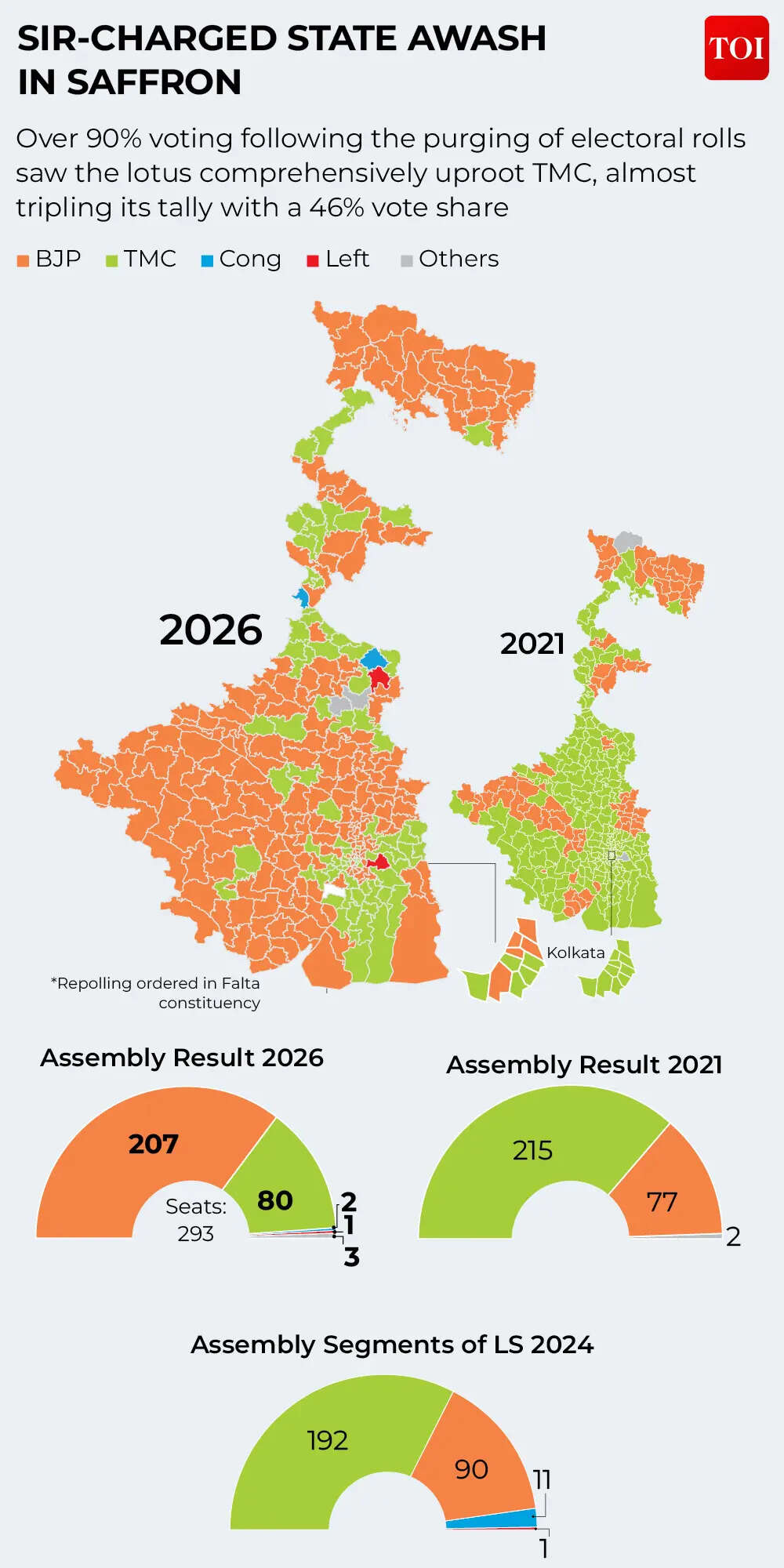
This follows earlier eastern gains. The ousting of Naveen Patnaik in Odisha in 2024 and the consolidation of power in Bihar under NDA leadership set the stage for Bengal.
Assam: Consolidation, not just continuity
If Bengal marked expansion, Assam represented consolidation. Under Himanta Biswa Sarma, the BJP not only retained power but did so emphatically, improving both seat share and vote percentage.
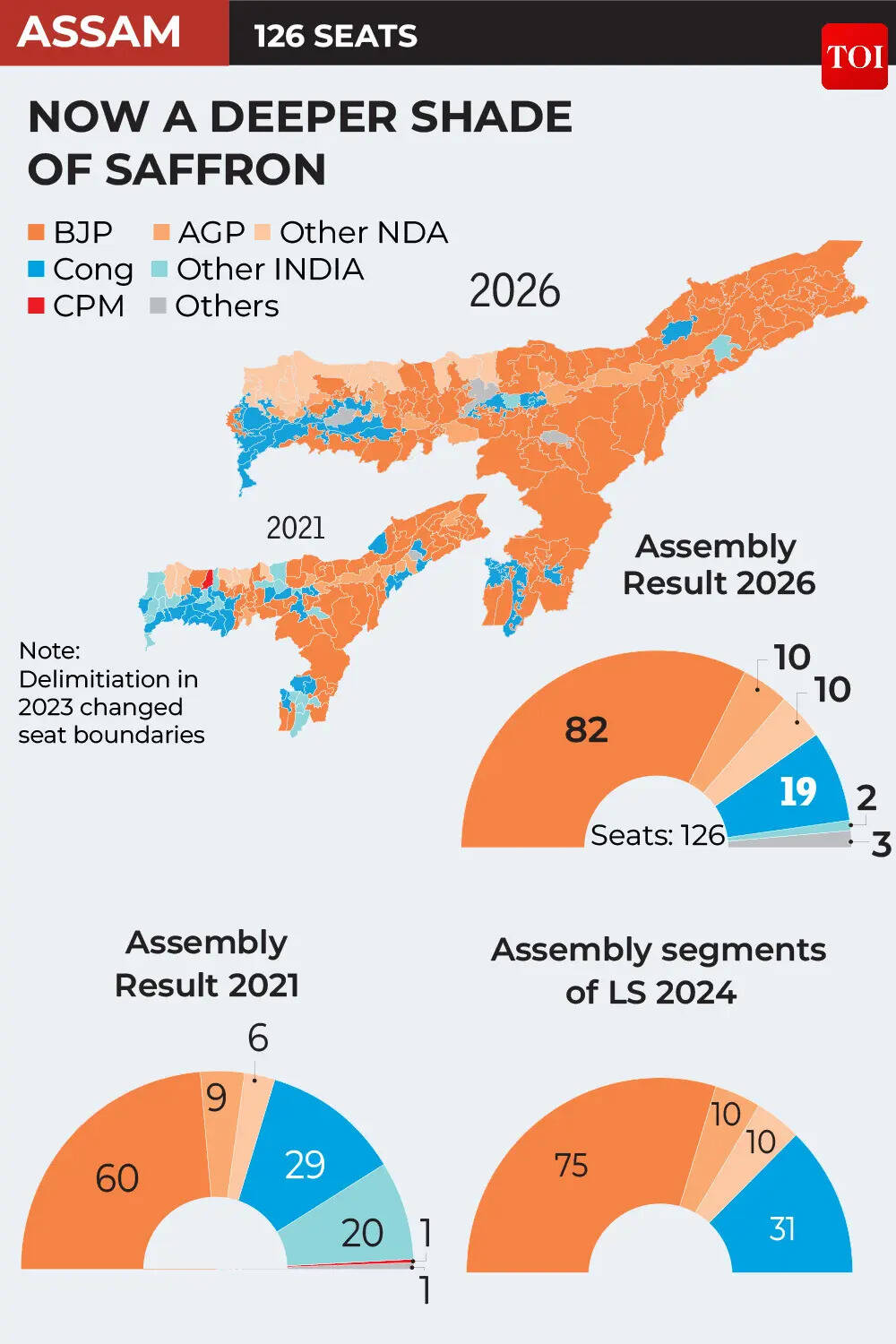
A mix of welfare schemes, identity politics, and strategic alliances delivered a sweeping mandate. Delimitation changes and high voter turnout, especially among women, further strengthened the NDA’s position, turning Assam into a model of sustained electoral dominance in the Northeast.
Beyond geography: The ideological shift
The BJP’s rise in the east reflects a deeper ideological shift. The Modi-led brigade has moved beyond its earlier image as a Hindi heartland entity, adapting its messaging to diverse cultural and regional contexts.In Bengal, religious identity and governance narratives converged. In Assam, long-standing concerns around immigration were sharpened into a powerful electoral plank. Across states, identity politics, welfare delivery, and nationalistic messaging are working together to reshape voter coalitions.Even in regions like Kerala, the BJP has begun to register a presence, signalling incremental but notable inroads.
Modi factor: The enduring anchor
Any analysis of the BJP’s expansion returns to PM Narendra Modi. Despite setbacks in the 2024 Lok Sabha polls, Modi’s personal appeal remains a powerful force multiplier.His image, built around development, national pride, and decisive leadership, has allowed the BJP to bridge organisational gaps in challenging terrains. Where local leadership may fall short, PM Modi’s presence often fills the vacuum and converts sentiment into votes.In many ways, the BJP’s electoral model operates in two steps. Modi creates the momentum, and Amit Shah’s organisational machinery converts it into victories.
The opposition squeeze
While the BJP expands, its rivals are confronting shrinking political space. The Congress-led bloc, despite isolated successes like Kerala, has seen its overall footprint contract. Regional parties, once dominant in their strongholds, are also under pressure.Leaders like Rahul Gandhi have questioned the integrity of electoral processes, particularly in Bengal, alleging large-scale irregularities. These claims have struggled to counter the BJP’s narrative on governance and development.“West Bengal and Assam are ‘clear cases of elections being stolen by BJP with the support of EC’,” alleged Rahul Gandhi.“We agree with Mamata (Banerjee) ji. More than 100 seats were stolen in Bengal,” he said, adding, “We have seen this playbook before: MP, Haryana, Maharashtra and Lok Sabha 2024 etc… Election theft, institution theft — what other option is there now?”Congress president Mallikarjun Kharge termed the results a “mixed bag”, stressing that “ours is an ideological battle… Such a path demands patience, perseverance and unwavering resolve.”The broader challenge for opposition parties lies in balancing minority outreach with wider electoral appeal, a balance that has become harder to sustain.
Welfare, women, and shifting voter base
One of the defining features of recent elections has been the centrality of welfare politics, particularly cash transfer schemes for women. What was once an advantage has now become a baseline expectation.In Bengal, welfare fatigue and concerns over women’s safety appear to have weakened a key support base for Mamata Banerjee. BJP’s counter-promises, often larger in scale, helped attract swing voters.Across states, women and younger voters are emerging as decisive blocs, reshaping traditional loyalties and demanding both opportunity and security.
Migration and politics of aspiration
Economic migration has quietly become a political issue, especially in Bengal. Once an industrial hub, the state now sees many workers moving elsewhere in search of opportunities.This shift has fed into a broader narrative around economic stagnation versus development-driven governance, a contrast that the BJP has used effectively in its campaign.
Looking ahead: the 2027 horizon
Even as it celebrates its eastern gains, the BJP has already turned its focus to the next electoral cycle. States like Uttar Pradesh, Punjab, Uttarakhand, and Goa are firmly on its radar.The Bengal victory has strengthened the party’s confidence and provided a strategic buffer against potential losses elsewhere. With 42 Lok Sabha seats, Bengal is now as critical to the BJP’s national ambitions as its traditional strongholds.For the opposition, the challenge is to rebuild narratives, reconnect with voters, and counter a political machine that continues to expand.
A reshaped political landscape
The BJP’s march across Anga, Banga, and Kalinga is more than a slogan fulfilled. It reflects a transformed political landscape. The country’s electoral map in 2026 is increasingly defined by a dominant national force rather than fragmented regional strongholds.Whether this consolidation endures or triggers a counter-mobilisation will shape the next phase of Indian politics. For now, the message from the east is clear. The BJP’s expansion is continuing and gaining pace.The Bharatiya Janata Party, having already taken on key challengers like Arvind Kejriwal last year and now Mamata Banerjee and M. K. Stalin, appears to be in a far more comfortable position to consolidate its hold on power.