 Vinay Kumar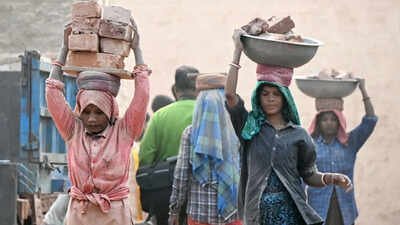
‘Purab mat jaiyo more Rajaji …’Passed down through generations, this folk song still echoes the reality of many villages in Bihar, where the men are forced to leave in search of greener pastures.Migration has long been woven into Bihar’s social and cultural landscape. But long-standing gaps in local employment, combined with rising aspirations, have increased the pace of out-migration from villages in recent years.And what is left behind? A patch of land, a half-finished brick house and, most importantly, women who are left to hold everything together.
Migration and Bihar
Bihar has long functioned as country’s great labour reservoir.In the early 19th century, young men from this region migrated because of widespread poverty and underdevelopment. After Independence, the trend continued, with migration largely directed towards India’s more developed states.Even today, Biharis can be found across the country in a wide range of roles: from running small businesses like tea stalls in Jammu and Kashmir, working in factories in Gujarat and Maharashtra, and contributing to agriculture in Punjab and Haryana, to taking up skilled, professional and entrepreneurial roles in rapidly growing cities.
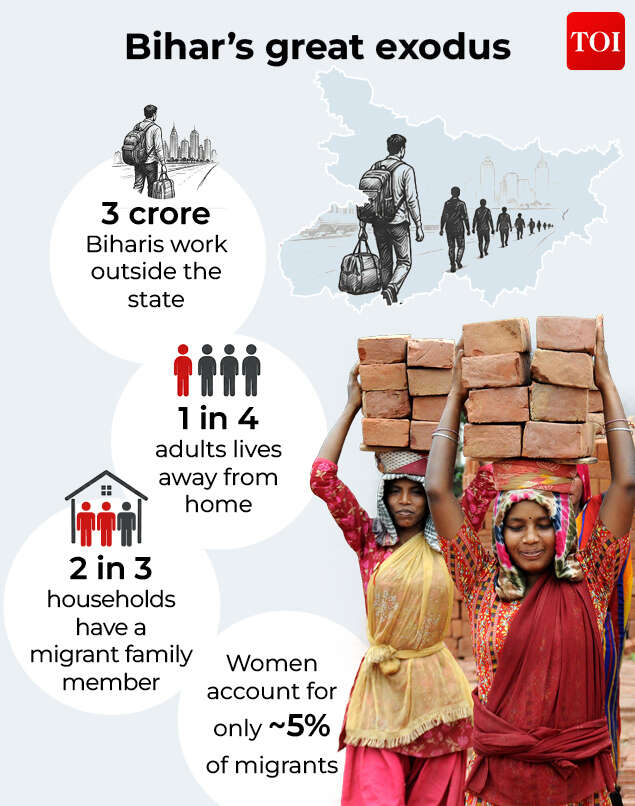
The decline of traditional industries, including sugar, jute, rice, flour, pulse, oil and paper mills, along with the slow expansion of local employment opportunities, has kept job creation a major challenge in Bihar.The exodus is visible at almost every railway station in the state, where trains bound for other parts of India are packed with young men leaving for a mix of aspiration and economic necessity.An estimated three crore Biharis now work outside the state. Roughly one in four adults and two out of every three households have a family member living away.Migration is no longer confined to the poor. It cuts across caste, class and community. Yet it remains overwhelmingly male, with women accounting for barely five per cent of migrants.
The rural milieu
Men leave villages in Bihar, often with the aspiration of providing a better standard of living for their families. However, remittances are not the only outcome. Male out-migration also skews the demography of villages and alters the dynamics of families.Just 36km from Patna, Baikatpur village offers a glimpse into the human cost of Bihar’s migration story.Ashok Kumar Dutta, a resident of the village, describes the situation as “dystopian”.Speaking to The Times of India, he says men from almost every household have left in search of work in bigger cities. While migration has marginally improved the economic condition of some families, it has also left behind villages inhabited largely by women, children and the elderly.“When people leave, they don’t take their entire families with them. Those who migrate rarely earn as much as they had hoped. As a result, instead of improving, the family’s economic condition often worsens,” Dutta told TOI.
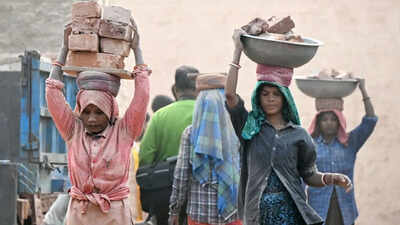
“The women left behind, and even the elderly and children, are forced to take up whatever small jobs they can to make ends meet. Women from the poorest households have little choice but to work in the fields, transplanting paddy and taking up daily-wage labour,” he added.Subhash Kumar, founder of Samadhan Kendra, an NGO in Vaishali district that works with women’s self-help groups, paints a similar picture.He says large-scale migration has drained the village economy and created an acute labour shortage. Even families planning to build a house often struggle to find enough workers.“If you look at the villages today, it’s only natural that there are fewer young people. There are simply no sources of income here. When there are no jobs locally, young people have no option but to leave,” Subhash Kumar told The Times of India.“Why do they migrate? Because they believe they can earn better elsewhere. Their calculations may not always work out, but they still see more opportunities outside Bihar than at home,” he added.
The role of women
It is encouraging when women in any society become economically and socially independent. In Bihar, however, this shift has often come out of necessity rather than choice. Many women have had to take on additional responsibilities beyond the household, including roles that were earlier less commonly undertaken by them.Subhash Kumar says a family cannot survive on the meagre remittances sent by migrants alone. To generate extra income, women often rear livestock or take up daily-wage work to keep the household running.“Today, it is simply not possible for an entire household to survive on the husband’s earnings alone. Suppose the husband is working outside the state and sends home Rs 5,000 or Rs 10,000 every month. A family cannot survive on that money alone. If there’s a wedding in the extended family, a social function, a medical emergency or any unexpected expense, they need extra,” Subhash Kumar said.
“Now imagine the husband falls ill or is unable to send money for two or three months. How will the household manage? In such situations, women take up daily-wage work. They work in the fields or wherever they can find work locally. If there is no work available, they rear cows, buffaloes or goats. Whatever little income they earn from livestock helps keep the household running,” he added.Nabanipa Bhattacharjee, sociology professor at Sri Venkateswara College, says seasonal migration, which is prevalent in Bihar, often creates a temporary gender imbalance in villages, with women outnumbering men for much of the year.“Migration has pushed women into roles they didn’t traditionally occupy. They now manage agriculture, run households, look after children and the elderly, and handle finances sent back as remittances. You can call it the feminisation of agriculture,” Professor Bhattacharjee told The Times of India.“While the men are away, women have to manage everything. However, the right to take important decisions still largely remains with the men,” she added.
Professor Bhattacharjee said that despite the growing role of women in villages, their workload and emotional stress from spousal separation have surged.“While seasonal migration temporarily skews village populations toward women and expands their roles, it doesn’t automatically translate into greater social status or authority,” she said.
The fragile economics
The Bihar government has launched several welfare schemes to make women in rural areas financially independent and improve the long-term viability of women-led enterprises. Schemes such as the Mukhyamantri Mahila Rojgar Yojana provide a grant of Rs 10,000 to women from households, with additional assistance of up to Rs 2 lakh linked to the progress of their enterprises.Jeevika is another poverty-alleviation programme that aims to empower rural women socially and economically by organising them into self-help groups. These groups help women save money, learn new skills, start small businesses and become part of the formal economy.
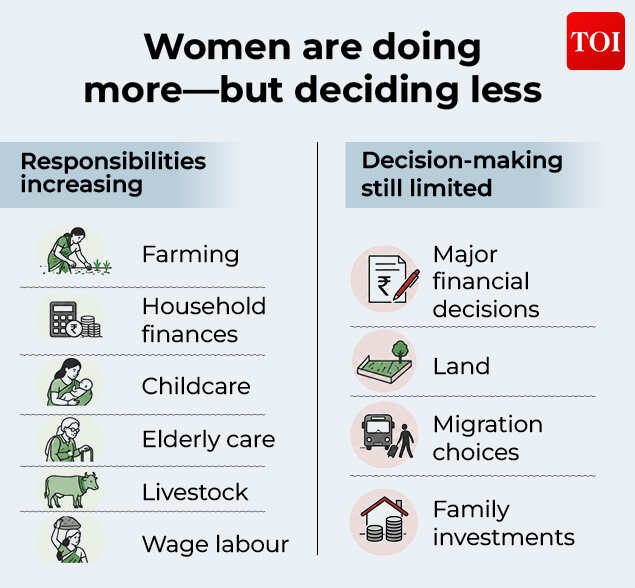
Jeevika has mobilised more than 1.4 crore women across Bihar into self-help groups, creating one of the largest women’s collectives in the world.Initiatives such as self-help groups and community-based livelihood programmes like Jeevika have expanded women’s economic participation by promoting collective entrepreneurship and creating local livelihood opportunities. But for many families, migration still determines whether these efforts succeed.According to Subhash Kumar, however, these schemes also operate within a difficult rural economy. He says that direct financial support can help women start work, but low purchasing power in villages and dependence on remittances continue to shape whether small enterprises survive.“Most women here take loans, but even those loans depend on the men in the family. Suppose the husband has migrated for work. As long as he keeps sending money home, the loan instalments are paid on time. But if, for some reason, the money stops coming for two months, four months or even six months, how can the family avoid defaulting?” he told The Times of India.That is the paradox of migration in Bihar. It gives families a lifeline, but also leaves women carrying the burden of homes, farms, debts and decisions that are still not always theirs to make.Until local work becomes steady enough to keep men closer home, Bihar’s villages will continue to run on two engines: money sent from outside, and the unpaid, underpaid and often invisible labour of women left behind.